
Filter Post Type
NewsVideoProductEventLink
Sort:
Most Recent
1–10 of 18

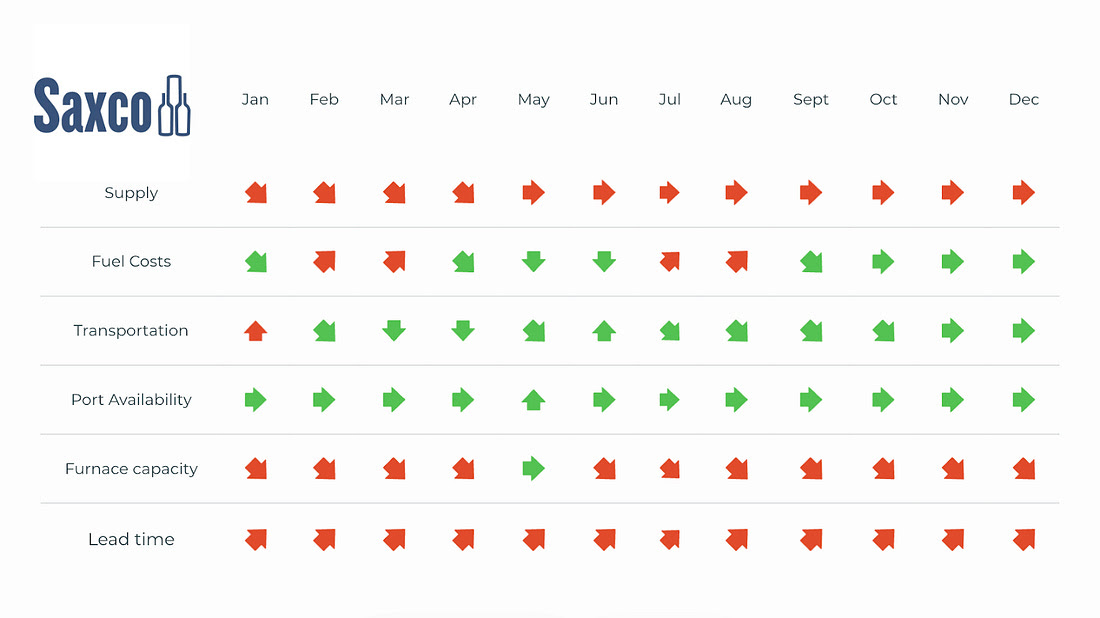
Another month of calm November typically marks the end of a new harvest and the middle of our busiest sales quarter. October’s government shutdown created unbelievable market uncertainty. But with the system back up and Thanksgiving almost normal, stability returned rather than the predicted surges or collapses by pundits from both sides. Still, questions remain about the future of our economic recovery prospects. For now, it is a reprieve, allowing us to regroup for the new year. Market dynamics The delayed reports from Commerce and the Bureau of Labor Statistics have started to trickle in, bringing some key takeaways: Unemployment is holding at 3.8%. Inflation easing to 2.3% YoY. Consumer spending down ~2% from Q3, but no hint of a cliff. As we close out the year and look to 2026, the focus will be on staying agile in both supply planning and capturing winery sales and marketing opportunities. The key trends persist: Steady demand, no major swings, and a growing gap between spe
00
The One Big Beautiful Bill Act (OBBBA) introduces changes and new requirements for reporting overtime pay in 2026. The changes are required to enable employees to claim certain overtime deductions on their personal tax return. The new tax deduction applies only to the ‘Qualified Overtime Compensation’ portion of overtime pay. The Qualified Overtime Compensation is the premium portion of overtime pay, or that extra “half” portion of “time-and-a-half” compensation. For example, if an employee earns $20/hour and works overtime, the overtime pay is $30/hour. Of the $30/hour, in this example the $10/hour is the Qualified Overtime Compensation that may be deductible under the new rule. Not all overtime will qualify for the deduction by employees. Only overtime pay required by the Federal law Fair Labor Standards Act (FLSA) is eligible. Overtime Pay required by California regulations will not be included in the tax deduction. This means the California
00

August 5, 2025

If you employ full-time staff, seasonal crews, or part-time help in Oregon’s wine industry, there’s a new law that could change how you approach labor planning and workplace disputes—especially during your busiest seasons. Oregon Senate Bill 916 (SB 916) makes Oregon the first state in the country to offer unemployment insurance (UI) benefits to both public and private sector employees who are engaged in a labor strike. Why Provide Unemployment Benefits to a Striking Workforce? Lawmakers behind the bill say it’s about fairness. Their argument is that workers who are lawfully on strike shouldn’t be forced to choose between standing up for better conditions and being able to pay their bills. They point out that most strikes in Oregon don’t last long—about eight or nine weeks on average—and believe a short-term safety net could lead to more productive negotiations. But not everyone agrees. Many employers, especially in agriculture and manufa
00
January 3, 2024

Along with New York and the U.S. Virgin Islands, California is facing a reduction in Federal Unemployment Tax Act (FUTA) credit for 2023, which means employers in California pay higher FUTA taxes retroactively in January 2024 for wages paid in 2023 due to the state’s outstanding federal loans. Many states, including California, experienced a FUTA Credit Reduction of 0.3% for 2022, and will be subject to an additional 0.3% credit reduction for 2023. What Is the Federal Unemployment Tax Act (FUTA)? The Federal Unemployment Tax Act (FUTA), passed in 1939, established a federal payroll tax to help fund and insure state unemployment benefits across the United States. This base federal payroll tax is 6% on the first $7,000 each employee makes in a year, which the employer is responsible for paying. Employers in most states are provided a Credit of 5.4% to this 6% FUTA rate. The results in a rate of 0.6%. State governments are also responsible for collecting unemployment taxes from
00
FUTA CREDIT REDUCTION STATES RELEASED FOR 2023 Employers in California to Pay Higher FUTA Tax Rates Retroactively Employers in California, Connecticut, Illinois, New York, and the U.S. Virgin Islands will pay higher Federal Unemployment Act (FUTA) taxes in January 2023 for wages paid in 2022 due to unpaid federal loans. The Department of Labor & IRS recently announced that the Credit for FUTA taxes will be reduced for employers in these states. This results in an adjusted higher net tax rate. This increase will be based on FUTA taxable wages paid in the affected jurisdictions during 2022. This adjusted higher net rate must be calculated retroactively for 2022 and paid in January of 2023. California Employers will pay an additional 0.3% on FUTA taxable wages (first $7,000 of taxable wages times 0.3%, or up to $21 per employee) when the 2022 Form 940 is filed. According to IRS regulations, any increased FUTA tax liability due to a credit reduction is considered incurre
00

The labor market continues to be tight with very low unemployment and steady job growth each month. The ongoing discussion about remote and hybrid work we see everywhere is leaving some employers whose businesses simply cannot support a remote work option wondering how they will compete in the current labor market without being able to offer such flexibility. Many workers have come to value and now demand work flexibility, but employers in the hospitality, construction, agriculture, and manufacturing sectors, to name a few, need employees on-site and available to provide customer service, complete projects, and build products. Working from home is simply not an option some businesses can offer. For workers who never left the work site, there is no discussion regarding transitioning back to on-site work. However, for those being asked to come back on-site every day, an inflation rate that has increased by an astounding 9.1% in a 12-month period and the current cost of gas may be gi
00

January 27, 2021
The $900 billion COVID-19 relief bill, passed by Congress and signed into law on Dec. 27, includes a number of provisions that affect employers and their workers in terms of paid sick leave and Emergency Family and Medical Leave Act provisions. The legislation also boosts unemployment benefits to out-of-work Americans, as well as reopening and expanding the Paycheck Protection Program that was introduced in March as part of the Coronavirus Aid, Relief, and Economic Security (CARES) Act. Paid sick and family medical leave The new law did not extend the obligation for employers to provide emergency paid sick leave and expanded family and medical leave beyond Dec. 31, 2020, instead making it voluntary after that date. From Jan. 1, employers can continue receiving tax credits if they provide emergency paid sick leave (EPSL) and emergency family medical leave (EFML) to employees for COVID19-related purposes through March 31. Here are the caveats: Tax credits will be available for leave gran
00
November 9, 2020
By Dawn Ross, Partner
As Shelter in Place restrictions continue to ease throughout California and employees return to the office, it is important for employers to be aware of the ever changing requirements and expectations to keep your staff and the public safe.
Below is a checklist for employers about how to safely reopen, while accommodating employees who need to continue to work at home under the Families First Coronavirus Response Act (“FFCRA”) and/or the Family and Medical Leave Act (“FMLA”). Employers should also be aware of several other considerations that apply, including reasonable accommodation and leave obligations under the Fair Employment and Housing Act (“FEHA”), the Americans with Disabilities Act (“ADA”), and the California Family Rights Act (“CFRA”).
A. Create a Written Return to Work Plan
Most employers will return to the office in stages, with some employees continuing to work at home for an
00
This week the Senate returns from a two week, COVID-19 forced recess. The Senate Judiciary Committee has been in session working on the Supreme Court nomination hearings, but the full Senate has been out since the end of September. Senate Majority Leader McConnell (R-KY) has indicated that he intends to bring a smaller, $500 billion relief package up for a vote on the Senate floor. The package includes unemployment assistance, more money for schools and health care, and new funding for the Paycheck Protection Program for small businesses. The smaller measure will also contain liability protections so businesses, schools and health care providers that follow the appropriate health precautions can't be sued if people get sick. The bill is not expected to become law.
At the same time, Speaker Pelosi (D-CA) has continued negotiations with Treasury Secretary Mnuchin on a larger relief package. The President has expressed his willingness to sign another large relief package, but the ne
00

The past two months have left many Sonoma & Napa County residents wondering, “Why us?” How many times can we continue to go through this traumatic experience of wildfires? When we start to assess the damage caused by the most recent Glass Fire, we are reminded that there are many items that must be carefully examined and thought through in order for all of us to successfully navigate the fire rebuild process. Looking into the future, there is a natural desire to get back to a state of normalcy. As an accomplished leader in the wine industry, Nordby Winery Advisors has played, and will continue to play, a critical role in helping our community get back to the life we once knew through rebuilding efforts.
We do not claim to be experts in overcoming disasters, but continued success in helping clients get through the process over the past four years shows our leadership ability in these times of need. We have, and continue to seek, knowledge and networks for assista
11