
Filter Post Type
NewsVideoProductEventLink
Sort:
Most Recent
1–10 of 25


We’re not debating calories or whether that charcuterie board counts as an appetizer or dinner. We're talking about the IRS tightening the rules for deductible meals. Starting January 1, 2026, some winery meals that have historically been deductible will become completely nondeductible. Same harvest crew. Same pizza. Different tax result. Here is what changes and what does not. 1. Harvest Meals on Winery Premises Zero Deduction Beginning in 2026 If you provide meals at the winery so employees can keep working, those meals will no longer be deductible starting in 2026. That includes: Crush pad dinners Bottling day lunches Late night production meals served on site For years these were deductible. Beginning in 2026, they are not. If harvest meals are a routine part of your operations, this is worth budgeting for now. 2. Occasional Overtime Meal Reimbursements Possibly Still 50 Percent Deductible If an employee unexpectedly works late and you reimburse them for dinner, tha
00
February 17, 2026
Most winery owners and their employees hear “extension” and think one thing: We’re late. That is not what an extension means. In many cases, filing an extension is a protective move. It keeps options open, even if the return is filed by the original deadline. Here’s why that is important. What an Extension Really Does An extension gives additional time to file. It does not give additional time to pay. Any tax due must still be paid by the original deadline to avoid penalties and interest. So why extend if the return is ready? Because wineries and the individuals they employ operate in complex environments where information continues to evolve. Final K-1s arrive late. Corrected 1099s show up. Payroll departments issue corrected W-2s. Overtime and tip allocations get adjusted. Cost allocations change. Entity elections are reconsidered. New tax legislation is passed. If something important changes after the original filing, flexibility matters. Supersed
00
.png)
December 23, 2025

If peak seasons make or break your operation, you’ve seen how quickly a smooth-running warehouse can get overloaded. Orders pile up, aisles tighten, and your main forklift fleet hits its limit. You need more capacity fast, but you don’t necessarily need more equipment all year long. That’s exactly where a smart short-term rental strategy comes in. With one of the largest material handling rental fleets in the West and dozens of locations spanning across California, Oregon, Washington, Nevada, and Montana, Papé Rents helps businesses add flexible surge capacity without locking up capital in equipment that sits idle once the rush is over. Start with Historical Data Effective seasonal surge planning starts long before the first big order drops. Look at your historical data: Daily order volumes and lines picked Dock-to-stock times Overtime hours Equipment utilization by truck type As you monitor your workflow over time, patterns start to emerge. Maybe ou
00
The One Big Beautiful Bill Act (OBBBA) introduces changes and new requirements for reporting overtime pay in 2026. The changes are required to enable employees to claim certain overtime deductions on their personal tax return. The new tax deduction applies only to the ‘Qualified Overtime Compensation’ portion of overtime pay. The Qualified Overtime Compensation is the premium portion of overtime pay, or that extra “half” portion of “time-and-a-half” compensation. For example, if an employee earns $20/hour and works overtime, the overtime pay is $30/hour. Of the $30/hour, in this example the $10/hour is the Qualified Overtime Compensation that may be deductible under the new rule. Not all overtime will qualify for the deduction by employees. Only overtime pay required by the Federal law Fair Labor Standards Act (FLSA) is eligible. Overtime Pay required by California regulations will not be included in the tax deduction. This means the California
00
October 2, 2025
The One Big Beautiful Bill Act (OBBBA) requires changes to tax reporting on overtime and tips. However, the IRS announced that, as part of the phased implementation of the OBBBA, there will be no changes to tax returns or federal withholding tables for Tax Year 2025. The IRS will not be making adjustments for 2025 related to the OBBBA, and forms will remain the same. Specifically, Forms W-2, existing Forms 1099, Form 941, and other payroll forms will not change for 2025. Federal income tax withholding tables will continue as they are. Employers should continue using current reporting and withholding procedures until 2026. The IRS explained that delaying changes until 2026 is meant to reduce confusion during the upcoming tax filing season and give businesses and tax professionals more time to prepare for implementation. “These decisions are intended to avoid disruptions during the tax filing season and to give the IRS, business, and tax professionals enough time to implement the c
00

August 21, 2025

Santa Rosa, Calif., August 21st, 2025—Lumo, the leader in precision irrigation technology for specialty crop growers, today announced the launch of Pump Automation, a powerful new integration with its smart valve platform. Select growers on the North and Central Coasts are already using Lumo pump automation to fully automate irrigations from pump to plant on ranches ranging from 60 to 1,300 acres. With block-level irrigation data, advanced safety checks, and verified performance, growers are able to save time and achieve precision across a wider range of irrigation systems and setups than ever before. With Lumo, growers are scheduling irrigations overnight and at off-peak times, without relying on overtime labor or pulling folks away from harvest. Real-time flow and pressure data from Lumo smart valves provides the feedback necessary to dial in precision, optimize which blocks to run at the same time, and minimize damage from dry runs and pressure spikes. “Pump automation i
00
June 2, 2025

“We successfully automated almost every irrigation set last season on 60 acres of the ranch, running the pump at night and freeing up irrigator hours to irrigate other blocks on the ranch during the day. For the first time, I can say that these blocks were sufficiently irrigated, and last year’s canopy and crop proved that.” - Andrew Oliver, Vineyard Manager at Antinori Andrew Oliver, Vineyard Manager at Antinori, standing with Devon Wright, Lumo CEO, at a recent Napa RISE event. Irrigation Issues Before working with Lumo, Andrew and his irrigation team were stressed about three key irrigation challenges: Their original pump and mainline were specced for the lower vine densities that were planted in the 80’s and 90’s. After replanting the entire ranch to higher densities, their irrigation demand increased beyond what the system was capable of, especially when trying to irrigate before a heat wave They also knew they had pressure issues but we
00
February 12, 2024
Employment laws in California are always changing, and it is important for employers in California to keep up with these changes to ensure their policies and practices are compliant. This blog post provides key updates to the California employment laws that all employers should know for this year. Minimum Wage Increase Beginning January 1, 2024, the state minimum wage for all employers has been increased to $16.00 per hour. This rate reflects a 3.5% increase from this year’s minimum wage based on the law’s provision that allows this increase if the national Consumer Price Index (“CPI”) is over 7%. All employers must post the current minimum wage rate in a common area where employees can easily view it. With this new rate of $16.00/hour, the minimum salary for exempt employees in 2024 has also increased to $66,560.00/year. Note that the minimum salary is tied to the state minimum wage rate, not individual municipalities. Employers should also check if there
00
With the start of the new year, it is time to dust off the employee handbook, review your policies and procedures, and make sure they comply with all the new laws, regulations, and interpretations that have either already gone into effect or will in early 2023. Below, we have identified our “top 10” changes. Please keep in mind there were hundreds of laws, regulations, and changes implemented at the local, state, and federal levels throughout 2022. So, if you need a handbook/COVID-19 policy review or have any questions, please call. 1. California and Local Minimum Wage Raised – In addition to the gradual increase to minimum wage that has been in effect under California law, several Sonoma County cities have increased minimum wage beyond that required by the state. Below is a table that describes the state and local city requirements: Locality Effective Date Employers With 26 Or More Employees Employers With Less Than 26 Employees California 1/1/2023 $15.5
00
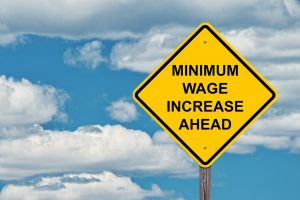
As of January 1, 2023, California’s new minimum wage will increase to $15.50/hour for companies of all sizes. With this minimum wage increase also comes an increase in the minimum salary requirement for salary positions. exemptions. As of January 1, 2023, the minimum salary for positions exempt from overtime in California will increase to $64,480 annually ($1,240 weekly). The California Labor Code section 1182.12(c)(3)(A established the schedule for minimum wage increases, including an annual adjustment based on inflation. Adjustments to the state minimum wage based on inflation will continue to be announced annually by August 1 for the subsequent year. The California minimum wage was set to increase for smaller employers to $15.00/hours, but on July 27, 2022, the Director of the Department of Finance certified that based on inflation rate from July 2021 to June 2022,), the state hourly minimum wage must be increased, effective January 1, 2023, to $15.50/hour (regardless of
00