
Filter Post Type
NewsVideoProductEventLink
Sort:
Most Recent
1–10 of 47
February 10, 2026
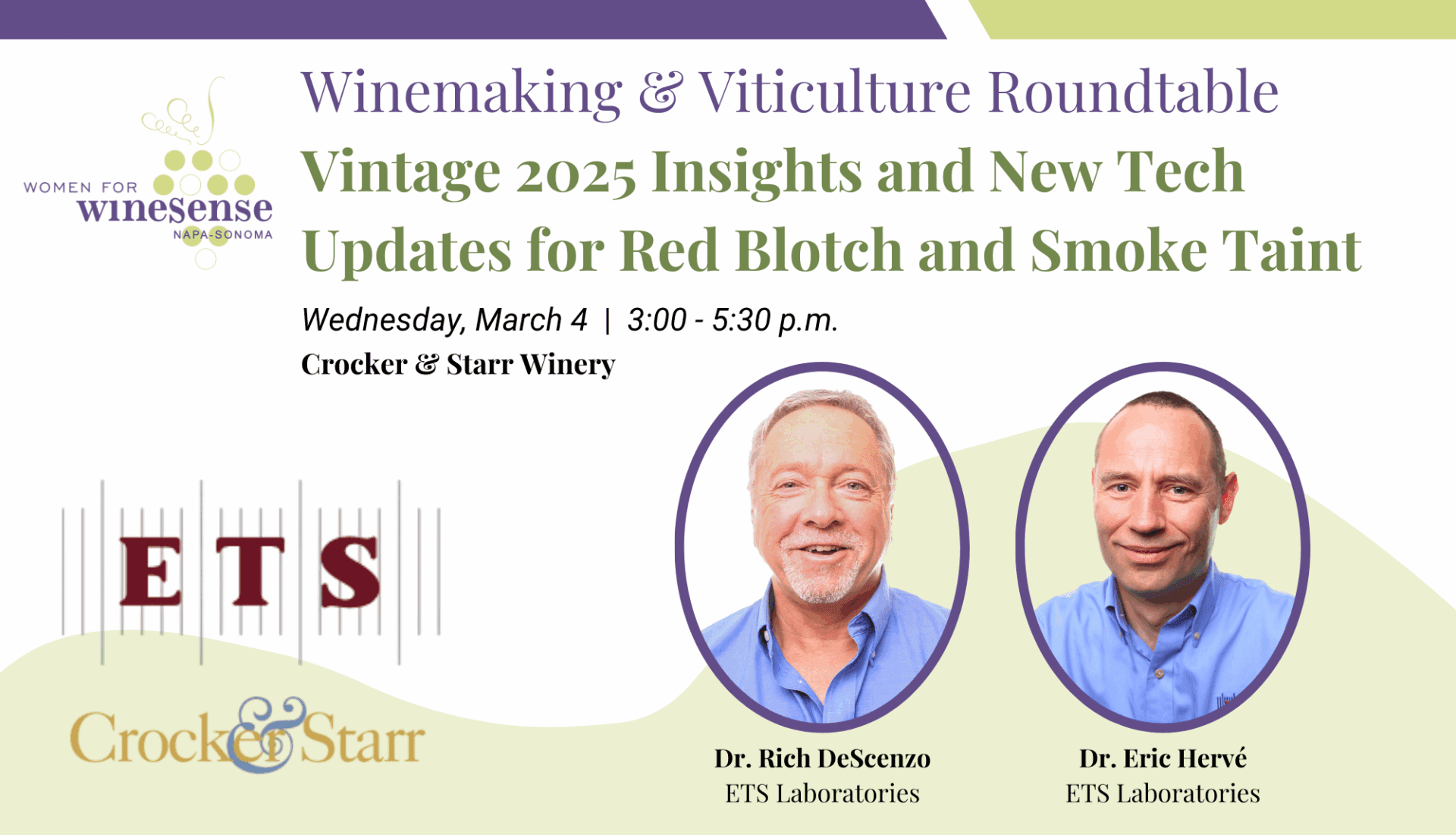
February 10, 2026 (Napa / Sonoma, CA) — On Wednesday, March 4, 2026, from 3:00 – 5:30 p.m., the Winemaking & Viticulture Roundtable of the Napa-Sonoma chapter of Women for WineSense (WWS) will host a timely proprietary technical presentation, “Vintage 2025 ETS Insights and New Tech Updates for Red Blotch and Smoke Taint.“ The event opens with a networking wine mingle at Crocker & Starr followed by a behind-the-scenes production tour and an engaging technical viticulture and winemaking research presentation and discussion with guest experts from ETS Labs research scientists Dr. Rich DeScenzo and Dr. Eric Hervé. This presentation will focus on actionable information to help winemaking and viticulture attendees get a strategic first look at vintage 2025 overall, plus the latest technological updates related to Red Blotch disease and smoke taint. Attendees will hear this first synthesis of proprietary 2025 data and the additional research,
00

November 17, 2025
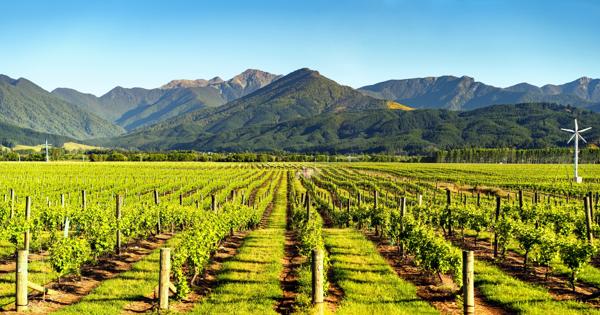
For many North Coast growers, Fleabane has gone from an occasional nuisance to a persistent challenge. Once it takes hold between rows or drip lines, it competes with young vines for moisture, slows canopy growth, and creates long-term pressure that can be costly to manage later in the season. What’s catching many growers off guard right now is timing. Fleabane does most of its damage before spring even begins. By the time it becomes tall, fibrous, and woody, mechanical removal struggles, contact herbicides lose effectiveness, and regrowth surges after bud break. Why Fleabane Persists Unlike many annual weeds that fade with summer heat, fleabane germinates and seeds aggressively over winter, forming low mats that harden into upright stalks by early spring. That’s why post-harvest through dormancy (Q4) is often the most strategic time for control, not April or May when vineyard crews are already stretched across canopy management an
00


The global shift toward sustainability is palpable across nearly every sector. Within the wine and spirits industries, this movement has gained remarkable traction, driven by consumers’ increasing demand for environmentally responsible products. More pressure for industry to put sustainability at the center of all operations but also provides opportunities for businesses to flourish by staying ahead of the trends in innovative and sustainable advancements. Here are four sustainability trends to keep an eye on: Regenerative practices for wine and spirits Recent years have seen a boom in conscious agricultural practices through the philosophy that all aspects of agriculture are connected. This philosophy emphasizes the careful utilization of land management to restore and regenerate the ecosystems and land we use, leaving it in better health for future generations. Regenerative principles are a push back against traditional industrial agriculture practices which are respons
00
October 6, 2025

The California Department of Food & Agriculture has announced it has certified the votes on the referendum to continue the Sonoma County Winegrape Commission, also known as the Sonoma County Winegrowers (SCW), for another five years. Garnering 85.77% percent of the vote, winegrape growers strongly supported continuation of the organization. The Commission was established in 2006 and is required by California law to conduct a grower vote every five years to determine if they want to continue to be assessed to fund the organization. “It is very gratifying to see the efforts of the Commission recognized and supported by the very people who fund it and make all the great work possible,” said Bret Munselle, chairman of the SCW board of directors and owner of Munselle Vineyards. He added, “Through the assessment, the growers have been personally investing in promoting Sonoma County for nearly 20 years and with this vote, SCW will continue
00

April 29, 2025
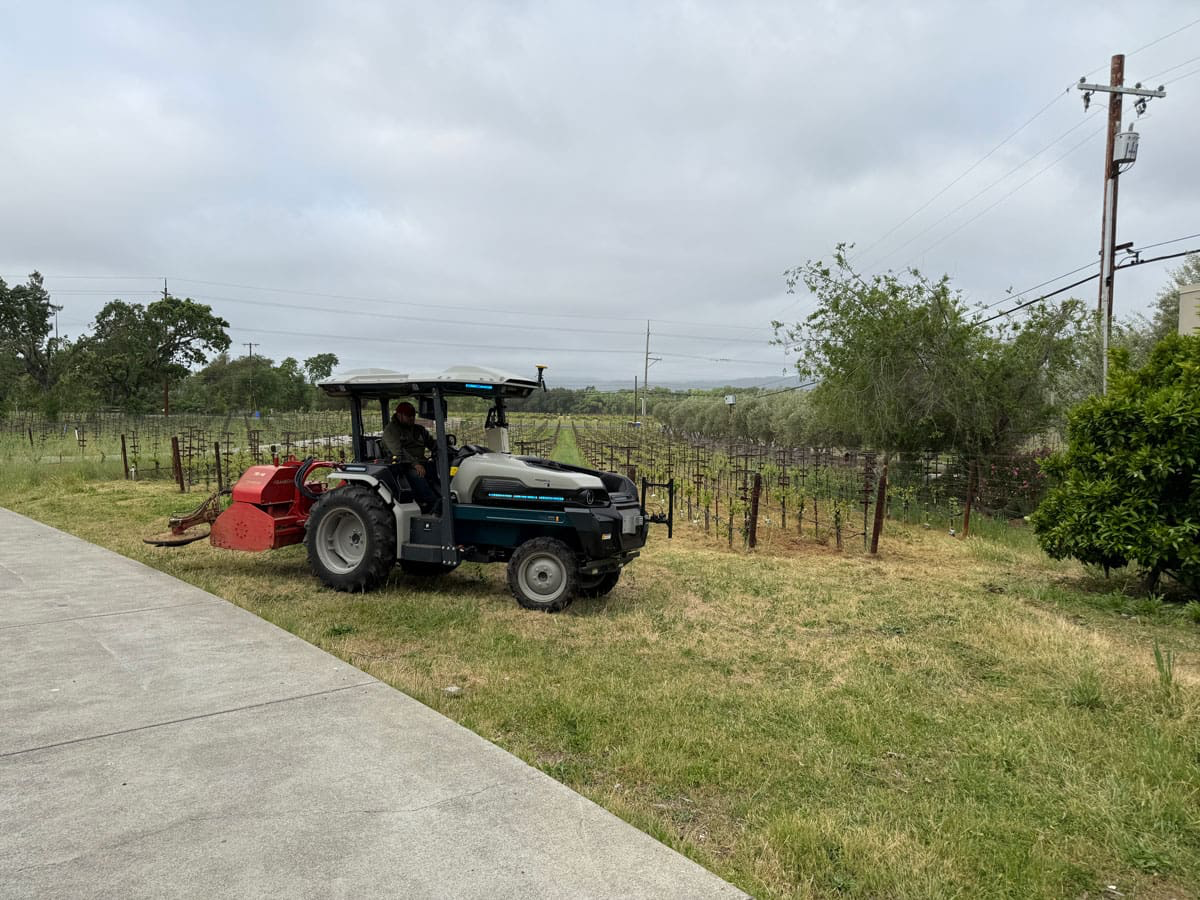
Better Together: Scout + Monarch Partner to Power a New Era of Sustainable Vineyard Management Scout, the leader in AI-supported precision viticulture data platform, and Monarch Tractor, the pioneer of the fully electric, driver-optional tractor, and smart MK-V tractor, have announced a strategic partnership to provide vine-level mapping and analysis during standard MK-V operations; maximizing the value of each tractor pass and further reducing a vineyard’s carbon footprint. The collaboration pairs Scout’s AI-supported actionable plant insights with Monarch’s zero-emissions operations, enabling more regenerative, biodynamic, and organic practices in modern viticulture that also unlocks significant savings for a farm. A Shared Vision for the Future of Farming “Practices like organic, biodynamic, and regenerative farming demand greater surveillance and precision at the vine level– that’s why Scout exists,” says Kia Behnia, CEO of Scout. &ldq
00

Sustainable farming practices are essential for protecting the environment, improving long-term agricultural productivity, and supporting healthy communities. In fact, many of the methods highlighted today are shared across a variety of certification programs, from sustainable certifications like SIP Certified to regenerative programs like Regenerative Organic Certified (ROC). While each certification has its own specific requirements, the core principles of responsible farming remain consistent. In this week’s Marketing Tip, we’ll take a closer look at three key areas – Water Management, Soil Health, and Habitat Preservation – and how sustainable farmers manage them to ensure future success. Water Management Water is one of agriculture’s most critical resources. Sustainable farmers work carefully to both use water efficiently and protect water quality. Efficient Irrigation Anyone who has struggled to keep a plant alive knows that plants
00
.jpg)
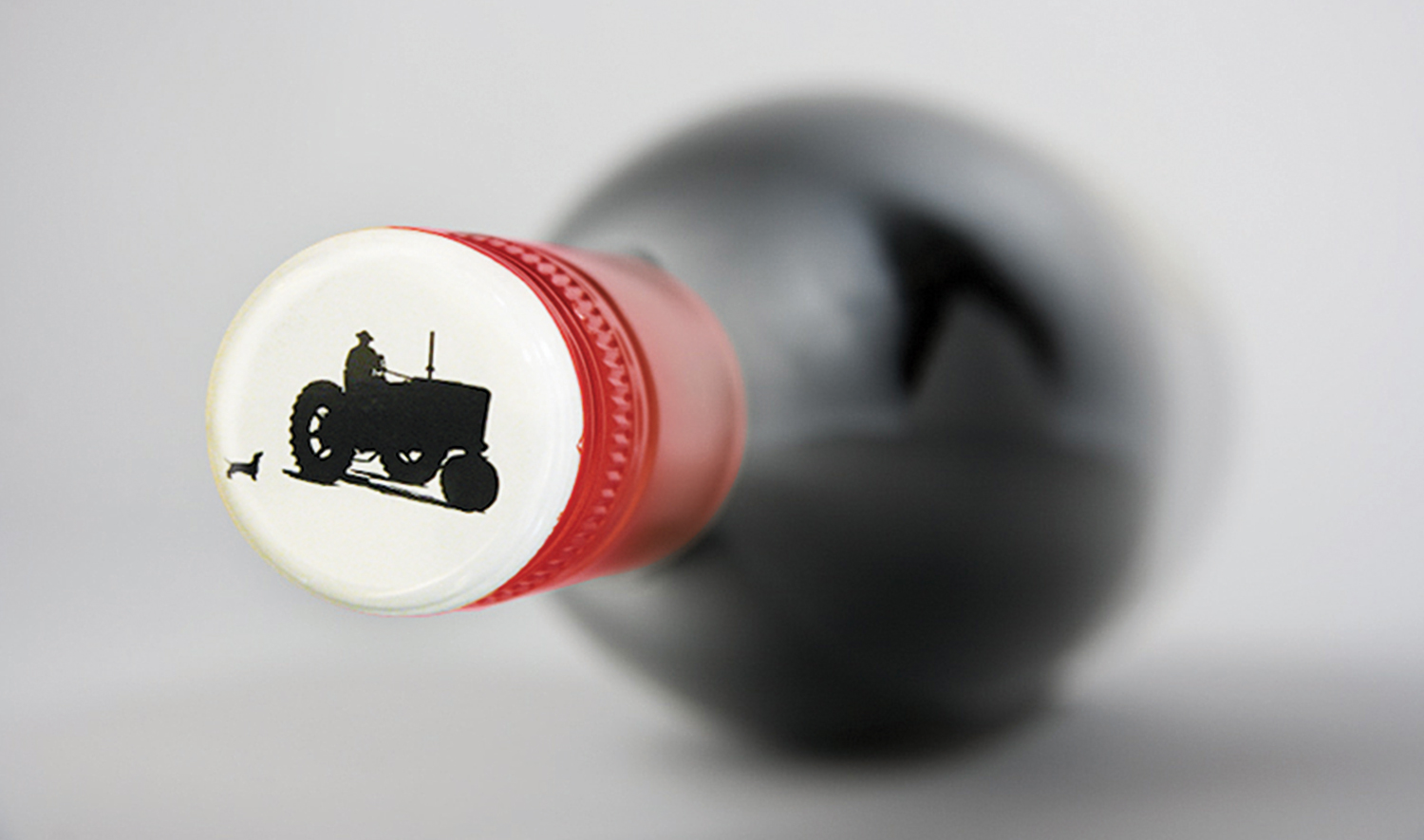
When you think of a tractor, do you picture the sturdy, hardworking machine of the past or today’s powerful, modern marvel? For wineries, cideries, and fruit farmers, tractors symbolize the bridge between nature and craft. But how does this relate to marketing? Tractor symbolism can be marketing gold. Let’s explore this through two brands our team has worked on, illustrating how the old and new of the tractor world can inspire marketing. Built to Last: The Legacy of Road 13 In 2008, Pam & Mick Luckhurst sought to rebrand their winery, originally named Golden Mile Cellars. Our team discovered that “It’s All About The Dirt” was a core value, which became the foundation for a new brand. The heart of this brand was the tractor Mick drove through the vineyard, accompanied by his dogs. This rebrand transformed the winery into a standout on shelves and a household name for wine lovers in BC. The enduring presence of the tractor reflects its timeless appeal.
00
January 13, 2025

To conclude a year defined by forward-thinking practices and community engagement, we at Vineyard Team proudly share an annual review to highlight our industry’s significant achievements and ongoing commitment to sustainable winegrowing. In 2024, we hosted 8 Tailgates and 2 collaborative events across 3 counties, offering over 20 continuing education (CE) hours to growers and ag professionals. These events strengthened the sense of community, supported five local coffee shops, and fostered the formation of countless new friendships. November’s annual Sustainable Ag Expo included: 531 attendees 63 exhibitors 3 special networking opportunities 16 in-person seminars 13 online courses 29 hours of continuing education 147 attendees experienced streamlined DPR reporting through a collaboration with CE Reported. All attendees enjoyed 38 gallons of coffee, 205 donuts, 26 bottles of wine, and 600 ounces of beer in the event’s lively and engaging atm
Year in Review2024Vineyard TeamSustainableSustainable WinegrowingSustainable ViticultureRegenerativeRegenerative FarmingRegenerative AgAg TechPest ManagementPodcastSustainable Winegrowing PodcastExpoSustainable Ag ExpoJuan Nevarez Memorial ScholarshipScholarshipFirst GenerationSIP CertifiedSustainable CertificationMarketing
00
December 2, 2024
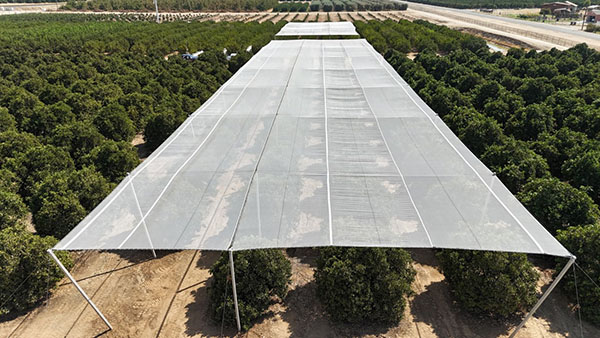
Winegrowers are nothing if not adaptable, given that the grape is a harbinger crop, or in more prosaic terms, the canary in the coal mine for agriculture. As a result, when climate shifts generate more frequent heat waves of higher temperatures and longer duration, viticulturists swing into action with a toolbox of methods to mitigate the effects. Growers use misters to cool the air around the grapes, irrigate in advance of heat waves to prevent dehydration, and even apply anti-transpirants that work like sunscreen to protect from sun damage. Medium-term options include changing canopy management to delay ripening and using regenerative farming techniques to boost water retention in the soil. The most aggressive strategies involve relocating vineyards to cooler microclimates or pulling up and replacing less heat-tolerant varietals. However, vineyard owners are unlikely to invest in these approaches while consumption and demand are declining. A better alternative wou
00

Doors open in 5 days! There's still time to get tickets for the Sustainable Ag Expo before prices increase!* Doors open Tuesday, Nov. 12 & Wednesday, Nov. 13 at 7:00 am. *Prices increase Saturday, November 9 GET TICKETS Check out: The program schedule, featuring 16 in-person seminars hosted by industry experts. The Exhibitor Map, showcasing 63 sustainable ag companies. CE Hours Available 16 in-person seminars next Tuesday and Wednesday give you access to 7.5 DPR and 15.5 CCA hours. Continue taking your 12 online courses* through November 29 to earn an additional 10 DPR and 12 CCA hours. *Add your license numbers into the online portal *Online courses are accessible with a 2-day pass. FAQs Get ready for the premiere sustainable ag event of the year! Check out the Frequently Asked Questions (FAQs) for all of the info you need to know. If you have any questions that aren't addressed here, please reach out to Hayli@VineyardTeam.org.
00