
Filter Post Type
NewsVideoProductEventLink
Sort:
Most Recent
1–6 of 6


Afternoon Brief: Court OKs $140 Million in Vintage Wine Estates Assets Sales
Nearly two dozen wineries, brands and other assets of the defunct Santa Rosa-anchored Vintage Wine Estates portfolio got the green light to change hands in a Delaware bankruptcy court Tuesday...
Vintage Wine EstatesGlobal Plant GeneticsGomberg Fredrikson & AssociatesFull Glass Wine Co.California Department of Pesticide RegulationWeathered Vineyards & WineryWagner VineyardsShady Lane CellarsWine & Spirits Wholesalers of AmericaWines of Germany USAInnoVintWineGlass MarketingCome Over OctoberEnolyticsKeushHalfpenny Green Wine EstateBlock 55Global PackageThe Vineyard TeamLaffort USAClif Family WineryOvershine Wine Co.Johnson BrothersWhitehall Lane Winery
00
During fermentation, thousands of different identifiable flavors are created in wine. Understanding how to choose and use yeast to manage this process can give winemakers an impressive amount of control and creativity in determining their wines' profiles. Today's finest winemakers employ yeast as a key tool to add character to their wines and to explore new sensory experiences. THE BASICS Wine is the result of the fermentative activity of yeasts and bacteria. The microbiota of grape juice fermentation can vary significantly, as over 40 genera and 100 different species of yeast have been isolated from grapes or wine. Saccharomyces is the genus most winemakers are familiar with. The S. cerevisiae and S. bayanus species have been found to efficiently dominate and execute alcoholic fermentation. However, other yeast, collectively known as non-Saccharomyces yeast, along with bacteria, may also contribute to the aroma and flavor profile of wine. There are two basic types of w
00
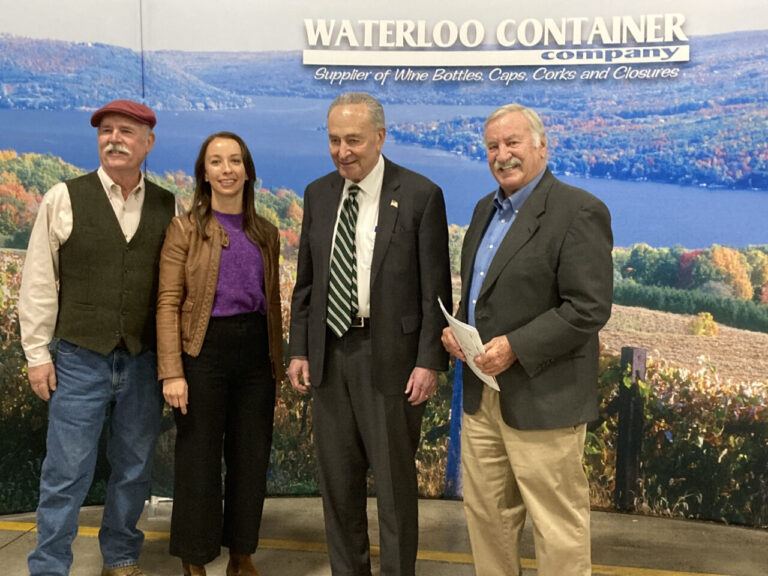
Majority Leader Chuck Schumer Meets with WineAmerica and Waterloo Container WATERLOO, NY–Senate Majority Chuck Schumer met on Friday, December 2 with leaders of WineAmerica, the National Association of American Wineries, and owners of Waterloo Container, a large supplier of bottles to the American wine industry located in the fabulous Finger Lakes wine region of upstate New York. WineAmerica President Jim Trezise, Vice Chair Scott Osborn of Fox Run Vineyards, and Board Member Erica Paolicelli of Three Brothers Winery met with their Senator and discussed WineAmerica’s National Economic Impact Study of the Wine Industry plus two legislative priorities. Scott Osborn, Erica Paolicelli, and Jim Trezise join Majority Leader Schumer The USPS Shipping Equity Act would allow the postal service to ship wine (and beer, and spirits) directly to consumers like FedEx and UPS have been doing for years. Federal funding for the National Agricultural Statistics Service (NASS) of USDA to cond
00


Dr. Anne Fennel is a Distinguished Professor at South Dakota State University. Academic Interests/Expertise: Grapevine bud dormancy and cold hardiness Grapevine Genetics and genomics Plant Physiology and Molecular Biology Dr. Barry Gump is the Harvey R. Chaplin Eminent Scholar Chair in Beverage Management at Florida International University. Academic Interests/Expertise: analytical methodology applied to grapes, juices, and wines Beer, Wine Consultant, Wine Judge
00
March 19, 2021
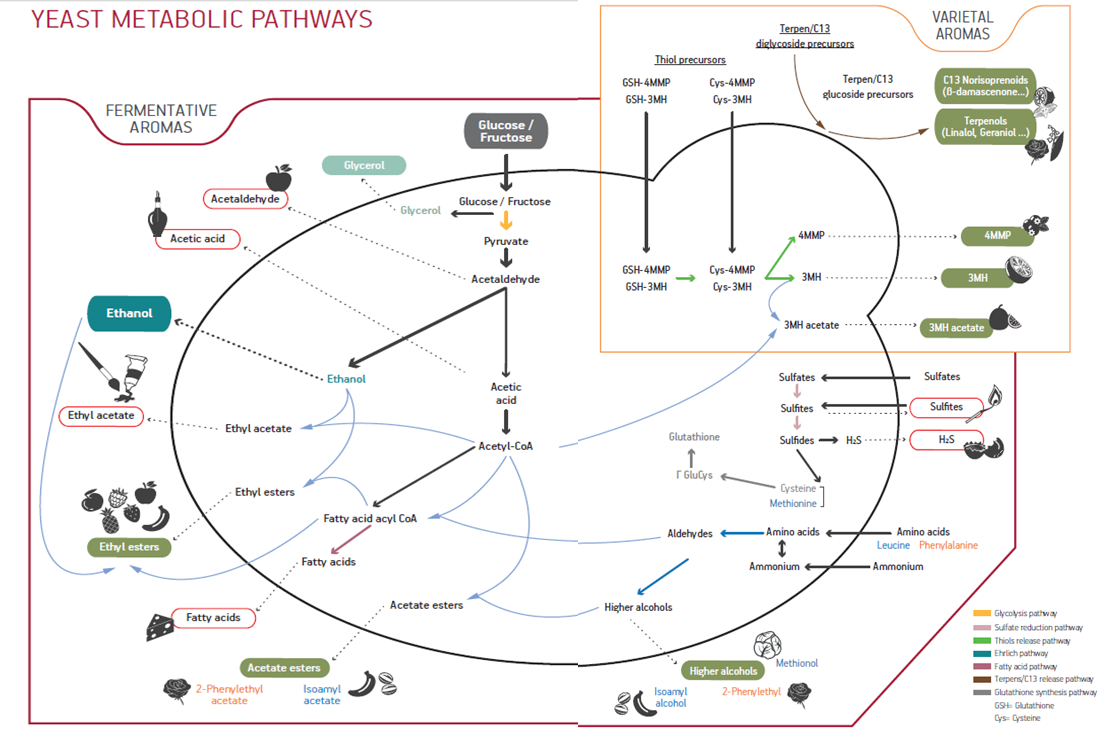
Wine is the result of the fermentative activity of yeasts and bacteria. The microbiota of grape juice fermentation can vary significantly as over 40 genera and 100 different species of yeast have been isolated from grapes or wine. The genus Saccharomyces is the one that interests most winemakers. The S. cerevisiae and S. bayanus species have indeed been found capable of dominating and conducting the alcoholic fermentation with S. cerevisiae being the more prevalent. However, other yeast, collectively known as non-Saccharomyces yeast, and bacteria may also contribute to the aroma and flavor profile of the wine. There are two basic types of wine production practices with respect to management of the microbial populations: indigenous and inoculated (deliberate addition of pure cultures of selected microorganisms). There are two main reasons for the inoculation of selected yeasts: 1. The rapid dominance of the fermentation by a high population of Saccharomyces spp. which minimizes the cont
00
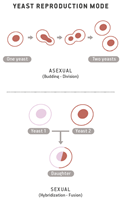
As Fermentis launched two new hybrid strains on the market, it can be useful to remind ourselves what hybridization is - both to demystify the term (so that everyone understands what it covers) and to clarify what winemakers can expect from it. And no less importantly, to explain why Fermentis chooses to invest time and resources to it and consolidate valuable partnerships.
A reproduction method as old as the world
“Hybridization” is simply the production of offspring from the union of two different parents (from the same specie - intraspecific hybrids or from different species - interspecific hybrids). It is a widespread phenomenon, more common amongst the plant kingdom than in animals. Yeast, together with mushrooms and molds, occupies a place between the plant and animal kingdoms reserved for “fungi.” Like all fungi, yeast has asexual and sexual reproductive cycles. Yeast is most commonly the result of the asexual cycle (asexual because reproduction is the
00