
Filter Post Type
NewsVideoProductEventLink
Sort:
Most Recent
1–10 of 17
March 2, 2026

Fruitful Innovation Can Lead to Tax Benefits Napa has never had the luxury of standing still. This valley adapts. When the weather shifts, growers adjust. When consumer preferences change, winemakers experiment. New rootstock. New clones. Different planting locations. New production techniques. Reinvention here is not a trend. It is how we survive. That is innovation. And in many cases, it is also research. We are not talking about changing a label design or launching a new club tier. We're talking about the real technical questions you wrestle with in the vineyard and the cellar: Can this new grape clone handle higher temperatures? Will adjusting canopy management reduce sunburn without sacrificing ripeness? Can we modify fermentation to improve stability or manage alcohol levels? Is there a way to produce a non-alcohol option that still feels like wine? When you do not know the answer and you run trials to find it, you are eliminating uncertainty. You are experimenting. You are
00


The conversations I have about quality tend to focus on red wine. This is especially true in California, where Napa Cabs have historically garnered high prices, followed up by Coastal Pinot noirs and red Rhones. Honestly, in most places I’ve been where the climate allows for ripening red grapes, the reds are the main event with the whites being more of a warm-up act or even an afterthought. As a result, we know a lot about how to grow red grapes for quality – and less about how to grow whites. Consumer tastes are shifting though, and the big reds of yore are taking a back seat. Drinkers want lower alcohol wines with a lighter style and wineries are taking fewer risks with wine they can turn around in under a year. As a result, white varieties are in hot demand. If you’re a grower who can’t sell your grapes, you may very well be considering grafting some of your reds over to white. So how do you grow a good white? In many ways whites are harder than their r
00

November 25, 2024
The fog along the California coast is alive — it flows from the Pacific Ocean up through passes in the protective coastal ranges and into the valleys like a tide. It rises into the hills and breathes before slowly receding to the valley floors and retreating through the mountains, across the sands and into the ocean waters. Toward the north, these fogs nurture the redwoods, and all along the coast, they provide relief from hot daytime temperatures for many wine country vineyards. The Niner Estate vineyards are near Paso Robles, about 20 miles from the Pacific Ocean. They are protected from the cold maritime winds by the Santa Lucia mountain range that parallels the coastline. One of the valleys the fog creeps through is the nearby Templeton Gap. For over a decade, Niner Wine Estates’ winemaker Patrick Muran has been crafting the Fog Catcher Bordeaux blend that he says is “named after the cool banks of fog we often see drifting over our vineyards on early mornings in
00
October 21, 2024

Panel: Areawide Management of Vine Mealybug and Leafroll Virus Sustainable Ag Expo | November 13 | 2:00-3:00 pm Dr. Kent Daane will be joined by a panel of expert growers from various California growing regions to discuss the challenges of areawide management of vine mealybug and leafroll virus. Get Tickets! --- Dr. Kent Daane is Professor of Cooperative Extension Specialist in the Department of Environmental Science, Policy and Management, University of California, Berkeley, CA. He has laboratories on the Berkeley Campus and at the Kearney Agricultural Research and Extension Center, where his lab works on the development of integrated pest management (IPM) and sustainable agriculture programs for insect and mite pests of perennial crops. Research to improve and extension to implement insect pest management are his primary objectives and, to this goal, he has delivered 100s of presentations and co-authored numerous publications. Biolog
00
March 12, 2024

Ecosystem Science combines biology, chemistry, and physics to model and predict responses like wine grape yield forecasting, water management, and disease vector mapping. Joshua Fisher, Associate Professor of Environmental Science & Policy, at Schmid College of Science and Technology, Chapman University, and science lead at Hydrosat explains how high-resolution data from space helps farmers plan for climate change. His research uses satellites to help growers understand how to change their practices to succeed in their current location and predict future winegrowing regions around the world. LISTEN IN Resources: 199: NASA Satellites Detect Grapevine Diseases from Space 191: CropManage: Improving the Precision of Water and Fertilizer Inputs Hydrosat Joshua Fisher Joshua Fisher on LinkedIn Joshua Fisher on Twitter Martha Anderson, Research Physical Scientist, USDA-ARS NASA Acres - applying satellite data solutions to the most pressing challenges facing U.S. agriculture
00
February 8, 2024
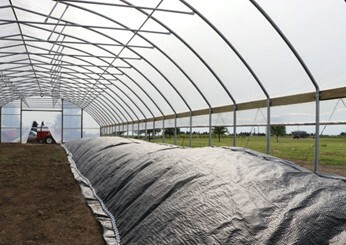
Did you know that soil steaming increases yields, saves money and is organic? Soil steaming is catching on across the ag business landscape. From commercial greenhouses and nurseries to vineyards and orchards, there are a surprising number of research-supported benefits to switching from chemicals and herbicides to steam. Some fascinating facts… Who can get steamed? Soil steaming will benefit many ag-businesses. To name a few: vineyards, tree farms, greenhouses, nurseries, vegetable growers, cannabis growers, hemp growers, ornamental growers, orchards & more. Soil steaming is far less hazardous, frees up labor for more productive activities, gets you planting faster, and can help improve your overall yield. Plus new technologies enable precise zone control so you always steam at the right temperatures. Soil steaming benefits. Weeds & diseases can become resistant to chemicals over time, but steam will always remain effective. Supports Organic growing A commercial s
00

December 13, 2023
Coming soon: A new beginning. A new name: Novonesis We are happy to announce that Novonesis will be the new company name for the future combination of Novozymes and Chr. Hansen*. The name means 'A new beginning' derived from the Greek word 'genesis', which means 'beginning'. Together, we will start an era of biosolutions to help solve some of the biggest challenges facing humanity – using biology. *The name Novonesis will be used once the proposed combination is completed. We expect that to take place in the first quarter of 2024 following regulatory approval. Until final merger control approvals are received, and the proposed combination completes, Novozymes and Chr. Hansen operate as completely separate companies. Learn more about the name in the video below or in this press release.
00
September 11, 2023
We are thrilled to announce Dr. Terry Bates as our headline speaker this year! Dr. Bates is Director of Cornell Lake Erie Research and Extension Lab Cornell AgriTech. He will speak about integrating multiple layers of spatial vineyard information into variable-rate management maps and the myths, misperceptions, and motivations for precision vineyard management. His research program focuses on viticulture with an integrated systems approach to vine productivity, fruit quality, and farm profitability. Research interests and contributions include vine mineral nutrition and root biology to control vegetative growth, mechanized vineyard management for fruit quality and labor reduction, and Precision Viticulture to increase production efficiency. Read more about Dr. Terry Bates, his experience, and articles HERE. Get your tickets for the Sustainable Ag Expo HERE.
00
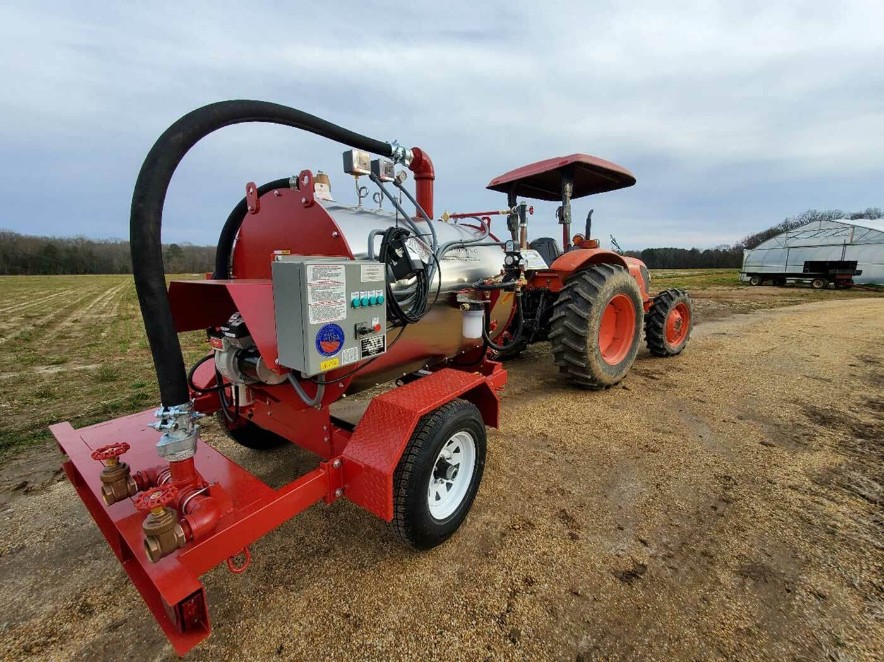
You’ve got weeds you need to get rid of, whether it’s vineyards, company landscaping or other sensitive areas. But you don’t want to use herbicides, pesticides or any other chemicals. What’s a body to do? If you’ve got a steam cleaning machine, aka a steam generator, you can actually turn it into a safe and effective chemical-free weed killer. It’s all about… …A safe, organic solution to weeds Weeds are a major hassle for landscape managers, property owners, gardeners, nurseries, greenhouses and farmers. Mulching and digging works only temporarily, but are labor-intensive and gobble up time which could be better used elsewhere. Herbicides come with environmental and health issues. Steam cleaning can also be used for soil pasteurization for greenhouses and nurseries. Steam weeding is chemical-free and 100% organic, posing no danger to humans or the environment, and comes with other benefits. It’s the smart choice solution. Cook
00

Dr. Anne Fennel is a Distinguished Professor at South Dakota State University. Academic Interests/Expertise: Grapevine bud dormancy and cold hardiness Grapevine Genetics and genomics Plant Physiology and Molecular Biology Dr. Barry Gump is the Harvey R. Chaplin Eminent Scholar Chair in Beverage Management at Florida International University. Academic Interests/Expertise: analytical methodology applied to grapes, juices, and wines Beer, Wine Consultant, Wine Judge
00