

March 1, 2026
“We are excited to partner with Andavi to provide more solutions to our customers and provide more growth opportunities for our entire team,” said Doug Hoogervorst, CEO of Tradeparency.Press Release | Andavi Solutions Acquires Tradeparency

Andavi Solutions, a beverage alcohol software company, has acquired Tradeparency, a leading industry pricing solution. Read more now!
March 1, 2026
Without the right tool to accurately track and optimize promotions, trade spend, depletion allowances, and individual markets, your winery could be struggling to reach the necessary profit margin to cover each tier of the sales process.Choosing the Right Wine Pricing Tool | Tradeparency

The profitability and brand integrity of your winery ties to how you manage your pricing. Learn how to select the wine right pricing tool.
March 1, 2026
The Forgotten People: Wine Pricing Challenges for National On-Premise AccountsWine Pricing for National On-Premise Accounts | Tradeparency

National account managers are the key to greater distribution, yet they are often the forgotten people in wine pricing management. Read more.
March 1, 2026
You Won’t Hit a Target You Can’t SeeIf you’re like me, the first thing you’ll think reading this title is “you can’t know that; people hit invisible targets by mistake all the time!” Touché. Can we move on, smart aleck? (Takes one to know one.)
A lot of wine and spirits brands are doing the professional equivalent of heading to the gun range blindfolded, with high hopes to grow their business year over year. The lunacy is less apparent only because the BevAlc business isn’t a matter of life and death—at least not what Peter Attia calls “fast death.”
We romanticize hustle: more accounts sold, more calls made, more activity. But activity without visibility isn’t strategy — it’s superstition.
Until recently, wine & spirits suppliers operated with a very limited view of what was happening on the ground: depletions delivered on a monthly basis, already outdated. Account-level insights? Rare. Shared priorities between supplier and distributor teams? Aligned in theory, but it’s mostly pageantry due to every distributor’s sheer lack of resources in the face of thousands and thousands of supplier partners.
That changes with BevPath.
For the first time, both sides of the 3-tier handshake can see the same field in near-real time: which accounts are driving lift, which actions correlate with volume, where by-the-glass placements are pulling weight — and where opportunity is gathering dust.
🎯 BevPath lets you:
- Sync supplier + distributor targets (finally)
- Share execution data in both directions
- Direct your reps’ efforts where ROI has demonstrably stemmed from those activities
Less guesswork. More alignment. Greater impact. Because if your team’s going to take the shot, you owe them a clear look at the target, at bare minimum.
Reach out to bevpath@andavisolutions.com to explore what BevPath could do for your sales this OND.

March 1, 2026
Breaking the Spell: Why Your Product Isn’t Enough and How Technology Can Transform Your Sales
If you are happy with your current sales level and are on track to hit all of your depletion and revenue goals in 2024, this article is not for you. Just hit your back button and return to whatever you were busy doing before this headline caught your eye.
But if growing your sales and hitting your goals are high on your list of things that occupy your waking (or supposed-to-be-sleeping) hours, please read on.
Why a Great Product Isn’t Enough to Achieve Sales Success
Here is an interesting observation: Most wine and spirits companies need to grow their sales. Some of them quite desperately. The typical methods they deploy to attack this objective almost always involve the same twelve things:
- Craft compelling stories to sell their products
- Emphasize the features and benefits of their products
- Pursue awards and accolades
- Spend small fortunes on social media and influencer marketing
- Spend even larger fortunes on brand awareness
- Pursue liquid-to-lips opportunities
- Conduct market blitzes
- Create incentives for their distributors
- Spend time and money on educating others about their products
- Send out promo emails like a curtain of fire
- Run FB and IG ads attempting to stimulate eCommerce purchases with a “buy now” CTA
- Attend tastings and events
But notice what is conspicuously absent from this list: leveraging technology and data.
This is woefully imprudent because leveraging technology and data will yield FAR more excellent results than any of the items listed above.
And the reason for this oversight is an intense focus on the product itself.
It's an easy mistake to make.
After all, wine is sexy. Whiskey is seductive. Vodka is silky. Mezcal is smokey. Prosecco is sweet and sparkly. Gin is sophisticated. To NOT talk about these products, you have to tear yourself away from them!
Traction Tramples Tradition
Most wine and spirits salespeople (and marketers) believe if consumers and trade knew more about the product (who made it, where and how it was made, etc.) and had an opportunity to taste it, they would purchase it.
This seems logical on the face of things, but the product, no matter how differentiated and delicious one might think, is simply not enough to sell it successfully. It takes so much more than that.
The “Product” is only one of the five Ps of marketing. By focusing disproportionately and narrowly on the product itself, you risk de-leveraging the OTHER four P’s:
- Price
- Promotion
- Place
- People
And it's in relation to these four Ps that technology and data shine.
Accelerating Sales with the “Other 4 P’s”
Whether you like it or not, you operate in one of the planet's most complex and competitive consumer product categories.
It takes more than a great product to win the sales game.
There will be winners and losers in 2024. If you want to be on the winning side, pay close attention.
The good news is that the data will tell you about everything you need to know. The bad news is that it’s neither fun nor sexy.
The good news is that technology will allow you to scale, leverage, and propel your sales success to unimaginable levels and leave your competitors in the dust. The bad news is that your heart rate will remain unaltered.
Advisory: some readers may experience a cold and dispassionate reaction to the remaining content of this article.
Pricing
Question: Who wants to talk about pricing?
Answer: Just about nobody.
Try this experiment: The next time you host a wine dinner, stand up and say, “OK, let’s talk about the pricing strategies for this wine as it relates to brand equity and profitability.”
Nevertheless, let’s try to make this topic as concupiscent as possible.
Pricing is powerful. Pricing drives performance. How well you plan, measure, analyze, collaborate, and systematize your pricing strategy is directly related to your level of sales success.
Pricing will make or break your brand’s performance. Pricing is precise. Pricing is not to be taken lightly.
Your pricing strategy can be used to increase profitability, boost sales, strengthen your pattern relationships, optimize efficiency, and gain valuable insights into the marketplace.
The right pricing technology lets you effectively plan, analyze, optimize, and promote your brand.
Promotion
The intense competition in our category causes many wine and spirits brands to behave foolishly and imprudently regarding their promotional spending.
With wild-eyed enthusiasm and visions of grandeur, we love to promote aggressively. Drive that price down! Stimulate trial and purchases! Yank that product off the shelf! Drive those distributor salespeople into a selling frenzy!
But how much time and energy do we spend analyzing the return on investment of these promotional programs? Very little, indeed.
The problem is that this is simply too much work without a robust technology solution!
All that manual data entry, emailing spreadsheets back and forth, and the sales department running wild without collaboration with the finance department.
And who has the TIME to conduct post-promotion analysis? We’ve got to get busy launching the next promotion! This shoot-first, ask questions later is rampant.
“We made fourteen new by-the-glass placements!” Congratulations, but what did it cost us per case? “We moved 28 cases!” Marvelous, but at what level of profitability?
“Do you want me in the office crunching numbers or our selling?” the sales team asks. It’s a great question. Who in their right mind would leave this analysis up to the sales team? But it happens every day of the week.
Technology is the answer to ensuring your promotional spending returns BOTH the volume performance you desire and the profitability you need.
Place
All can agree that sales success is about the right product in the right place, time, and price.
If this is true (and it most certainly is), then why are most salespeople allowed to run willy-nilly throughout the market armed with nothing more than their own intuition to guide them in the accounts they choose to target?
But it gets much worse. Most sales leaders urge their people to call on as many accounts as possible each week, acting under the grossly misguided belief that more sales calls equals more sales.
This reckless disregard for the Pareto Principle is the norm for most sales organizations in our industry. This more-is-more approach is the single largest reason most wine and spirits companies aren’t consistently achieving their sales goals.
What is needed is a much more empirical approach. One that is driven by data. The data will tell you where to hunt. The key to high levels of sales performance is a disciplined adherence to the 80/20 Rule.
In fact, according to the 80/20/30 rule (found in Jeff Thull’s masterpiece, Mastering the Complex Sale), any time spent in the bottom third of the account base is guaranteed to cut your sales potential in half. HALF!
So, technology comes to the rescue in two ways:
- The data is used to identify the richest target accounts in any given sales territory.
- The disciplined use of a CRM system to manage the opportunity pipeline and provide a clear line of sight to it.
Place is not just important; it’s paramount! And only technology and data can unlock the highest levels of sales performance.
People
Ask most salespeople what the #1 key to sales success is; they will tell you, without exception, “relationships.”
But things quickly start to break down when asked about the best way to manage and foster relationships.
It is tragic but true: too many salespeople are hired based on their personality and charm—essential traits, to be sure. But what separates the exceptional performers from the rest of the pack is their ability to provide flawless follow-up to their customers. To these sales superstars, details matter.
Most salespeople resist using CRM because they think it’s a waste of time and too big-brother-ish. But the best salespeople embrace it because it enables them to
- Make more efficient use of their time (every salesperson’s most valuable asset).
- Close more sales faster.
- Close bigger deals.
- Eliminate written call reports.
- Improve retention of the placements they’ve worked so hard to achieve.
- Provide superior customer service.
- Crush their sales goals and cash bigger bonus checks.
- Automate, reduce, or eliminate manual repetitive administrative tasks.
Don't blame the CRM system if you are struggling with adopting CRM in your sales organization.
The “People” part of the 5 Ps isn’t just about the people making purchase decisions; it’s about the people you have on your sales team. And that includes your sales leaders.
Wine and spirits companies that consistently achieve their sales goals leverage technology in their sales processes and hire people who know how to use these systems and see value in them.
Top salespeople want CRM. It empowers them. They embrace it. They leverage it.
The “Sexiness” of Technology is in the Eye of the Beholder
Everyone who’s read this article faces two critical choices:
- Continue to embrace a product-focused approach to sales
- Learn to love and leverage data and technology to accelerate your sales in a disciplined way.
Times have changed in this industry. In many ways. You can run with the big dogs or get up on the porch with the puppies.
Consistently nailing your sales and profitability goals is completely within your grasp. But it requires the tech chops to do it.
Need help? We don’t produce wine or spirits, but we sure know how to sell them. Click here to schedule an appointment to talk with one of our sales technology experts.
https://www.linkedin.com/pulse/breaking-spell-why-your-product-isnt-enough-how-technology-lni7c/
March 1, 2026
12 Things Distributors Do for Their Supplier Partners (but Don’t Always Get Credit)
Wine and spirits distributors do not always get full credit for their myriad of services offered.
With portfolios bursting at the seams, their role in the 3-tier system is difficult. We at Andavi Solutions would like to recognize some of the critical functions distributors perform on behalf of their supplier partners.
1) Training and Education
Distributor sales teams include some of the most highly trained professionals in the industry.
The training opportunities distributors provide are not solely for internal stakeholders. They also play a critical role in the education and training of their supplier partners.
It is sad but true to say that many brand owners do not properly train their people, and by default, distributors end up picking up the slack.
Another vital area of training distributors provide is forecasting and inventory management (more on this below).
Distributors do a lot of staff training (far more than most suppliers), and they don’t always get due credit for these efforts. The tools exist, however, to bring perfect visibility to all of this activity!
As a side note: Legal issues are one of the most glaring gaps in education distributors provide to their supplier partners. Many suppliers do not know the laws of each state as well as they should. This often results in supplier representatives saying and doing things that violate the law.
2) Market Analysis and Insights
Distributors possess significant information about the markets they service, especially regarding what sells and what doesn’t.
They often find themselves needing to temper suppliers' expectations around what kind of growth potential exists for each product category, price tier, and trade channel.
Suppliers everywhere would do well to listen to and heed this guidance to collaborate with their distributors more effectively.
Trends come and go, but rest assured, the distributor is typically the best and, sadly, most ignored resource for accurate market and category insights suppliers need to reach their sales goals.
3) B2B eCommerce and Online Supplier services
In the last five to six years, distributors have made significant leaps in their ability to manage “the long tail” of distribution more efficiently, and more and more, this requires a digital approach.
Here are just a few of the areas where distributors meet the demand for digital B2B services:
- Online ordering platforms allow customers (retailers, restaurants, and bars) to place orders online.
- eCommerce integrations: many wholesalers integrate their digital ordering platforms with their customers’ eCommerce systems and provide accurate product listings and pricing on their websites.
- Mobile apps: enable order replenishment, product availability, and notifications about promotions and new arrivals.
- Supplier portals: These portals enable access to sales data, monitor inventory levels, and collaborate on marketing initiatives and promotions.
- CRM and Customer Support: Many distributors use CRM systems to manage customer and supplier partner interactions. They are often willing to share the data from these tools if the Supplier has the means to ingest it.
- Compliance and Regulatory Tools: Distributors may provide tools to help customers and suppliers comply with various regulatory requirements such as labeling, tax reporting, and alcohol distribution laws.
- Digital Marketing Support: Distributors often assist supplier partners with digital marketing initiatives, including social media campaigns, email marketing, and online promotions to help boost product visibility and sales.
- Order Tracking and Delivery Notifications: To keep customers informed about the status of their orders and expected delivery times.
By offering these digital B2B services, wine and spirits wholesalers aim to enhance efficiency, improve customer satisfaction, and strengthen their relationships with customers and suppliers in the competitive beverage distribution industry.
4) Inventory Management
Distributors utilize sophisticated inventory management systems to manage stock levels. These systems can also provide insights into product trends and purchasing patterns.
A surprising number of supplier partners do not fully utilize their distributors' capabilities in this area. Or worse, they ignore the distributors' guidance on how to help them keep their inventory as low as possible while eliminating out-of-stock situations at their warehouses. Instead, supplier partners insist on large shipment volumes to make fiscal numbers and provide large deal incentives to do so, introducing drastic inefficiency and cost into the system.
Supplier partners should regularly schedule brief check-in meetings to review key data points such as days on hand, daily rate of sale, and recommended orders. The ideal cadence would be to hold these brief meetings monthly or, at a minimum, once per quarter.
5) Supporting Under-represented Brand Owners
Most distributors place a very high value on DEI internally and externally.
One of the ways this priority is manifested is in how distributors go out of their way to make room in their book for the diversity of owners (especially startup brands) looking to gain access to diverse audiences.
A shining example of this is the Republic National Distributing Company. RNDC actively seeks to support underrepresented brand owners and vigorously pursues and supports associations like Diverse Powered Brands.
In general, distributors seek to make a difference in supporting Black-owned, minority-owned, and women-owned producers looking to scale their brands.
6) Strategic Partnerships
Wine and spirits distributors often form strategic partnerships with various entities to aid supplier partners and improve distribution networks.
These strategic partnerships cover a wide array, including:
- State-level retailer and restaurant associations
- Trade groups
- Technology providers
- Marketing and promotion agencies
- Industry research groups
- Colleges and universities
These partnerships are essential for ensuring that wine and spirits wholesalers can effectively distribute their supplier partners' products to a wide range of customers while staying competitive in a constantly evolving market.
7) Doing Good in Their Communities
Most distributors actively raise money for various local and national charities and directly donate to them.
For example, Empire Merchants in New York contributes products and monetary donations to more than eight charitable organizations, including hospitals, youth organizations, food banks, and LGBTQ foundations.
Another area of philanthropy that distributors engage in is providing various scholarship opportunities.
In 2023, RNDC raised over $1 million in support for the Prostate Cancer Foundation!
8) Multi-state Partnerships
Most suppliers are certainly aware of the coverage and reach of the largest national distributor companies. But, not all understand and appreciate the vast array of distributors that offer multi-state partnerships on a smaller scale.
The benefits to suppliers and brands of these multi-state wholesale companies are many, including:
- Market access
- Efficient distribution
- Expertise and resources
- Regulatory compliance
- Negotiating power
- Cost savings
- Scale and volume
- Portfolio synergy
- National and international expansion
- Financial stability
It's important to note that while there are clear advantages to working with large, multi-state wholesale companies, there are also considerations such as contractual agreements, fees, and competition for attention within their portfolios.
Careful selection and management of distributor partnerships are crucial for maximizing the benefits and achieving your brand's goals in the wine and spirits industry.
9) Championing Small, Emerging Brands
More and more distributors are looking for ways to support the smaller, emerging brands. They instinctively understand that today’s emerging brands are tomorrow’s “mega-brands.”
They offer guidance and mentoring to brands they see as having enormous potential. They simply cannot accommodate every new brand that pops up on the scene, but they do their best to put processes in place to evaluate and “vet” new brands entering the already crowded supplier landscape.
One way this takes shape is the development of new selling divisions created specifically for small, emerging brands.
Another service many distributors provide is an online portal where new brands can apply online (submit their proposals for consideration).
Different distributors offer support and services for new brands looking to enter their market. These online application processes make it easier for new brands to get started.
10) Improving Efficiency and Streamlining the Supply Chain
Tremendous investments have been made in platforms, infrastructure, and systems to automate and streamline the supply chain. All tiers benefit from these high-tech tools, but too few suppliers know they exist.
Given the ongoing supply chain disruptions in bottling, importing, warehousing, and shipping, distributors' efforts to improve these systems should be celebrated.
Some of these new systems include:
- Partnerships with transportation companies
- Planning and procurement software
- Improved analytics tools enable better forecasting
- More transparency in communication between tiers
- Warehouse visibility
Because alcohol must adhere to strict compliance policies, the distributor tier is uniquely positioned to assist its supplier partners with these potential disruptions in the supply chain.
11) Data Collaboration
The wine and spirits industry increasingly uses big data from various sources to make more informed decisions.
America's wholesalers are sitting on mounds of data, and most are beginning to make this data more actionable for their supplier partners.
Suppliers can better understand and leverage their distributors' data by leveraging integrated software solutions like BevPath.
The current technology exists to bring your entire distribution team to the table!
12) Brand Promotion Assistance
Today, distributor capabilities regarding email marketing, social media, and graphic design are more sophisticated than ever. But, it’s surprising how few supplier partners avail themselves of these high-tech services.
These services are provided by small and large distributors alike. Most boast a state-of-the-art graphic design department and experienced merchandising professionals who help their suppliers create custom marketing campaigns and materials that help their brands stand out in a crowded marketplace.
But despite this widespread support from distributors of all sizes, stories abound about distributors dragging their suppliers, kicking and screaming, to utilize their tools and resources like:
- Wine and cocktail menu printing
- Market-specific point-of-sale materials
- Access to and involvement in high-exposure events like rodeos, wine festivals, auctions, and trade shows.
Giving Credit Where Credit Is Due
There are certainly more than twelve ways distributors can and do support their supplier partners! It often goes unnoticed because so much of it occurs behind the scenes.
Andavi Solutions is fortunate to have clients operating in multiple tiers of the industry, and we are eager to continue enabling the players in those tiers to work together ever more effectively.
https://www.linkedin.com/pulse/12-things-distributors-do-supplier-partners-dont-always-w70sc/
March 1, 2026
Profitable Promotions: What’s the ‘Three in Three’ Rule?With finance endlessly hunting and pecking for data while sales scrambles for approvals on their ‘gut’ guess for the best pricing models and incentives with a distributor, it’s no wonder that planning and executing successful promotions are often a WAG.
The problem is – while you can get lucky or play mediocre odds on accidental wins, only accessible data, accurate numbers, visibility into performance, and the ability to execute quickly in the market can help you turn the dials on consistent, repeatable profitability through promotions.
It’s time to implement and execute on the Three in Three rule.
What is the Three in Three rule exactly? It’s a tried and true, simple, three-step looped approach to promotions in the three-tier wine industry:
- Track
- Plan
- Automate.
To elaborate, this means, you need to:
- Centralize and govern collecting the outcomes of absolutely trade programs and promotions, such as by-the-glass (BTG), depletion allowances (DA’s), free goods, incentives, and samples. (Track).
- Use the tracked performance data from above to create profitable promotional models at any level from the most comprehensive view of your trade program performance. (Plan).
- Auto approve promotions and pricing incentives for sales to submit and activate anywhere while working with distributors. (Automate).
Chances are your current pricing systems, manual processes, and Excel spreadsheets don’t allow you to execute on Three in Three easily or effectively. After all, this proven, circular triad approach hinges on technology that enables centralized, governed, and accessible data.
So, how can you get started? Check out Tradeparency.
See a full demo of our full-cycle trade management solution on-demand:
March 1, 2026
How to Sell All of Your Wine or Spirits – by Ignoring Most of Your Account Universe
80% of Your (Unsold) Accounts Don’t Matter – So Stop Calling on Them
Don’t worry; we’re not going to write another article arguing that the majority of your sales volume comes from the top handful of your accounts; we’re not sure we could even locate that poor horse’s cadaver at this point. We’re more interested in the practical implications of the 80/20 rule: the “So what?” part of this equation – how do we use this knowledge to sell more wine & spirits?
Sales Resources are Limited; Limit Account Targets Accordingly
For any hope of success selling all of your inventory, you must first acknowledge the salesperson’s scarcest asset: time.
Novice sales teams take a shotgun approach with the goal to win as many placements in as many accounts as possible. This sounds logical in the abstract, and would work great if it resulted in high volume; instead, unfocused activity generates a lot of one-off (time consuming!) sales that don’t stick.
Many well-intentioned teams spend their time touching high numbers of accounts because it feels productive. Any self-aware salesperson knows that it’s easier to defend oneself in a “Did you do anything this week?” meeting with a ton of activity to show for their paycheck. Maximum sales activity looks impressive in the short term, but leads to failure in the long term. Why?
Jumping from prospect to prospect and racking up numbers leaves little time to research and intimately understand your buyer’s needs. The result is a bunch of unhappy customers: more placements with higher churn, a disconnect with your end consumer, and an overall shallow impact in the market.
Sales teams who fail to devote their limited attention to a clearly defined target list of accounts ultimately fail to deliver the desired result: an empty warehouse and a bunch of revenue. So how do you avoid the trap of activity obsession and accept instead the counterintuitive constraints of the Pareto principle to grow your business?
Identify Your Target Accounts
If you want to sell a lot of wine & spirits through traditional channels, you’ll need to create (and dynamically narrow down) a key account target list – really, a few lists broken down by premise (on/off), by market. You’ll need to think more like a sniper.
Coming up with this list is one thing – and hard work, at that – but actually sticking to those account targets with any real discipline is another rarity altogether. Out of the few suppliers that do decide to research and target a narrow subset of accounts, fewer still succeed in directing their sales team’s time and energy into only the pursuit of meaningful relationships within those accounts.
Until recently, beverage brands have been reliant on whatever account information they can dig up through various means of research online, in-person scouting, subscriptions like Nation's Restaurant News, GAYOT, Eater or Zagat, and whatever limited visibility their distributor offers through data brokers. Fortunately, alternative lines of communication between supplier and distributor are being opened, allowing for more granular account attributes to be shared, including qualifiers like whether there’s a cold box or grab & go options at checkout, POS info, percent of shelf, etc.. – saving valuable time by providing a narrower list to begin with.
Gain Visibility Into Key Accounts
In addition to serving, empowering, and protecting one’s team – a sales leader’s primary function is that of analyst, identifying promotions worth repeating (or retiring) and providing the beta (to use a climbing term) their team needs to win in key accounts.
While depletions and retail account data (RAD) provide some visibility into what’s actually happening in key accounts, they’re really just lagging indicators of success: a view into the past. The best CRM tools are able to integrate an automated depletion feed and use business intelligence tools like GoodData to report that data side by side with sales activity at the account level to determine which among those activities is actually responsible for the greatest lift in sales volume. If, for instance, you tend to see a lift in sales everywhere that you land a by-the-glass or cocktail menu placement, identifying gaps – accounts where you don’t yet have those placements – gives you the strategic oversight to deploy your sales reps’ time to maximum effect.
This practice of identifying leading indicators of success – incentivizing activities that have a proven track record of driving volume – is the secret sauce that alchemizes our teams’ efforts into revenue.
Execute in Lockstep With Your Distributor Partners
Given today’s unworkable bottleneck – i.e., too many suppliers and far too few distributors – and yesterday’s long-obsolete strategies – e.g., trying to manage the distributor in hopes that they’ll magically grow their capacity – suppliers must turn instead to new competitive advantages and iconoclastic solutions.
Here’s where key account target lists and timely data come together. Not only is it easier and faster than ever for suppliers to gain unprecedented visibility at the account level by seeing what the distributor sees, but contemporary tools like BevPath have also made it possible for suppliers to work in lockstep with their distributor partners, coordinating their sales teams to execute against agreed-upon targets and measure the outcomes.
In the thick of the pandemic, we quietly rolled out an innovation enabling our supplier partners to send KPIs to their distributors in the form of survey questions for the distributor reps to execute against at the account level, reporting the results back. We’ve turned what has lately become a one-way street – outdated distributor-generated reports pushed to the supplier at regular intervals – back into the two-way partnership that the supplier<>distributor handshake was always intended to signify.
Strategy Eats Hope for Breakfast
Fancy digital solutions make things a whole heck of a lot easier, but in the end, no matter what tool fits your budget, the basic principle remains the same; tracking, refining, and ultimately optimizing your presence in a few carefully selected accounts – to the neglect of every shiny new toy that enters your team’s periphery – is the path to prosperity for beverage alcohol suppliers in this hyper-competitive market. You have to know your customer, understand why you’re a part of their lifestyle, and meet them where they are, just the way they prefer you.
March 1, 2026
9 Questions to Know if You’re Able to Price Your Wine CorrectlyAre your three-tier pricing management tools and processes giving you the ability to price your wine and evaluate trade spending correctly? After all, tracking, optimizing, automating, and reporting on all your DAs, trade spending, and promotions is how you’ll stay competitive, protect your brand, and ensure a healthy bottom line.
To help you determine if your workflows, infrastructure, or governance allow for efficient and profitable pricing management, Tradeparency’s industry data experts compiled 9 initial questions to ask and answer internally.
These will help you reveal where you may have gaps in the complete cycle of your pricing management or what could be preventing you from pricing for profit effectively in the three-tier market:
- How do you track and analyze approved deals by product, date, region, or distributor?
- Can your sales managers access price grid reports on-demand?
- What is your process for handling exception-based managerial approval of new deals?
- Do your current pricing tools base depletion allowances and chargeback invoice reconciliations off third-party depletion numbers only? Are you able to reconcile against actual approved deals and invoices?
- Do you have tools that integrate seamlessly to cover everything in the cycle of trade promotion management, not just pricing alone? For example, claims/collection, accounting, reporting/analysis, and promotional planning?
- Are you able to support and enforce supplier-controlled billback pricing versus only distributor-to-supplier-controlled billback pricing?
- How do you track and execute pulse deals?
- What is your workflow for approving deals? What is manual in this workflow versus automated?
- Are your trade/pricing management tools and processes integrated with your ERP or accounting system so you can work with common codes, invoices, credit memos, etc.?
Once you have rough answers to these questions, you can begin building a clearer picture of your organization’s pricing management and recognize any inefficiencies or identify opportunities that can significantly boost financial, brand, and operational performance.
To expand further on this exercise, download Tradeparency’s free Evaluation Checklist for Wine Pricing Management Software. It includes a self-service guide to appraising various pricing management processes and tools in your winery or import business to match your needs.
Once you’ve gone through the internal exercise with the questions above, you can take the checklist for a spin in a no-cost, personalized Tradeparency demo.
March 1, 2026
The Tech Revolution in Wine & Spirits Sales: 9 Ways to Adapt and Thrive in Tomorrow’s MarketThe changing landscape of sales
Nearly every advancement in professional selling is due to the use of technology. When you fold in the rapid evolution of consumer behavior - such as independent online research and social media - you have a perfect storm that will leave most salespeople bobbing precariously in the wake of forward progress.
This article is intended as a wake-up call to all sales professionals in our industry. Salespeople who are comfortable with and proficient in using digital tools will reap significant advantages compared to “traditional” salespeople.
The reward for the tech-savvy includes higher productivity and better customer insights. Adaptability is an attribute that will become increasingly prized as time goes on.
Traditional versus modern sales methods
Historically, most salespeople rely on ‘traditional’ means of selling. We are all familiar with these common methods, such as:
- Face-to-face appointments with samples in tow
- Phone calls and text messages
- Selecting target accounts by “intuition” and gut feel (instead of hard data)
- Sales by volume approach (instead of leveraging 80/20)
But this “analog” method of operating simply won’t cut it as we move into 2024. It’s become too competitive!
While not entirely bad, these methods are extremely limiting. What sales leader or business owner would intentionally put an inefficient, ineffective sales team on the field?
The fatal weakness of wine & spirits selling
While it might appear we are being melodramatic here, there is indeed a fatal weakness, and it is this:
Being overly obsessed with the product itself
There it is. We said it out loud.
Everyone reading this article knows exactly what we are talking about here. The focus on the product (how it was made, who made it, what it tastes like, etc) is intrinsically inseparable from the sales process.
We’d go so far as to say some people cannot sell wine or spirits any other way.
While there’s nothing inherently wrong with this approach, it does have two fatal flaws:
- It is not very efficient
- It is not scaleable,
Sales success in the future will depend on leveraging the use of technology.
The gap is growing!
Before diving into the specifics of how to leap into the future, let’s briefly touch on this important observation: the gap between ‘analog’ selling and ‘tech-enabled’ selling is growing fast.
Worth noting here is we are not advocating to stop face-to-face selling completely but rather augmenting it.
When it comes down to it, there are only two ‘assets’ every salesperson possesses: their time and the goodwill of their customers.
Sales success is highly dependent upon the efficient use of time. Time is precious, but it is also leverageable.
This concept of ‘leverage’ is mission-critical. Doing more with less. Being ruthless in using one's time is the key to accelerating sales success. We love this quote from The 4-Hour Workweek: “Being busy is a form of laziness - lazy thinking and indiscriminate action. Being overwhelmed is often as unproductive as doing nothing and is far more unpleasant.”
Heading into 2024 and beyond, there are nine things every wine and spirits salesperson will need to know:
1. Expert use of CRM
CRM is the perfect tool for salespeople who want to achieve outstanding sales results. Effective use of CRM empowers salespeople to sell more.
The core functionality of CRM has four key benefits for salespeople:
- It saves precious time
- It allows documentation and visibility of communication and simplifies prospecting
- It helps to streamline the sales into a repeatable process
- It dramatically improves customer retention
In the right hands and with the right training, CRM does not replace sales efforts; it enhances them.
One of the most practical things you can do is learn more about how CRM helps salespeople sell more effectively.
2. Social Selling
Today, too many salespeople see social media as the realm of influencer marketing and obsessive self-aggrandizement. Most never consider what a powerful prospecting tool social media can be. It can also be a mighty force for building relationships at scale.
Social selling (also known as ‘virtual selling’ or ‘digital selling’) has evolved from using social media as we have typically come to view it.
Social selling is about unlocking an entire digital ecosystem, one that can amplify and augment a person’s sales efforts.
Take LinkedIn, for example. LinkedIn is not just a platform for the unemployed. It has become one of the most powerful networking and prospecting tools on the planet.
A complete, well-curated presence on LinkedIn becomes a strategic method for sellers to connect and build relationships with prospects.
Actively engaging with prospects on LinkedIn is an effective way to develop connections, build trust, and develop impactful relationships.
3. Basic category management
Category management is not solely reserved for selling in the off-premise trade channel.
The efficient use of resources is at the core of sound category management principles, and this concept naturally applies to on-premise.
Modern, tech-savvy salespeople understand the importance of going well beyond product knowledge by leveraging data and trends to serve customers better.
Now more than ever, restaurants and retailers must figure out how to do more with less. When salespeople primarily focus on how a product tastes, how it was made, and the story behind it who made it they fall far short of what the restaurant or retailer truly needs: how to grow revenue, control costs, and improve guest satisfaction.
Objective, data-driven business decisions should be prized just as highly as product knowledge certifications if sellers seek to add value to the accounts they serve.
While full-blown category management skills can be complex and intimidating, the basics need not be. Every salesperson worth their salt should understand SKU rationalization, assortment, inventory turns, sales mix, and market share.
4. Key account targeting
For a typical salesperson, the thrill of the hunt is what drives them. If a customer is not using their product, they feel it’s their job to get in there and close that account.
Most hiring managers look for this quality when selecting candidates for a sales position. The problem is that sales results will always fall short of the potential unless those client acquisition skills are augmented by a data-driven approach to targeting the right accounts.
In reality, most salespeople do not always act in the company's best interest (let alone their own best interests). Restricting sales activity and investment to only the most attractive and responsive accounts takes a great deal of discipline.
Not all accounts are of equal value. The key to accelerating sales performance is to stay focused on the 20% of the accounts that can drive 80% of the volume.
Modern sales pros must possess the skills to identify the most important accounts to target. They must learn which attributes of an account contribute to high levels of depletion, put in the research, and then target those precise accounts.
This less-is-more approach is essential to gaining the most sales with the least amount of effort and time expenditure.
Wine & spirits brands must use a strategic, empirical approach to account selection if they hope to achieve their sales goals.
5. Data-driven sales approach
Data objectively points to the opportunities. Data will show sales teams where to aim their resources and efforts. Data will also help sellers to better understand and serve their buyers.
Today’s buyers have much higher expectations of sellers than ever, and sellers must be well-equipped and trained to meet these expectations.
A data-driven sales approach is the only way to truly help customers achieve their goals. Responding to these elevated expectations requires analytics.
The pandemic surely accelerated the shift towards a more data-driven sales approach but there is no doubt that the need for these skills will only continue to be critical for sales success in the wine & spirits industry.
According to Salesforce.com, 80% of business buyers expect to do more business online than ever before. We invite you to learn more about how other adult beverage companies use their data to unlock business intelligence.
6. How to leverage AI
To say that AI has the potential to revolutionize the wine & spirits industry is a huge understatement. AI can help improve many facets of sales and marketing.
If our industry has been slow to adopt and leverage AI capabilities, it’s even more true among sales professionals. Tech-savvy beverage producers use AI to:
- Predict customer behavior
- Analyze data
- Identify cross-selling and upsell opportunities
- Automate repetitive tasks
- Improve the accuracy of forecasting
- Gathering information from multiple sources
Human sales skills like relationship building and storytelling will always remain crucial to sales success. However, all sales teams must seek to leverage AI for no other reason than to increase productivity.
Central to leveraging AI in sales is providing your sales team with just the right information and tools to close more deals.
A great way to start the process of incorporating AI into your sales process is to figure out which aspects of your sales processes can be simplified or optimized. From this point, you can explore and identify just the right tools for your sales team.
A great example of this is the automated management of pricing. Tools like Pricing Gateway exist now that simplify the three-tier pricing process by providing collection, aggregation, and reporting of distributor pricing for the beverage industry.
7. Use Email marketing platforms to enhance trade sales
Sales teams of tomorrow must move beyond one-to-one email tools like Outlook and Gmail. Automated platforms like Pardot, MailChimp, and Klavio offer targeted trade email campaigns and lead management.
A trade-only email list of buyers is essential to managing buyer relationships at scale. Modern sellers need to know how to grow and maintain their trade-only email lists.
For example, consider adding a popup that appears when people visit the Trade section of your website inviting them to join your trade-only email list. You can then set up an automated welcome email and a series of “nurture” emails that add value to your subscribers. This is less about selling and more about serving.
Email automation platforms can greatly enhance your communications with your distributor partners as well.
And if you have not yet grabbed your copy of The 3-Tier Survival Guide for Wine & Spirits, now is the time!
You can also find inspiration from articles like this that show how to use email marketing to attract trade buyers.
“Modern” email automation is not about newsletters and “blasts” to everyone on your list. It’s about building one-to-one relationships AT SCALE!
8. Inbound lead generation
One of the most powerful and effective ways to grow your trade-only email list and gain new buyer contacts is to practice inbound marketing.
Central to inbound marketing principles is the use of lead magnets. Lead magnets are valuable, digital content that you give away in exchange for a buyer’s contact information. These might include:
- E-books
- White papers
- Videos
- How-to guides
- Research
- Webinars
Outbound digital sales strategies are time-consuming and often ineffective. Inbound strategies can be fully automated and allow even the smallest sales team to box above their weight class.
Wineries, distilleries, breweries, and even distributors can leverage inbound sales strategies to not only dramatically increase their trade-only email list but also ‘serve’ their trade audiences.
A great example of this is hosting “gated content” on your website such as case studies, white papers, and how-to guides.
Highly informative webinars are a fantastic way to attract and grow your trade-only audience. When thinking about what topics to use for webinars, it is vital sales teams take off their sales hats and instead don their industry-expert hat. Think about what problems your buyers have and how you can help solve those problems. People do not like to be sold but they love to learn.
Lead generation is and has always been used to supercharge a sales team’s efforts but much less so in the wine & spirits industry. Now is the time to get on board and get the training you need to leverage this powerful sales strategy!
9. Trade spend management
Imagine being able to track all of your promotions such as by-the-glass spending, depletion allowances, free goods, incentives, and samples in one powerful tool.
Sales teams of the future will dispense with time-consuming manual processes and spreadsheets to manage trade spending in favor of powerful software tools that tie together sales, finance, and IT teams into one central process.
The ability to quickly and accurately analyze the ROI of your trade spending is something all “modern” sellers can enjoy.
How much did your last BTG program cost? Was the spend worth it? Did I have the optimal price for both the restaurant and the distributor? These are critical questions that cannot be left to Excel spreadsheets!
Thanks to modern technology, visibility, and control of all aspects of your trade spending can be at your fingertips. This should include the management of your pricing, powerful, intuitive reports, and insightful, predictive analytics.
Only tech-savvy salespeople need apply
More and more job descriptions for sales roles include requirements for proficiency in using digital sales tools and strategies.
The adaptation of technology is no longer a nice-to-have but a must-have feature of a modern sales team. And why shouldn’t they be? Higher productivity and better engagement are the rewards of adopting digital selling strategies!
Digital selling strategies of the future are not just for the DTC channel. They are desperately needed in the 3-tier realm as well!
Sales roles are evolving quickly and we at Andavi do not want anyone to get left behind.
Is YOUR sales team up to snuff? Do you need guidance, support, and training? We’re here to help!
About Andavi Solutions
Andavi Solutions was built to offer beverage alcohol businesses an integrated suite of technology solutions that provide insights, drive superior decision-making, and deliver ROI across the value chain. With decades of experience as suppliers, distributors, and analysts, Andavi Solutions has successfully leveraged technology to support the deliverables of on-premise chain accounts.
Want to learn even more about how we can help you succeed in on-premise chains? Contact us here for more information.
March 1, 2026
The Punch Down of Profits: Do You Cost Your Wine Accurately? (Hint, Most Don’t)Do you have the complete picture of your trade spending? Suppose you’re basing promotion costs off depletion allowances only, or you’ve fallen into one or more of the common traps listed below. In that case, you’re likely losing visibility over a shockingly large portion of the expenses.
In the end, that means you don’t truly know how much your wine margins are or if it’s even profitable. Without an accurate breakdown and proper understanding of the actual spend, you miss the opportunity to adjust pricing, plan promotions, or make moves that will turn the dials in your bottom line and brand’s favor.
These are the most common mistakes three-tier wineries and import businesses make with wine pricing and expenses:
- The cost of samples isn’t being accounted for
- Sales incentives aren’t included in costing and spend calculations
- Promotion expense types are being bundled
- Controlled promotional programs aren’t being tracked properly
- Expense buckets are in a completely separate, non-integrated system
- Non-distributor vendors have no attributed expenditures against them
- Pricing and promotions management isn’t integrated with your central ERP
- When meeting with distributors, sales doesn’t have access to promotional data
But the remedy to one or all of these isn’t complicated. You can start today by reading Tradeparency’s full article: Beyond Depletion Allowance: The Top 8 Mistakes Wineries Make With Pricing Management.
March 1, 2026
Importers Have it Rough Right Now – Solving Pricing Challenges to Keep Foreign Wine Trade ProfitableLast year saw a rocky start to the import wine business. Thanks to the Boeing vs. European-subsidized Airbus battle, enormous tariffs on European wine were all but imminent. Once defeated (thanks to intense lobbying efforts), restaurants around the country began to shut down and on-premise sales came to a halt. In 2020, importers couldn’t catch a break.
Still, as restaurant sales rebound and portfolios are adjusted, those in the wine import business always have challenges as they work two sides of the import coin—suppliers and distributors. Processing billbacks on the distributor side and managing commissions on the supplier side, all while trying to promote and price products with adequate margin in the market, is a feat. In addition, many importers realize lost profits and are forced to provide slow customer service as they just try to reconcile everything from inefficient and error-prone disparate systems, spreadsheets, and deal tracking practices.
But it isn’t all dismal.
Tradeparency is a one-of-its-kind trade management platform aimed at solving the unique pricing, promotion, and margin obstacles importers face every day. Not only does Tradeparency automate billbacks and commissions based on real data, but it also manages multiple FOBs, brands, and suppliers in a centralized platform.
Click here to learn more about Tradeparency and how it transforms business management for importers when they need it the most.
September 2, 2025
Distributors Getting Smart About Their Sales Processes In Order to Grow The evolution of consumer tastes over the last decade has spawned an explosion of brands – beer, wine and spirits – resulting in an already crowded field becoming nearly unmanageable without some kind of technology. Plus, as the competition grows fiercer. Producers are becoming more reliant on their distributors to play a more prominent role in the sales process. It is for this reason that forward thinking distributors are now realizing the benefits yielded using technology to aid in the execution of sales strategies dictated by the suppliers they serve. Here’s some information on why the need has grown so acute for solutions to this business challenge and how contemporary solutions are helping distributors play a stepped up role in the sales process. First, the “why” the need has grown.
As the beverage industry grows increasingly diversified, there are simply too many moving parts to be managed casually. These days, it’s not uncommon for a large supplier to own 20 brands. Should the supplier develop, say, five strategic initiatives to execute per brand/per quarter that translates to 100 different executable programs (each with its own performance indicators or ‘KPIs’ to be tracked) per quarter or 400 for the entire year! Multiply the number of initiatives by the number of accounts a sales rep services and the number of KPIs to be executed and managed by a single salesperson easily grows to more than 2,000 per year!
As distributors are pressed into service in this way. Suppliers are demanding their distributors take steps to assure accountability. But don’t imagine for a moment that distributors are adopting technology like GreatVines under duress or less-than-willingly. For most distributors, there is a well-documented need to optimize the strength and effectiveness of their portfolios involving all their suppliers. With niche products/brands finding ways to penetrate the market effectively. Distributors are hungry for any tools they can use to protect their innate advantage. Tools to help drive sales by exploiting leading indicators are very attractive to distributors.
Next, let’s examine how distributors are leveraging technology tools according to contemporary best practices. Much like their suppliers, distributors are finding tools like GreatVines invaluable for a number of reasons. First and foremost, technology solutions provide processes and methodologies. Built into their applications, which are flexible enough to manage the disparate needs of a wide array of product lines. The processes, which are replicable and even more importantly, scalable, provide improved control over workflows. Through permissions/approvals and allow the enforcement of KPIs for trade spend budgets. Plus, being cloud-based and designed for use on mobile devices all salespeople rely on today, these tools enable collaboration in real time. They’re perfect for keeping sales forces in the field informed, up to the minute, on all relevant measures of success. Meanwhile, management gets timely reporting and improved control over strategies and correlated spend.
With the right tools and processes in place, distributors are seeing increased sales volumes. This in turn supports stronger, more positive relationships with the suppliers/producers and healthier, more consistent brand management. For more detailed information on the positive effects of technology solutions for distributors. You should read GreatVines newest white paper on this very subject. It’s called, Why Distributors Need a Solution to Execute their Suppliers Leading Indicators (KPIs). It is available for download on the sidebar of this article.
September 2, 2025
5 Ways that Tradeparency Overdelivers Compared to Price 2.0
The three-tier system is filled with challenges like regulatory compliances, multi-level pricing structure, and data integration that highlights your sales teams’ efforts. Your pricing solution shouldn’t be one of these challenges to overcome. That’s why we designed Tradeparency to solve your pricing structure and promotion needs and do it all with exceptional capabilities, all at your digital fingertips.
If you’re looking to solve your Price 2.0 challenges, here are 5 reasons why Tradeparency excels:
1. Simple tool for anyone to use
Choosing a solution can be hard, but getting your team to use it is always harder. We make sure that Tradeparency is simple, intuitive, and easy to use. Not only do we help train your staff, but we make sure you have the support you need, when you need it. You won’t have frustrated team members when using an intuitive solution, and user adoption will remain high when everyone sees the value of efficiencies in Tradeparency.
2. Industry experience matters – Wine & Spirits included
Between by-the-glass pricing, menu incentives, and depletion allowance matching, nobody knows your business better than you, but we understand the industry. Our Wine and Spirits experienced team delivers real insights, industry-leading solutions, and pricing language that matters to you. We’ve worked for decades in the industry just like your teams, so we won’t ignore the important features and key tools that matter for your business. Stop working within the confines of software that’s designed for the beer industry and start working with one that is designed for your business.
3. Distributor Authoritarian on Pricing with Price 2.0
Your pricing strategy and discussions are key factors in your success. That’s why you shouldn’t rely on one source of truth for all your pricing data and strategy. With Price 2.0, your distributors tell YOU how to price your products, not the other way around. This means not having control on the pricing of your products or approving bill backs that you may or may not have validated or would have approved. Tradeparency lets you control your pricing structure and bill backs with automatic validation and alerts when your pricing doesn’t match your invoices.
4. Just Having Pricing doesn’t do the Policing – Ensure Compliance with your Pricing
Do you know how much you actually spent on a promotions program? Are your invoices showing you the true efforts and effectiveness of your distributors? A key measurement of sales success like this shouldn’t be only told to you by the distributor. Having visibility to the spending in each market will allow for better planning and control over future spending.
5. Gross-to-Net Coverage – Invoicing control and consolidation
One of the most time-consuming aspects of pricing is consolidating and reconciling your invoices compared to your bill-backs. Tradeparency removes this challenge for you by automating the reconciliation part of this crucial process with alerts and checkpoints to ensure you aren’t overpaying and spending hours reconciling your invoices. Plus, it allows you to actually SEE the effectiveness and success of your programs With all your supported pricing inside of Tradeparency, you can quickly identify if Distributors are submitting invoices on unapproved or even ended bill-backs. It also allows for you to quickly pull the unsupported bill-back from invoices to communicate with Distributors. Keeps your invoices clear, organized and accurate with Tradeparency.
With Tradeparency, give your team time back to truly strategize on pricing, see the work your team can do with our intuitive system, find the money you could be overpaying, all in a system designed for your business. Start using Tradeparency for the best ROI you can find today.
Want to learn more? Click here or schedule a demo with one of our team members today!
July 18, 2025
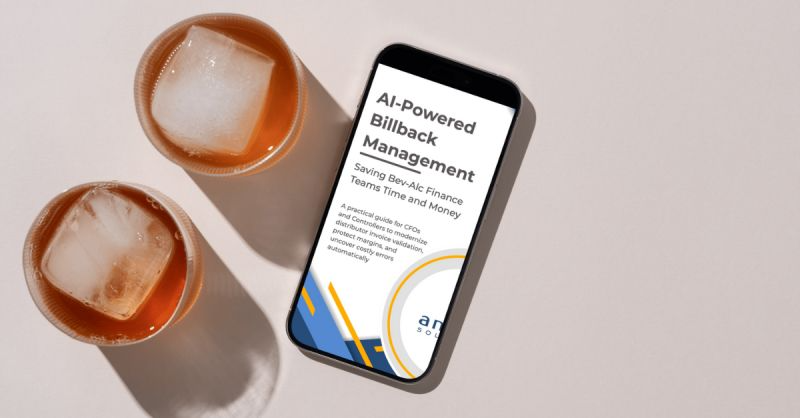
AI-Powered Billback Management🔠What You’ll Learn in This White Paper:
💰 Why manual invoice reconciliation is costing BevAlc finance teams time and money
💰 The most common, costly mistakes even top finance teams miss
💰 How AI is transforming invoice validation for 3-Tier suppliers
💰 Real-time visibility, fewer errors, and faster reconciliation
💰 Proof of ROI: What real Tradeparency partners have saved
💰 Quick ROI checklist: Are you leaving money on the table?
Sign up here & we'll email you a free copy: https://lnkd.in/ggRtJJ-p
June 25, 2025
How to Employ AI Without Sacrificing Your Winery or Distillery's Humanity
The fear of alienating one’s customers is warranted, considering AI-suggested ad copy tends to feel like a supermarket birthday cake: the tepid intersection of everyone’s tastes, perfectly inoffensive and underwhelming, pleasant but forgettable. In Wine & Spirits especially, it’s tempting to treat AI’s role in our marketing output like a zero sum game: a choice between efficiency or meaning, novelty or tradition, quantity or quality, transaction or connection.
Fortunately—with the right approach—it’s actually not all that difficult to retain one’s soul despite dramatically improving one’s productivity in any role. While this does sound like something Chat GPT would write (looking at you, em dashes)—well, there’s nothing I can say to convince you I’m human right now, is there? On second thought, maybe it’s best to just read on.
It’s Worth It.
Used judiciously, AI is the great equalizer. Where small businesses truly had little hope of accomplishing as much as larger teams before, a resourceful startup can now run circles around inefficient, bureaucratic, do-everything-by-committee corporations.
It’s tempting as an up-and-coming wine or spirits brand to feel hopelessly outgunned by the old guard in terms of the resources they’re able to muster (like the distributor’s attention, for starters). In our daydreams of success, we tend to mythologize and even emulate those at the top. Ask an actual employee at one of the largest suppliers how they deploy their giant budgets so carefully, and they may have trouble stifling their laughter.
Robots Hate This Simple Trick
...Read the full article here
April 7, 2025
Niche AI Applications for Wine & Spirits
With wineries practically betrothed to spreadsheets, early-2000s websites, and stodgy cursive fonts plucked straight from a Jane Austen character’s trembling hands, is it any surprise that our industry is behind in adopting useful AI tools with the capacity to make our businesses efficient and profitable?
Despite all appearances to the contrary, given that first paragraph – this isn’t another post trying to shame the industry into adapting. A well-connected bev alc professional need only scroll LinkedIn for about two seconds for a hearty dose of “stop complaining; this is your fault” novellas on the state of alcohol sales today.
No; the intent here is to empower you: to suggest that the AI tools available to us right now are not only developed enough, but so easily adoptable that taking action today might just be enough to usher you and your team into a sound night’s sleep for the first time since, perhaps, “the before times” pre-pandemic.
It would be foolish to keep operating the same way we did half a century ago. Adept as we are at agonizing over our own mortality, we somehow fail to apply the same existential urgency to our business practices in a world that changes very, very quickly.
Is it any surprise automation has failed to resonate with winemakers and distillers, careful stewards of ancient arts?
In Wine & Spirits, it makes sense that we struggle to relinquish control to artificial intelligence on the business end; so much of our focus in production is on uncompromising perfection, resisting anything that might threaten to dilute our creative vision.
Successful marketing practice, on the other hand, often entails split testing (A/B testing) multiple variations of creative, treating our own ideas as entirely disposable and entrusting the promotion of our precious products (read: our babies) to the publishing equivalent of a pump-action shotgun in the algorithm’s hands.
Hesitation Warranted; Help Wanted
Admittedly, AI’s usefulness is still very much emerging; there’s merit to questioning whether or not Chat GPT’s tenth-grade-essay bravado is really enough to strike deep resonance with your ideal customers.
On one side of the fence, certain hiring managers/recruiters take a “burn the fleet and never look back” approach to AI, rejecting every applicant who doesn’t seem to bow down and worship emerging technology as the only way forward.
Then, there are the experienced applicants, with an acute awareness of AI’s shortcomings in the shadow of their own skill set, keeping a close eye on new tools as potential competitors on one hand and a competitive advantage on the other.
The answer is to wield these tools judiciously; to stay up to date and agile, open to potential benefits without gulping down the panacea pill with both eyes shut.
So what’s the practical application here? How are wineries and distilleries already using AI tools to conduct business more efficiently and eliminate costly manual processes?
Chat GPT (and Comparable Generative AI Tools)
Let’s begin with the tool(s) most familiar to the masses. Without getting tangled in the weeds of every possibility out there, have a look at some practical and immediately accessible ways to apply Chat GPT and any image generator (dealer’s choice) to the work your team is already doing to grow your wine and/or spirits business today:
- Brainstorming Campaign Ideas – Now, this one assumes you are, in fact, running any campaigns at all promoting your business. This is one area where Chat GPT, with all of its copywriting shortcomings, really shines: brainstorming ideas for your team to take and develop further. Need a list of 50 lead magnet ideas? Choose your top 3-5 favorites and develop those into full blown pieces of content. Use your audience’s hopes and fears as a guide; which one of these AI-generated ideas is most likely to help my customer get what they want and become the person they want to be? How is it going to enrich their lives and lead to self-actualization? This is the part your AI colleague is going to need help with — empathy.
- Copywriting (to be refined by your team) – AI can provide a great springboard, or starting point for your email campaigns, ad copy, labels, product and collection descriptions for your website. With paid/premium versions of these tools, you can (and should) actually create a persona out of your little AI co-writer; give the tool a brief on who they are (as a stand-in employee) and feed it as many materials as you can on your brand; then, when it’s time for it to crank out an email campaign selling organic Chilean wines from your estate, it has an idea of what brand voice to use and which lines to color inside.
- Marketing images – Need an image for a blog post or LinkedIn article? A photo of a cocktail recipe you came up with, but haven’t actually — ever — made? It’s incredibly easy to save time normally spent searching for the right stock photo or creating (or paying an agency to create) an original piece of content. While this isn’t recommended for everyone, when used sparingly and with some discernment, AI generated images make it possible to bypass many of the time consuming and expensive processes involved in promoting a sale, releasing a new product, and generally supporting all of your marketing efforts from your webstore to social media and email campaigns.
- Promotional videos – this can be especially useful in a B2B context, when your value proposition requires more in-depth explanation to an educated, niche audience. Explainer videos and product releases come to life using stock video libraries and AI voice narration with a quick script.
- Identifying Trends in Complex Data – Feed Chat GPT your depletion data or a spreadsheet and ask it identify patterns, callout highlights, and provide insights or areas for improvement. These tools are alarmingly good at extrapolating insights from massive bodies of data and summarizing those at a speed we could never hope to achieve ourselves. It’s like having an unpaid (yet somehow happy) analyst on your team! It gets better over time the more it learns what you care about and what you’re looking for.
- Ninja Meeting Prep and Communications – if you use an AI notetaker like Fathom, which not only recaps and summarizes everything that transpired, but also breaks down and organizes the content into agendas, follow up and frameworks like BANT —consider feeding these meeting summaries into Chat GPT and asking for high level, simple/digestible/concise communications for your next QBR or presentation.
Most people are aware of these universal AI applications; it’s the niche, industry-specific solutions that aren’t yet on everyone’s radar that we’re here to highlight today.
Automated Distributor Billback/Invoice Management
Few in our industry know it, but the days of manual invoice entry and billback management are over. Using tools like Tradeparency’s AI Invoice Manager, wine & spirits suppliers are able to automatically match any incoming invoices to the deals in their system and catch any discrepancies to save money over time on billback errors.
This frees your team members’ time to use their talents elsewhere, where you really need humans; they’ll be happier, freed from hours of drudgery, and your bottom line will benefit from their highly motivated, inspired new life actually using their rare and valuable skills.
Maps & Route Planning
Beverage alcohol sales teams going door to door can also use AI-driven maps and route planning tools like Salesforce Maps or Lilypad to determine the most efficient way to use their time over the course of a week, given their goals.
Using logic like “show me all the accounts where I have an open objective and haven’t opened a new point of distribution in the last 12 months,” these tools can automatically plan out the most efficient route covering the highest priority accounts generated by users or dictated from the top-down.
Image Recognition
When a sales rep does make an account visit, simply snapping a photo of the backbar or shelf space at a package store location can help piece together what’s actually happening with your product(s) at the account level.
Rather than stand around asking “what part of the shelf am I on?”, AI-driven image recognition solutions enable reps to move on with their day. By analyzing all the images your reps collect in the field, image recognition does the heavy lifting with identifying your SKUs and drawing out actionable insights and suggested follow up in the accounts where you’re not on the shelf or accounts are not compliant with your trade promotions.
Automated Planograms
AI planogram builders are making it easier than ever to save tremendous time and bandwidth optimizing shelf space using historical data. These tools ensure that you are fundamentally positioned to sell more – that your product is at the right place at the right time, at the right price.
From a sales perspective, if you see that you have 2/10 facings on the shelf (20%), but your products represent 60% of the total dollars sold, that gives your team the leverage to approach the retailer for more shelf space. Using AI to draw insights from the shelf (and inform future relays) allows your brand to be as strategic, efficient, and profitable as possible off premise.
by Sarah Nagle
April 7, 2025
3 Indicators of High Volume in Off-Premise Accounts
It’s hard, in any business, to choose strategies that promote long term growth and longevity while struggling to keep the lights on and make payroll every month. Under thinly veiled panic, we have a tendency to push our sales teams to treat our buyers as means to an end when cash is tight. Overvaluing vanity metrics like off-premise accounts sold, we scrounge for quick, small wins and placements that result in high churn and ultimately lead us right back to square one.
While we may accept – somewhere in the distant, tightly compartmentalized, “rational part” of our brain – that not all accounts are equal and that the vast majority of volume is driven by the top ten or twenty percent of our customers, we go on behaving this way nonetheless, because action feels better than a sales cycle rivaling the Great Wall of China lengthwise.
The good news for wineries & distilleries willing to be more strategic with their sales resources is that it’s not only possible, but well within one’s power to sell all of the wine & spirits one makes by winning placements with just a handful – in some cases, one or two – of the right retailers.
With so much positive feedback to part one in this series, 3 Indicators of High Volume in On-Premise Accounts, we’ve returned to deliver the criteria and common characteristics that define the off-premise accounts driving the most volume today, and how to find them.
Two Methods for Building Key Account Target Lists
What tools does a sales leader have at their disposal for building a well-researched key account target list in 2025?
Many are not yet aware that this first option exists. It’s now possible for any brand to connect directly with their distributor’s database for near real-time access to their brand-specific sold and unsold account universe. With direct visibility into specific account rankings and attributes like whether or not unsold account x has a cold box or counter positioning available at checkout for shooters/small format displays, beverage brands are already wielding this information to determine which accounts are (not) worth calling on in the first place.
The second method, manual research (usually online), is significantly more time consuming but no less critical for success in the market. Search engines and review sites like Yelp really brought this onto the scene, and it has since gotten easier without ever straying far from Google reviews. This method is so effective, in fact, that it’s possible to make a living full-time putting together and selling custom key account lists to large sales teams in the wine & spirits industry.
Do your customers shop there? Will your placement stick?
What really differentiates one package store from another? What are we really asking when we decide whether or not to include a retailer on our brand’s key account list?
The main determinant of success for your brand in any retailer is whether or not your customers shop there. It feels silly to “say out loud,” but it’s comically easy to lose sight of this. We see other brands having success at, say, Costco, and think “if I could only get a meeting with their buyer, we’d be set for life!” That may be true, but only if your customers routinely shop at Costco.
The same type of person looking for a great deal on some “pretty dang good wine” for a white elephant party might not necessarily appreciate the premium price commanded by the number of hands that touched your limited-production, esoteric varietal from harvest to bottle.
Understanding your brand and customers helps you determine which type of off-premise account best suits their needs.
Asking your team to spend all their time calling on boutique bottle shops sounds like a great way to get fired from your new gig as National Sales Manager at Four Loco.
The winning strategy for your brand might look completely different from market to market as state law allows, of course. Most people instinctively understand all of the above, but it’s worth formalizing here as a cautionary preface; pressure from the top-down to hit sales activity goals can quickly dilute even the most highly targeted sales team’s efforts.
It won’t do to simply search the “ten best liquor stores in Denver” and call it a day, but it can be a good starting point. Just use 1) fit for your brand and ideal customer persona and 2) the remaining criteria in this article to narrow your selections down.
1. A Strong Online Presence
If a package store is making an effort to generate demand online for the products they carry, you can bet that this attention to detail carries over into every area of their business:
- Has a bunch of followers and/or positive reviews on social media
- Regularly updates their instagram (or whatever channel their followers prefer) with the latest products they carry, exciting new releases, events, tastings
- A website that doesn’t look downright geriatric, lists their hours, location(s)
- Ecommerce – delivery and/or store pickup (or the ability to at least view the products the store carries)
The quickest way to tell what kind of customer experience an off-premise account offers is to search for them online – to feel out their virtual storefront. It’s a miracle, really – having even a basic, positive presence online automatically puts any package store leagues ahead of their competitors. Up-to-date websites are a staggering rarity, even in 2025.
The same way many successful wine & spirits brands link to a store locator on their website, a package store that reciprocates with visibility to your products on their website has the highest chance of catching your customers’ attention. It’s incredibly easy to drive traffic to your retail partner’s physical locations when all you need is your product’s landing page url from their site and a geotargeted, one-off email campaign to your loyal subscribers.
2. A Loyalty Program
Another way package stores – chains & independents alike – generate repeat business is to offer a convenient and rewarding loyalty program for their customers.
Stores that invite their customers to become subscribers and market to them with special offers and a competitive rewards system know that the biggest driver of revenue for any business is customer retention. If your customers love the experience your retail partner provides. Chances are far higher that when the time comes to shop your category, your inventory is less likely to gather dust awaiting random, one-off foot traffic.
3. They Offer Wine & Spirits Direct Deals
Wine & Spirits brands who are privy to this seldom acknowledged corner of our industry have the potential to trade their struggling startup woes for fast-scaling production headaches trying to keep up with demand overnight.
The regional and national chains driving wine & spirits direct deals drive so much volume on their wine & spirits direct brands in particular because they can enjoy such high margins on the products they sell this way.
This means that if Bentley’s Bourbon Cream agrees to sell exclusively through (in this case, fictional) spirits direct retailer, The Chapped Flask, in the state of Texas, The Chapped Flask’s store associates are going to hound their customers with recommendations for Bently’s and light up those shelf-placements like Christmas trees with shelf talkers, stacks, and everything short of illegal fireworks.
The tradeoff is that some of these placements can be relatively difficult to land. Which requires tenacity over a longer sales cycle akin to most national accounts.
Follow Up is Key
What indicators of high volume did we leave out? Let us know in the comments. If a retailer is a good fit for you customers and has their ducks in a row online and in store, maybe even multiple locations – your efforts are far better directed in large part to that account (and accounts like it).
Simply landing a placement is not enough, though – you’ll need to service that account to build a relationship with your buyer upon dependability and trust, preventing out of stocks and doing your part to generate your own demand to pull your product through and off their shelves.
by Sarah Nagle
March 10, 2025
How to Sell Alcohol in Sobering Times
With no and low-alcohol categories on the rise and the sober-curious boogeyman around every corner, we needn’t wait for rock bottom to take a hard look at our sales strategy and make a change today.
While much of the wine & spirits industry points the finger at Gen Z & Millennials, the World Health Organization or the Surgeon General, the truth is there’s only one entity responsible for the trajectory of our revenue.
According to Navy SEALs Jocko Willink and Leif Babin in Extreme Ownership, when “problems feel overwhelming and insurmountable . . . it’s our human nature to shift blame, find excuses, and avoid consequences. But taking ownership over what went wrong and accepting the reality of the situation gives you complete control over how you can solve these challenges.”
Trying to sell alcohol in 2025 is tough. Plain and simple, no way around it. With that acknowledged, let’s explore what we can do about it.
A Sign of the Times
If there was one take-away from the recent WSWA Access Live convention, it was that traditional wine & spirits sales are down, and non-traditional and non-alcoholic beverages are here to stay. The convention’s “Opening General Session: A State of the Alcohol Industry” featured Winemaker and Doctor Laura Catena who spoke on the recent U.S. dietary guidelines on alcohol consumption, concluding that we should drink higher quality beverages, and less often. She was followed by Danny Brager and Dale Stratton of SipSource who pointed to plummeting sales, and a failure of on-premise sales to bounce back to post pandemic levels, concluding that we as an industry need to shift with changing demands.
The buzz around non-alc and non-traditional beverages was on display at sessions like “More than a Trend: How Non-Alcoholic Wine & Spirits are Reshaping the Market” with speaker Stephanie Honig, and the “No & Low Mixology Workshop”. Those events drew crowds, but they paled in comparison to the boisterous gathering of the “Hemp Beverage Meet & Greet” presented by the Hemp Beverage Alliance. Granted, the location of the event being Denver, Colorado might have contributed to the popularity of the hemp beverage presence at the show.
In her session, Stephanie Honig, a member of the Honig winemaking family and founder of no-alcoholic wine brand Missing Thorn, said that her target audience is not solely sober or pregnant people, but that it is primarily made up of alcohol consumers who are looking to cut back for a multitude of reasons. She cited the aging “boomer” population that might be cutting back for health reasons, while the younger “Gen Z” generation are choosing to drink less alcohol in general.
A Fruitless Battlefield
Skimming wine & spirits headlines, one gets the impression that the widely-regarded antidote to an increasingly sober society rests on our ability to change consumer perception: to prove “alcohol’s not so bad for you after all; it might even help you live longer!” so that young people change their minds and imbibe more frequently.
If we could just get a modern Edward Bernays to make drinking cool again, these writers seem to think, then every tech bro and YouTuber would be out to liquid lunch again like some ramen-haired Don Draper. At last, we could get back to arguing about our favorite topics instead, like whether gruyère or butterkäse pairs better with a nice grüner veltliner.
In the opening paragraphs of Breakthrough Advertising, copywriting giant Eugene M. Schwartz offers a different take on the matter:
“Copy cannot create desire for a product. It can only take the hopes, dreams, fears, and desires that already exist in the hearts of millions of people, and focus those already-existing desires onto a particular product. This is the copy writer’s task: not to create this mass desire—but to channel and direct it.
Actually, it would be impossible for any one advertiser to spend enough money to actually create this mass desire. He can only exploit it. And he dies when he tries to run against it.”
It’s up to every beverage brand to figure out why people who do drink should drink their product in particular, rather than attempting to change their lapsed customers’ beliefs and behaviors with an already strained marketing budget.
Selling is Listening.
The nice thing about the fundamentals, or basic principles of sales & marketing is that they never change. Wildfires? Tariffs? War? Global Pandemic? To an accomplished brand strategist and copywriter, these are just another lens offering audience insights.
What mass desire or need does your product satisfy? Why is your brand the best at helping your ideal customer get what they want and become their actualized, ideal self? For a clear and simple explanation of how to script out your brand message, see Donald Miller’s Building A StoryBrand.
To sell more alcohol in the age of neo-prohibitionism’s growing influence and the rise of no and low-alcohol enjoyment, we need to understand our existing customers better.
Start with repeat customers, your evangelists – the people who have given you money for your product(s) more than once.
- Why did they choose you?
- What are they getting out of your product?
- When they consume your product, what else are they doing, with whom, and when? Do they order it out, or drink it at home?
- Do they prefer it in bundles, or individual bottles? Cases, half cases? Single-servings like cans, 750ml, or large format?
- Is it a special occasion purchase, or their daily drinker? How much do they usually spend on a bottle of wine or whiskey?
- How much do they consume, and in what configuration – neat? In cocktails? Cold? Room temp? Over ice, up, on the rocks?
- With a meal? Without a meal? Hosting tastings? Do they enjoy pairings, or couldn’t care less?
- What time of day?
- In what type of glass? Stemless or stemmed? In a lowball or a Glencairn?
- In more than one sitting, the whole bottle, or split with friends?
- What else do they drink? How often do they drink alcohol? What do they drink when they’re not drinking alcohol?
- How do they spend their free time? What circles or communities do they run in? What kind of person are they? What are their beliefs? What do they stand for?
Craft your brand messaging for this person, with their habits in mind. Go and find more of that person. Fish where the fish are, with bait that matches their prey of choice for that time and place.
One can go overboard with questions, sure – you needn’t request a blood panel (unless you’re selling wearable glucose monitors). The questions that are most relevant and strategic will depend on your go to market strategy, products, and brand. Mine these data with discretion, seeking insights that will inform your future outreach and define your ideal customer persona.
Fortunately, eCommerce and DTC sales have made historical customer data collection easier than ever. For just one example of this critical listening exercise, check out this recent Linkedin article from Go Brewing’s founder, Joe Chura, who generously shared some of their recent insights.
Some eCommerce providers offer decent enough reporting to glean a lot of this information already, but there’s nothing wrong with outright asking customers in a survey. Producers who are dissatisfied with the native reporting capabilities of their eCommerce provider can always enlist custom third-party analytics and data warehousing for total command of this listening practice, with the added benefit of pulling from multiple data sources like 3 tier depletions, wine club/subscriptions, and tasting room sales.
Adopt, Adapt, or Accommodate?
In a market pressurized like an overcarbonated homebrew, the stakes feel higher. How do alcohol brands react to changing consumer habits and behaviors?
One detrimental consequence of obsessing over no and low-alcohol’s impact is that we tend to corral ourselves into thinking about alcohol by volume as a zero sum game. “If my customers are drinking more low alcohol options, that means they’re spending less on me!” That’s not necessarily the case, when you seriously consider how your product fits into the broader narrative of their lifestyle, and assimilate your message accordingly.
Customer alignment has always been the path to longevity in business. It’s up to each producer to decide if adopting or adding an NA option to their lineup is worth the investment.
Many wineries, distilleries, and breweries have already added NA offerings to their portfolio and are merrily selling both. Heineken hardly broke a sweat rolling out the world’s best-selling 0.0 ABV beer alongside their flagship offering. Even smaller craft distilleries are releasing creative additions to their regular lineup with botanical NA pours like Burnt Church Distillery’s Amethyst. Bev-alc brands looking to join the fray needn’t restrict themselves to simply alcohol-free expressions of their existing products; this decision, too, warrants a case-by-case (no pun intended) basis.
It’s not just producers cashing in on NA; unsurprisingly, early-adopter wholesalers with robust NA portfolios are seeing their revenue doubled in key markets like Utah — traditionally a relative blind spot in that dry desert.
Sporting a no or low-alcohol option doesn’t make any sense at all for many drinks brands. To “know thyself” is a gift; leaning into your authentic identity has the potential to further endear you to your audience and attune your brand to its proper niche. If your customer base never turns down or dries out, lowering your (alcohol by) volume could estrange your brand from their way of life. One misstep, unfortunately, is sometimes all it takes to fall out of alignment with our loyal customers – to catastrophic effect.
Unless you’re dead-set on all out war with non-alcoholic beverages, an alternative to selling your own NA offerings is to accommodate your existing customer’s preferences wherever applicable. If you find your loyal customers bringing their sober friends and family along for a visit to your tasting room, you likely only stand to gain guest satisfaction and repeat business by accommodating those needs with NA guest taps and a friendly, easy-to-find NA category on your menu.
When your existing website customers experience life change and can’t (or decide not to) drink for whatever reason. Do they still have a way to signify membership in the brand identity you’ve cultivated together? Invite them to customize future shipments, ask for their opinion on future product development, or simply offer branded merchandise like top-notch glassware to enjoy their NA beverages in. Again, look for ways to participate in their lifestyle – barrel-age coffee beans from their favorite roaster in a cool collaboration, or arrange gift sets that make their lives easier around holidays.
Actualize Your Sales Goals
Finally, once it’s clear where your beverage business fits into the big picture, the way to win in a competitive beverage landscape full of seemingly endless choices is to be extremely targeted and strategic with your limited resources in the market.
Tracking sales execution against goals and measuring the results is easier than ever before with specialized CRM tools geared towards beverage alcohol. Beverage brands are already leveraging leading indicators of success like survey questions at the account level to anticipate challenges and outmaneuver their competitors.
There’s never been a more exciting time for consumers. Brands come and go, but our first love – enjoying the little things – isn’t going anywhere anytime soon.
by Sarah Nagle
January 13, 2025
3 Indicators of High Volume in On-Premise AccountsDepending on your wine or spirits brand, the cocktail of channels you depend upon to drive volume in 2025 may look different than it did five years ago. You might lean more heavily upon E-Premise and Direct to Consumer sales. Still, nothing moves cases like a placement in strategic national accounts, regional chains, and high-volume independents in the right markets.

The natural consequence of devoting more attention to emerging channels is less time to devote to traditional 3-tier sales strategy without investing in more resources. Under these constraints, it’s more important than ever to focus your team’s efforts in the market with a well-researched, highly-targeted plan of attack.
A crucial roadmap resulting from this research is a Key Account Target (KAT) list. By selecting the accounts capable of driving the most volume for your brand and focusing your sales team’s time and efforts — to the neglect of the rest of your available account universe — in those key accounts, you’re more likely to outperform the market and your competitors.
Fortunately, the common traits that characterize high volume accounts are not mysterious if you know what to look for; they’re just not necessarily intuitive either. Drawing upon our collective experience as an industry-leading provider of sales execution solutions for some of the largest wine & spirits brands in the world, here are 5 indicators of high volume in on-premise accounts to seek out when building your own key account target lists in 2025.
1. Fit (For Your Brand/Product/Customer in Particular)
While not an indicator of high volume in its own right, “fit” is every account relationship’s prerequisite for high volume. It must come first. Aside from hurting your brand equity, a mismatched placement in an otherwise high volume account could mean negligible volume and wasted resources for your winery or distillery.
An account that fits the other criteria on this list — say, a rooftop bar featuring live music — might drive a ton of volume for cocktail-friendly spirits brands, craft beer, and RTDs, but that doesn’t mean they’re going to sling your Sonoma Coast Pinot to college kids all night at $95/bottle.
2. Private Parties / Event Space
The adult beverage is the most frequently invited guest at everything from fundraising events to birthday parties, weddings, funerals, and more. It’s the reason so many get into this industry in the first place; beverages bring people together, through the best and worst of times.
If you manage to land a by the glass placement or get on the cocktail list for one of these event menus, you're looking at pallets of reordering potential. Because these event menus are so tightly curated and offer so few options, your product has way fewer brands to compete with. That means the bourbon guy is going to order your pour every single time — he has no other choice!
Pay particular attention in your account research to the number of rooms a hotel has, as well as the square feet of meeting space available for corporate events, banquets, and the like. Getting on the room-service list or landing a banquet menu placement at the right hotel could mean the difference between selling all the wine you make or your inventory gathering dust at the distributor warehouse.
3. Outdoor Seating
Even if owners were willing to ignore fire code and capacity regulations, there’s only so much room inside a restaurant or bar to seat customers, and only so much revenue to squeeze from each guest without overserving them. That’s a little indelicate, perhaps, but this in part explains why venues with balconies, patios, and rooftop bars sell so much more than indoor-only venues.
There’s another, more experiential side to this as well, though — especially in areas with nice weather or a scenic view, tourists and locals alike tend to linger and order more drinks. Look for accounts with multiple excuses for guests to extend their stay, like yard games, live music, trivia nights, and other well-promoted, scheduled attractions.
Bonus High-Volume Indicator: A Well-Loved Social Media Following & High-Quality Web Presence
This one almost goes without saying, but an account that’s not visible online may as well not exist unless they have some niche appeal with older or local demographics or some legendary word-of-mouth cult following. When someone sees that you have a large following, this acts as social proof; it’s the same effect as walking past a crowded restaurant and thinking, “wow, that place must be good.”
Today, you can find everything you need to assemble a high quality key account target list online using Google Places/Maps/Reviews and publications like Eater for even more niche, deep dives into particular markets.While Yelp is not as highly trafficked as it used to be, using filters for the highest number of reviews or (back to Google) searching specifics like “best cocktail bar in Denver” yields a surprising wealth of results for getting started.