
Filter Post Type
NewsVideoProductEventLink
Sort:
Most Recent
1–10 of 28

Imagine your VP of Sales announcing they’ve ditched CRM for a Rolodex. Or your finance director saying Excel is too modern, so they’re switching to chalkboard. And yet, here we are — 2025 — squinting at billbacks for hours on end and sending reps to visit every retail account like the entire industry is running for sheriff. Automation isn’t new, but for the wine & spirits world, it might as well be black magic. We love to talk about efficiency, scaling, and modernizing — right up until someone proposes replacing busywork with bots. Suddenly, it’s “But our rep relationships!” or “This is how we’ve always done it.” As if nostalgia for manual labor is part of our brand identity. Let’s get one thing straight: no one’s asking you to hand your label design to Midjourney or let ChatGPT pick your clones. We’re talking about automating the parts of your business that drain time, w
00
July 16, 2024

TLDR If you manage pricing on Excel spreadsheets and email them back and forth, you are in the Stone Age. Modern pricing platforms outshine Excel in many aspects. They offer significantly enhanced accuracy and speed, superior version control, and ensure state-level compliance. These platforms are the key to unlocking wineries' full potential, and they pay for themselves quickly. The good is the enemy of the best This saying from Jim Collins’ 2001 book Good to Great poignantly indicts the state of most wine and spirits companies' preferred method of managing pricing: static spreadsheets that must be emailed back and forth. Even if you utilize shared drives and shared spreadsheets (i.e., Google Docs and Google Drive), you are still rubbing two sticks together to make a fire when you could be using a blowtorch. Even on their best days, dealing with the 3-tier pricing models is complex and varies from state to state. Collecting, aggregating, and reporting distributor p
00

Distributors’ portfolios are more crowded than ever. Getting the distributors’ attention has become nearly impossible, especially for smaller suppliers. But fear not; some strategies can help you break through the clutter and gain the focus you need to succeed. There's always a way forward! Here are ten practical tips to do it: 1) Demonstrate you value their time Suppliers who hope to gain mindshare with their distributors will be very careful about the time demands they make upon their distributors. Time is the one commodity every distributor is in short supply of. Most suppliers demonstrate a complete lack of empathy for the plight of their distributor partners. By respecting their time, you will immediately elevate yourself among their suppliers. 2) Become more self-sufficient in identifying opportunities Small, medium, and large distributors are completely overwhelmed by the sheer size of their portfolios and the number of suppliers they have. It is no longer
00

At Andavi Solutions, we interact with a wide array of wine & spirits sales teams. When it comes to those who consistently achieve high levels of sales performance, we’ve discovered 5 habits common to all of those high achievers. 1. They measure what really matters. Everyone is familiar with the “standard” Adult beverage KPIs, such as shipments, depletions, points of distribution, and accounts sold. The best-performing sales teams do not use standard KPIs to measure success; they use them to confirm results. More time and energy are spent on forward-looking metrics (leading indicators), such as: Penetration of target accounts (percentage) Sales per POD in target accounts (velocity) Retention of the best placements (re-order) At-risk accounts (downward trending sales) Account touches (who and how often) Top-performing sales teams are relentless in measuring performance, and the key is having centralized dashboards visib
00

Your BTG sales may be up and increasing, but is that really why you invested in this competitive distribution strategy? By-the-glass programs, on their own, are often the least profitable endeavors for any winery or importer, yet they are "supposed" to deliver what you are really after – exposure. So, do you know if your BTG program is really driving the lift you are after, and if it is (gasp) worth it? Between manual spreadsheets, disconnected systems of data, and a lack of full-picture analysis, all while you're serving extensive distributor discounts and incentives to get on the by-the-glass lists – it’s imperative you have the visibility into your BTG program success so you can turn the right dials. Find out the top 3 critical questions you need to be able to answer about your BTG program to determine if your on-premise wine sales are delivering that intended ROI. READ THE FULL ARTICLE NOW.
00
June 8, 2022

Press Release | Andavi Solutions Acquires Tradeparency
Andavi Solutions, a beverage alcohol software company, has acquired Tradeparency, a leading industry pricing solution. Read more now!
00
May 17, 2022
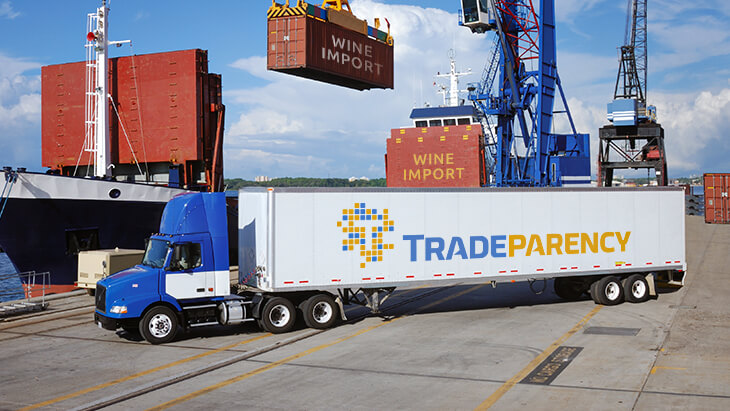
The North American market for imported wine has become a competitive and fast-paced industry. To stay ahead of the game, you need to be able not only to manage international suppliers but also all the aspects involved in shipping their goods and then working with domestic distributors to get the product on the shelves and menus. But increasing shipping rates, limited cargo space, and long overseas delivery delays are putting a considerable burden on wine importers juggling these pivotal supply chain points that impact everything from product availability to pricing. Importers might even be so inclined to refer to it as the three-‘tear’ system right now! So, just how extensive is the influence of these prolific and increasing distribution challenges on wine imports? And most importantly, how can wine import businesses get ahead of these obstacles to promote and price their wine profitably in a constant-changing market dynamic? Read The Wine Import Business: Proactive Pricing
00
May 2, 2022

Proactive Pricing for Your Wine Import Business | Tradeparency
Pricing for the wine import business is complex with rising supply chain challenges. Learn how to proactively manage three-tier pricing.
00

What are the benefits and return on investment considerations for a trade promotion management platform like Tradeparency to manage your three-tier distribution profitability? Remove margin leaks instantly with automated claims processing you can use today to realize ROI fast. Get visibility on all spend and return to control the bottom line better. This includes by-the-glass (BTG), incentives, free goods, and samples. Raise brand value and improve customer service with readily available chain pricing and the ability to empower a mobile sales force. Increase and maximize your margins by covering the 30% third-party depletion data reliance gap in all of your markets. Understand the drivers that improve performance and deliver better results with accurate, accessible analytics and reporting specifically built for three-tier distribution. Remove inefficiencies by eliminating duplicate, manual efforts. Get centralized price grids and ERP integration that str
10
Learn why competing three-tier wineries and importers need centralized pricing, promotions, and trade spend management.
00