
September 2, 2025
Distributors Getting Smart About Their Sales Processes In Order to Grow
The evolution of consumer tastes over the last decade has spawned an explosion of brands – beer, wine and spirits – resulting in an already crowded field becoming nearly unmanageable without some kind of technology. Plus, as the competition grows fiercer. Producers are becoming more reliant on their distributors to play a more prominent role in the sales process. It is for this reason that forward thinking distributors are now realizing the benefits yielded using technology to aid in the execution of sales strategies dictated by the suppliers they serve. Here’s some information on why the need has grown so acute for solutions to this business challenge and how contemporary solutions are helping distributors play a stepped up role in the sales process. First, the “why” the need has grown.
As the beverage industry grows increasingly diversified, there are simply too many moving parts to be managed casually. These days, it’s not uncommon for a large supplier to own 20 brands. Should the supplier develop, say, five strategic initiatives to execute per brand/per quarter that translates to 100 different executable programs (each with its own performance indicators or ‘KPIs’ to be tracked) per quarter or 400 for the entire year! Multiply the number of initiatives by the number of accounts a sales rep services and the number of KPIs to be executed and managed by a single salesperson easily grows to more than 2,000 per year!
As distributors are pressed into service in this way. Suppliers are demanding their distributors take steps to assure accountability. But don’t imagine for a moment that distributors are adopting technology like GreatVines under duress or less-than-willingly. For most distributors, there is a well-documented need to optimize the strength and effectiveness of their portfolios involving all their suppliers. With niche products/brands finding ways to penetrate the market effectively. Distributors are hungry for any tools they can use to protect their innate advantage. Tools to help drive sales by exploiting leading indicators are very attractive to distributors.
Next, let’s examine how distributors are leveraging technology tools according to contemporary best practices. Much like their suppliers, distributors are finding tools like GreatVines invaluable for a number of reasons. First and foremost, technology solutions provide processes and methodologies. Built into their applications, which are flexible enough to manage the disparate needs of a wide array of product lines. The processes, which are replicable and even more importantly, scalable, provide improved control over workflows. Through permissions/approvals and allow the enforcement of KPIs for trade spend budgets. Plus, being cloud-based and designed for use on mobile devices all salespeople rely on today, these tools enable collaboration in real time. They’re perfect for keeping sales forces in the field informed, up to the minute, on all relevant measures of success. Meanwhile, management gets timely reporting and improved control over strategies and correlated spend.
With the right tools and processes in place, distributors are seeing increased sales volumes. This in turn supports stronger, more positive relationships with the suppliers/producers and healthier, more consistent brand management. For more detailed information on the positive effects of technology solutions for distributors. You should read GreatVines newest white paper on this very subject. It’s called, Why Distributors Need a Solution to Execute their Suppliers Leading Indicators (KPIs). It is available for download on the sidebar of this article.
September 2, 2025
You Won’t Hit a Target You Can’t SeeIf you’re like me, the first thing you’ll think reading this title is “you can’t know that; people hit invisible targets by mistake all the time!” Touché. Can we move on, smart aleck? (Takes one to know one.)
A lot of wine and spirits brands are doing the professional equivalent of heading to the gun range blindfolded, with high hopes to grow their business year over year. The lunacy is less apparent only because the BevAlc business isn’t a matter of life and death—at least not what Peter Attia calls “fast death.”
We romanticize hustle: more accounts sold, more calls made, more activity. But activity without visibility isn’t strategy — it’s superstition.
Until recently, wine & spirits suppliers operated with a very limited view of what was happening on the ground: depletions delivered on a monthly basis, already outdated. Account-level insights? Rare. Shared priorities between supplier and distributor teams? Aligned in theory, but it’s mostly pageantry due to every distributor’s sheer lack of resources in the face of thousands and thousands of supplier partners.
That changes with BevPath.
For the first time, both sides of the 3-tier handshake can see the same field in near-real time: which accounts are driving lift, which actions correlate with volume, where by-the-glass placements are pulling weight — and where opportunity is gathering dust.
🎯 BevPath lets you:
- Sync supplier + distributor targets (finally)
- Share execution data in both directions
- Direct your reps’ efforts where ROI has demonstrably stemmed from those activities
Less guesswork. More alignment. Greater impact. Because if your team’s going to take the shot, you owe them a clear look at the target, at bare minimum.
Reach out to bevpath@andavisolutions.com to explore what BevPath could do for your sales this OND.

September 2, 2025
5 Ways that Tradeparency Overdelivers Compared to Price 2.0
The three-tier system is filled with challenges like regulatory compliances, multi-level pricing structure, and data integration that highlights your sales teams’ efforts. Your pricing solution shouldn’t be one of these challenges to overcome. That’s why we designed Tradeparency to solve your pricing structure and promotion needs and do it all with exceptional capabilities, all at your digital fingertips.
If you’re looking to solve your Price 2.0 challenges, here are 5 reasons why Tradeparency excels:
1. Simple tool for anyone to use
Choosing a solution can be hard, but getting your team to use it is always harder. We make sure that Tradeparency is simple, intuitive, and easy to use. Not only do we help train your staff, but we make sure you have the support you need, when you need it. You won’t have frustrated team members when using an intuitive solution, and user adoption will remain high when everyone sees the value of efficiencies in Tradeparency.
2. Industry experience matters – Wine & Spirits included
Between by-the-glass pricing, menu incentives, and depletion allowance matching, nobody knows your business better than you, but we understand the industry. Our Wine and Spirits experienced team delivers real insights, industry-leading solutions, and pricing language that matters to you. We’ve worked for decades in the industry just like your teams, so we won’t ignore the important features and key tools that matter for your business. Stop working within the confines of software that’s designed for the beer industry and start working with one that is designed for your business.
3. Distributor Authoritarian on Pricing with Price 2.0
Your pricing strategy and discussions are key factors in your success. That’s why you shouldn’t rely on one source of truth for all your pricing data and strategy. With Price 2.0, your distributors tell YOU how to price your products, not the other way around. This means not having control on the pricing of your products or approving bill backs that you may or may not have validated or would have approved. Tradeparency lets you control your pricing structure and bill backs with automatic validation and alerts when your pricing doesn’t match your invoices.
4. Just Having Pricing doesn’t do the Policing – Ensure Compliance with your Pricing
Do you know how much you actually spent on a promotions program? Are your invoices showing you the true efforts and effectiveness of your distributors? A key measurement of sales success like this shouldn’t be only told to you by the distributor. Having visibility to the spending in each market will allow for better planning and control over future spending.
5. Gross-to-Net Coverage – Invoicing control and consolidation
One of the most time-consuming aspects of pricing is consolidating and reconciling your invoices compared to your bill-backs. Tradeparency removes this challenge for you by automating the reconciliation part of this crucial process with alerts and checkpoints to ensure you aren’t overpaying and spending hours reconciling your invoices. Plus, it allows you to actually SEE the effectiveness and success of your programs With all your supported pricing inside of Tradeparency, you can quickly identify if Distributors are submitting invoices on unapproved or even ended bill-backs. It also allows for you to quickly pull the unsupported bill-back from invoices to communicate with Distributors. Keeps your invoices clear, organized and accurate with Tradeparency.
With Tradeparency, give your team time back to truly strategize on pricing, see the work your team can do with our intuitive system, find the money you could be overpaying, all in a system designed for your business. Start using Tradeparency for the best ROI you can find today.
Want to learn more? Click here or schedule a demo with one of our team members today!
July 17, 2025
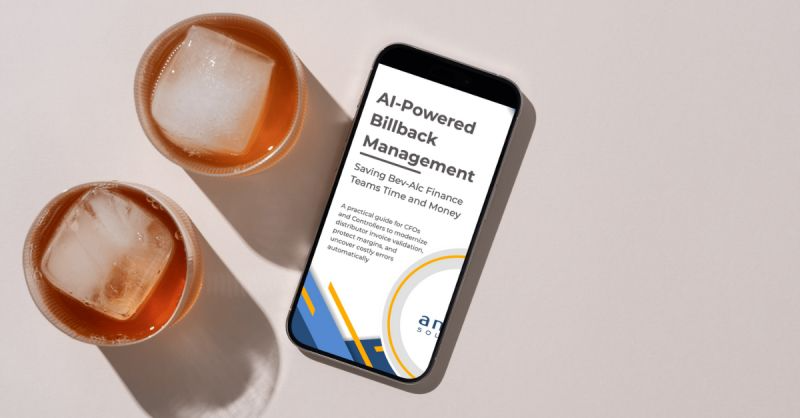
AI-Powered Billback Management🔠What You’ll Learn in This White Paper:
💰 Why manual invoice reconciliation is costing BevAlc finance teams time and money
💰 The most common, costly mistakes even top finance teams miss
💰 How AI is transforming invoice validation for 3-Tier suppliers
💰 Real-time visibility, fewer errors, and faster reconciliation
💰 Proof of ROI: What real Tradeparency partners have saved
💰 Quick ROI checklist: Are you leaving money on the table?
Sign up here & we'll email you a free copy: https://lnkd.in/ggRtJJ-p

June 24, 2025
How to Employ AI Without Sacrificing Your Winery or Distillery's Humanity
The fear of alienating one’s customers is warranted, considering AI-suggested ad copy tends to feel like a supermarket birthday cake: the tepid intersection of everyone’s tastes, perfectly inoffensive and underwhelming, pleasant but forgettable. In Wine & Spirits especially, it’s tempting to treat AI’s role in our marketing output like a zero sum game: a choice between efficiency or meaning, novelty or tradition, quantity or quality, transaction or connection.
Fortunately—with the right approach—it’s actually not all that difficult to retain one’s soul despite dramatically improving one’s productivity in any role. While this does sound like something Chat GPT would write (looking at you, em dashes)—well, there’s nothing I can say to convince you I’m human right now, is there? On second thought, maybe it’s best to just read on.
It’s Worth It.
Used judiciously, AI is the great equalizer. Where small businesses truly had little hope of accomplishing as much as larger teams before, a resourceful startup can now run circles around inefficient, bureaucratic, do-everything-by-committee corporations.
It’s tempting as an up-and-coming wine or spirits brand to feel hopelessly outgunned by the old guard in terms of the resources they’re able to muster (like the distributor’s attention, for starters). In our daydreams of success, we tend to mythologize and even emulate those at the top. Ask an actual employee at one of the largest suppliers how they deploy their giant budgets so carefully, and they may have trouble stifling their laughter.
Robots Hate This Simple Trick
...Read the full article here
May 22, 2025
How to Sell All of Your Wine or Spirits – by Ignoring Most of Your Account Universe
80% of Your (Unsold) Accounts Don’t Matter – So Stop Calling on Them
Don’t worry; we’re not going to write another article arguing that the majority of your sales volume comes from the top handful of your accounts; we’re not sure we could even locate that poor horse’s cadaver at this point. We’re more interested in the practical implications of the 80/20 rule: the “So what?” part of this equation – how do we use this knowledge to sell more wine & spirits?
Sales Resources are Limited; Limit Account Targets Accordingly
For any hope of success selling all of your inventory, you must first acknowledge the salesperson’s scarcest asset: time.
Novice sales teams take a shotgun approach with the goal to win as many placements in as many accounts as possible. This sounds logical in the abstract, and would work great if it resulted in high volume; instead, unfocused activity generates a lot of one-off (time consuming!) sales that don’t stick.
Many well-intentioned teams spend their time touching high numbers of accounts because it feels productive. Any self-aware salesperson knows that it’s easier to defend oneself in a “Did you do anything this week?” meeting with a ton of activity to show for their paycheck. Maximum sales activity looks impressive in the short term, but leads to failure in the long term. Why?
Jumping from prospect to prospect and racking up numbers leaves little time to research and intimately understand your buyer’s needs. The result is a bunch of unhappy customers: more placements with higher churn, a disconnect with your end consumer, and an overall shallow impact in the market.
Sales teams who fail to devote their limited attention to a clearly defined target list of accounts ultimately fail to deliver the desired result: an empty warehouse and a bunch of revenue. So how do you avoid the trap of activity obsession and accept instead the counterintuitive constraints of the Pareto principle to grow your business?
Identify Your Target Accounts
If you want to sell a lot of wine & spirits through traditional channels, you’ll need to create (and dynamically narrow down) a key account target list – really, a few lists broken down by premise (on/off), by market. You’ll need to think more like a sniper.
Coming up with this list is one thing – and hard work, at that – but actually sticking to those account targets with any real discipline is another rarity altogether. Out of the few suppliers that do decide to research and target a narrow subset of accounts, fewer still succeed in directing their sales team’s time and energy into only the pursuit of meaningful relationships within those accounts.
Until recently, beverage brands have been reliant on whatever account information they can dig up through various means of research online, in-person scouting, subscriptions like Nation's Restaurant News, GAYOT, Eater or Zagat, and whatever limited visibility their distributor offers through data brokers. Fortunately, alternative lines of communication between supplier and distributor are being opened, allowing for more granular account attributes to be shared, including qualifiers like whether there’s a cold box or grab & go options at checkout, POS info, percent of shelf, etc.. – saving valuable time by providing a narrower list to begin with.
Gain Visibility Into Key Accounts
In addition to serving, empowering, and protecting one’s team – a sales leader’s primary function is that of analyst, identifying promotions worth repeating (or retiring) and providing the beta (to use a climbing term) their team needs to win in key accounts.
While depletions and retail account data (RAD) provide some visibility into what’s actually happening in key accounts, they’re really just lagging indicators of success: a view into the past. The best CRM tools are able to integrate an automated depletion feed and use business intelligence tools like GoodData to report that data side by side with sales activity at the account level to determine which among those activities is actually responsible for the greatest lift in sales volume. If, for instance, you tend to see a lift in sales everywhere that you land a by-the-glass or cocktail menu placement, identifying gaps – accounts where you don’t yet have those placements – gives you the strategic oversight to deploy your sales reps’ time to maximum effect.
This practice of identifying leading indicators of success – incentivizing activities that have a proven track record of driving volume – is the secret sauce that alchemizes our teams’ efforts into revenue.
Execute in Lockstep With Your Distributor Partners
Given today’s unworkable bottleneck – i.e., too many suppliers and far too few distributors – and yesterday’s long-obsolete strategies – e.g., trying to manage the distributor in hopes that they’ll magically grow their capacity – suppliers must turn instead to new competitive advantages and iconoclastic solutions.
Here’s where key account target lists and timely data come together. Not only is it easier and faster than ever for suppliers to gain unprecedented visibility at the account level by seeing what the distributor sees, but contemporary tools like BevPath have also made it possible for suppliers to work in lockstep with their distributor partners, coordinating their sales teams to execute against agreed-upon targets and measure the outcomes.
In the thick of the pandemic, we quietly rolled out an innovation enabling our supplier partners to send KPIs to their distributors in the form of survey questions for the distributor reps to execute against at the account level, reporting the results back. We’ve turned what has lately become a one-way street – outdated distributor-generated reports pushed to the supplier at regular intervals – back into the two-way partnership that the supplier<>distributor handshake was always intended to signify.
Strategy Eats Hope for Breakfast
Fancy digital solutions make things a whole heck of a lot easier, but in the end, no matter what tool fits your budget, the basic principle remains the same; tracking, refining, and ultimately optimizing your presence in a few carefully selected accounts – to the neglect of every shiny new toy that enters your team’s periphery – is the path to prosperity for beverage alcohol suppliers in this hyper-competitive market. You have to know your customer, understand why you’re a part of their lifestyle, and meet them where they are, just the way they prefer you.
April 4, 2025
Niche AI Applications for Wine & Spirits
With wineries practically betrothed to spreadsheets, early-2000s websites, and stodgy cursive fonts plucked straight from a Jane Austen character’s trembling hands, is it any surprise that our industry is behind in adopting useful AI tools with the capacity to make our businesses efficient and profitable?
Despite all appearances to the contrary, given that first paragraph – this isn’t another post trying to shame the industry into adapting. A well-connected bev alc professional need only scroll LinkedIn for about two seconds for a hearty dose of “stop complaining; this is your fault” novellas on the state of alcohol sales today.
No; the intent here is to empower you: to suggest that the AI tools available to us right now are not only developed enough, but so easily adoptable that taking action today might just be enough to usher you and your team into a sound night’s sleep for the first time since, perhaps, “the before times” pre-pandemic.
It would be foolish to keep operating the same way we did half a century ago. Adept as we are at agonizing over our own mortality, we somehow fail to apply the same existential urgency to our business practices in a world that changes very, very quickly.
Is it any surprise automation has failed to resonate with winemakers and distillers, careful stewards of ancient arts?
In Wine & Spirits, it makes sense that we struggle to relinquish control to artificial intelligence on the business end; so much of our focus in production is on uncompromising perfection, resisting anything that might threaten to dilute our creative vision.
Successful marketing practice, on the other hand, often entails split testing (A/B testing) multiple variations of creative, treating our own ideas as entirely disposable and entrusting the promotion of our precious products (read: our babies) to the publishing equivalent of a pump-action shotgun in the algorithm’s hands.
Hesitation Warranted; Help Wanted
Admittedly, AI’s usefulness is still very much emerging; there’s merit to questioning whether or not Chat GPT’s tenth-grade-essay bravado is really enough to strike deep resonance with your ideal customers.
On one side of the fence, certain hiring managers/recruiters take a “burn the fleet and never look back” approach to AI, rejecting every applicant who doesn’t seem to bow down and worship emerging technology as the only way forward.
Then, there are the experienced applicants, with an acute awareness of AI’s shortcomings in the shadow of their own skill set, keeping a close eye on new tools as potential competitors on one hand and a competitive advantage on the other.
The answer is to wield these tools judiciously; to stay up to date and agile, open to potential benefits without gulping down the panacea pill with both eyes shut.
So what’s the practical application here? How are wineries and distilleries already using AI tools to conduct business more efficiently and eliminate costly manual processes?
Chat GPT (and Comparable Generative AI Tools)
Let’s begin with the tool(s) most familiar to the masses. Without getting tangled in the weeds of every possibility out there, have a look at some practical and immediately accessible ways to apply Chat GPT and any image generator (dealer’s choice) to the work your team is already doing to grow your wine and/or spirits business today:
- Brainstorming Campaign Ideas – Now, this one assumes you are, in fact, running any campaigns at all promoting your business. This is one area where Chat GPT, with all of its copywriting shortcomings, really shines: brainstorming ideas for your team to take and develop further. Need a list of 50 lead magnet ideas? Choose your top 3-5 favorites and develop those into full blown pieces of content. Use your audience’s hopes and fears as a guide; which one of these AI-generated ideas is most likely to help my customer get what they want and become the person they want to be? How is it going to enrich their lives and lead to self-actualization? This is the part your AI colleague is going to need help with — empathy.
- Copywriting (to be refined by your team) – AI can provide a great springboard, or starting point for your email campaigns, ad copy, labels, product and collection descriptions for your website. With paid/premium versions of these tools, you can (and should) actually create a persona out of your little AI co-writer; give the tool a brief on who they are (as a stand-in employee) and feed it as many materials as you can on your brand; then, when it’s time for it to crank out an email campaign selling organic Chilean wines from your estate, it has an idea of what brand voice to use and which lines to color inside.
- Marketing images – Need an image for a blog post or LinkedIn article? A photo of a cocktail recipe you came up with, but haven’t actually — ever — made? It’s incredibly easy to save time normally spent searching for the right stock photo or creating (or paying an agency to create) an original piece of content. While this isn’t recommended for everyone, when used sparingly and with some discernment, AI generated images make it possible to bypass many of the time consuming and expensive processes involved in promoting a sale, releasing a new product, and generally supporting all of your marketing efforts from your webstore to social media and email campaigns.
- Promotional videos – this can be especially useful in a B2B context, when your value proposition requires more in-depth explanation to an educated, niche audience. Explainer videos and product releases come to life using stock video libraries and AI voice narration with a quick script.
- Identifying Trends in Complex Data – Feed Chat GPT your depletion data or a spreadsheet and ask it identify patterns, callout highlights, and provide insights or areas for improvement. These tools are alarmingly good at extrapolating insights from massive bodies of data and summarizing those at a speed we could never hope to achieve ourselves. It’s like having an unpaid (yet somehow happy) analyst on your team! It gets better over time the more it learns what you care about and what you’re looking for.
- Ninja Meeting Prep and Communications – if you use an AI notetaker like Fathom, which not only recaps and summarizes everything that transpired, but also breaks down and organizes the content into agendas, follow up and frameworks like BANT —consider feeding these meeting summaries into Chat GPT and asking for high level, simple/digestible/concise communications for your next QBR or presentation.
Most people are aware of these universal AI applications; it’s the niche, industry-specific solutions that aren’t yet on everyone’s radar that we’re here to highlight today.
Automated Distributor Billback/Invoice Management
Few in our industry know it, but the days of manual invoice entry and billback management are over. Using tools like Tradeparency’s AI Invoice Manager, wine & spirits suppliers are able to automatically match any incoming invoices to the deals in their system and catch any discrepancies to save money over time on billback errors.
This frees your team members’ time to use their talents elsewhere, where you really need humans; they’ll be happier, freed from hours of drudgery, and your bottom line will benefit from their highly motivated, inspired new life actually using their rare and valuable skills.
Maps & Route Planning
Beverage alcohol sales teams going door to door can also use AI-driven maps and route planning tools like Salesforce Maps or Lilypad to determine the most efficient way to use their time over the course of a week, given their goals.
Using logic like “show me all the accounts where I have an open objective and haven’t opened a new point of distribution in the last 12 months,” these tools can automatically plan out the most efficient route covering the highest priority accounts generated by users or dictated from the top-down.
Image Recognition
When a sales rep does make an account visit, simply snapping a photo of the backbar or shelf space at a package store location can help piece together what’s actually happening with your product(s) at the account level.
Rather than stand around asking “what part of the shelf am I on?”, AI-driven image recognition solutions enable reps to move on with their day. By analyzing all the images your reps collect in the field, image recognition does the heavy lifting with identifying your SKUs and drawing out actionable insights and suggested follow up in the accounts where you’re not on the shelf or accounts are not compliant with your trade promotions.
Automated Planograms
AI planogram builders are making it easier than ever to save tremendous time and bandwidth optimizing shelf space using historical data. These tools ensure that you are fundamentally positioned to sell more – that your product is at the right place at the right time, at the right price.
From a sales perspective, if you see that you have 2/10 facings on the shelf (20%), but your products represent 60% of the total dollars sold, that gives your team the leverage to approach the retailer for more shelf space. Using AI to draw insights from the shelf (and inform future relays) allows your brand to be as strategic, efficient, and profitable as possible off premise.
by Sarah Nagle
April 4, 2025
3 Indicators of High Volume in Off-Premise Accounts
It’s hard, in any business, to choose strategies that promote long term growth and longevity while struggling to keep the lights on and make payroll every month. Under thinly veiled panic, we have a tendency to push our sales teams to treat our buyers as means to an end when cash is tight. Overvaluing vanity metrics like off-premise accounts sold, we scrounge for quick, small wins and placements that result in high churn and ultimately lead us right back to square one.
While we may accept – somewhere in the distant, tightly compartmentalized, “rational part” of our brain – that not all accounts are equal and that the vast majority of volume is driven by the top ten or twenty percent of our customers, we go on behaving this way nonetheless, because action feels better than a sales cycle rivaling the Great Wall of China lengthwise.
The good news for wineries & distilleries willing to be more strategic with their sales resources is that it’s not only possible, but well within one’s power to sell all of the wine & spirits one makes by winning placements with just a handful – in some cases, one or two – of the right retailers.
With so much positive feedback to part one in this series, 3 Indicators of High Volume in On-Premise Accounts, we’ve returned to deliver the criteria and common characteristics that define the off-premise accounts driving the most volume today, and how to find them.
Two Methods for Building Key Account Target Lists
What tools does a sales leader have at their disposal for building a well-researched key account target list in 2025?
Many are not yet aware that this first option exists. It’s now possible for any brand to connect directly with their distributor’s database for near real-time access to their brand-specific sold and unsold account universe. With direct visibility into specific account rankings and attributes like whether or not unsold account x has a cold box or counter positioning available at checkout for shooters/small format displays, beverage brands are already wielding this information to determine which accounts are (not) worth calling on in the first place.
The second method, manual research (usually online), is significantly more time consuming but no less critical for success in the market. Search engines and review sites like Yelp really brought this onto the scene, and it has since gotten easier without ever straying far from Google reviews. This method is so effective, in fact, that it’s possible to make a living full-time putting together and selling custom key account lists to large sales teams in the wine & spirits industry.
Do your customers shop there? Will your placement stick?
What really differentiates one package store from another? What are we really asking when we decide whether or not to include a retailer on our brand’s key account list?
The main determinant of success for your brand in any retailer is whether or not your customers shop there. It feels silly to “say out loud,” but it’s comically easy to lose sight of this. We see other brands having success at, say, Costco, and think “if I could only get a meeting with their buyer, we’d be set for life!” That may be true, but only if your customers routinely shop at Costco.
The same type of person looking for a great deal on some “pretty dang good wine” for a white elephant party might not necessarily appreciate the premium price commanded by the number of hands that touched your limited-production, esoteric varietal from harvest to bottle.
Understanding your brand and customers helps you determine which type of off-premise account best suits their needs.
Asking your team to spend all their time calling on boutique bottle shops sounds like a great way to get fired from your new gig as National Sales Manager at Four Loco.
The winning strategy for your brand might look completely different from market to market as state law allows, of course. Most people instinctively understand all of the above, but it’s worth formalizing here as a cautionary preface; pressure from the top-down to hit sales activity goals can quickly dilute even the most highly targeted sales team’s efforts.
It won’t do to simply search the “ten best liquor stores in Denver” and call it a day, but it can be a good starting point. Just use 1) fit for your brand and ideal customer persona and 2) the remaining criteria in this article to narrow your selections down.
1. A Strong Online Presence
If a package store is making an effort to generate demand online for the products they carry, you can bet that this attention to detail carries over into every area of their business:
- Has a bunch of followers and/or positive reviews on social media
- Regularly updates their instagram (or whatever channel their followers prefer) with the latest products they carry, exciting new releases, events, tastings
- A website that doesn’t look downright geriatric, lists their hours, location(s)
- Ecommerce – delivery and/or store pickup (or the ability to at least view the products the store carries)
The quickest way to tell what kind of customer experience an off-premise account offers is to search for them online – to feel out their virtual storefront. It’s a miracle, really – having even a basic, positive presence online automatically puts any package store leagues ahead of their competitors. Up-to-date websites are a staggering rarity, even in 2025.
The same way many successful wine & spirits brands link to a store locator on their website, a package store that reciprocates with visibility to your products on their website has the highest chance of catching your customers’ attention. It’s incredibly easy to drive traffic to your retail partner’s physical locations when all you need is your product’s landing page url from their site and a geotargeted, one-off email campaign to your loyal subscribers.
2. A Loyalty Program
Another way package stores – chains & independents alike – generate repeat business is to offer a convenient and rewarding loyalty program for their customers.
Stores that invite their customers to become subscribers and market to them with special offers and a competitive rewards system know that the biggest driver of revenue for any business is customer retention. If your customers love the experience your retail partner provides. Chances are far higher that when the time comes to shop your category, your inventory is less likely to gather dust awaiting random, one-off foot traffic.
3. They Offer Wine & Spirits Direct Deals
Wine & Spirits brands who are privy to this seldom acknowledged corner of our industry have the potential to trade their struggling startup woes for fast-scaling production headaches trying to keep up with demand overnight.
The regional and national chains driving wine & spirits direct deals drive so much volume on their wine & spirits direct brands in particular because they can enjoy such high margins on the products they sell this way.
This means that if Bentley’s Bourbon Cream agrees to sell exclusively through (in this case, fictional) spirits direct retailer, The Chapped Flask, in the state of Texas, The Chapped Flask’s store associates are going to hound their customers with recommendations for Bently’s and light up those shelf-placements like Christmas trees with shelf talkers, stacks, and everything short of illegal fireworks.
The tradeoff is that some of these placements can be relatively difficult to land. Which requires tenacity over a longer sales cycle akin to most national accounts.
Follow Up is Key
What indicators of high volume did we leave out? Let us know in the comments. If a retailer is a good fit for you customers and has their ducks in a row online and in store, maybe even multiple locations – your efforts are far better directed in large part to that account (and accounts like it).
Simply landing a placement is not enough, though – you’ll need to service that account to build a relationship with your buyer upon dependability and trust, preventing out of stocks and doing your part to generate your own demand to pull your product through and off their shelves.
by Sarah Nagle
March 10, 2025
How to Sell Alcohol in Sobering Times
With no and low-alcohol categories on the rise and the sober-curious boogeyman around every corner, we needn’t wait for rock bottom to take a hard look at our sales strategy and make a change today.
While much of the wine & spirits industry points the finger at Gen Z & Millennials, the World Health Organization or the Surgeon General, the truth is there’s only one entity responsible for the trajectory of our revenue.
According to Navy SEALs Jocko Willink and Leif Babin in Extreme Ownership, when “problems feel overwhelming and insurmountable . . . it’s our human nature to shift blame, find excuses, and avoid consequences. But taking ownership over what went wrong and accepting the reality of the situation gives you complete control over how you can solve these challenges.”
Trying to sell alcohol in 2025 is tough. Plain and simple, no way around it. With that acknowledged, let’s explore what we can do about it.
A Sign of the Times
If there was one take-away from the recent WSWA Access Live convention, it was that traditional wine & spirits sales are down, and non-traditional and non-alcoholic beverages are here to stay. The convention’s “Opening General Session: A State of the Alcohol Industry” featured Winemaker and Doctor Laura Catena who spoke on the recent U.S. dietary guidelines on alcohol consumption, concluding that we should drink higher quality beverages, and less often. She was followed by Danny Brager and Dale Stratton of SipSource who pointed to plummeting sales, and a failure of on-premise sales to bounce back to post pandemic levels, concluding that we as an industry need to shift with changing demands.
The buzz around non-alc and non-traditional beverages was on display at sessions like “More than a Trend: How Non-Alcoholic Wine & Spirits are Reshaping the Market” with speaker Stephanie Honig, and the “No & Low Mixology Workshop”. Those events drew crowds, but they paled in comparison to the boisterous gathering of the “Hemp Beverage Meet & Greet” presented by the Hemp Beverage Alliance. Granted, the location of the event being Denver, Colorado might have contributed to the popularity of the hemp beverage presence at the show.
In her session, Stephanie Honig, a member of the Honig winemaking family and founder of no-alcoholic wine brand Missing Thorn, said that her target audience is not solely sober or pregnant people, but that it is primarily made up of alcohol consumers who are looking to cut back for a multitude of reasons. She cited the aging “boomer” population that might be cutting back for health reasons, while the younger “Gen Z” generation are choosing to drink less alcohol in general.
A Fruitless Battlefield
Skimming wine & spirits headlines, one gets the impression that the widely-regarded antidote to an increasingly sober society rests on our ability to change consumer perception: to prove “alcohol’s not so bad for you after all; it might even help you live longer!” so that young people change their minds and imbibe more frequently.
If we could just get a modern Edward Bernays to make drinking cool again, these writers seem to think, then every tech bro and YouTuber would be out to liquid lunch again like some ramen-haired Don Draper. At last, we could get back to arguing about our favorite topics instead, like whether gruyère or butterkäse pairs better with a nice grüner veltliner.
In the opening paragraphs of Breakthrough Advertising, copywriting giant Eugene M. Schwartz offers a different take on the matter:
“Copy cannot create desire for a product. It can only take the hopes, dreams, fears, and desires that already exist in the hearts of millions of people, and focus those already-existing desires onto a particular product. This is the copy writer’s task: not to create this mass desire—but to channel and direct it.
Actually, it would be impossible for any one advertiser to spend enough money to actually create this mass desire. He can only exploit it. And he dies when he tries to run against it.”
It’s up to every beverage brand to figure out why people who do drink should drink their product in particular, rather than attempting to change their lapsed customers’ beliefs and behaviors with an already strained marketing budget.
Selling is Listening.
The nice thing about the fundamentals, or basic principles of sales & marketing is that they never change. Wildfires? Tariffs? War? Global Pandemic? To an accomplished brand strategist and copywriter, these are just another lens offering audience insights.
What mass desire or need does your product satisfy? Why is your brand the best at helping your ideal customer get what they want and become their actualized, ideal self? For a clear and simple explanation of how to script out your brand message, see Donald Miller’s Building A StoryBrand.
To sell more alcohol in the age of neo-prohibitionism’s growing influence and the rise of no and low-alcohol enjoyment, we need to understand our existing customers better.
Start with repeat customers, your evangelists – the people who have given you money for your product(s) more than once.
- Why did they choose you?
- What are they getting out of your product?
- When they consume your product, what else are they doing, with whom, and when? Do they order it out, or drink it at home?
- Do they prefer it in bundles, or individual bottles? Cases, half cases? Single-servings like cans, 750ml, or large format?
- Is it a special occasion purchase, or their daily drinker? How much do they usually spend on a bottle of wine or whiskey?
- How much do they consume, and in what configuration – neat? In cocktails? Cold? Room temp? Over ice, up, on the rocks?
- With a meal? Without a meal? Hosting tastings? Do they enjoy pairings, or couldn’t care less?
- What time of day?
- In what type of glass? Stemless or stemmed? In a lowball or a Glencairn?
- In more than one sitting, the whole bottle, or split with friends?
- What else do they drink? How often do they drink alcohol? What do they drink when they’re not drinking alcohol?
- How do they spend their free time? What circles or communities do they run in? What kind of person are they? What are their beliefs? What do they stand for?
Craft your brand messaging for this person, with their habits in mind. Go and find more of that person. Fish where the fish are, with bait that matches their prey of choice for that time and place.
One can go overboard with questions, sure – you needn’t request a blood panel (unless you’re selling wearable glucose monitors). The questions that are most relevant and strategic will depend on your go to market strategy, products, and brand. Mine these data with discretion, seeking insights that will inform your future outreach and define your ideal customer persona.
Fortunately, eCommerce and DTC sales have made historical customer data collection easier than ever. For just one example of this critical listening exercise, check out this recent Linkedin article from Go Brewing’s founder, Joe Chura, who generously shared some of their recent insights.
Some eCommerce providers offer decent enough reporting to glean a lot of this information already, but there’s nothing wrong with outright asking customers in a survey. Producers who are dissatisfied with the native reporting capabilities of their eCommerce provider can always enlist custom third-party analytics and data warehousing for total command of this listening practice, with the added benefit of pulling from multiple data sources like 3 tier depletions, wine club/subscriptions, and tasting room sales.
Adopt, Adapt, or Accommodate?
In a market pressurized like an overcarbonated homebrew, the stakes feel higher. How do alcohol brands react to changing consumer habits and behaviors?
One detrimental consequence of obsessing over no and low-alcohol’s impact is that we tend to corral ourselves into thinking about alcohol by volume as a zero sum game. “If my customers are drinking more low alcohol options, that means they’re spending less on me!” That’s not necessarily the case, when you seriously consider how your product fits into the broader narrative of their lifestyle, and assimilate your message accordingly.
Customer alignment has always been the path to longevity in business. It’s up to each producer to decide if adopting or adding an NA option to their lineup is worth the investment.
Many wineries, distilleries, and breweries have already added NA offerings to their portfolio and are merrily selling both. Heineken hardly broke a sweat rolling out the world’s best-selling 0.0 ABV beer alongside their flagship offering. Even smaller craft distilleries are releasing creative additions to their regular lineup with botanical NA pours like Burnt Church Distillery’s Amethyst. Bev-alc brands looking to join the fray needn’t restrict themselves to simply alcohol-free expressions of their existing products; this decision, too, warrants a case-by-case (no pun intended) basis.
It’s not just producers cashing in on NA; unsurprisingly, early-adopter wholesalers with robust NA portfolios are seeing their revenue doubled in key markets like Utah — traditionally a relative blind spot in that dry desert.
Sporting a no or low-alcohol option doesn’t make any sense at all for many drinks brands. To “know thyself” is a gift; leaning into your authentic identity has the potential to further endear you to your audience and attune your brand to its proper niche. If your customer base never turns down or dries out, lowering your (alcohol by) volume could estrange your brand from their way of life. One misstep, unfortunately, is sometimes all it takes to fall out of alignment with our loyal customers – to catastrophic effect.
Unless you’re dead-set on all out war with non-alcoholic beverages, an alternative to selling your own NA offerings is to accommodate your existing customer’s preferences wherever applicable. If you find your loyal customers bringing their sober friends and family along for a visit to your tasting room, you likely only stand to gain guest satisfaction and repeat business by accommodating those needs with NA guest taps and a friendly, easy-to-find NA category on your menu.
When your existing website customers experience life change and can’t (or decide not to) drink for whatever reason. Do they still have a way to signify membership in the brand identity you’ve cultivated together? Invite them to customize future shipments, ask for their opinion on future product development, or simply offer branded merchandise like top-notch glassware to enjoy their NA beverages in. Again, look for ways to participate in their lifestyle – barrel-age coffee beans from their favorite roaster in a cool collaboration, or arrange gift sets that make their lives easier around holidays.
Actualize Your Sales Goals
Finally, once it’s clear where your beverage business fits into the big picture, the way to win in a competitive beverage landscape full of seemingly endless choices is to be extremely targeted and strategic with your limited resources in the market.
Tracking sales execution against goals and measuring the results is easier than ever before with specialized CRM tools geared towards beverage alcohol. Beverage brands are already leveraging leading indicators of success like survey questions at the account level to anticipate challenges and outmaneuver their competitors.
There’s never been a more exciting time for consumers. Brands come and go, but our first love – enjoying the little things – isn’t going anywhere anytime soon.
by Sarah Nagle
January 13, 2025
3 Indicators of High Volume in On-Premise AccountsDepending on your wine or spirits brand, the cocktail of channels you depend upon to drive volume in 2025 may look different than it did five years ago. You might lean more heavily upon E-Premise and Direct to Consumer sales. Still, nothing moves cases like a placement in strategic national accounts, regional chains, and high-volume independents in the right markets.

The natural consequence of devoting more attention to emerging channels is less time to devote to traditional 3-tier sales strategy without investing in more resources. Under these constraints, it’s more important than ever to focus your team’s efforts in the market with a well-researched, highly-targeted plan of attack.
A crucial roadmap resulting from this research is a Key Account Target (KAT) list. By selecting the accounts capable of driving the most volume for your brand and focusing your sales team’s time and efforts — to the neglect of the rest of your available account universe — in those key accounts, you’re more likely to outperform the market and your competitors.
Fortunately, the common traits that characterize high volume accounts are not mysterious if you know what to look for; they’re just not necessarily intuitive either. Drawing upon our collective experience as an industry-leading provider of sales execution solutions for some of the largest wine & spirits brands in the world, here are 5 indicators of high volume in on-premise accounts to seek out when building your own key account target lists in 2025.
1. Fit (For Your Brand/Product/Customer in Particular)
While not an indicator of high volume in its own right, “fit” is every account relationship’s prerequisite for high volume. It must come first. Aside from hurting your brand equity, a mismatched placement in an otherwise high volume account could mean negligible volume and wasted resources for your winery or distillery.
An account that fits the other criteria on this list — say, a rooftop bar featuring live music — might drive a ton of volume for cocktail-friendly spirits brands, craft beer, and RTDs, but that doesn’t mean they’re going to sling your Sonoma Coast Pinot to college kids all night at $95/bottle.
2. Private Parties / Event Space
The adult beverage is the most frequently invited guest at everything from fundraising events to birthday parties, weddings, funerals, and more. It’s the reason so many get into this industry in the first place; beverages bring people together, through the best and worst of times.
If you manage to land a by the glass placement or get on the cocktail list for one of these event menus, you're looking at pallets of reordering potential. Because these event menus are so tightly curated and offer so few options, your product has way fewer brands to compete with. That means the bourbon guy is going to order your pour every single time — he has no other choice!
Pay particular attention in your account research to the number of rooms a hotel has, as well as the square feet of meeting space available for corporate events, banquets, and the like. Getting on the room-service list or landing a banquet menu placement at the right hotel could mean the difference between selling all the wine you make or your inventory gathering dust at the distributor warehouse.
3. Outdoor Seating
Even if owners were willing to ignore fire code and capacity regulations, there’s only so much room inside a restaurant or bar to seat customers, and only so much revenue to squeeze from each guest without overserving them. That’s a little indelicate, perhaps, but this in part explains why venues with balconies, patios, and rooftop bars sell so much more than indoor-only venues.
There’s another, more experiential side to this as well, though — especially in areas with nice weather or a scenic view, tourists and locals alike tend to linger and order more drinks. Look for accounts with multiple excuses for guests to extend their stay, like yard games, live music, trivia nights, and other well-promoted, scheduled attractions.
Bonus High-Volume Indicator: A Well-Loved Social Media Following & High-Quality Web Presence
This one almost goes without saying, but an account that’s not visible online may as well not exist unless they have some niche appeal with older or local demographics or some legendary word-of-mouth cult following. When someone sees that you have a large following, this acts as social proof; it’s the same effect as walking past a crowded restaurant and thinking, “wow, that place must be good.”
Today, you can find everything you need to assemble a high quality key account target list online using Google Places/Maps/Reviews and publications like Eater for even more niche, deep dives into particular markets.While Yelp is not as highly trafficked as it used to be, using filters for the highest number of reviews or (back to Google) searching specifics like “best cocktail bar in Denver” yields a surprising wealth of results for getting started.
December 17, 2024
3 Practical Applications for Wine & Spirits Industry News and Trends
Keeping up with industry news and trends is one of the most underrated disciplines in beverage alcohol. It’s a frightening habit, admittedly — slowing down long enough to read or at least skim several articles every day when the return on investment takes months or years to materialize.
When sales are down, it’s human nature to scrounge for the fastest wins available. In our desperation to keep the lights on, we abandon most eagerly the very practices that would lead to longevity and profitability for our business.
The inconvenient timing of these insights — namely, that the best articles and industry reports tend to circulate precisely when everyone has checked out for the holidays —only intensifies the competitive advantage up for grabs by those who are paying attention.
An up-to-date understanding of consumer preferences and behavior can inform our production, focus our messaging, and align sales & marketing so that everything from tasting room events to DTC sales and trade promotions all take utmost advantage of what Eugene Schwartz calls “mass desire” in Breakthrough Advertising.
Most people are pretty good at understanding short-term cause and effect, but extrapolating action items and insights from the big-picture, macro level is difficult and rarely obvious. With that in mind, let’s examine 3 practical uses for industry trends that your team can begin implementing today.
1. Keep Your B2B Customers on the Leading Edge of Success: Sales Calls and Account Visits
Most salespeople in Wine & Spirits are so obsessed with presenting the features & benefits of their own product (brand story, tasting notes, over delivering on value . . . like everyone else) that they are leaving the door wide open for you to care — even just a little bit — about your buyer’s business.
One of the best questions to ask, whether your buyer is on or off-premise, is “what tends to sell well here?” Your buyer has only a handful of objectives on their mind, all in service of increasing revenue: 1) getting rid of their inventory, 2) increasing foot traffic, 3) improving guest satisfaction, 4) raising average ticket or order value. If your conversation isn’t directly related to these urgent needs, then — spoiler alert — they have likely checked out of the conversation, because they do not have time for you.
Industry news is some of the lowest hanging fruit available as an excuse for salespeople to reach out to a bar manager or bottle shop owner in a way that is not too self-serving. An insightful article or report has the potential to help your buyers stock products that their customers want and get rid of products that are quickly becoming irrelevant or losing their appeal.
It might sound silly or seem like a small thing, sharing an article in the spirit of, “hey, just wanted to pass this along — are you seeing more customers asking for [x product]?” but your buyers are far too busy to keep tabs on the headlines on their own time. On-premise decision-makers in particular tend to wear so many different hats and juggle so many disparate responsibilities that most of them gladly welcome another ear to the ground on their behalf.
2. Lead Generation and Strategic Marketing Engagements
This aforementioned practice of sharing relevant industry news is no less useful for your marketing department, assuming you are growing a well-qualified email list of prospects and existing customers, accumulating a foundation of first-party data to keep building your business upon.
Instead of relentlessly “blasting” your trade audience with scores and accolades — although there is a place for that, within reason — try functioning instead as an advisor, letting beverage alcohol trends inform your content strategy. If a category that you sell is trending, leverage this as a conversation starter. Segment your on and off premise trade buyers into distinct “buckets” (likely using tags) and tailor your email marketing to each group accordingly so that it feels as though you’re communicating on a 1:1 basis as much as possible.
If, for instance, you learn that consumers are suddenly interested in ranch water en masse, as they were during the pandemic, use this as an excuse to send them a ranch water recipe using your tequila in particular. Just be careful you don’t lump your particular audience in with the rest of the world by default; you can learn a lot about your followers’/prospects’/customers’ interests by paying attention to their click and open rates, the actions they take on your website, and by outright asking them through the use of surveys — another under-utilized feature native to many email service providers.
When it comes to attracting new customers in both trade and consumer channels, industry news or consumer reports can also function as a highly compelling lead magnet. While you can’t gate a SevenFifty Daily, VP Pro, or Wine Business article, you can assemble an original document of your own, compiling industry insights from multiple sources. Linking to industry publications throughout your original resource is also fair game.
If you sell vodka and you just read that the espresso martini is trending this year, compile a list of coffee cocktails using your product and offer a digital booklet or video series of the recipes in exchange for consumer email addresses.
Just be careful, again, that you tailor your messaging differently when targeting trade buyers. Some lead magnets may function as a sort of hybrid trade/consumer magnet in the sense that you could take that same coffee/vodka cocktail guide and frame it as either a staff training for bar programs (for the trade) or as a cheat sheet for home bartenders (for consumers).
The most successful, dedicated B2B-facing lead magnets, however, tend to require a little more “getting into your buyer’s head.” If your winemaker works with off-the-beaten-path varietals and you happen to specialize in Viognier, for instance, you might put together a list of “5 Fast-Selling By-the-Glass Pours for Spring 2025” linking to reports with a favorable outlook for your wines in the New Year.
3. Position Yourself in the Market
It’s no secret that the same exact product can over or under perform depending entirely upon the marketing department’s self-awareness and attunement to demand. Could anyone have predicted the second coming of Stanley? By turning grandpa’s camp mug into a brightly colored tumbler and affiliate marketing machine aimed at a previously untapped customer base, the brand became capable of market penetration well beyond the cookware realm, having transcended the category altogether — born anew as a fashionable status symbol of health and hydration for women everywhere.
Now, attempting to strike gold like this is akin to declaring you want to be a movie star when you grow up. Fortunately, wine and spirits brands needn’t shoot for the moon to reap the benefits of a little market awareness.
Where market trends and industry news really come into play for a beverage brand is in the perfectly achievable micro-adjustments one can make to position any product for maximum impact.
Some of these micro adjustments require more agility than others. Do you produce a number of brands with a wide variety of SKUs in your portfolio? Or are you riding exclusively on one or two products? For producers with larger portfolios and several brands, (de)emphasizing certain brands or varietals seasonally within a strategic marketing calendar can work wonders for sales.
While trade channels require more forethought to time promotions seasonally, keeping the end user in mind (your customers’ customers) gives you something to communicate to decision-makers early on. Depending on the size of the account (regional chains vs. national accounts vs. independents), the time to be thinking about what you want your trade buyers to push in OND could be as early as the previous calendar year for chains and as late as the month before for independents.
While you can’t predict the future, you can use historical data in conjunction with the latest trends to make informed projections about what your buyer might be pining for months from now.
Capitalizing on seasonality isn’t the only way to ride the wave of industry trends. If your brand is somewhere in the middle of the bell curve – reasonably affordable; neither the everyman’s dram nor a white tablecloth indulgence — you have a little more freedom to maneuver up or down the shelf and manipulate consumer perception by testing some new marketing messages and seeing what resonates. A word of caution, again — double check that your customer-base in particular conforms with or defects from the herd you read about in publications.
Packaging and Production are two more agility-dependent adjustments informed by industry trends. When it comes to production, wine sits on one end of the spectrum with the strictest constraints for those who grow instead of sourcing their juice elsewhere, whereas distilleries and breweries (depending, again, on where the grain/hops are sourced) tend to enjoy more freedom to either ramp up production of one SKU while phasing out another according to demand.
While a change in packaging is not always practical, for those who enjoy the freedom to do so, revisiting whether your sauvignon blanc belongs in bottles or cans or entertaining the idea of a RTD cocktail rollout is just one more consideration dependent on the strength and longevity of any given shift in consumer drinking habits.
Devil's Advocate: Timelessness Over Trendiness — Or, A Case for Erosion Resistance
Finally, the ideas expressed here are intended to be taken with a grain of salt. Nobody knows your brand (and your customers) better than you. For some, jumping and adapting at every turn in the wind is the very opposite of the best employable strategy.
Many tenured brands find a contrarian kind of success in not changing or chasing trends. For these legacy brands, knowing when to innovate and when to hold fast while keeping a finger on the pulse of the world around them is the best path to success. Market awareness and the consumption of news is no less valuable, but it may be wielded very differently.
If you want your brand to age like fine wine, you can’t afford to live — unlike your product — under a rock, deep down in a cellar, cut off from the rest of the world.
November 6, 2024
Watch Where You're Going: Aligning Your KPIs With Your Goals
What’s the opportunity cost of stopping to ingest another piece of content? Two sentences in, are you gripped with a guilty impulse to reach for your phone or keyboard and start making calls instead?
I’d like to redirect your energy so that your success in sales isn’t random or acute, but consistent and chronic — the result of a strategic, focused effort that means doing less and selling more.
Defining Success
If I “get you” to read this article, does that mean I’ve written it well?
“Well,” you might say, “that depends on your goal, I guess. What are you trying to do here —put words in my mouth?”
As tribal creatures, we tend to assume everyone around us is on the same page, that we define success in the same way.
In Chapter 1 of The Psychology of Money, Morgan Housel argues that “Nobody’s Crazy” — every one of us handles our finances based on different values, informed by very different life experiences:
“In theory people should make investment decisions based on their goals and the characteristics of the investment options available to them at the time. But that’s not what people do. [In 2006, economists Ulrike Malmendier and Stefan Nagel] found that people’s lifetime investment decisions are heavily anchored to the experiences those investors had in their own generation — especially experiences early in their adult life.”
You might be operating under the assumption that you invest your time working towards what you want. All of us are taking the path that seems most reasonable to us, tracking activities that we believe are the most likely to end in success and avoid failure.
Just because you want something, however, does not mean that your efforts to obtain it are advancing your goals. It’s highly debatable whether or not your decisions are even driven by executive functioning to begin with.
Target Fixation
Anyone who has entered a corner too fast on a motorcycle has had to contend with a phenomenon called “target fixation.” The moment you realize you’re carrying too much speed and unable to turn sharply enough, there’s a strong compulsion to stare directly at your imminent dance partner, whether it be a guardrail, a tree, or a car in the oncoming lane.
In a “target fixation” scenario, you’re focused so intently on not hitting something that your body follows your line of sight straight into it like a tractor beam. Primal fear takes over in a sickening self-fulfilling prophecy.
To overcome this, look instead where you want to go; keep your eyes down the road at the corner’s exit, where you intended to go in the first place. It’s widely understood in motorcycle safety curriculum that “the bike follows your eyes.” Your eyes reside in a head that’s attached to a spine that prefers to stay relatively aligned. Your vision forecasts and projects your locomotion.
Too often, our sales activities and behaviors are driven by fear. We want something so badly, we behave in ways that actively work against us, annoying our buyers or — in a leadership role — setting unattainable targets that demoralize our team.
What do you want?
Seriously. Have you asked yourself, your boss, your partners, and customers this question lately?
Presumably, your team wants to sell more. That’s a start. But how do you think you’re going to get there? What are you actually paying your people to do?
To get your prospects to buy, you have to care about – and invest energy into – helping your buyers get what they want.
Carol Mahoney’s Buyer First brings to the surface something many of us have felt as buyers but failed to internalize when the roles are reversed and it’s our turn to put bread on the table: “selling isn’t something we do to others. It is something we do with them.”
When panic takes control, we’re often so focused on the sale that what our buyer actually gets from us is more cold calls about the features and benefits of our products, further attempts to overcome their objections, and a rampant need to “always be closing” on our timeline — never mind their needs.
Confusing Activity With Achievement
Ahh, yes — the ol’ Wolf of Wall Street chest-beating, “rah-rah” approach to sales. Rally the troops, get those boots on the ground and make stuff happen. Sales leaders prescribe these tactics because they believe it will result in more sales.
The emphasis here is on activity and output. There’s something to be said for this strategy; it’s so prevalent because it works some of the time. It’s at least halfway there. Why? It’s a heck of a lot better than the opposite extreme, perfectionism: that unique brand of paralysis whereby nothing gets done because it’s not up to our impossible standards.
Most sales teams are too busy spraying and praying to stop and evaluate which of their sales activities are actually driving revenue.
In Slow Productivity: The Lost Art of Accomplishment Without Burnout, Cal Newport prescribes three key principles as an antidote to our frantic, scattered, unproductive efforts in the modern workplace: 1) Do Fewer Things, 2) Work at a Natural Pace, and 3) Obsess Over Quality. He offers a compelling blueprint for “pursuing meaningful accomplishment while avoiding overload” that holds counterintuitive value for our laughably overburdened sales reps across the 3-tier system.
“What Gets Measured Gets Managed”
Wine & Spirits sales veteran, Ben Salisbury, takes Peter Drucker’s principle here one step further: “what you measure, you get more of.” Simply being aware of this fundamental mechanism can mean the difference between self-sabotage and manifesting your goals.
Suppose that you decide to strength-train for months on end, measuring the number of sets and reps you complete for each exercise, every time you visit the gym. Would you not be more keenly aware of your progress, or lack thereof, than if you were only measuring how many times a week you visit the gym? If and when you discover that your efforts are making a difference, would this not motivate you to keep going, or change course and alter your behaviors if the results are not what you had hoped?
By merely paying attention to something, we are far more likely to invest the time and energy that it takes to improve it. Watch anything long enough, and it pretty quickly becomes excruciating to maintain the status quo. Chief among the reasons we sit down to watch Netflix — and not wet paint — at the end of a long day, is that the object of our attention must change, for better or worse, if it is to hold our interest.
Where this can backfire, of course, is if you measure the wrong thing. If your goal is to sell all the wine you make but you spend every sales meeting and performance review focusing on the number of sales calls your team made and number of accounts sold, you’re going to end up with a bunch of 1-2 case placements while your wine gathers dust in the warehouse.
Key Performance Indicators (KPIs)
If I looked at your CRM right now, what kind of story would it tell me about your goals?
Assuming you’re not just working with a glorified notetaker or worse — a plastic bin full of business cards and some outdated spreadsheets . . . we could pull all kinds of sales data into your dashboard:
- Accounts sold & unsold
- Number of sales calls by channel, account, sales rep
- Number of engagements (responses) by channel, account type,
- Order commitments vs. actual Retail Account Depletions (RAD)
- Surveys
- Promotional events and tastings
- Staff trainings and presentations
- Sales volume by brand, SKU, channel, varietal, vintage, packaging, size, quantity
- Lift
- Velocity
- Inventory
- Revenue year over year
. . . to name a few.
Are sales down this year despite an increase in account activity? Honestly evaluate whether or not there’s been too much emphasis on quantity metrics that tend to propagate themselves like weeds without necessarily bearing fruit.
Off-the-beaten-path metrics like “churn” can help us determine the quality of the accounts we’re in. By devoting our limited resources to the “stickiest” accounts with the best fit for our brand, we can achieve far higher volume than we could by landing fleeting placements in hundreds of high-churn accounts.
It Takes a Village
If our internal behavior and goals are so often out of alignment, how likely is it that we’re aligned with our partners and customers on our mutual goals?
There was once a time when distributors were capable of actively selling to retailers on the supplier’s behalf so much so that the supplier needed only to “manage” their distributors to succeed. In today’s unworkable bottleneck — thanks to too many brands and too few distributors — the best that a supplier can expect is for the distributor to match the supplier’s own efforts in the market.
For a supplier, success in 2024 actually entails more collaboration, not less. In this “help me help you” scenario, timely and accurate communication with the distributor is more important than ever before.
Automation = Domination
As suppliers generate their own demand in the market and take order commitments, keeping the distributor informed on activities in key accounts (and staying informed on the distributor’s activities) eliminates duplicate efforts and ensures the best experience possible for retailers, increasing the likelihood of repeat business.
Shared data isn’t just about retailer rapport. Updating sales and promotional targets and gaining visibility into the distributor’s execution against those targets as quickly and frequently as possible is a matter of survival. The beverage alcohol space is too crowded and competitive; the brands who communicate the clearest and fastest with their distributors will come out on top.
A few early adopters are already using automation to their advantage, keeping their sales execution data and key account activity updated in near-real time between supplier, distributor, and distributor sales reps in the field. The brands and wholesalers who can afford these tools early on are seeing a sharp competitive edge, taking advantage of this brief window of time before the middle of the bell curve catches on.
Granularity and Gumption
As with anything in life, our success in business depends entirely upon the relevance of the agreed-upon metrics we share with our partners to track our progress incrementally.
That last word, “incremental,” is worth camping out on for one last point.
We have trouble wrapping our minds around mountains, but getting to the top of the next hill is rarely a problem. Picturing a gargantuan goal all at once invites us to despair, where granularity gives us just enough to manage at one time. Smaller units of measurement give our brains’ reward pathways more scaffolding to keep us moving forward. Consistent, measurable progress is powerful enough to carve canyons under the right conditions.
It’s not enough to just find the right KPIs; evaluating progress across a variety of time horizons helps make sense of an otherwise overwhelmingly big picture, like grab handles on an industrial sized refrigerator.
In the face of daunting goals, we are most powerful when we are most vulnerable; communicating frequently with our allies and embracing a willingness to hold one another accountable to the small, achievable, daily tasks is enough. Staying aligned means getting there in the shortest amount of time possible.
October 22, 2024
Pricing Strategy Simplified: How to Harness Pricing Data for Maximum Profitability
It’s very tempting to lower prices to stay competitive in a down market like ours, believing that’s what’s required to be competitive. But this should never be an intuitive, emotional decision.
The data will tell you whether you should get more aggressive with your pricing, stand pat, or even raise your prices.
The price-sensitive nature of the wine & spirits industry
The wine and spirits industry is very competitive—extremely competitive if we’re honest—due to the overwhelming number of SKUs on the market (experts estimate that there are more than 175,000 wine brands for sale in the US).
There are so many similar products at similar price points that this abundance of choice causes price sensitivity in buyers (both trade and consumers alike).
However, not all consumers base their decisions on price. Need proof? Sales of wines selling for $50+ are up 1%. That’s nearly a 14-point swing from the overall market. Domestic wines in the $50+ price range are up even higher at +3%.
You can see that it’s tempting to hit the lower-the-price lever without hard data. But don’t make any pricing decisions that are not rooted in data.
Pricing is more transparent than ever before
Given the plethora of e-commerce, online platforms, and purchasing apps, consumers and trade buyers (retailers and restaurants) can quickly and easily compare prices across brands.
This puts massive pressure on products to undercut or at least stay on par with competitors.
Many retailers now maintain extensive online stores that show every publicly available price. Consumers and trade buyers can shop leisurely without getting up from their desks (or couches).
Lowering prices or offering aggressive discounts to avoid losing market share may be necessary, but only sometimes.
For entry-level and mid-tier brands, price is a big differentiator in consumers' minds. However, there are alternatives to lowering the price, such as differentiation via unique storytelling and strong brand recognition.
Strategies to mitigate the impact of price transparency
To avoid the pitfalls of price transparency, a brand must seriously consider these critical strategies:
- Brand differentiation: Developing a strong brand identity and special product attributes (like sustainability, limited production, or the highest-quality ingredients and production methods) can help prop up prices and reduce the sensitivity of price comparisons.
- Value-added services: Personalized customer service, custom packaging, or trade marketing support provide a platform of permission to build relationships beyond price.
- Scarcity: Emphasizing the rarity of offerings can mitigate price sensitivity for premium products and categories. Consumers will be willing to pay more for perceived value beyond the price on the shelf.
- Leverage data: Analytics can help producers better understand market trends, competitors’ pricing, and demand. With the right data, brands can adjust pricing more strategically, avoiding the danger of across-the-board price cuts.
Maintaining profitability and brand equity without giving in to the pressure to reduce prices is possible. Producers can thrive even amid high levels of competition and market transparency by focusing on brand value, meaningful differentiation, and strategic pricing.
The dangers of aggressive pricing
When all you have is a hammer, everything looks like a nail. But, danger lurks within aggressive pricing strategies. Dangers such as:
- Erosion of brand perception: Lowering prices too much risks putting your brand positioning at risk. Perceived value is critical, and—especially in this industry—lower pricing denotes lower quality.
- Price wars: Once price-cutting starts, competitors often follow suit, leading to a race to the bottom.
- Impact on profit margins: Lowering prices may temporarily boost sales but reduce profitability. Fewer funds are available for essential activities like marketing and innovation, which are critical for long-term growth.
- Discount dependency: Consumers and retailers begin to expect ongoing discounts, leading to an unsustainable reliance on price cuts and discounting to maintain sales volumes.
The complexity of distributor pricing data
It is a monumental challenge for producers to collect, aggregate, and interpret distributor pricing data.
Throw in the essential need to price differently across regions, trade channels, and accounts, and it becomes hard to imagine doing this right without data.
Many producers are utterly unaware that the tools already exist to share, communicate, and manage pricing data.
Managing all of this manually comes with a high price. This includes errors, time consumption, and a lack of real-time insights.
Brands that thrive today leave nothing to chance. They know how to simplify the three-tier pricing process using sophisticated software platforms like our Pricing Gateway.
By leveraging systems and software, brand owners can not only save many hours by eliminating the need for manual work.
Accurate pricing data ensures maximizing profitability
The industry is replete with examples of brands that “lost their way, " allowing brand equity (pricing power) to dwindle.
Avoiding this dilemma requires continually monitoring and analyzing distributor and retailer pricing.
It is nearly impossible to spot opportunities for improved profitability without real-time data provided automatically by your distributor network.
Distributors are also under enormous pressure. Driven by the need to lower inventory costs, distributors will continue to pressure suppliers to become more aggressive with their pricing. Some do it without even consulting the supplier! This need not happen to your brand if you have a clear line of sight into what your distributors are doing with pricing.
Access to real-time data is key to avoiding this. It can help strike the right balance between staying competitive and maintaining your targeted pricing margins.
Turning data into dollars
In summary, automating and simplifying your pricing management systems is key.
Do you need a thorough investigation (audit) of your current systems?
Would you like to see examples of suppliers who have invested in modern pricing management systems and hear how those investments paid for themselves?
Would you like to see these data-driven pricing systems in action?
We invite you to contact us and let us show you how to do what so many others are already doing. Your brand's equity, performance in the marketplace, and profitability depend upon it!
October 8, 2024
Mastering the Middle Tier: Using Data to Drive Distributor SuccessIt’s no secret that gaining mindshare from your distribution partners has become challenging.
After all, their portfolios are overflowing with things to sell. How can you stand out?
Avoid the most common pitfalls
Is your company guilty of any of these?
- You leave it up to your distributors to decide where to sell your products.
- You don’t spend time analyzing the data your distributors provide.
- You fail to make a compelling case for why your products deserve to be on the shelf or the wine list.
- You don’t spend enough time researching where the best account opportunities lay in key markets.
- You don’t appreciate that your distributors have thousands of brands to represent.
The best way to optimize the collaboration with your distributors is to study the data.
The data will tell you where the best opportunities are and where the “gaps” in distribution are so you can squeeze every last case available to your brands.
Not all distributors are alike
Depending on the market, each distributor has strengths and weaknesses.
Some are dialed into the chains and enjoy access to the biggest buyers in the state.
Some excel in the independent accounts.
Some distributors’ portfolios are jam-packed with competitive SKUs. Others, not so much.
Some distributors specialize in the on-premise. Others are stronger in off-premise.
Most have access to category data, but some do not.
Some distributors have market share dominance.
If you use a one-size-fits-all approach to your array of distributors, don’t be surprised when your sales results are falling below expectations.
Leveraging data to maximize distributor potential
Your primary aim should be to help your distributors help you. This requires continually studying key data points such as:
- Depletion growth year over year.
- Growth in accounts sold.
- Grown in points of distribution.
- A clear understanding of the top 25 accounts for your products and the share of total volume those top accounts represent.
- “Account penetration” of your target account lists. (It’s up to YOU to provide this to them).
- Velocity (sales per POD) in your top accounts.
- Days on hand of inventory.
- Accounts that are “at risk” of losing distribution.
- Which distribution points did your team achieve compared to those your distributors achieved on your behalf?
Thanks to modern sales execution software, this data is more accessible to obtain than ever before.
Always knowing where you stand is not solely the distributor's job. You must do your part.
Allocate your resource where it will make the most impact
There are three primary resources to manage:
- Time: Identify high-performing distributors who deserve more direct engagement and support versus lower-performing ones who may require a different strategy.
- Money: How to allocate trade marketing budgets according to which distributors will most likely deliver the best results.
- People: Determine which distributor sales teams and distributor manager to provide with extra support from YOUR sales team members.
To ensure maximum sales impact, you must decide where to spend time, money, and people because not all accounts, markets, or distributors are equal.
How to tailor your approach to each distributor
This all comes down to collaboration.
Take goal-setting as an example. “Whose” goals are these? The distributors? Yours? Or are the goals jointly owned?
If a distributor falls short of your expectations, don’t be too quick to blame them. Nowadays, goals are met consistently only through the alignment of expectations and joint efforts in each market.
But HOW do you do it?
Here are a few keys to consider:
- Make sure your goals are realistic and in line with the market trends.
- Fully participate in the achievement of your goals, leveraging a do-it-first approach.
- Respect your distributors' time by not asking for information you could easily obtain on your own.
- Become keenly aware of other products in the distributors' portfolio that directly compete with your products.
- Take the time to learn (and follow) the distributors’ preferences for communicating with them (and how often).
- Strive to know the sales data better than your distributors do. They have a LOT on their plates!
A surefire way to be disappointed in your distributors is to use a one-size-fits-all approach. Building “customized” relationships driven by hard data would be best.
The cost of ignoring the data
Far too many supplier partners utilize a just-do-it, intuitive approach to working with distributors.
They go by “instincts,” relationships, and experience when they should be going by empirical data and facts.
It is simply too crowded and competitive to go by gut feel.
Suppliers must continually monitor the most essential KPIs and be ready to shift resources from lower-impact to higher-impact distributors.
Beware of the spoken (and unspoken) “silos” that exist inside your organization. It’s incumbent upon the sales leaders to regularly assess where, when, and how much these shifts in resources should take place.
Once again, relying on the data to guide your decisions is critical.
Modern methods for collaborating with distributors
Thanks to modern software platforms like BevPath, suppliers can quickly bring their entire distribution team to the table to collaborate and share things such as:
- Target accounts lists
- KPIs
- Sales execution data
- Sales results and performance
This “real-time” digital collaboration is a game changer!
The goal is to improve execution in the marketplace collaboratively and easily.
There’s no longer a need to email static spreadsheets back and forth, which makes maintaining “version control” nearly impossible.
The ability for both parties to have complete visibility in real-time to all sales-related data not only saves precious time but also allows for better execution and results.
We invite you to contact us for a full overview and demonstration of BevPath’s capabilities.
September 24, 2024
Follow the Foot Traffic: Using Data to Pinpoint Wine and Spirits Sales Opportunities
Combining the 80/20 rule with key data points from various online sources, wine and spirits brands can identify high-traffic accounts representing the best wine and spirits sales opportunities.
Trust the data to guide your sales strategy!
There is a perfect correlation between a restaurant or retailer's foot traffic and the amount of wine/spirits it purchases.
Thanks to the internet, plenty of data can be mined to pursue the key accounts to target in any market.
Creating a key account target list should not be done “intuitively” or by asking around. By focusing on concrete, empirical data, anyone can identify the richest accounts.
This is a fish-where-the-fish-are strategy; the data will tell you exactly where to fish.
Understanding the 80/20 Rule in Sales
Also known as the Pareto Principle, the 80/20 Rule states that 20% of the accounts will drive 80% of the sales.
For this to work correctly, one must focus on the potential an account holds.
The 80/20 Rule is often misunderstood or applied too broadly.
It is true that the “80” and the “20” aren’t always precise, and the actual ratio can vary. But the principle is absolutely true.
If you are one of those skeptics who believe that the 80/20 rule is not always applicable, you may want to consider a more simplistic theory that is very difficult to argue:
Not all accounts are equal.
Let’s take “volume” as an example. Some accounts purchase dozens of cases of wine per month, and others buy HUNDREDS per month.
Why would you want to avoid taking the time to learn which accounts fall into the higher-volume category?
Volume is a mission-critical KPI for wine companies because their ability to adjust production up or down is far less flexible than spirits or beer due to being tied to vineyard and grape contracts.
Consistently (and profitably) achieving volume goals also contributes directly to your revenue goals. Therefore, it is foolhardy not to focus on the accounts that can deliver the desired volume.
The single biggest challenge in sales
Managing time and resources effectively is the biggest challenge in sales success.
Identifying the top-performing accounts in each market can maximize your efforts, time, headcount, and budgets.
“Measure twice, cut once” is an apt approach. It is worth spending a little extra time gathering and analyzing the data to identify the best opportunities that will pay off in the long run.
Left to their own devices, salespeople will not typically do this on their own. They tend to favor a more-is-more approach to their territory. They believe that to sell more, you must make more sales calls, and this is a fatal mistake because it presupposes that all accounts are equal, and they most certainly are not.
"Hard data" beats “gut instinct” every time
Most salespeople use “feel” and intuition when selecting the accounts to call on.
If no data were available, this approach would be understandable. But the data is abundant (if you know where to look).
However, the type of data that is the most valuable is objective data.
Gut instinct is subjective. Empirical data is objective.
Here is a classic example:
When researching accounts on Yelp, the default is “Recommended,” meaning the rating (expressed in “stars” from one to five stars). This metric is highly subjective and will not tell you anything about how busy or popular the restaurant is.
But if you switch the sort to “Most Reviewed,” you now have a completely objective metric that can help you identify high volume.
According to Yelp, a restaurant needs at least 50 reviews before it claims the ratings are accurate. Why not 500 reviews? The answer is that very few restaurants receive that many reviews.
So, if an account like Taste of Texas in Houston has over 4,000 reviews, it is probably a bustling place serving thousands per week. You can be confident that you have found an account capable of purchasing serious amounts of wine and spirits!
Is Yelp the only source of this “empirical” data? Certainly not. Sticking with the Taste of Texas example, we can see that this account has nearly 9,000 reviews on Google.
From a sales perspective, the number of stars an account has is almost meaningless compared to the total number of reviews.
In the world of statistics, the number of Yelp and Google reviews is reliable because it is “surrogate data.” This type of data can be used to support a hypothesis, such as restaurants with far more reviews than the average serving far more people.
Key data points to identify busy restaurants
As mentioned above, the number of Yelp and Google reviews is a reliable data point that demonstrates an account's volume potential. But what are some other easily accessible data points to use?
- Private Dining Rooms
- Outdoor Seating
- Reservation Availability
- Proximity to the City Center
Let’s dive more into two of these:
Private events such as corporate meetings, weddings, or celebrations tend to have higher spending than typical walk-in diners.
According to Open Table, restaurants with private dining options can see 40% higher per-guest spending for private events driven by prix-fixe menus, alcohol purchases, and service charges.
The National Restaurant Association says the average check size at group dining events is 10-20% higher than that at regular dining.
If these statistics aren’t convincing enough, consider that Restaurant Business Management reports that restaurants with private dining spaces report 25-30% of their annual revenues come from private dining and events due to the higher utilization of space (even in slower times).
A similar case can be made for restaurants with outdoor seating.
Outdoor seating expands a restaurant’s seating capacity, allowing more guests to dine during peak times without needing larger indoor space.
According to the National Restaurant Association, restaurants with outdoor seating can increase their total seating capacity by up to 30% or more. This leads to higher sales (particularly in temperate climates during spring and summer).
If you weren’t reading carefully, you could easily earn increases of 10, 20, 30, and 40% just by narrowing your focus to the right types of accounts.
How to combine data with the 80/20 Rule
“Following the foot traffic” is easier than ever, thanks to the data and the understanding of how to leverage it.
And “LEVERAGE” is an essential word here.
We are discussing the strategic use of data to gain insights that provide an advantage.
If you want to improve your sales, you need two things:
- Acceptance that the 80/20 Rule is real
- Data from reliable sources
By combining the use of empirical data with the belief in the reliability of the 80/20 Rule is a powerful strategy for increasing sales potential.
Here’s how this approach works:
- Identifying the highest-value accounts
- Optimizing resource allocation
- Refining your sales and marketing strategy
- Improving your product offerings
- Enhancing customer retention and loyalty
- Predicting future sales trends
- Minimizing (or eliminating) sales efforts on low-return accounts
- Maximizing the potential sales opportunities
Given the highly competitive nature of our industry and the severe headwinds we all face, it makes sense to adopt the strategy of “following the foot traffic!”
We want to help you take your sales to the next level!
At Andavi Solutions, we have the software tools you need to take your sales to the next level and the expertise to implement and execute it!
A great place to start is to book a free, no-strings-attached consultation with one of our sales execution specialists. Click here to book your call today!
September 4, 2024
Andavi Solutions Is Hiring a Business Development Manager - RemoteCategory: Business Development
Type: Full-time
Min. Experience: Some Experience
Salary: $70,000 - $90,000
About Andavi Solutions
Andavi Solutions provides category leading software with actionable data insights connecting partners within the beverage alcohol and consumer packaged goods industries. Andavi Solutions offers an integrated suite of technology solutions to provide insights, drive superior decision-making, and deliver ROI across the value chain and is built upon market-leading tech stacks.
About the Role
Reporting to the Vice President of Business Development, this role will support the business by developing a pipeline of prospects through digital efforts. Personalized and timely communication is crucial for the development of business prospects. Championing Salesforce and Pardot’s systems, this role will also work alongside marketing to craft multiple digital engagement touch points including website, social, case studies, and email communications.
Primary Responsibilities include:
- Identify and pursue new business leads to expand the client base
- Initiate timely communication for all inbound SQL and MQL with Discovery Call
- Work within the marketing department to engage in establishing corporate messaging and presence with digital campaigns
- Maintain clean and updated contact database in Salesforce
- Participate in corporate strategic planning, marketing department strategy, and marketing-team based initiatives as appropriate to support corporate objectives of growth, brand awareness and message consistency
- Stay updated on industry trends and competitors, providing insightful reports
- Collaborate with internal teams for seamless execution of sales strategies
- Represent the company at trade shows and events to build brand awareness
- Maintain proficiency in Salesforce and Pardot software and other sales tools
- Research and develop potential customers, identify and qualify business opportunities, and communicate in a timely and effective manner to opportunities
- Conduct research on existing and prospective clients, competitive landscape, and industry trends to aid in the development of marketing plans, pitches, presentations, and proposals to management
Experience Requirements
2 - 5 years of sales experience in related industries
Bachelor Degree or equivalent experience in Sales & Marketing
Salesforce CRM experience
Additional Qualifications
Excellent oral and written communication skills; must be proficient in grammar, spelling and punctuation, and have accurate proofreading skills
Strong project management and organizational skills, including attention to detail and ability to work with minimal supervision
Strong interpersonal skills and effective relationship building capacity with internal team members at different levels in the organization as well as external partners
Confident, consultative style in expressing opinions in a collaborative work environment
Proficient in using Salesforce CRM and Pardot software and other sales tools to manage leads, opportunities, and customer relationships
Excellent communication and presentation skills, with the ability to effectively articulate complex information to diverse audiences
Comfort and experience in cold-calling and beginning sales discussions
We value our employees and we show it with an expansive benefits package, open vacation policy and 401k with company match. We work remotely and provide the equipment to set you up for success from day one. Since we are a remote company, we do require you to provide a suitable work environment free from distraction and a reliable internet connection.
August 27, 2024
Tradeparency Trilogy Webinar SeriesJoin us for the first webinar in our trilogy, Unleash the Power of Precision Pricing, an insightful session on strategic pricing in the beverage industry led by Tracy L..
August 14, 2024
5 Tech Skills Your Sales Team Needs Now
With the peak season of OND right around the corner, now is a great time to assess your sales team's skills before the final push of the selling year.
Of course, if your sales strategy isn’t already in place by Labor Day, your OND will likely fall short of your goals. But it’s not too late to take an assessment!
The need to do more with less has never been more essential, and the waning days of summer provide an opportunity to assess your sales team’s skills.
Most adult beverage companies devote significant time and effort to ensuring the sales team’s product knowledge is as sharp as possible. But many stop there. They devote little, if any, of their training budgets to “technology for sales.”
With this in mind, we would like to provide you with a list of the five tech skills every sales professional should have.
1) Sales pipeline management
In the modern selling era, there are two primary pathways salespeople take.
The first is the “transactional” approach. An intense focus on the product itself characterizes this path. It’s a features-and-benefits approach that relies heavily on presentation skills, overcoming objections, and closing techniques. This way of selling was very popular in the 1950s.
The second, more effective approach might be called the “strategic” approach. This path is characterized by an intense focus on the customer, their business needs, and their challenges. In this scenario, the sale is merely a byproduct of a more significant business relationship built upon service, dependability, and trust.
For the first approach, no CRM sales pipeline is needed because there are only two “stages” of the pipeline: the presentation and closed won or closed lost as the final stage.
The second selling approach recognizes that each sale is a “journey” that the customer takes. To have a high closing ratio, knowing where each account stands in this journey (a.k.a. “The pipeline) is critical.
This pipeline view is typically visualized using a Kanban board view. The pipeline serves several functions vital to success in sales:
- Provides a clear line of sight to how much business is in each pipeline stage.
- It significantly reduces (and can even eliminate) the need for emails, phone calls, and meetings to discuss sales progress because everything anyone in the organization might need to know is available to everyone.
- It enables highly organized salespeople and improves customer service and closing ratios.
- Reports can be run to shine a spotlight on things like how much revenue is in each stage of the pipeline and which accounts are “stuck” in the pipeline.
We realize what we’ve just described might be completely foreign to some readers. Let this be the wake-up call you may need: your competitors are already doing this, and because of it, they are well positioned to pick up market share from companies still selling in the old-school, transactional way.
2) Social selling
It is critical that salespeople have a professional social media presence. At a minimum, this presence should be on LinkedIn and Instagram.
Not only do buyers regularly check out sellers online, but there are great opportunities for the sellers to leverage social media in a B2B sales context, including:
- Follow all your customers' business accounts to gain insights into their business initiatives, priorities, and promotional activities.
- Follow the primary buyers from their target accounts to learn more about them.
- Occasionally like or comment on posts (in a non-creepy, non-stalking way).
- Reach out and interact with them using DM (direct messaging). This is becoming increasingly common in a business context, but it needs to be done strategically and professionally.
Social media isn’t just about selfies and cat videos. It’s a powerful networking tool for buyers and sellers alike.
There is no shortage of articles and videos to help conscientious sales professionals bring their social media profiles up to snuff.
For those who like to keep their personal life separate from their professional lives, consider having two profiles: one personal that is private and one professional one that is public.
3) Artificial intelligence
Like it or not, AI is here to stay. A recent McKinsey report shows that modern sales technology, including AI, can automate about 30% of sales tasks.
Some of the key ways salespeople are using AI include:
- Content creation, such as detailed proposals and presentations
- Order management and order confirmation emails
- Mundane repetitive tasks include language translations, updating documents, scheduling appointments, and extracting key information/data from large documents.
- Note-taking, summarizing meeting notes, and transcribing speech to text (and vice versa).
AI should, in theory, be a salesperson’s best friend because if there is one thing in short supply among all salespeople, it’s time. The proper use of AI can be a total game changer in the time-savings department!
Savvy salespeople need to lean into AI and commit to continually learning about it as the technology is advancing rapidly.
4) Data-driven key account targeting
We live in a marvelous time! Data exists (in various forms) to tell salespeople how to “fish where the fish are.”
Not all accounts are of equal value. The 80/20 Rule is not only real but fully leveragable.
Here are just a few examples of how data can inform better decisions about which accounts are worth targeting:
- Restaurants with private dining spaces can handle significantly more volume than an average restaurant. Simple search tools like Yelp now have a wealth of data and search criteria that allow salespeople to quickly identify high-volume restaurants.
- Between Google, Yelp, TripAdvisor, and others, there is no shortage of “reviews” on off and on-premise accounts. While ratings, recommendations, and stars are subjective, one thing that is completely objective is the number of reviews an account has amassed. A package store that has 500 reviews receives far more foot traffic than a package store that has only 50 reviews.
- Your own depletion reporting system has a wealth of data that goes way beyond just depletions, accounts sold, and PODs. One useful metric for zeroing in on high-volume accounts is “velocity” (sales per POD). Take a look at your top 25 accounts in each market and study their velocity. You will then be able to create a “key account profile” to seek out similar high-volume accounts to target.
There are many sources and types of data that can be leveraged to better understand the best opportunities. The point is to move away from an intuitive, “just do it” approach to a highly empirical and data-driven approach.
5) Digital inbound lead generation
This is another “new” strategy in our industry. When selling wine and spirits, the popular method is to pull samples and sit down to taste with buyers.
While this will always be a highly effective way to sell, it's simply not scalable. In fact, anything that requires the physical presence of a human being cannot be scaled.
Enter digital, inbound lead generation! Imagine having a steady stream of inbound leads coming into your inbox daily.
There are several ways to practice inbound lead management, but by far, the most effective is a lead magnet.
A lead magnet is a digital download that you give away for free in exchange for a trade buyer’s contact information. It must be irresistibly desirable for the trade buyers.
They could be checklists, guides, videos, or mini-online courses. These digital downloads can then be promoted both organically and via highly-targeted “lead ads” on the Meta platforms (FB and IG).
Another highly effective inbound lead generation strategy is hosting live webinars for trade buyers. For this strategy to be effective, the content being shared in the webinar should be highly specialized and sought after by the trade buyers. For example, you might host a webinar featuring your winemaker sharing some highly technical information about their use of oak or their blending strategies. Most buyers have something in common: they want to learn and advance in their careers.
Wineries, distilleries, breweries, cideries, meaderies, and RTDs all have something to offer the trade buyer community.
It is critical that you have a system in place to patiently “nurture” these leads over time to build trust and rapport. The key to converting leads into paying customers is continually adding value to the business relationship rather than always trying to sell them something.
Let Andavi Solutions be your “digital dojo!”
We are about to experience a great separation among sales teams in our industry.
On one side are those who stick with old-school operating methods, and on the other are those who learn to leverage technology in their sales process to maximum effect.
We are a place to come for skills enhancement, knowledge, and powerful collaborative software solutions.
We invite you to contact us for a free consultation with a tech-for-sales expert! Contact us today!
August 6, 2024
Behold! The Ultimate KPI Collaboration ToolDoes This Sound Familiar?
- Filling out time-consuming manual in-store surveys
- Converting field photos into PowerPoint recaps
- Collecting incentive results from 15+ different markets in 15+ different formats
- Juggling numerous emails to distribute and recap KPI results
- Recapping results in outdated, error-prone excel spreadsheets
- Receiving KPI recaps weeks after the program run-time
If you’re nodding your head, you’ve experienced some of the many challenges of communicating and recapping Sales Execution within the Beverage Alcohol industry. These tasks can be overwhelming, yet they are crucial for tracking performance, aligning efforts, measuring success, making informed decisions, and staying competitive.
However, managing and driving results through Key Performance Indicators (KPIs) can be complicated due to the nature of collecting field-level data points from multiple sources, and juggling information between various tools and formats. That is why effective sales execution now requires more communication, oversight, and visibility from the field-level than ever before.
Yet, many suppliers and distributors still rely on time-consuming analogue systems. Relying on outdated methods to communicate and recap KPIs can no longer cut it in today’s fast-paced market.
STOP the confusing and time-consuming KPI back-and-forth.
The OLD way of managing this capability is inefficient, error-prone, and lacks real time insights. Which is why transitioning to a modern KPI collaboration system allows for better scalability and proactive decision making, providing a significant competitive advantage.
Why Is Sales Execution So Challenging?
Sales execution is multi-layered, with numerous touch points throughout the sales operations process that require alignment. Here are some of the critical layers that need to be managed & tracked for your brand’s success:
- Out of Stocks: This means not only the short-term loss of a sale but also the potential loss of a hard-earned shelf placement. Proactive field insights are necessary to manage stock levels effectively.
- Shelf Position: Product visibility is crucial. Double-facing placements and strategic positioning next to competitive brands drive more sales. Planogram compliance and optimal shelf positioning are key.
- Validate Trade Promotion Execution: Millions are spent annually on trade promotions like sales incentives and merchandising materials. With the high costs of these promotions, monitoring compliance and measuring the effectiveness of these programs is vital.
- Competition: Analyzing market share from syndicated reports is not enough to measure competition. In-market intel is necessary to understand competitors’ activities, such as pricing, POS, packaging, and line extensions. Tools that use digitized in-market surveys simplify this process, and bring transparency to what is happening in the market.
- High Sales Rep Turnover: This leads to the loss of key information in the field. Maintaining consistent performance through sales rep turnover is challenging. It is highly valuable to preserve critical account information, to continue momentum in accounts where there has been turnover.
Traditionally, each of these sales activities would be communicated and recapped by several different tools and formats. This fragmented approach often leads to inefficiencies, miscommunication, and a lack of cohesive strategy. This is why optimizing KPI communication is essential to ensure seamless coordination, enhance productivity, and achieve strategic alignment between suppliers, wholesalers, and agencies.
Why Are KPIs So Important?
Let’s review the benefits of setting-up an effective KPIs system, and why it is essential for your success in field execution:
- Focus on Key Objectives: KPIs help your sales team focus on the most important objectives, ensuring everyone involved is aligned with strategic goals.
- Measure Progress: They offer a tangible way to measure real-time progress toward specific goals, providing clear benchmarks.
- Enhance Decision-Making: KPIs provide evidence of what’s working and what isn’t, moving your strategic planning beyond gut-instincts.
- Boost Accountability: By setting clear expectations, KPIs help everyone understand their responsibilities and stay on track.
- Facilitate Communication: They provide a common language and clear metrics that everyone in the organization can understand and follow.
- Optimize Resources: KPIs help you identify where to allocate resources, ensuring efforts and investments are focused on the most impactful areas.
- Drive Continuous Improvement: They enable you to continually refine and improve your strategies and execution.
Now that we have reviewed the challenges of sales execution and how KPIs can help drive results, how do we optimize such a complex, yet essential capability without the traditional analog methods?
Alas! Andavi Solutions has created a platform where KPI Communication can be optimized using ONE TOOL.
Revolutionizing KPI Collaboration with ONE TOOL
BevPath was created to help you work more closely with your wholesalers by allowing you to easily enter, approve, and review KPIs, all in one place. With real-time submissions and instant connectivity, you can see the results as they happen, making it a powerful tool for improved communication and achieving your goals together.
Leveraging BevPath’s platform provides real-time visibility to the execution of your KPIs, and the provides clarity in communication and recapping of these KPIs. Implementing a robust collaborative environment leveraging a system like BevPath will allow you to:
- Create and share consistent brand KPIs
- Quickly analyze performance and results
- Build efficient planning and reporting across your supply chain
- Improve strategic alignment across multiple markets
- Automate approvals and reporting through industry-leading analytic and dashboard tools
- Save time and improve sales with thorough communication
- Harness real-time digital collaboration at your fingertips
Align Your Entire Distribution Team
Through this integrated software solution, BevPath enables you to execute & communicate strategic KPI activities more effectively through key factors like in-market surveys, images, sales, shelf placement, and marketing material usage. These data points are then consolidated into Reports & Dashboards so you can have real-time visibility to KPI execution.
Here are some real-world examples of how leveraging BevPath drives better sales execution through KPI collaboration:
- Target Accounts: Use BevPath’s dynamic account attributes to share KPIs related to your unique Target Account list.
- Merchandisable Accounts: Target merchandisable accounts, save costs on POS materials, and measure the effectiveness of merchandising programs.
- Shelf Placements: Collect in-market evidence of accounts with limited product facings, adjust KPIs accordingly, and increase product visibility on shelves to boost sales velocity.
- Menu Execution: Ensure menu placement KPIs are effectively executed and adjust future KPIs programming to drive sales.
Goodbye Manual KPI Recaps, Hello BevPath!
Gone are the days of relying on Excel spreadsheets, PowerPoint presentations, email back-and-forth, and manual data gathering to recap KPIs. This capability has been modernized! BevPath is a powerful tool that facilitates high-level KPI collaboration between suppliers & wholesalers, fostering more impactful KPI programming and execution.
By offering a streamlined approach to KPI collaboration, BevPath ensures that all stakeholders work together more effectively, make smarter decisions, and ultimately drive better business outcomes.
Once you integrate this improved way of collaborating on KPIs, you will wonder what you would ever do without it!
A Final Word of Advice
Transitioning to a data-rich world is a journey. It starts with buy-in from top executive stakeholders, your supplier and wholesaler partners, and most importantly, your sales team. By leveraging the new technology, data, and tools available, you will position your brand for greater success.
Ready to revolutionize your KPI Collaboration? Contact our team today to learn more about how BevPath can transform your sales execution using ONE TOOL.
Author: Heidi Mingo, BevAlc Technology Advisor
August 1, 2024
Eight Sales Performance Metrics You Should Be Measuring NOW!Regarding sales performance at the wholesale tier of adult beverages, there’s no more trustworthy saying than, “Whatever your measure, you’ll get more of,” which is a variation of the famous Peter Drucker quote, “What gets measured gets managed.” Another way to put it is, “Inspect what you expect!”
It is just as essential to ignore some metrics as it is to embrace others.
Near-pointless measures of performance
Here are a few things you might be tempted to measure that will leave you wanting in the performance department.
- The number of sales calls can be a misleading metric because more sales calls do not necessarily equate to more sales. This is a common misconception, but it can be a fatal trap.
- Accounts sold is a bit of a “hollow” metric because it assumes all accounts hold the same sales potential and most certainly do not.
- Unsold accounts can also be misleading for the same reason as accounts sold because not all “unsold” accounts equally deserve time and attention.
You must be much more specific about what you measure to improve performance.
The 8 Most Important Things to Measure
1) Penetration of target accounts
As mentioned above, “accounts sold” is a bit of a hollow metric because getting into the correct accounts is the key to crushing your sales goals.
There are two things you will need to be able to measure your level of penetration within your target accounts:
- A list of target accounts
- Software that allows you to track PODs only for this target account list
“Penetration” is always expressed as a percentage. So, if you have a target account list of 60 accounts and PODs in 23 of them, your penetration percentage is “38%.”
Tracking penetration forces your sales team (and by extension, your distributor partners) to narrow their focus to the accounts with the most potential.
Tracking this metric can transform your sales results!
2) Velocity (sales per POD)
Not all accounts are of equal value to brand owners. This is why tracking velocity is critical.
Let’s say you would like to sell 500 cases of a particular brand monthly. You can sell one case a month to 500 accounts, 10 cases a month to 50 accounts, or even all 500 to ONE account!
One of our clients measured velocity for the first time and noticed a stark difference between the sales per POD in their top and average accounts. The average velocity in their top ten accounts was five times higher than the average account!
The next step was to ask the logical question, “How can we find more accounts capable of this volume?”
Another important follow-up question was, “What about this account makes it capable of so much volume?” That question is worth asking (and answering) because it holds the key to accelerating sales performance massively!
Measuring velocity allows you to “leverage” your existing resources (time, people, and money) to a much more significant effect.
3) Commitments versus actual orders
Anyone who’s ever been on a distributor work-with knows there’s a big difference between a commitment and an order. We can certainly all agree on this.
But do you have a way to quickly and easily measure the gap between commitments and actual orders? It is very easy when you have the right software in place.
You must go into this expecting gaps. However, the faster you can identify them, the faster you can follow up and close the gaps.
Here’s how it works:
- At the end of the sales call, the sales rep records the sales call (including the order commitment) on their mobile app.
- A few days or a week later, that same sales rep will run a report showing whether or not any orders correspond with that commitment.
- c) Follow up with the account or wholesaler rep.
It is that easy! However, too many suppliers are not leveraging this capability, and as a result, much of the hard work done in the field is wasted.
4) Retention rate + churn rate
Churn is defined as PODs that don’t stick. Also known as “one-and-done” sales, this is the byproduct of many standard practices today, such as incentives and blitzes.
Paying for a temporary new placement wastes time for the sellers and dramatically diminishes the brand's equity. You must be able to track this to reduce or eliminate its occurrence.
Retention is a straightforward metric that shows how long a particular placement has been in place. However, a key metric for monitoring “quality of distribution,” retention, can be challenging to measure without the right software.
If you fail to monitor and measure retention and churn, you may spend a lot of time and energy merely to expend even more energy to compensate for the churn and lack of retention.
5) Gaps in chain authorizations
If you have a chain team, you already know what a significant investment of time and effort goes into securing chain authorizations for your brands.
However, only some genuinely understand how important it is to monitor the execution of these authorizations closely. Failure to do so could diminish your sales by 5-15% in any month.
This situation is worse today than ever due to the distributors’ swollen portfolios. It’s just not feasible to expect them to monitor this independently. That burden is now shared with the supplier. But not to worry—there’s software for this, too!
6) Daily rate of sale + days on hand
The days of set-and-forget inventory management at the distributor level are long gone. The burden of adequate inventory is now shared equally between suppliers and distributors.
The key metrics here are twofold: how many cases of a particular product are you selling each day and how many days of inventory are on hand.
Because lead time is more crucial than ever, suppliers must have software to help monitor inventory to get ahead (and stay ahead) of inventory issues.
Failure to monitor inventory (or blaming your distributors) will cost you dearly. A “sales year” is like a 12-inning baseball game; the clock is not your friend. You must have the proper inventory to “win” the sales game because you cannot get the time back.
7) Trade channel mix
Most brands have a “theoretical” sales mix in mind. On-premise versus off-premise. Chains versus independents.
But few stay on top of it the way they should. The key is to align the “actual” share of volume, dollars, and PODs with the theoretical goals.
Since off-premise volume tends to outpace on-premise volume on a per-store basis, measuring not only volume but also PODs by premise and class of trade is essential. A goal of 60% on and 40% off-premise should be measured in PODs.
This is a great place to overlay the velocity metric (#2 above). Strive to gain insights into where the volume potential lies for each segment in the channel mix.
8) Shipments versus depletions
Everyone measures shipments and depletions, but the key is the relationship between the two.
When shipments get ahead of depletions, distributor inventories rise. When distributor inventories rise, they often take steps to relieve the cash flow crunch, and very few of those “steps” are in the best interest of the brand owner.
If depletions outpace shipments, out-of-stock situations are imminent. Both scenarios create undesirable outcomes.
While true, the old saying “depletions drive shipments” only tells part of the story. The rest is about predictability and accurate forecasting. Shipments and depletion data need to be in the same report and viewed regularly (at least once per week).
Welcome to the age of collaboration!
Now more than ever, suppliers and distributors must work collaboratively. The best way to do this is to work across a shared set of metrics. But even better is using software to do it because no one needs more meetings, emails, or phone calls.
It is now possible to bring your entire distribution team together using software like BevPath.
You owe it to yourself to look closely at what is now possible. It’s time to ditch the spreadsheets and move into the modern age of digital collaboration.
If you’d like a closer look at the latest and most excellent tools for measuring success, please click here to schedule a no-obligation, no-pressure demonstration. The future is here now!