
Filter Post Type
NewsVideoProductEventLink
Sort:
Most Recent
1–10 of 10

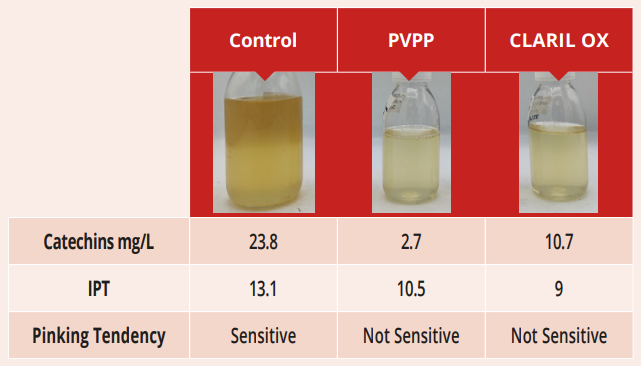
When it comes to fining wine, many traditional fining agents remove a broad spectrum of compounds that can often lead to stripped, less expressive wines. The CLARIL range from Enartis is focused on selective fining, which targets the specific compounds that cause instability and other faults, while preserving the integrity and quality of the wine. The CLARIL range offers precision solutions for an array of issues, including: Preventing and Treating Oxidation – CLARIL OX A natural alternative to PVPP, it acts with exceptional selectivity to target only the compounds responsible for pinking and browning. Its use during fermentation extends shelf-life while preserving color, freshness, and aromatic complexity. Metal Concentration Reduction – CLARIL HM A blend of PVI-PVP and chitosan, CLARIL HM provides antioxidant protection by removing metals that catalyze oxidation reactions such as copper and iron. Smoke Taint and Other Off-Aromas – CLARIL SMK Developed to eliminate
00

August 18, 2025
After a wet winter and a slow start to spring, California is now experiencing an unusually cool summer. While the extended hang time may sound ideal at first glance, many winemakers are concerned, and for good reason. Persistent cool, damp weather during the growing season brings with it an entirely different set of vineyard and cellar challenges, from disease pressure to delays in ripening. If you haven’t already, it’s time to start thinking about how this season’s cooler conditions may affect your fruit, and how to plan ahead to protect your wine’s quality. What’s the Problem with a Cool Summer? Cooler-than-average temperatures, especially when paired with humidity or late rains, can lead to several problematic outcomes in the vineyard: Delayed Ripening: Grapes take longer to reach phenolic maturity, and sugar accumulation may lag behind flavor development. This can result in unbalanced fruit and longer hang time on the vines. Increased Disease Pressure:
00
Achieving tartrate stability is critical for delivering wines that hold up in bottle and on the shelf. One tool that has become increasingly popular for this purpose is carboxymethyl cellulose (CMC), but not all CMCs perform the same. Understanding how CMC works, and how to properly use it, can help you avoid hazes, filtration issues, and color instability. How CMC Prevents Crystal Formation CMC helps prevent potassium bitartrate (KHT) crystals from growing by binding to the crystal surface. It does this through electrostatic attraction between the negatively charged carboxymethyl groups in CMC and the positively charged surface of the KHT crystals. The strength of this interaction depends on the molecular structure of the CMC, meaning that different CMCs vary in their effectiveness. Protein Stability: A Crucial First Step Some CMC products, particularly those with longer polymer chains, can interact with proteins in wine and cause hazes. Protein stability must be confirmed before any
00

January 13, 2025

Event Type: Webinar
Location: Online
Date: 1/21/2025
This free webinar will cover: The recent developments in wine protein instability, including the most current version of the mechanism describing how protein instability forms in white wines. The methods for wine protein stabilization The methods to predict protein instability in wines Speaker: Matteo Marangon, Associate Professor at University of Padova (Italy) The webinar is free rebroadcast of a past event, available on sale or with Infowine Premium Membership at this link. Register here.
00


During a recent fining trial of a problematic wine that was fermented with a problematic yeast, the conversation briefly touched on protein stability and I started reminiscing about the very first blog that I wrote for Laffort South Africa. Said blog post (click here to read it) was about bentonite and its affinity for various proteins or the lack thereof. Bentonite – Jack of all trades, master of some Whether you love it or hate it, this bentonite stuff really is a very versatile oenological additive. For those that are a bit hazy (see what I did there) on the subject, here is a quick recap on what bentonite is and what it does. Bentonite, which is essentially a very useful negatively charged clay, is mainly composed of plates of silicon and aluminium oxide, along with calcium and sodium ions. Upon rehydration, the above-mentioned plates separate, thereby creating a huge surface area that allows the sodium and calcium ions to interact with positively charged heat unstable prote
00
When making white wines, an ounce of prevention really is worth a pound of cure. With any fining process, winemakers must balance the removal of negative characteristics with the inevitable removal of positive ones. Unlike the fining of finished wines, where the flavors and aromatics are set, with juice fining pre-fermentation you are making necessary preventative adjustments before the yeast do their job of driving style. The result is improved aromatics, flavor, and overall quality in your finished wines with a significant reduction in the need for future intervention. This is especially true for things you know you will likely have to deal with later, such as protein instability, astringency, and unwanted color; dealing with them in the juice is always the best option. ATPGroup offers numerous options depending on your specific requirements, but a great place to start is with Phenol-Fine Plus NF. A blend of bentonite, PVPP, and casein, this simple-to-use and highly effective product
00

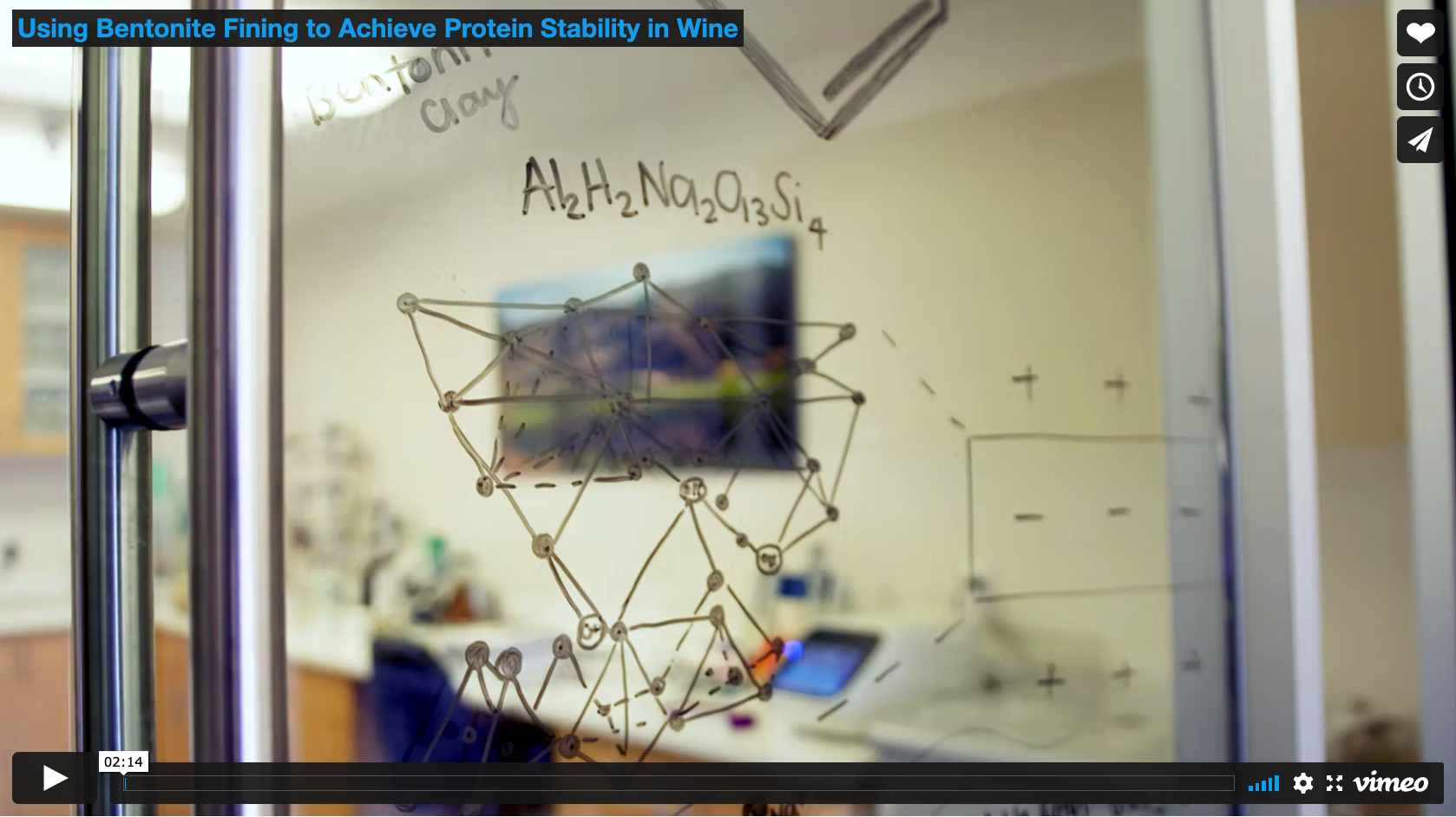
Clarity, or the absence of haze, is a key factor in the appearance of wine, contributing significantly to its commercial value. High temperatures, encountered during transportation or in poor storage conditions, can induce the denaturation of proteins, which then form a suspended haze in a bottle of wine and degrade its value. Bentonite can be used to treat protein instability, acting as a fining agent to pull proteins out of solution before they are bottled. As with many fining agents, bentonite can remove other components that are important to a wine’s sensory properties. Because of this, benchtop trials are encouraged to ensure protein stability in wine without stripping too much of its aromatic compounds through the addition of an appropriate concentration of bentonite. Here at Gravity Analytical Laboratories, turbidity is measured via nephelometer before and after heat exposure to wines treated with varying concentrations of bentonite. If a difference in turbidity greater t
00


Protease Enzyme: Innovative Tool to Achieve Protein Stability in Wine This presentation, sponsored by Oenobrands, will provide an overview on the current understanding of the mechanism of haze formation. In addition, a discussion on how the recent advances in the area allowed the elaboration of innovative strategies for protein stabilization of wines will also be addressed. Protein instability in wine: a review. Rapidase Proteostab application in winemaking to achieve protein stability of the wine. Experts: Matteo Marangon, University of Padova (Italy) Remi Schneider, Oenobrands (France) Participating Company:
00
When making white wines, an ounce of prevention really is worth a pound of cure. With any fining process, winemakers must balance the removal of negative characteristics with the inevitable removal of positive ones. Unlike the fining of finished wines, where the flavors and aromatics are set, with juice fining pre-fermentation you are making necessary preventative adjustments before the yeast do their job of driving style. The result is improved aromatics, flavor, and overall quality in your finished wines with a significant reduction in the need for future intervention. This is especially true for things you know you will likely have to deal with later, such as protein instability, astringency, and unwanted color; dealing with them in the juice is always the best option. ATPGroup offers numerous options depending on your specific requirements, but a great place to start is with Phenol-Fine Plus NF. A blend of bentonite, PVPP, and casein, this simple-to-use and highly effective product
00

Protein stability evaluation in white wines represents one of the more debated topics in the winemaking world. The market and the scientific community offer various alternatives in terms of analytical methods for the determination of the protein instability: Heat Test, Proteotest® and Bentotest® are some of them, and their purpose is to determine the optimal bentonite dosage to avoid the formation of haze caused by protein precipitation on the finished wine without stripping too much of the wine’s structure and aromatics.
Proteotest® is a methodology developed by the R&D department of VASONGROUP that allows the user to evaluate the protein stability at the enological conditions extremely fast and reliably. Already in 2007, on occasion of “Intervitis-Interfructa”, one of the main European fairs for Viticulture, Wine Cellars, and Distillery Technologies, Proteotest® was awarded for the company’s research and knowledge about
00