
Filter Post Type
NewsVideoProductEventLink
Sort:
Most Recent
1–10 of 18


Troubleshooting Sluggish and Stuck Fermentations—Can you Get Back on Track without a Restart? There are several factors that affect the success of fermentation, and sometimes a small adjustment can get things back on track without the need for a full restart. Below we outline some common causes of problematic fermentations and advice for next steps. TEMPERATURE STRESS Each yeast strain has an optimal temperature range and anything outside of this range can cause yeast stress. If the temperature was too high or spiked, the yeast may not be viable and a restart may be needed. If it is too low, try slowly warming the wine to 70°F. INADEQUATE MIXING If the tank isn’t mixed, yeast may settle and lose access to nutrients and sugar. This can slow fermentation or cause it to stall. Gentle mixing during fermentation helps keep yeast active and fermentation on track. WINE MIGHT NEED DETOXIFICATION When yeast become stressed, they can produce compounds th
00
September 11, 2025

A smooth, complete fermentation doesn’t happen by chance, it starts with balanced yeast nutrition. When yeast has access to the right nutrients at the right time, you avoid sluggish or stuck fermentations, reduce the risk of Hâ‚‚S and VA, and unlock the full aromatic potential of your grapes. Why Yeast Nutrition Matters? Nitrogen is the main driver of yeast growth and fermentation activity. Saccharomyces can assimilate only ammonium ions (DAP), amino acids (organic nitrogen), and small peptides (organic nitrogen). Amino acids are strategic: they are taken up early, stored, and used gradually. Some of them also act as aroma precursors (thiols, esters, acetates). Vitamins & minerals (thiamine, Mg, Zn) act as cofactors in enzymatic reactions and have a role in cell growth, fermentation activity, and nitrogen metabolism. Sterols & long-chain fatty acids are essential for membrane structure, stress resistance, and survival. Click here for all fermentation tips & gui
00


For over 30 years, we’ve partnered with wineries of all sizes to provide expert winemaking services tailored to real-world harvest needs. From precision alcohol adjustment and dealcoholization services to fermentation troubleshooting, BevZero is here to take complexity out of the crush season and help you produce your best wine, every time. We don’t just support winemakers, we work alongside them. Our global team of winemakers, food scientists, and beverage technologists are embedded in the industry, bringing first-hand experience and scientific expertise to every solution. Why BevZero? A Partner Rooted in Innovation Founded in 1991, BevZero pioneered vacuum distillation for alcohol reduction in wine, a process that quickly became a standard in the industry. But our commitment to innovation didn’t stop there. Today, BevZero operates globally, offering advanced winemaking support from our facilities in the U.S., Spain, and South Africa. Our services are designed to sol
00
Troubleshooting Sluggish and Stuck Fermentations Could you get back on track without a restart? There are several factors that affect the success of fermentation and sometimes a small adjustment can get things back on track without the need for a full restart. Below we outline some common causes of problematic fermentations and advice for next steps. Read the Full Article TEMPERATURE STRESS Each yeast strain has an optimal temperature range and anything outside of this range can cause yeast stress. If the temperature is too high (or if it spiked at any point), it’s possible the yeast are no longer viable and a restart is necessary. If the temperature is too low, try slowly warming the wine to 70°F (+/- 2°F). ALCOHOL MAY BE TOO HIGH Certain yeast strains can tolerate more alcohol than others. If you have exceeded the tolerance level of your selected strain, you may need to reinoculate with a strain that has a higher tolerance or try a restart.&nbs
00

September 16, 2024
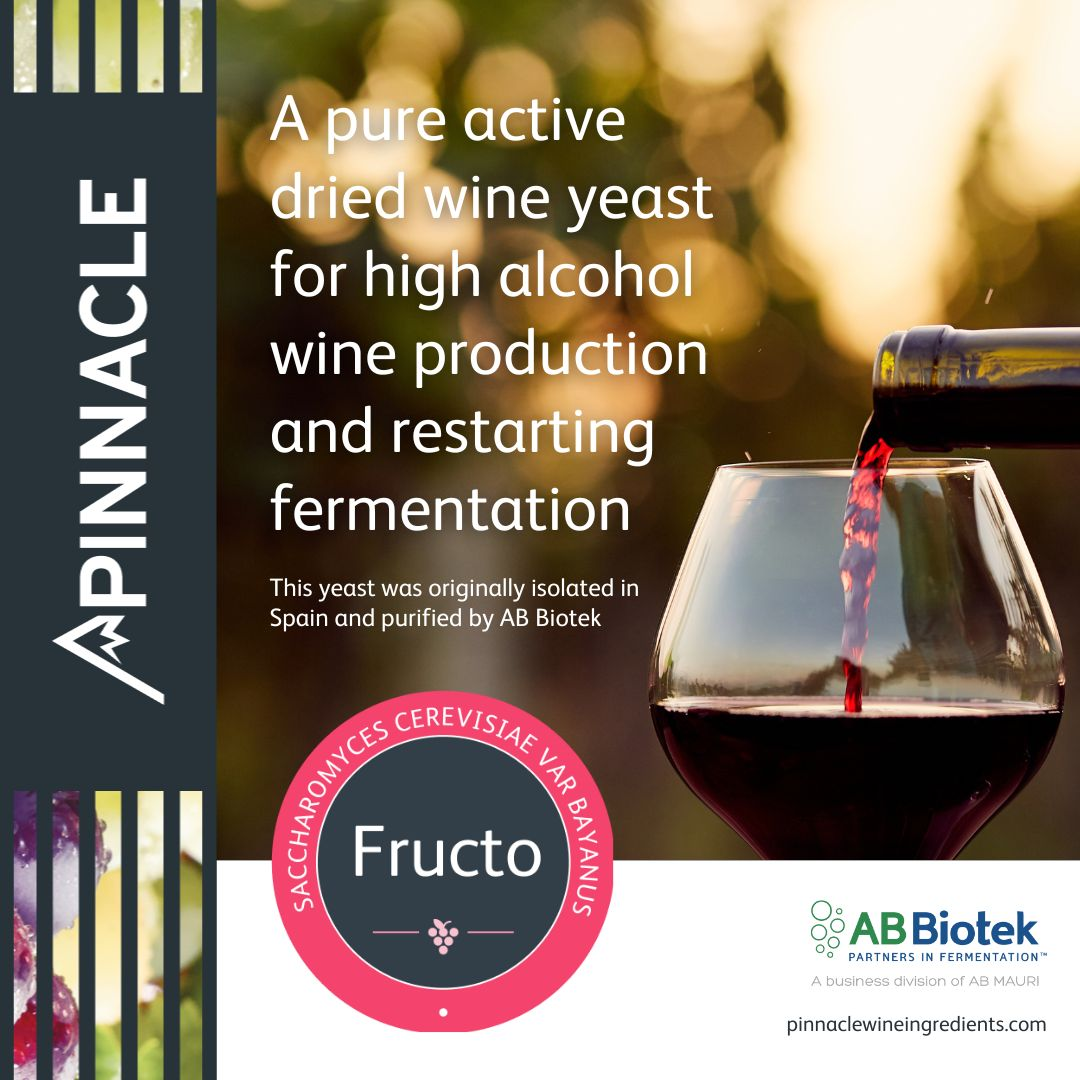
This strong fermenter thrives at temperatures of 15-30°C and has a high alcohol tolerance of up to >19% v/v. It's even capable of restarting fermentation in high alcohol conditions. Ideal for high sugar grape juices leading to high potential alcohol yield, Pinnacle Fructo is your solution for stuck and sluggish fermentations in both red and white wines. Best used on ripe Cabernet Sauvignon, Merlot, Malbec, Shiraz/Syrah, and other high alcohol wines. Plus, it's a low foaming strain, ensuring a smooth winemaking process. Cheers to high-alcohol, well-fermented wines! Learn more here.
00

August 16, 2024
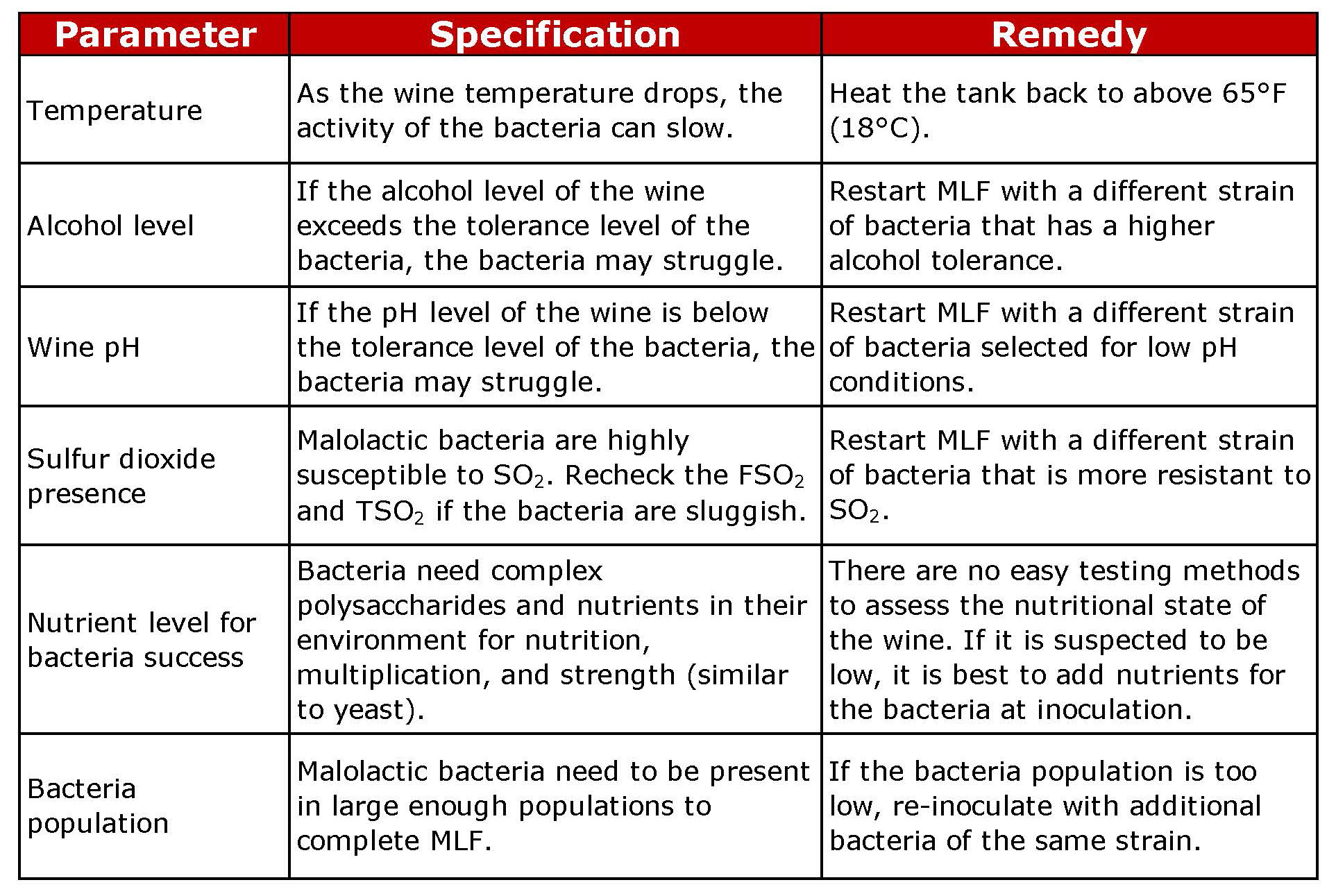
Malolactic fermentation (MLF) is crucial in winemaking for reducing acidity, enhancing flavor, and improving stability. By converting sharp malic acid into softer lactic acid, MLF softens the wine, creating a smoother, more palatable profile while also adding complexity, such as buttery or creamy notes, particularly in wines like Chardonnay. This process, which typically occurs after primary fermentation, also stabilizes the wine by preventing potential spoilage from spontaneous malic acid fermentation. MLF is common in red wines and some white wines and is often induced by inoculating the wine with a selected bacterial strain to achieve a specific texture, flavor, and overall quality of the wine. MLF is much slower and less turbulent than primary (alcoholic) fermentation; taking weeks, even months, to complete. The fermentation is complete when malic acid levels are measured below 0.1 g/L. Recommended practices for a successful MLF: For easier acclimatization, keep the wine belo
00

By OLIVIER CAILLE, Fermentis Technical Manager – Yeast Derivatives And ANNE FLESCH, Fermentis Technical Sales Support Manager Wine – The Americas By using yeast derivatives, you can do more than just facilitate fermentation. You can also get out of a stuck fermentation, stabilize your color, bring roundness and better resist to oxidation. Our expert, Olivier Caille, helps you clearly understand the advantages offered by derivatives at all stages of winemaking. “We know that time is precious for winemakers and that the fermentation process is not always easy to master” begins Olivier. “Offering efficient fermentation solutions is our way to help them focus on their creativity and core business. Over the last years, as the result of extensive research, Fermentis has launched several new yeast-derived technical products, which are classified into two families : fermentation aids and functional products.” The first ones improve and acc
00
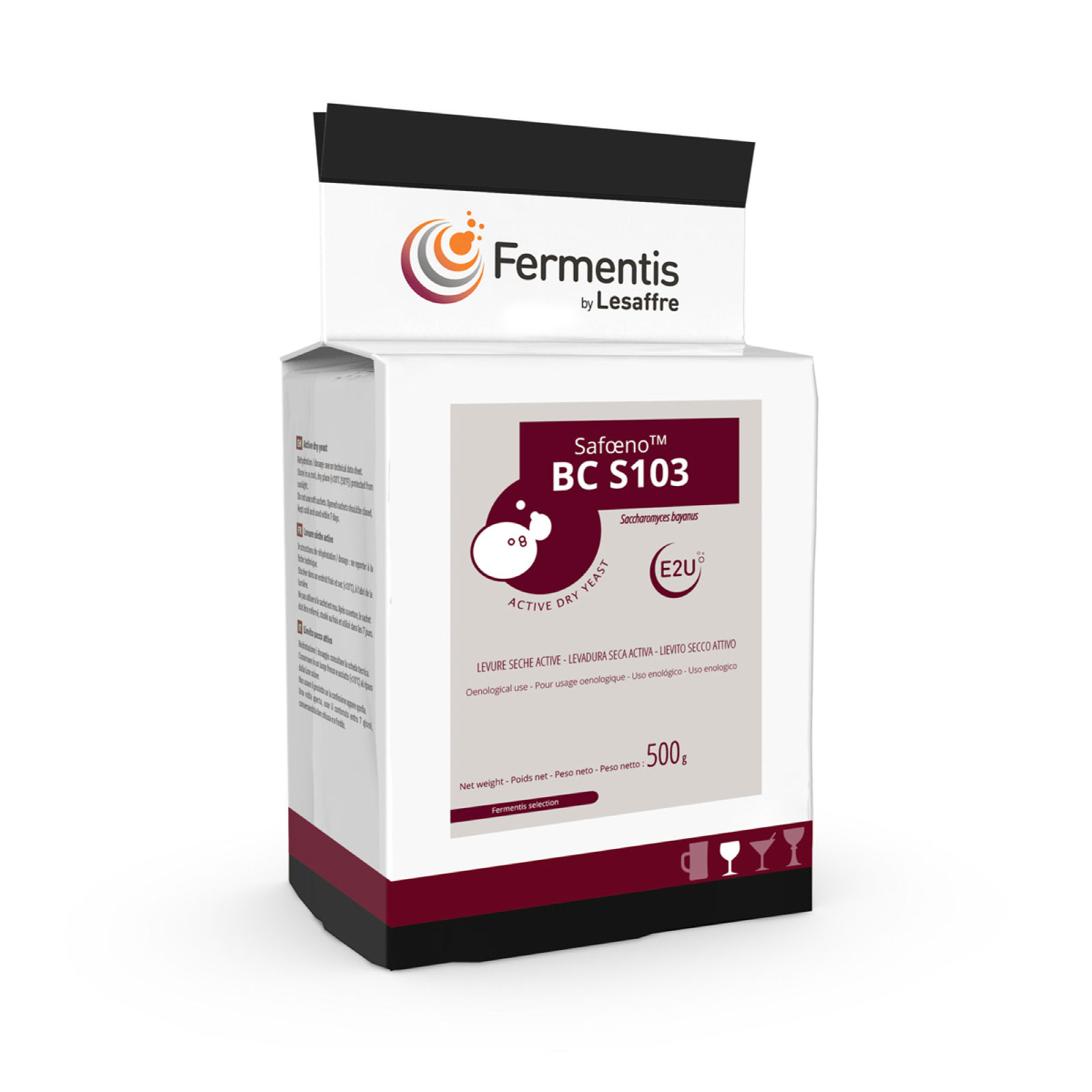
SafŒno™ BC S103 was selected for its excellent fermentation characteristics and its great resistance to extreme winemaking conditions. This is the workhorse of the Fermentis range, THE yeast we advise for all extreme fermentation conditions (low nitrogen needs high alcohol tolerance…) In short, a yeast we use for safety and in that case (matrix thiols), it is quite neutral in aromatic terms. But if we put it in good conditions (matrixes Esters and Esters/Thiols), we showed a very high production of isoamyl acetate (amylic notes) and of phenylethanol (floral) as well as a rather high thiol release and low ethyl esters production. And this was strictly correlated with fresh, floral and amylic notes. It was a very nice confirmation of the feedback we had from our most staunch customers. KEY-POINTS → Excellent settling strength → Wide fermentation temperature spectrum: 10-35 °C → Excellent fructose assimilation → Very go
00
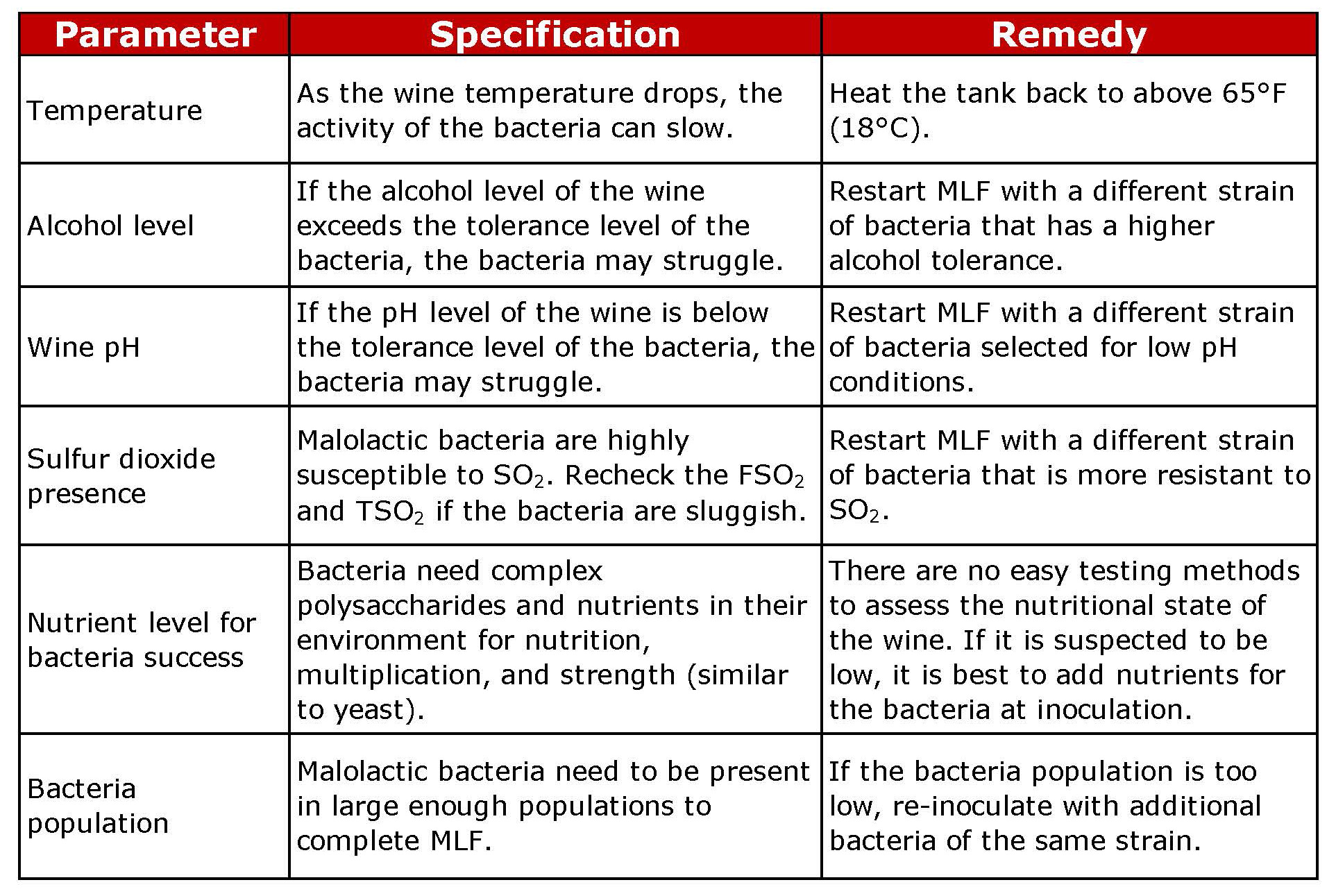
Malolactic fermentation (MLF) is a secondary bacterial fermentation that converts malic acid into lactic acid in wine. It is a common step in winemaking and is necessary for some wine styles. This process creates aroma and flavor compounds and reduces the acidity of the wine, which increases the roundness of the mouthfeel. MLF can occur naturally during or after primary fermentation or can be induced by inoculating the wine with a selected bacterial strain. It is much slower and less turbulent than primary (alcoholic) fermentation; taking weeks, even months, to complete, and truly testing the patience of an enologist. The fermentation is complete when malic acid levels are measured below 0.1 g/L. Recommended practices for a successful MLF: For easier acclimatization, keep the wine below 15% alcohol and above pH 3.1. Consult the recommendations for your selected strain of bacteria for specific parameters. Maintain a temperature between 63–77°F (17–25°C) to acti
00

We have endless amounts of free resources on our website. Whether you are looking for technical information like our winemaking guidelines, missed one of our educational webinars, or need help perfecting your wine and need some samples, we got you covered. RESOURCES Technical Webinars View all our previous webinars on our YouTube Channel and stay tuned for our upcoming webinars on the latest solutions to various winemaking challenges. View all webinars here. Winemaking Guidelines From rose winemaking to high pH reds to restarting a stuck fermentation, we have winemaking guidelines for your specific needs. View all winemaking guidelines here. Enjoy 10% off all FINISHING TANNINS! Sale Valid until May 15th Tannin Kits Ask Us for Samples, HERE We are happy to set up bench trials with you to work on mouthfeel, aromas, and balancing your wine. SIGN UP FOR OUR UPCOMING EVENTS MASTERING MALOLACTIC FERMENTATION - MAY 16, 2023 ADDRESSING CLIMATE CHANGE - JUNE 6, 2023
00