
Filter Post Type
NewsVideoProductEventLink
Sort:
Most Recent
1–10 of 40


Dear Customer, As bottling season approaches, we’re here to support you with specialized testing services and essential products to ensure your wine is at its best. Important Details for Testing Services: These tests are not included in your subscription pricing; individual pricing is listed below. Each test requires a separate sample, with specific volume requirements. Please label your samples clearly with the test name. For Turbidity (NTU) and Brettanomyces testing, ensure you write "NTU" or "Brett" on the sample tube cap and label for streamlined processing. Available Tests and Pricing: Stability Testing (Please complete the Stability Test Request Form) Heat Stability Test: $20/sample (250 mL sample required) Bentonite Fining Trials: $75/sample (750 mL sample required) Note: These trials take 3 days and will start the following Monday if submitted after noon on Thursday. Davis Conductivity Test: $30/sample (375 mL sample required) DIT – Degree o
10
January 27, 2026
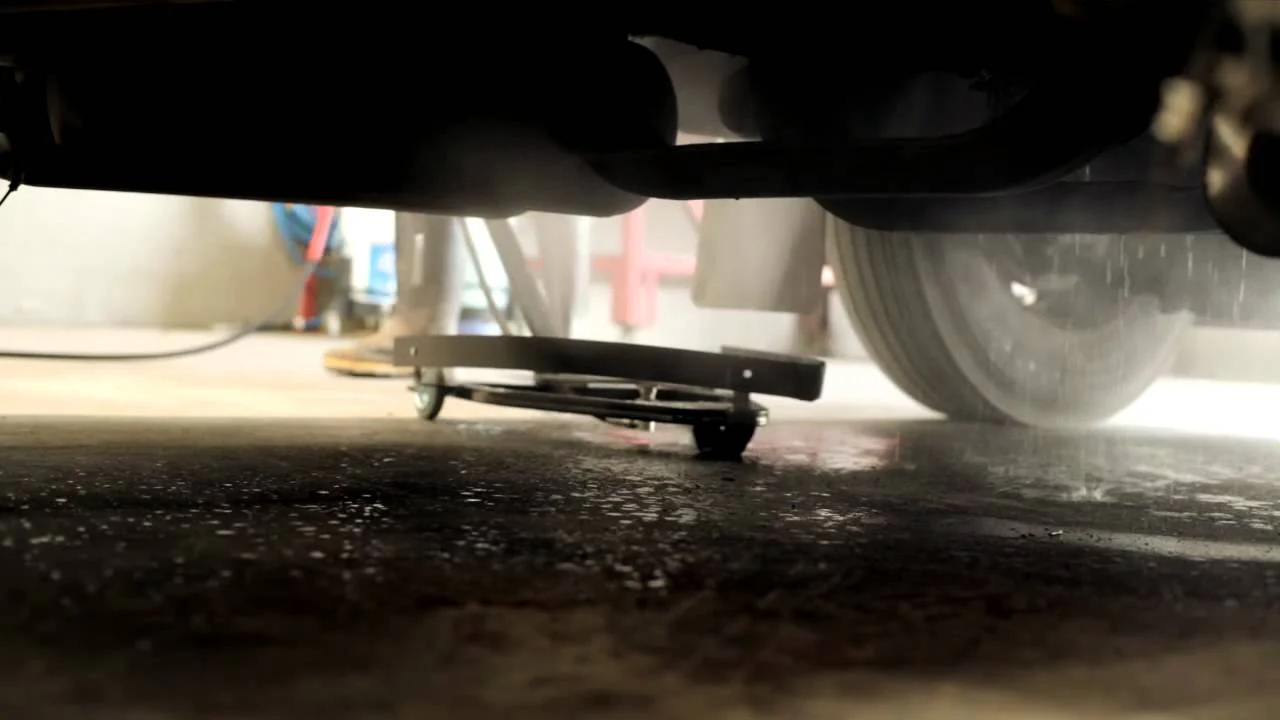
Are you paying for undercarriage corrosion? Whether it’s a company car or a heavy-duty commercial truck, there’s a hidden part of your vehicle and constantly under attack: the underbelly. Why should you care? Because the structural and operational integrity of your undercarriage directly impacts vehicle safety, performance, and even long-term value! Unfortunately, in the rush of doing a vehicle wash, it’s commonplace to skip this crucial cleaning step. But when you do, it leaves expensive systems—like the brake lines, suspension, and exhaust—exposed to relentless corrosion. And repair and replacement costs can rapidly climb into the thousands of dollars! 4 Sneaky Undercarriage Corrosives 1. Damage Scratcher Gravel, rocks, glass and general road debris bounce up into your undercarriage and constantly scrape and chip away at the protective coatings and paint. Once the bare metal is exposed, rust immediately sets in. 2. Sticky Sponge Wh
00
Troubleshooting Sluggish and Stuck Fermentations—Can you Get Back on Track without a Restart? There are several factors that affect the success of fermentation, and sometimes a small adjustment can get things back on track without the need for a full restart. Below we outline some common causes of problematic fermentations and advice for next steps. TEMPERATURE STRESS Each yeast strain has an optimal temperature range and anything outside of this range can cause yeast stress. If the temperature was too high or spiked, the yeast may not be viable and a restart may be needed. If it is too low, try slowly warming the wine to 70°F. INADEQUATE MIXING If the tank isn’t mixed, yeast may settle and lose access to nutrients and sugar. This can slow fermentation or cause it to stall. Gentle mixing during fermentation helps keep yeast active and fermentation on track. WINE MIGHT NEED DETOXIFICATION When yeast become stressed, they can produce compounds th
00
September 11, 2025

A smooth, complete fermentation doesn’t happen by chance, it starts with balanced yeast nutrition. When yeast has access to the right nutrients at the right time, you avoid sluggish or stuck fermentations, reduce the risk of Hâ‚‚S and VA, and unlock the full aromatic potential of your grapes. Why Yeast Nutrition Matters? Nitrogen is the main driver of yeast growth and fermentation activity. Saccharomyces can assimilate only ammonium ions (DAP), amino acids (organic nitrogen), and small peptides (organic nitrogen). Amino acids are strategic: they are taken up early, stored, and used gradually. Some of them also act as aroma precursors (thiols, esters, acetates). Vitamins & minerals (thiamine, Mg, Zn) act as cofactors in enzymatic reactions and have a role in cell growth, fermentation activity, and nitrogen metabolism. Sterols & long-chain fatty acids are essential for membrane structure, stress resistance, and survival. Click here for all fermentation tips & gui
00

For over 30 years, we’ve partnered with wineries of all sizes to provide expert winemaking services tailored to real-world harvest needs. From precision alcohol adjustment and dealcoholization services to fermentation troubleshooting, BevZero is here to take complexity out of the crush season and help you produce your best wine, every time. We don’t just support winemakers, we work alongside them. Our global team of winemakers, food scientists, and beverage technologists are embedded in the industry, bringing first-hand experience and scientific expertise to every solution. Why BevZero? A Partner Rooted in Innovation Founded in 1991, BevZero pioneered vacuum distillation for alcohol reduction in wine, a process that quickly became a standard in the industry. But our commitment to innovation didn’t stop there. Today, BevZero operates globally, offering advanced winemaking support from our facilities in the U.S., Spain, and South Africa. Our services are designed to sol
00

In vineyards, propane serves essential roles throughout various stages, ensuring optimal winemaking conditions from harvest to bottling. Unlike row crops such as peanuts and corn, grapes in vineyards don't require drying, but propane remains indispensable: During Harvest: Propane powers equipment such as de-stemmers, presses, and pumps for sterilization and crush pad heating. This is crucial for early-morning or cold-climate harvests. Fermentation: While glycol chillers are common, propane may be used to heat tanks, enabling precise control over fermentation restarts and management. Barrel Room & Tasting Rooms: Propane maintains ideal aging temperatures (55–60°F), ensuring quality preservation especially during colder months. Bottling: Propane heats water or steam for thorough cleaning and sanitation of bottling lines, maintaining hygiene standards critical to product quality. Propane's versatility supports sustainability goals by providing a low-emission energy
10


The calendar flip from 2024 to 2025 heralded several new packaging regulations, rulemaking updates, and bills with significant implications for consumer packaged goods in North America and Europe. Recent packaging legislation is reshaping packaging requirements for waste reduction, recyclable materials, circularity, and sustainability. However, actions by the Trump Administration may defer regulatory action at the U.S. federal level and shift packaging-related policies. EPR Packaging Laws Five U.S. states—California, Colorado, Oregon, Maine, and Minnesota—have passed extended producer responsibility laws for packaging. While each state's requirements vary, they share common goals of reducing packaging waste, enhancing recycling efforts, and holding producers (e.g., brand owners) accountable for the life cycle of their products. Since the start of the year, nine states have introduced or re-introduced EPR packaging bills. They include Washington, Tennessee, Hawaii
00
March 5, 2025
As bottling season approaches, we’re here to support you with specialized testing services and essential products to ensure your wine is at its best. Important Details for Testing Services: These tests are not included in your subscription pricing; individual pricing is listed below. Each test requires a separate sample, with specific volume requirements. Please label your samples clearly with the test name. For Turbidity (NTU) and Brettanomyces testing, ensure you write "NTU" or "Brett" on the sample tube cap and label for streamlined processing. Available Tests and Pricing: Stability Testing (Please complete the Stability Test Request Form) Heat Stability Test: $20/sample (250 mL sample required) Bentonite Fining Trials: $75/sample (750 mL sample required)Note: These trials take 3 days and will start the following Monday if submitted after noon on Thursday. Davis Conductivity Test: $30/sample (375 mL sample required) DIT – Degree o
00
Troubleshooting Sluggish and Stuck Fermentations Could you get back on track without a restart? There are several factors that affect the success of fermentation and sometimes a small adjustment can get things back on track without the need for a full restart. Below we outline some common causes of problematic fermentations and advice for next steps. Read the Full Article TEMPERATURE STRESS Each yeast strain has an optimal temperature range and anything outside of this range can cause yeast stress. If the temperature is too high (or if it spiked at any point), it’s possible the yeast are no longer viable and a restart is necessary. If the temperature is too low, try slowly warming the wine to 70°F (+/- 2°F). ALCOHOL MAY BE TOO HIGH Certain yeast strains can tolerate more alcohol than others. If you have exceeded the tolerance level of your selected strain, you may need to reinoculate with a strain that has a higher tolerance or try a restart.&nbs
00

September 16, 2024
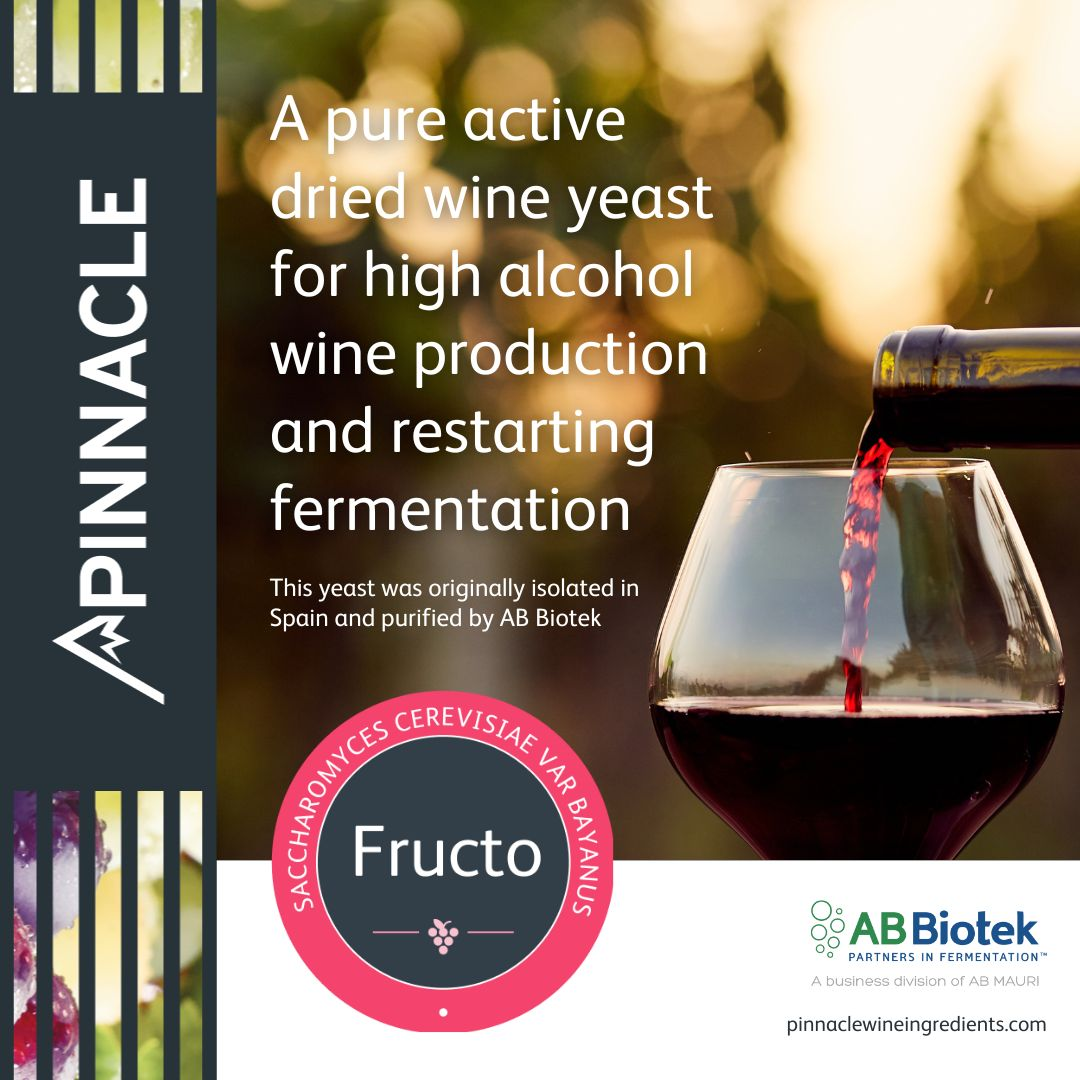
This strong fermenter thrives at temperatures of 15-30°C and has a high alcohol tolerance of up to >19% v/v. It's even capable of restarting fermentation in high alcohol conditions. Ideal for high sugar grape juices leading to high potential alcohol yield, Pinnacle Fructo is your solution for stuck and sluggish fermentations in both red and white wines. Best used on ripe Cabernet Sauvignon, Merlot, Malbec, Shiraz/Syrah, and other high alcohol wines. Plus, it's a low foaming strain, ensuring a smooth winemaking process. Cheers to high-alcohol, well-fermented wines! Learn more here.
00