
Filter Post Type
NewsVideoProductEventLink
Sort:
Most Recent
1–7 of 7

Troubleshooting Sluggish and Stuck Fermentations—Can you Get Back on Track without a Restart? There are several factors that affect the success of fermentation, and sometimes a small adjustment can get things back on track without the need for a full restart. Below we outline some common causes of problematic fermentations and advice for next steps. TEMPERATURE STRESS Each yeast strain has an optimal temperature range and anything outside of this range can cause yeast stress. If the temperature was too high or spiked, the yeast may not be viable and a restart may be needed. If it is too low, try slowly warming the wine to 70°F. INADEQUATE MIXING If the tank isn’t mixed, yeast may settle and lose access to nutrients and sugar. This can slow fermentation or cause it to stall. Gentle mixing during fermentation helps keep yeast active and fermentation on track. WINE MIGHT NEED DETOXIFICATION When yeast become stressed, they can produce compounds th
00
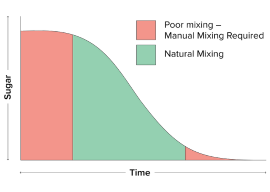
Why Proper Fermentation Mixing is Essential It’s a common myth that fermentations “self-mix" when in fact this is only true during the most active stages of fermentation. Recent research (Schwinn et al., 2019) has shown that without manual mixing, yeast can struggle to stay in suspension, causing yeast stress and other unwanted impacts. The Benefits of Mixing LIMIT STRATIFICATION Without mixing, yeast and nutrients can crowd the bottom of the tank, leading to different fermentation rates and progression in different parts of the vessel. PREVENT OFF-AROMAS Ensuring even distribution of yeast and nutrients limits stress, reducing the risk of off-aromas like hydrogen sulfide, acetic acid, and acetaldehyde. IMPROVE YEAST PERFORMANCE Even distribution of yeast and nutrients also keeps yeast healthy, active, and efficient, improving fermentation kinetics and tank turnover. WHEN TO MIX Mixing is most important during early fermentation and near the end. At both o
00
.jpg)
April 2, 2025
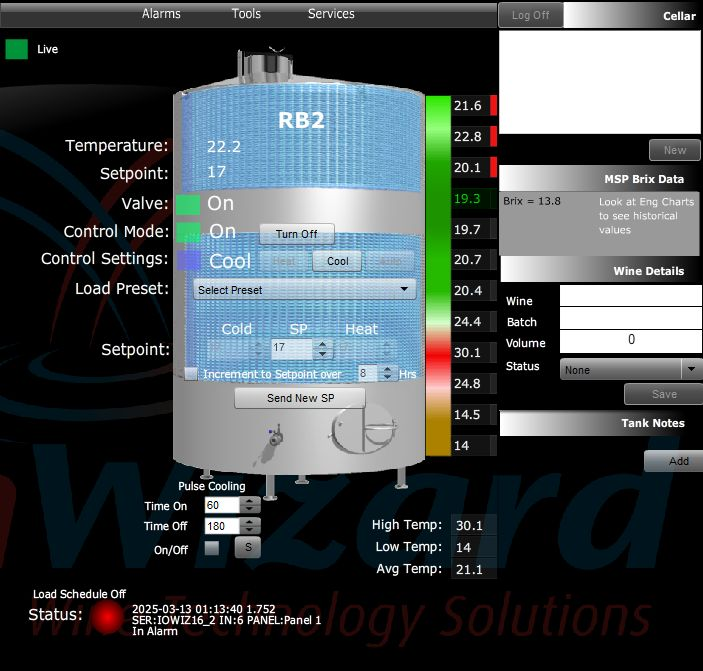
Tank temperature stratification doesn't differ in the Southern Hemisphere! We have a new MSP deployment and the data shows there are TWO different fermentations happening in ONE tank. Unfortunately fermenting Bordeaux at 14C/57F lower in the tank and 30C/86F near the top is likely not the winemaker's intention. The "sawtooth" trends shows the impact of a pumpover, which unfortunately is not achieving good enough mixing. The wine at the bottom of the tank never reaches the desired set point and the skin cap reaches the setpoint for less than an hour before jumping. While our real-time Brix readings are looking good as well (right side of the tank image), I know a lot of winemakers are changing their fermentation management based upon the MSP's ability to elucidate temperature at every level of the tank.
00

Manage 1-2 ton red wine cap fermentations with Pulsair Systems. Col Solare located on Red Mt. in Benton City, WA has used Pulsair since 2008 to help manage and mixing floating red grape caps during the fermentation process to enhance tannin extraction, phenolics, aromatics and more.
00
Saviah Cellars in Walla Walla, WA uses Pulsair's mixing equipment to mix 1-2 ton red wine fermentation tanks. The wine cap air mixing process works by sequentially pulsing in large bursts of compressed air into the juice below the floating grape cap. The rising bubbles push and pull the juice up over the top of the cap to complete homogenize and mix the cap. Wine punch-downs are used alongside Pulsair during fermentation to create and craft the best wines possible. This large bubble mixing process saves time and help enhance and improve the infusion of phenolics, tannins, flavors and color yielding a more healthy and active ferment.
00
May 14, 2020
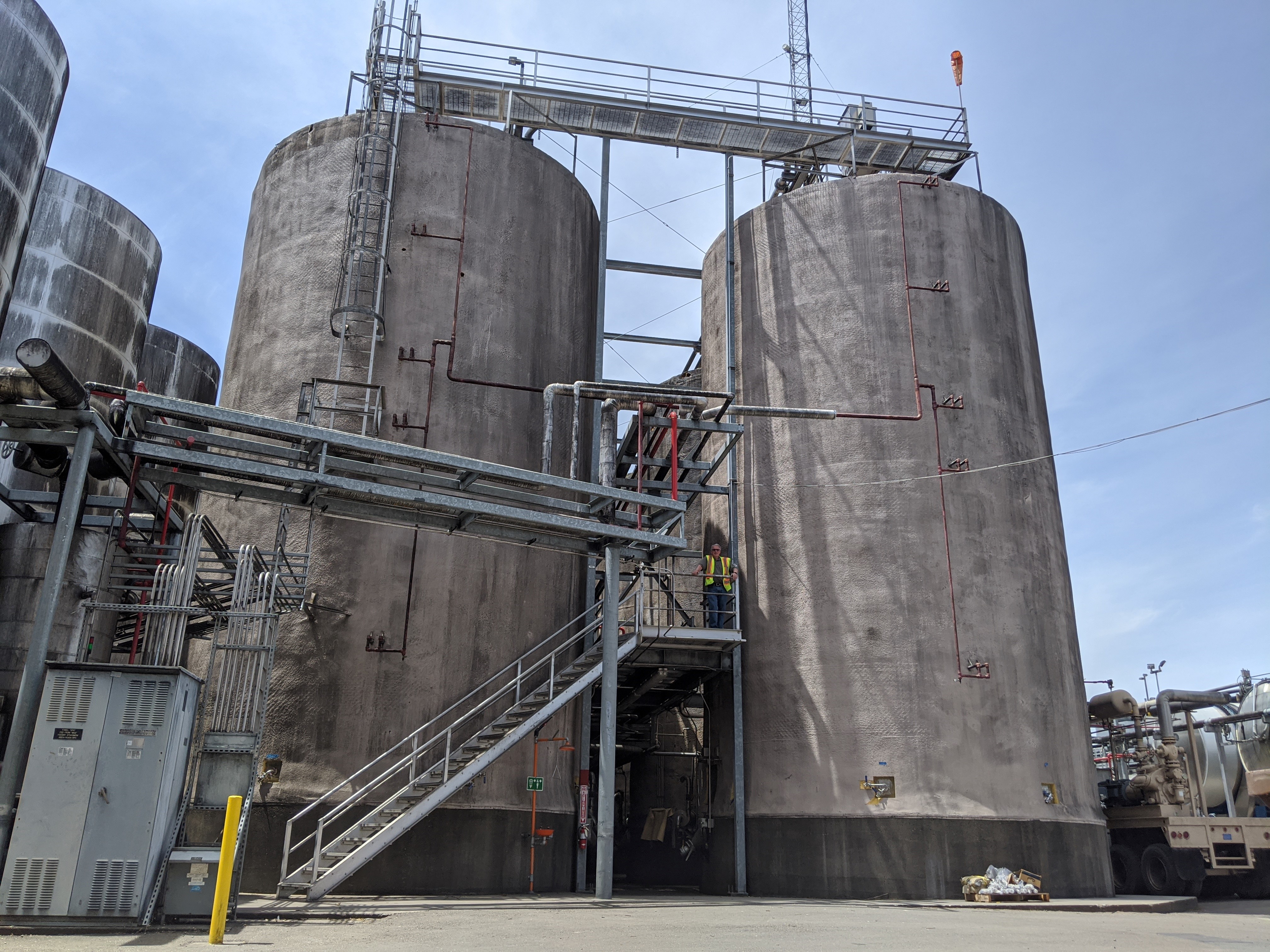
Kirkland, WA – Pulsair Systems Inc. today announced that Bear Creek Winery, one of the country’s largest custom premium wine producers is expanding their Pulsair large bubble, air mixing system installation into four (4) 450-ton, 23 foot diameter red fermentation tanks to maximize efficiency for cap management and rapid tank devatting after primary fermentation is ended. Pulsair is providing cap management equipment, engineering, training and a Pulsair Pneumatage multi-tank touchscreen air mixing controller for Bear Creek Winery in Lodi, CA. “We’re thrilled to continue working with Bear Creek Winery as they expand and adopt winemaking technologies that help support their high-quality standards and lower productions costs without any compromise in wine quality,” said John Parks, Pulsair’s General Manager. “Bear Creek first started using Pulsair during the 2019 harvest with amazing result. What usually took 24-30 hours t
00
February 25, 2020
All-New Pulsair Systems TM-1501W Wine Kit.
Pulsair officially unveils a new, inexpensive, portable air mixing system, the TM-1501W Wine Kit, for winemakers who ferment smaller grape lots in barrels, macrobins and 1-3 ton fermentation tanks to improve the vinification process.
Featuring Pulsair's 35-year proven and tested air mixing process for cap management, winemakers can now use Pulsair in smaller fermentation tanks to enhance the infusions of phenolics, tannins and color to improve aromatics, complex structure and reduce reductive and stuck ferments.
A lightweight, portable stainless steel probe is inserted in through the buoyant cap to sequentially release the timed pulses of compressed air or gas into the ferment. The speed and intensity of the modulated injection of air pulses can be controlled on the all-pneumatic, air driven Pulsair TM-1501W Mixer. Once released under the cap, the rising compressed air bubbles push the juice up into and over the top of the c
00