
Filter Post Type
NewsVideoProductEventLink
Sort:
Most Recent
1–10 of 23

Roy Chapin of 4 Winds Winery shares how WiseConn’s DropControl system enables real-time irrigation management directly from his phone. By monitoring soil moisture and weather data, Roy can make informed decisions to optimize vine health during critical stages like budbreak. This technology allows for precise water application, ensuring the vines receive exactly what they need, when they need it. Watch the video to see how remote irrigation control is transforming vineyard management.
00

Noticeably improved market activity: Where and on what? Bulk wine and grape activity levels since the turn of the year have been noticeably improved versus the final months of 2024, although much of the activity has consisted of inquiries rather than transactions. Publication in February of the CDFA’s preliminary 2024 harvest figure of 2.84 million tons - upped slightly to 2.88 million tons in the final report published March 10, but still the smallest in 20 years – failed to generate additional market momentum. On the bulk market, the buyer pool remains shallow and activity is certainly not concerted enough to make a dent in overall inventory: Paid subscribers can view our updated bulk wine inventory graphs by volume and by varietal, and find out what wines are in demand, by reading the full California Report for March. The grape market has experienced a smaller uptick in interest than the bulk market, likely in part because growers and grape buyers are waiting for the fr
00
The weather across California was largely normal through April into early May, perhaps exhibiting a tendency to be slightly erratic, with warm spells of sunshine interspersed by cooler temperatures and some rain. Few if any issues were encountered in the vineyards; the frost risk has now all but passed without notable incident, some frost-prone areas perhaps experiencing limited damage. Budbreak and the early stages of flowering have occurred at a normal timing, perhaps up to three weeks ahead of the lateness seen last year. With some warm periods expected through May, the expectation is that the flowering stage will proceed quicker than last year, when it was greatly protracted by unseasonable coolness. It remains too early to read much into cluster count reports, which have been variable. A second-consecutive helpfully wet winter means the growing season opens with good soil moisture levels and water reserves, with reservoirs and Sierra Nevada snowpack at or in excess of 100% o
00
The jet stream moved further south in February, bringing steady rainfall to Coastal California and also some precipitation to Lodi and the Interior. Significant snow fell at higher elevations: State-wide snowpack levels rose from 50% of normal as of January 31st to 104% by March 4th. This spring has started similar to last year’s, although not as wet or as late to the same extent. Also in common with last year, some growers have struggled to get into their vineyards to prune. Budbreak is now underway. Temperatures have not dropped low enough for frost to become an issue – in any case, moisture levels have been a defence. The frost risk window will remain open until around the start of May, and some growers may be holding off from pruning until then; others will be assessing whether or not they should prune at all if their vines remain uncontacted. Viticultural climatologist Gregory V. Jones forecasts a continuation of the southerly jet stream through March, making abo
00

November 2, 2023
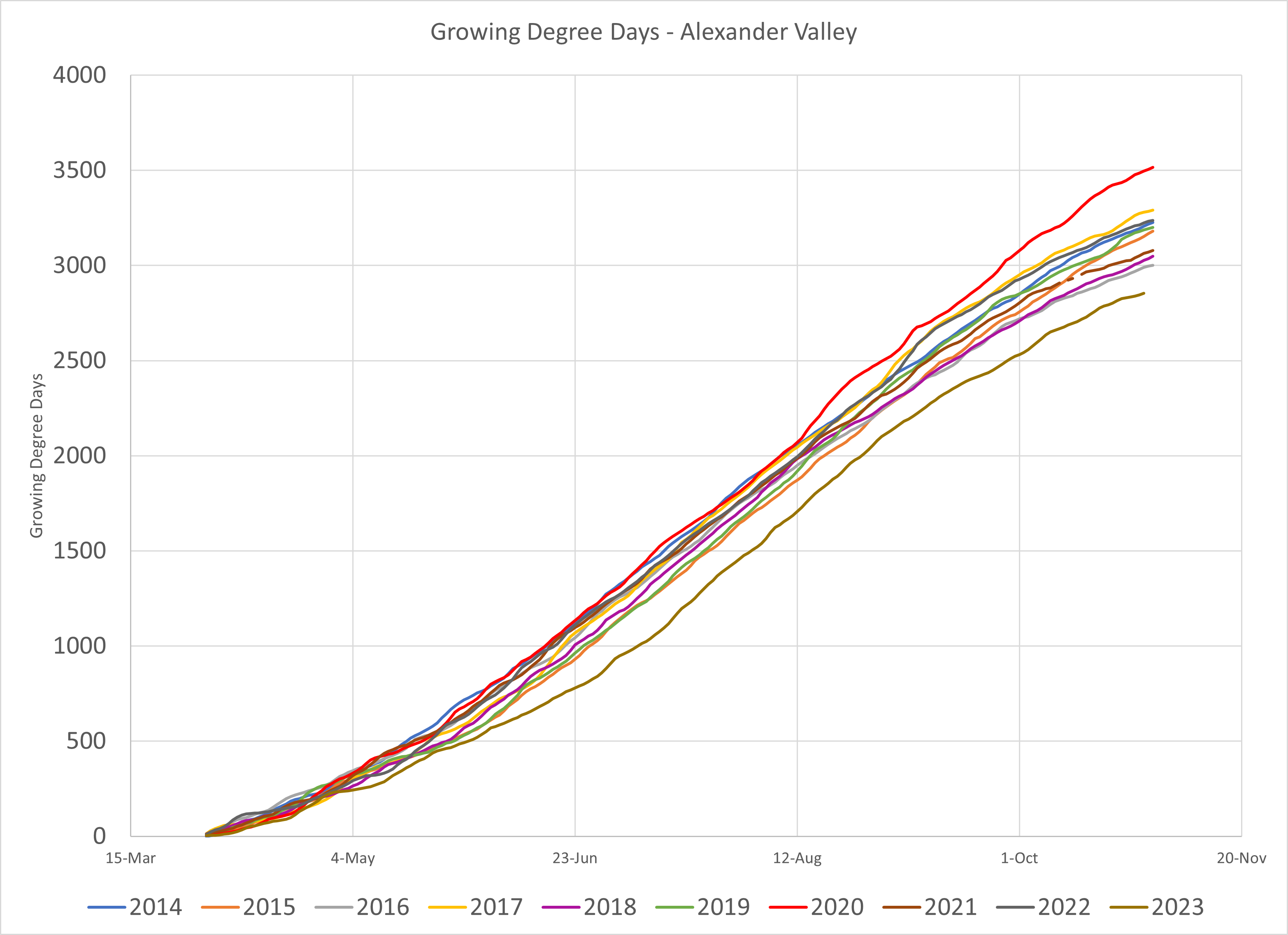
Yesterday marked the official end of the growing season and what a season it was, amiright?? 2023 has proven to be polarizing. For some growers and winemakers, this was a remarkable year for quality, and others are just thankful to have crop insurance. Let’s take a look at why this is. I wrote about how 2023 was shaping up back in July when I looked at how Growing Degree Days (GDD) were stacking up compared to other years. GDDs are typically calculated by taking the average of the daily minimum and maximum temperature and subtracting a base number, in this case 10°C (50°F). Back in July, most places sampled were around 300 GDDs behind previous years. After rerunning the temperature data this week, it looks like the season never caught up. Here's a look at Growing Degree Days in Alexander Valley The difference in some locations was extreme. At this vineyard in Eastern Paso Robles, this year was between 300 and 800 GDDs behind! Early season woes Back in July
00
A cooler than normal spring to date, following a wetter than normal winter, has delayed vineyard development in much of California by between 10 days to three weeks when compared with recent years. The forecast is for continued cooler weather in the first part of May before the eventual arrival of higher temperatures, raising the prospect of the growing cycle being further behind by the time June comes around. While the high precipitation levels of the first quarter of the year have been welcome, as they considerably eased drought levels across the state, growers are now impatient to get on with the season. Recent weeks have finally been dry enough in the Coast to allow vineyard work, including the first preventative sprays; disease pressure has not been a reported issue. The cooler spring has prevented premature budbreak, limiting the frost risk so far, and the very few cluster count reports we have received – mainly from the North Coast – have been positive. Cluster
00
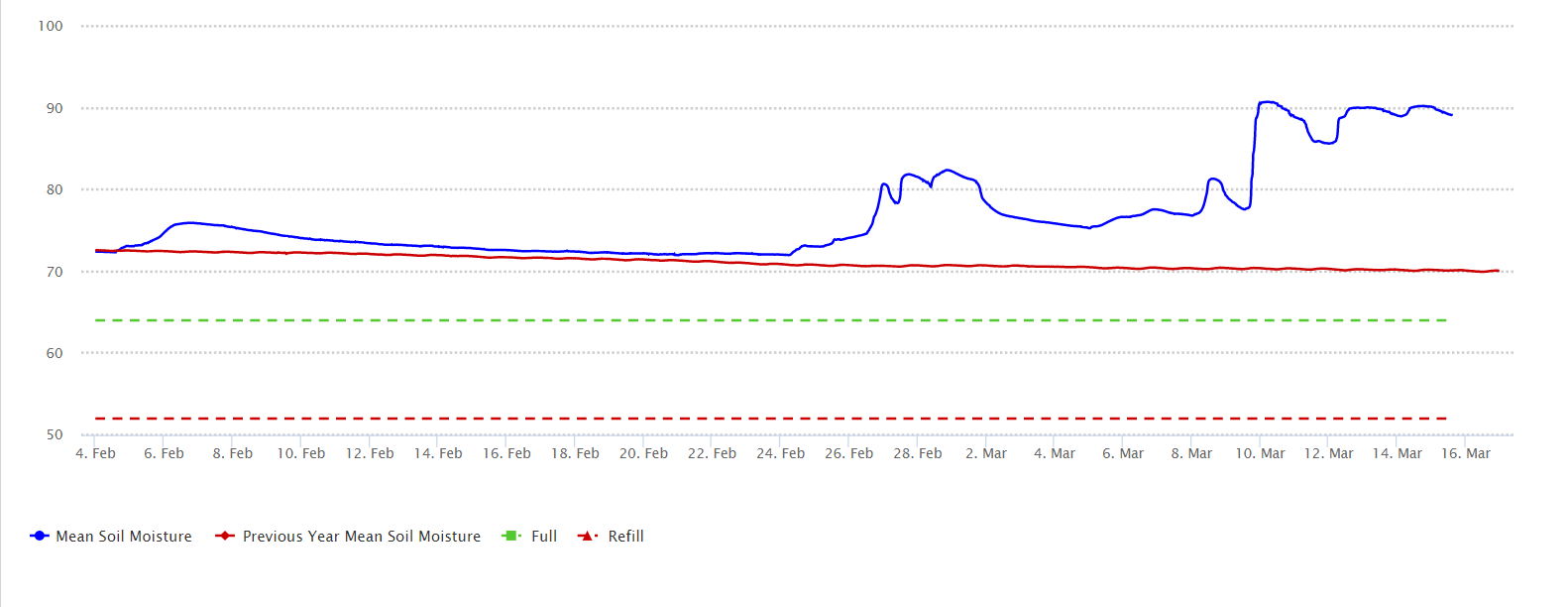
We got a lot of rain this year and every time I'm a bit of a Debby Downer about what it means for the 2023 season. Rainfall in the fall is nice, but did I mention that spring time rain is what counts? Well budbreak is right around the corner and unlike 2022, the rain has stuck around. So the big question is...are we in a better place than we were last year? Yes. Let's take a look at where we are with regards to last year around this time. Roll footage! Look at that. The blue line above is this year's average water content while the red line is last year's. This block is in a much moister position than it was last year. The above graph is from down south in the Paso Robles region. This time last year (red line), they were already irrigating because the soil was already super dry. This year (blue line) rain has filled the soil profile to field capacity. This site does not have a whole lot of water, so the fact that they can push back the start of irrigations until later
00
Mid-February’s publication of the California Department of Food and Agriculture’s preliminary 2022 grape crush report – showing 3.349 million tons crushed, the lowest figure since 2011 – has failed to stimulate extra activity on California’s grape wine and bulk markets. Such hesitant activity after a fourth-successive sub-4-million-ton crop starkly illustrates the underlying demand weakness, which – to some extent – applies even in those areas that traditionally command the highest premium. The disconnect between supplier and buyer price expectations – on grapes and bulk wine – is continuing and by now well-documented: This month’s report again outlines the impasse in deal-making that this is producing. If there is any vineyard news that has impacted the market in the past four weeks, it has come not from the pages of the crush report but from the weather bulletins, which have shown a very wet few weeks across California
00
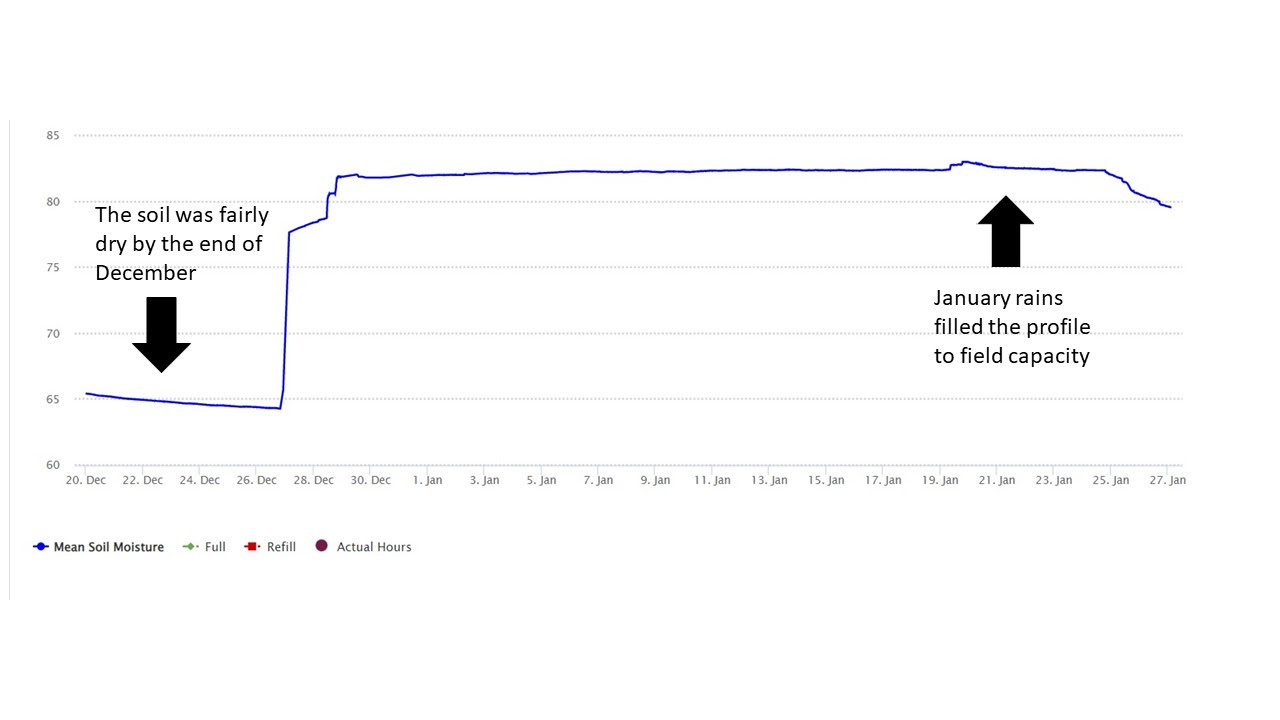
In the last couple of months, California has been hit with a lot more water than we’re used to. Here in Sonoma County we’ve had excesses of 18” of rain and that was just since January 1st. Other parts of the state got even more. The sun has been out for over a week now. Let’s look at how much of that water stayed in the ground. The following charts show relative soil moisture content measured by soil moisture probes. Location 1: Here’s a site with a loamy/moderate textured soil. The rain did a good job pumping up the relative water content. Location 2: Here’s a site with light texture. This site may have taken on a lot of water, but it rapidly percolated into the deep soil, leaving it as it was prior to the rain. Here’s a look at the different depth levels. Location 3: Here’s a heavy soil texture. Notice that the soil here was already at field capacity thanks to the rain we got in late 2022. It may have gotten a lot o
00
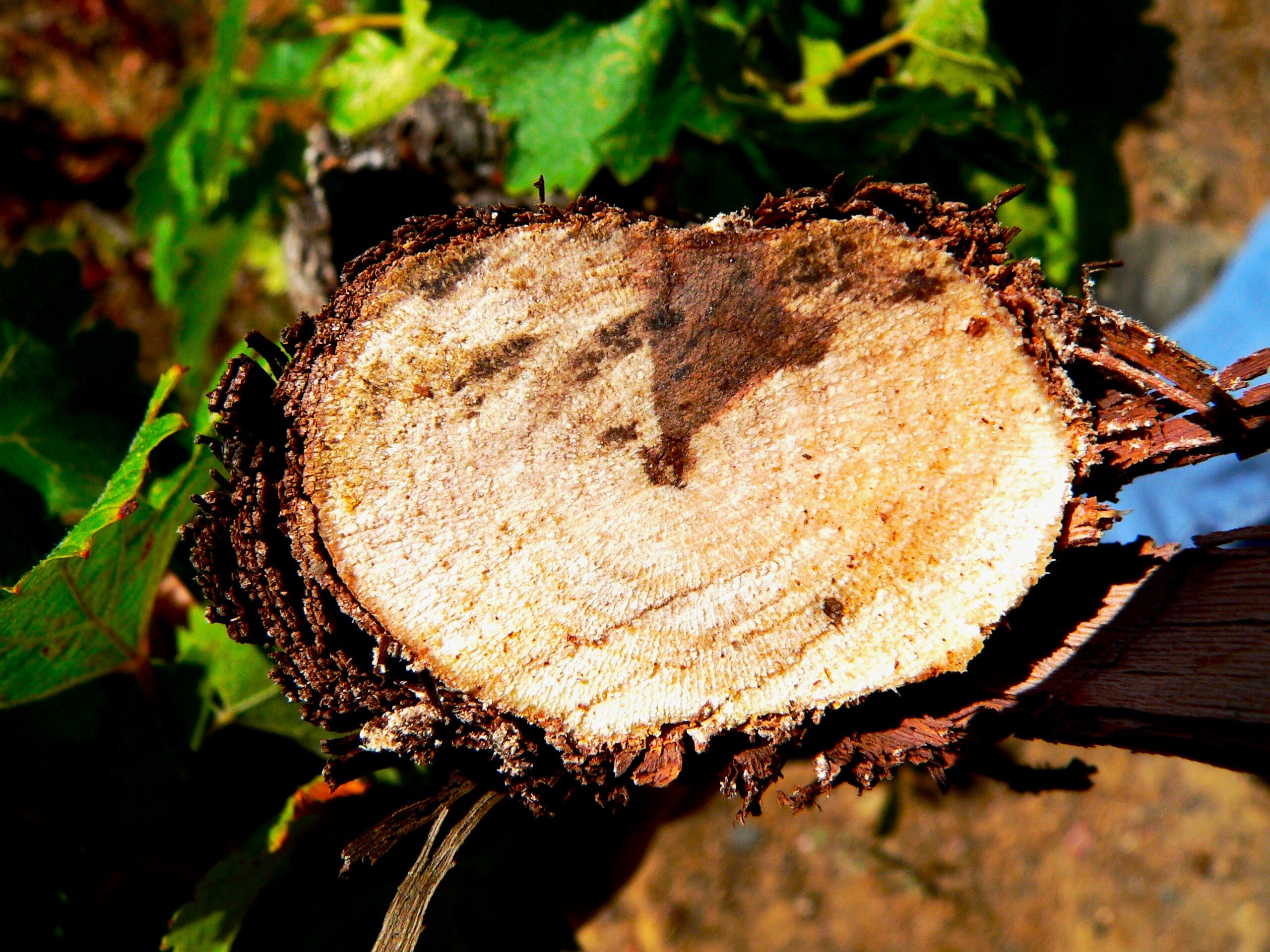
The recent rain we’ve been getting is certainly a welcome change. Wet weather does, however, present other challenges especially going into the pruning season. That’s right. I’m talking about trunk disease. It’s everywhere, and like viruses, growers like to pretend they don’t have it. After all, it takes years before symptoms express themselves and even longer before they amount to an economic loss. But economic loss from trunk disease is real and, uh, expensive. No one likes being told their best option is tearing out and replanting a vineyard, so let’s go over some ways to be proactive. We’re all stuck in the office right now anyway. Sometimes there are more than one pathogen present in the vascular tissue. This vine shows the classic wedge-shaped canker typical of Eutypa, but also has some spotty necrotic tissue associated with an Esca infection. What is trunk disease? Trunk disease is a catch all term that refers to fungal diseases Eutypa,
00