
Filter Post Type
NewsVideoProductEventLink
Sort:
Most Recent
1–10 of 13

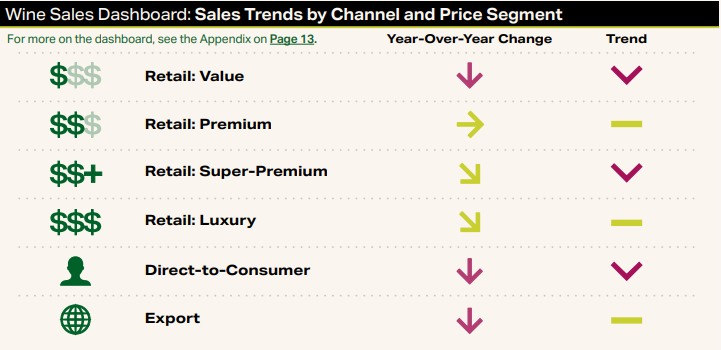
A tumultuous 2025 economy likely depressed wine sales. In 2026, the higher-end segments should continue to outperform, and the grape market should be less oversupplied when harvest begins. REPORT SNAPSHOT Situation: Wine sales softened across the board in 2025, and prices stagnated as a result of consumer price sensitivity and heightened competition among producers trying to move excess inventory. Although the wine market slump continues, relative bright spots include premium and luxury wines, nonalcoholic and ready-to-drink wines, and white and sparkling wines. Outlook: I’m not expecting a material change in the trajectory of U.S. wine sales in the near term, though I see the most potential for progress in the second half of the year. There should be less excess supply burdening the grape market when the 2026 harvest begins than there was in 2025. Impact: For wineries that are fairly certain about their grape needs, it may be prudent to act sooner rather than later. Download the
00
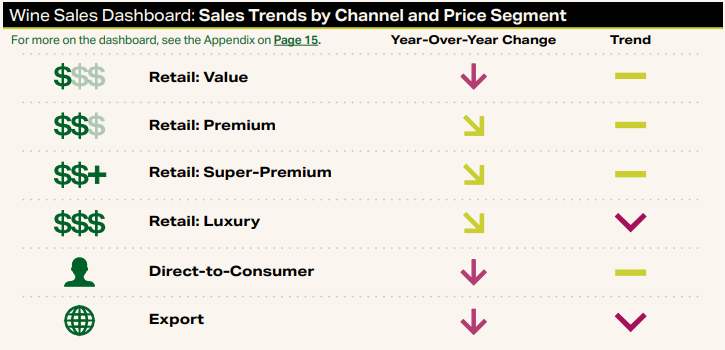
An exceptionally small 2025 grape harvest would help balance wine inventories and potentially stimulate grape demand next year There wasn’t much change in the complexion of the wine market in the third quarter. Sales continued to decline across channels and price points, though at varying rates. Some segments improved while others worsened. Wine exports continued to flag because of provincial bans in Canada. I continue to believe the slump is mainly structural, particularly at the lower end of the market (see Page 3). But I also believe economic factors such as inflation and depressed consumer sentiment have played a role, and I expect wine sales to firm up once the economic backdrop improves. Unfortunately, we aren’t expecting much change in the economy, for better or worse, in the months ahead, so the wine market isn’t likely to see much improvement either. 2025 was a painful year for California grape growers. Weather was an issue, but the grape market p
00
October 20, 2025
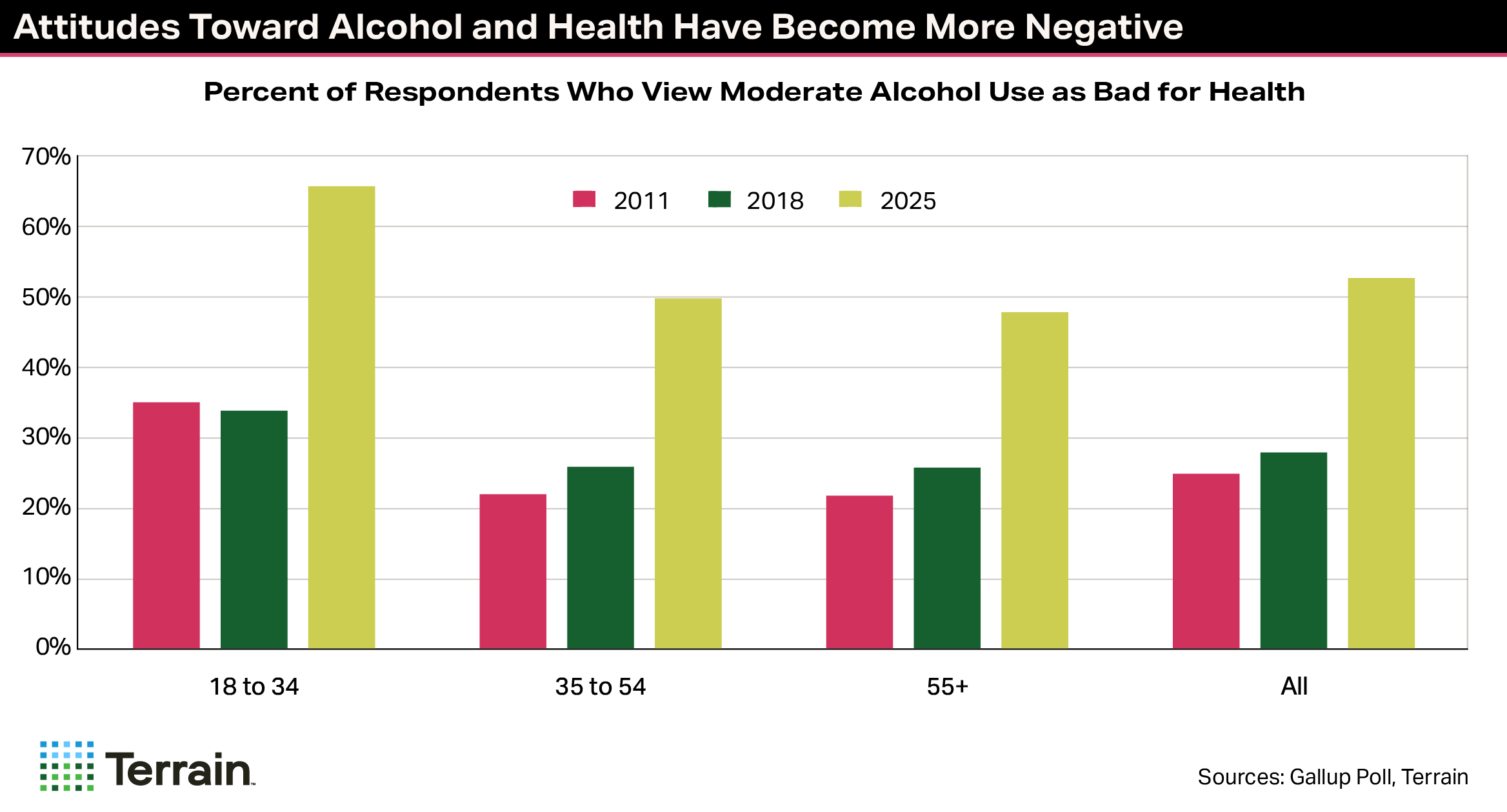
It’s no secret that people are drinking less. The consistent, downward trends in alcohol consumption are presenting significant challenges to the wine industry, which is already having to operate in a complex, competitive marketplace. In order to dissect what is happening in the world of wine and figure out how to make adjustments, industry leaders need solid information on which to base their current business practices and future projections. Fortunately, the industry has Terrain, a group of experts providing exclusive insights and forecasting to customers of American AgCredit and other participating Farm Credit associations in order to promote a more vigorous agricultural economy. Chris Bitter, Ph.D., a senior wine and grape analyst with Terrain and American AgCredit, has recently written two comprehensive articles for "Winescape", a publication that delves into current wine sales data and explores what those show about trending topics such as overall alcohol consump
00
October 7, 2025
In the Fall 2025 issue of Winescape, Dr. Chris Bitter, Senior Wine and Grape Analyst at Terrain, dives into the data behind the decline in alcohol consumption to find its root causes. In this episode of Expert Perspectives, he outlines the five major factors and what he thinks is the biggest driver.
00
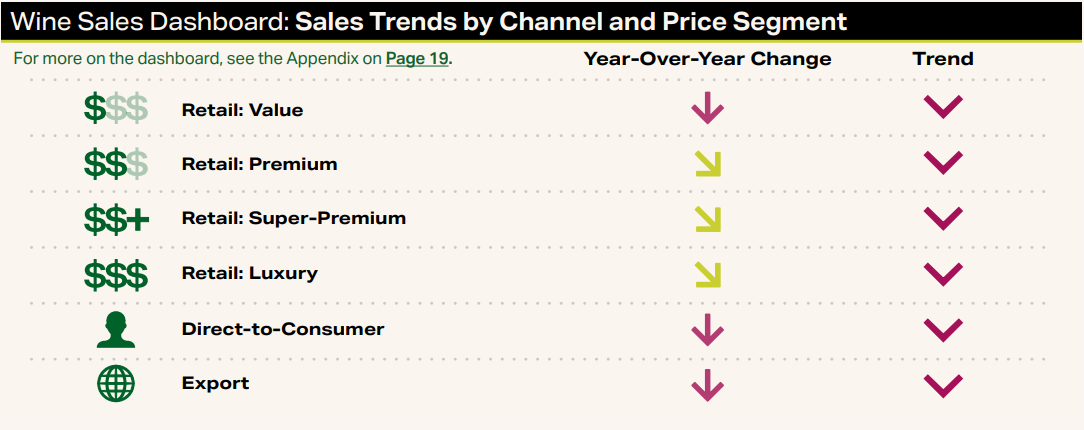
Price-sensitive consumers have kept a lid on wine sales this year, while grape sales are likely to remain slow. As for the moderation movement, a range of factors are contributing. It was a disappointing first half of the year for U.S. wine sales as a shaky economic backdrop quashed the signs of progress that were evident in late 2024. Nonetheless, there has been modest improvement in some areas since spring. Retail wine sales fell across price segments in the first half but declined at a slower pace in the second quarter than in the first (see Page 3). Following a bleak first five months of 2025, direct-to-consumer sales, while still down, firmed in June and July. Alternatively, exports deteriorated markedly in the second quarter as shipments to Canada collapsed. Unfortunately, I am not expecting much improvement in the near term. The economic outlook remains murky, but the Terrain team believes that slow economic growth, a gradually eroding labor market, and sticky
00
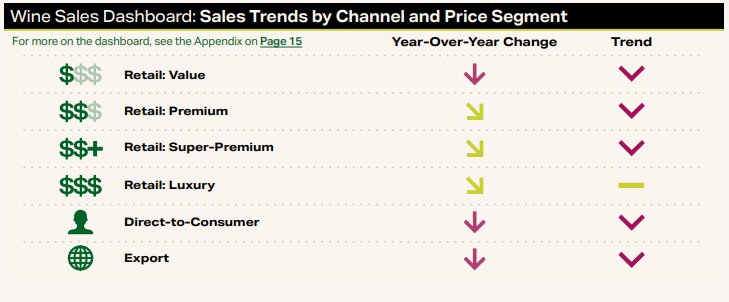
Economic uncertainty continues to dampen consumer confidence and wine demand, with no apparent threats to an abundant grape crop. Wine sales are off to a slow start in 2025 and the glimmers of progress evident in the second half of 2024 have mostly dissipated. I had initially expected to see progress continue in 2025, particularly in the premium and luxury segments, due in part to an improvement in consumer sentiment that began after the November election. This looks overly optimistic now. Consumer sentiment has plummeted over the last several months, though the hard economic indicators have generally remained positive. Nonetheless, I expect the labor market to soften and progress on inflation to stall as we move into the back half of the year, though the outlook remains extremely uncertain. Thus, wine sales are not likely to improve anytime soon. Consequently, the grape market has continued to soften. This is despite the fact that there will be likely less excess fruit this year becau
00
April 15, 2025

State of the Industry; The Wine Market and Consumer Are Evolving – So Should You In this data-driven session, Dr. Chris Bitter, Senior Wine and Grape Analyst for Terrain / American AgCredit, will break down the key trends shaping both retail and direct-to-consumer wine sales. He’ll examine the structural headwinds impacting the industry, provide a forward-looking outlook on wine sales, and highlight areas where innovative wineries are still finding growth. Wine consumption is declining, and that trend isn’t likely to reverse anytime soon. But beneath the headlines, there’s a more complex story—one that reveals important nuances, shifting consumer behaviors, and untapped opportunities for wineries willing to evolve. The brands that succeed in this new landscape will be those that understand the challenges, adapt to market realities, and embrace strategic change. This interactive session will also include live polling to establish industry benchmarks, allowi
00
March 17, 2025
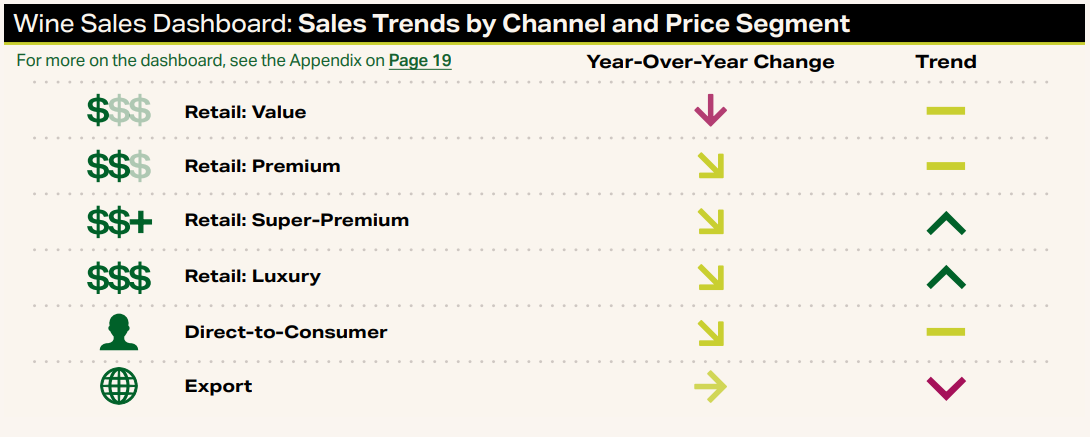
Flexibility and focus will be key this year, as the economic backdrop for wine sales has become murkier, and the grape market still looks long despite a short harvest in 2024. The 2024 numbers are in, and they confirm that off-premise wine sales have not bottomed yet. They are descending at a slower rate, though, due mainly to improvement in the super-premium and luxury segments. Alternatively, the slump deepened in the direct-to-consumer (DtC) and on-premise channels. The economy continues to sail along at a reasonable pace, and the labor market remains solid. But consumer sentiment, which has been treading water, took a dive in early 2025 due to intense uncertainty and negative inflation news. The Spring 2025 Issue of Winescape includes: Breaks down the 2024 grape crush numbers by variety and region Lays out key factors for a recovery in the grape market Reviews wine sales data for 2024 and shares the outlook for 2025 Download the Spring 2025 Winescape
00

The most pressing topic for the California wine industry is the state of the market. This issue provides a detailed outlook for the wine market in 2025 and beyond. This issue of “Winescape” focuses entirely on the state of the market. As the fruits of the recent harvest are now being converted into wine and beginning their journey to market, the most important topic for the California wine industry is, what’s next? In this issue’s Trending Topic, I provide a detailed outlook for the wine market in 2025 and beyond. This issue: Focuses on the wine industry's most pressing topic: the state of the market Provides a detailed outlook for the wine market in 2025 and beyond Discusses the economy and wine’s post-pandemic new normal in a time of uncertainty Download Winescape Winter 2024/2025
00

Wine sales in the profitable direct-to-consumer (DtC) channel are slumping, but there are general actions wineries can take to enhance their competitiveness in this hypercompetitive marketplace. The Fall 2024 issue of "Winescape," a U.S. wine industry report series from Terrain and American AgCredit, looks specifically at DtC, with clear analysis of the root causes of the sales decline and concrete suggestions for how to put your best foot forward in this challenging market environment. Read and download the Fall 2024 issue today to learn what steps wineries can take to boost their DtC competitiveness: Winescape.com.
00