
Filter Post Type
NewsVideoProductEventLink
Sort:
Most Recent
1–10 of 28
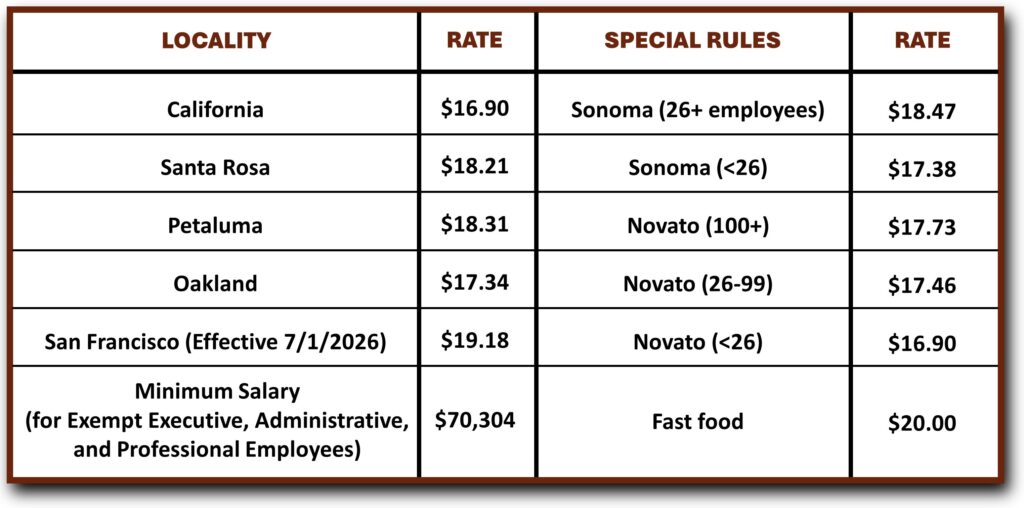
It is time to dust off the employee handbook, review your policies and procedures, and make sure they comply with all the new laws, regulations, and interpretations that went into effect during 2025, became effective in late 2025, or January 1, 2026. Below, we have identified our “top 10” changes. Please keep in mind there were hundreds of laws, regulations, and changes implemented at the local, state, and federal levels throughout 2025. This summary highlights selected changes most likely to impact California employers and is not intended to be exhaustive. So, if you need a handbook/policy review or have any questions, please call us! 1 – Minimum Wage Update: Updates happen every year. It’s best to put a calendar reminder in November, to make sure your payroll is ready! Action: Review your payroll to ensure all employees are being paid the new minimum wage, send written notice of the wage change to affected hourly employees, and be sure your salari
00
July 7, 2025

We want to make you aware of a new requirement for California employers that took effect on July 1, 2025. The California Civil Rights Department (CRD) has released the official “Survivors of Violence and Family Members of Victims Right to Leave and Accommodations” notice. Employers are now required to provide this written notice to employees at specific times, based on recent changes under Assembly Bill 2499. Key Requirements for Employers Under AB 2499, employers must now distribute this notice: To all new employees at the time of hire To all employees on an annual basis Upon request by an employee Any time an employee informs you that they or a family member is a crime victim We recommend distributing the notice to all employees now, adding it to your onboarding documents, and setting a recurring reminder for annual distribution. Important Changes Under AB 2499 The law expands who qualifies as a crime victim. It now includes individuals impacted by a wid
00


FAMILY FRENZY IN WINE COUNTRY: THE CASE FOR KIDS AND CANINES Let’s kick things off with a dose of reality. We’ve all been there: it’s a bustling Saturday morning in July, you’re bracing for a packed day at the Tasting Room, and Murphy’s Law is in full effect. Two of your staff are out sick; another is off serving the crowd at an art and wine festival downtown. You unlock the door at 10:01 AM, only to be greeted by a frazzled family of five: mom, dad, and three rambunctious kiddos. The younger two are reenacting a wild-west shootout with gravel as ammo, while the third is glued to an iPad, deep in the latest YouTube Kids saga. Mom and Dad look like they’ve just survived a hurricane, and you have a “high-roller” group arriving in fifteen minutes. And then comes the kicker: “Can we bring in our German Shepherd?” You contemplate if it’s too late to call in sick. INCLUSIVE IS THE NEW BLACK If you have yet to hear, exclusive
00
February 12, 2024
Employment laws in California are always changing, and it is important for employers in California to keep up with these changes to ensure their policies and practices are compliant. This blog post provides key updates to the California employment laws that all employers should know for this year. Minimum Wage Increase Beginning January 1, 2024, the state minimum wage for all employers has been increased to $16.00 per hour. This rate reflects a 3.5% increase from this year’s minimum wage based on the law’s provision that allows this increase if the national Consumer Price Index (“CPI”) is over 7%. All employers must post the current minimum wage rate in a common area where employees can easily view it. With this new rate of $16.00/hour, the minimum salary for exempt employees in 2024 has also increased to $66,560.00/year. Note that the minimum salary is tied to the state minimum wage rate, not individual municipalities. Employers should also check if there
00
On January 9, 2024, the California Department of Health (CDPH) issued an order changing COVID-19 related definitions. These revisions apply to the Cal/OSHA Non-Emergency Regulations, which are still in place until February 3, 2025 and must be followed by all employers in California. The questions and answers below reflect the updated rules and definitions that currently apply in the workplace. You can read more about the changes on Cal/OSHA’s FAQ page here, which is updated regularly. COVID-19 Updates for California Employers as of January 2024 What is the current definition of the “infectious period” for employees who test positive for COVID-19? For COVID-19 cases with symptoms, the “infectious period” is a minimum of 24 hours from the day of symptom onset. Under the current regulations, there is no infectious period for COVID-19 cases with no symptoms. If an employee tests positive, are they required to be excluded from the workplace? If an employ
00
Happy New Year! It is time to dust off the employee handbook, review your policies and procedures, and make sure they comply with all the new laws, regulations, and interpretations that have either already gone into effect or will in early 2024. Below, we have identified our “top 10(ish)” changes. Please keep in mind there were hundreds of laws, regulations, and changes implemented at the local, state, and federal levels throughout 2023. So, if you need a handbook/policy review or have any questions, please call. 1. California and Local Minimum Wage Raised – In addition to the gradual increase to minimum wage by the state, several Sonoma County cities have increased minimum wage beyond that required by the state. Below is a table that describes the state and local city requirements: Locality Effective Date All Employers California 1/1/2024 $16.00 Santa Rosa 1/1/
00
October 11, 2023

Just this month, the California state legislature passed Senate Bill No. 616 (SB 616), an amendment to the 2014 Healthy Workplaces, Healthy Families Act to set a statewide minimum standard for Paid Sick Leave. This is in response to local communities who, in recent years, across California have passed their own Paid Sick Leave ordinances to set minimums for Paid Sick Leave accrual, subjecting California businesses with multiple locations to a patchwork of regulations. The new California Paid Sick Leave law takes effect on January 1, 2024. Virtually all employers with employees in California will be affected, except for railroad carrier employers — leaving only a few months for businesses to review and, if necessary, alter their Sick Leave policies to ensure compliance. The New California Paid Sick Leave Law at a Glance &nb
00

FIVE SURPRISING MARKETING STRATEGIES TO INCREASE SALES BY DAN PENDERGAST It is a natural reaction – when you need cash, the gut reaction is to turn to marketing and demand more. More emails, more social media posts, more ads, and more offers. But the volume of marketing does not have an equal or parallel relationship to results. If you send twice as many emails, you may get less than twice as many sales, and a 20% discount will likely deliver less than double the sales of a 10% discount. Furthermore, marketing isn’t turnkey and often takes months (or years) of consistency to witness results. So why execute marketing if you can’t count on it to provide sales? Marketing provides your product (wine) with a brand. A brand is a reason to buy your wine and charge a specific price for your wine above other wines. Without marketing, there’d be no brands; without brands, all wines are the same. Marketing can even create value beyond the product. Take Barefoot, for examp
00
With the start of the new year, it is time to dust off the employee handbook, review your policies and procedures, and make sure they comply with all the new laws, regulations, and interpretations that have either already gone into effect or will in early 2023. Below, we have identified our “top 10” changes. Please keep in mind there were hundreds of laws, regulations, and changes implemented at the local, state, and federal levels throughout 2022. So, if you need a handbook/COVID-19 policy review or have any questions, please call. 1. California and Local Minimum Wage Raised – In addition to the gradual increase to minimum wage that has been in effect under California law, several Sonoma County cities have increased minimum wage beyond that required by the state. Below is a table that describes the state and local city requirements: Locality Effective Date Employers With 26 Or More Employees Employers With Less Than 26 Employees California 1/1/2023 $15.5
00
November 29, 2022
Usually, California employers need to be prepared for the possibility of new employment laws signed during the legislative session, which adjourned on August 31. This year, there was some additional wrangling in the legislature that took a little longer. But, as expected, Governor Newsome signed several bills expanding employee workplace protections on September 29th and 30th. Below are the top laws that we believe could impact our clients. Read on, the fun has just begun! Before you start, we suggest you have your heartburn medication handy, or maybe some coffee or some other drink of choice. . . we’re HR people, and can’t tell you what kind of drink to choose, but we think you might already know. Ok, ready? Set? Here we go. . . 1. COVID-Related Bills: AB 152, AB 2693, and AB 1751 California COVID-19 Supplemental Paid Sick Leave Effective now through the end of the 2022 (But you’re already compliant, right?) Ok, we know, we’re all done with COVID, right? N
00