


Filter Post Type
Sort:
Most Recent
110 of 50
Are You Ready For Sustainable Wine and Spirits Packaging?
Sustainability has become a core focus across every industry sector lately, but, as lovers of the traditional, the wine and spirit industries are behind the curve on implementing sustainable glass packaging. According to the IWSR, 48% of American alcohol drinkers say that a company’s sustainability or environmental initiatives positively influences their purchasing decisions. Furthermore, according to a report by the global decision intelligence company, Morning Consult, 7 in 10 American adults would consider purchasing from a food and beverage brand that prioritizes sustainability, the highest share across all industries. In the face of ongoing environmental concerns, a growing number of media stories have cited the need for our industry to find a more sustainable package solution. And the call is validated by consumer demands. We are seeing the emergence of a new category of wine consumer: the environmentally-conscious consumer, who is choosing wines and spirits based on the s
00
Verallia Trend Book 2026: What consumer expectations will shape the packaging and beverages of tomorrow?
The 2026 edition of Verallia’s Trend Book developed in collaboration with Carlin Creative, highlights deep and lasting transformations in consumer behaviors across the food and beverage sectors. Consumers increasingly seek authenticity, functional benefits, and formats that foster togetherness. These shifts are prompting brands to view packaging not merely as a container, but as a strategic asset at the heart of their relationship with consumers.  Profound and lasting market shifts The food and beverage industry is undergoing structural change. This particularly evident in wine and spirits, where moderation has emerged as a defining global trend. At the same time, new categories are gaining traction, most notably no-and low-alcohol beverages, which are expected to grow by 7% annually between 2023 and 2026 (IWSR, 2025). This reflects a broader cultural shift: moderation is no longer a marginal trend or limited to younger demographics, but a mainstream behavior across generat
00
By Nick Thomas October 3, 2024 9:54 pm (Washington Examiner) Wine consumption globally is continuing its downward trend, and some winemakers and other industry players are failing to see what could be an existential crisis for the nectar of the gods.  Wine has been facing a long-term structural decline for some time. Major wine markets such as France and Italy have indeed been in such decline for decades while the United States, the world’s most valuable market for wine, appears to be in a downward cycle, according to industry body IWSR.  The reasons for such decline are multiple, including a trend toward drinking moderation. But one key area is the apparent di culty of attracting younger generations to wine. “The wine category is becoming increasingly reliant on older drinkers, thanks to a number of factors, including aging populations in regions such as Europe, and a challenge recruiting younger LDA (legal drinking age) consumers in certain markets,” accor
00
Today's wine business news for wine industry professionals...

Bars and Nightclubs Beware! The Drug Testing Regime Starts on July 1st and You Must Be Ready: Starting July 1, 2024, holders of a Type 48 (bars and nightclubs that do not sell food) license issued by the California Department of Alcoholic Beverage Control (ABC) must be able to provide drug testing devices to customers, as stated in Business and Professions Code § 25624...

00
Are You Ready For Sustainable Wine and Spirits Packaging?
Sustainability has become a core focus across every industry sector lately, but, as lovers of the traditional, the wine and spirit industries are behind the curve on implementing sustainable glass packaging. According to the IWSR, 48% of American alcohol drinkers say that a company’s sustainability or environmental initiatives positively influences their purchasing decisions. Furthermore, according to a report by the global decision intelligence company, Morning Consult, 7 in 10 American adults would consider purchasing from a food and beverage brand that prioritizes sustainability, the highest share across all industries. In the face of ongoing environmental concerns, a growing number of media stories have cited the need for our industry to find a more sustainable package solution. And the call is validated by consumer demands. We are seeing the emergence of a new category of wine consumer: the environmentally-conscious consumer, who is choosing wines and spirits based on the
00
Today's wine business news for wine industry professionals...

Some Early Results from the SvB DtC Survey: Today, we are about 50 responses short of what we need to produce the Annual Direct to Consumer Report, so please participate. To help us reach the finish line, we are leaving the survey open over the weekend and closing it on 3/24...

00
Today's wine business news for wine industry professionals...

Hoopes Winery Civil Trial in Napa County Wraps After 11 Days, Ruling Could Take Months: Whether Napa Valley vintner Lindsay Hoopes has been using company structures as a shield against liability was the focus Wednesday of the 11th and final day of trial in a county lawsuit over alleged winery permit violations...

00
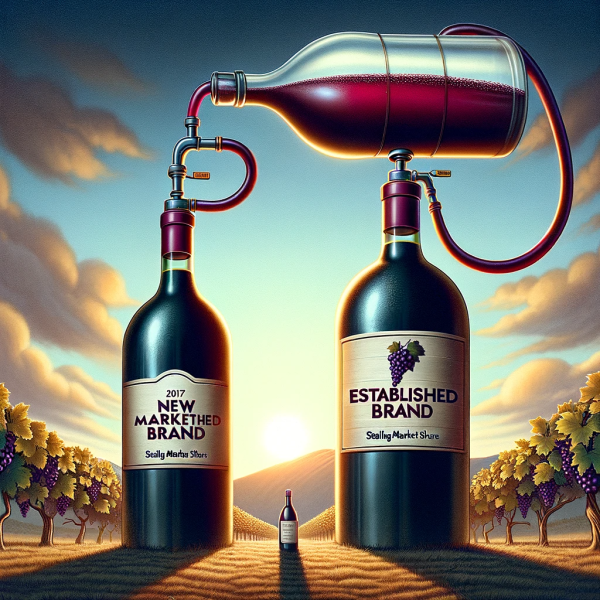
7 Ways to Steal Market Share Without Lowering Your Price
Pulling the lower-the-price lever to gain market share in a highly competitive category such as adult beverages is tempting. But it is not a good idea for all of the following reasons: Erodes profit margins Provides short-term gains at the expense of long-term strategy Reduces ability to invest in innovation Lowers perceived value deterioration Dilutes brand image Puts you in an unsustainable price war Hinders your ability to raise prices later Puts too much pressure on the need to increase the volume So, what should you do instead? We’re so glad you asked! Keep reading. 1) Protect and strengthen your brand equity Brand equity is a brand's value and strength built over time. Preserving brand equity should be your top priority. Every spending decision must be weighed against the potential threat to brand equity.  Another way of thinking about brand equity is “pricing power on the shelf.”  Here are twelve practical ways to strengthen your brand equity: En
00