
Filter Post Type
NewsVideoProductEventLink
Sort:
Most Recent
1–10 of 26

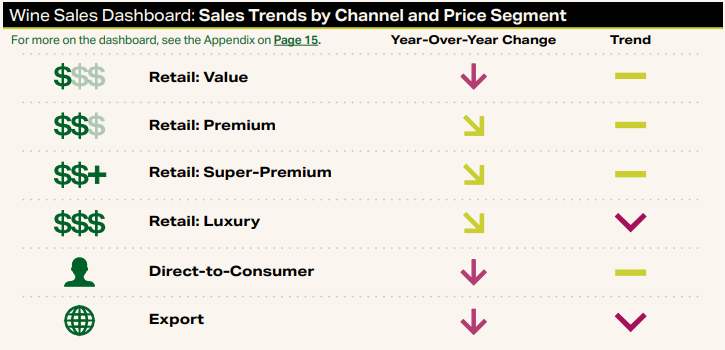
An exceptionally small 2025 grape harvest would help balance wine inventories and potentially stimulate grape demand next year There wasn’t much change in the complexion of the wine market in the third quarter. Sales continued to decline across channels and price points, though at varying rates. Some segments improved while others worsened. Wine exports continued to flag because of provincial bans in Canada. I continue to believe the slump is mainly structural, particularly at the lower end of the market (see Page 3). But I also believe economic factors such as inflation and depressed consumer sentiment have played a role, and I expect wine sales to firm up once the economic backdrop improves. Unfortunately, we aren’t expecting much change in the economy, for better or worse, in the months ahead, so the wine market isn’t likely to see much improvement either. 2025 was a painful year for California grape growers. Weather was an issue, but the grape market p
00

January 16, 2026

The 2026 State of the U.S. Wine Industry Report, published by Silicon Valley Bank and authored by Rob McMillan, provides a comprehensive, data-driven assessment of current conditions in the U.S. wine market. Built on more than 25 years of industry research, the report combines results from SVB’s annual winery survey, its Direct-to-Consumer (DTC) survey, demographic and cohort consumption modeling, and a wide range of third-party wholesale, retail, and population datasets. The conclusion is clear: while the industry continues to face structural headwinds, wineries are not experiencing these conditions equally. A widening performance gap has emerged between those adapting to changing demand and those struggling to do so. 2025 Performance: A Difficult Year for Many By nearly every measure, 2025 was a challenging year for the U.S. wine industry. Roughly half of the surveyed wineries rated the year negatively, citing slowing demand, rising costs, margin pressure, and inventory ch
00

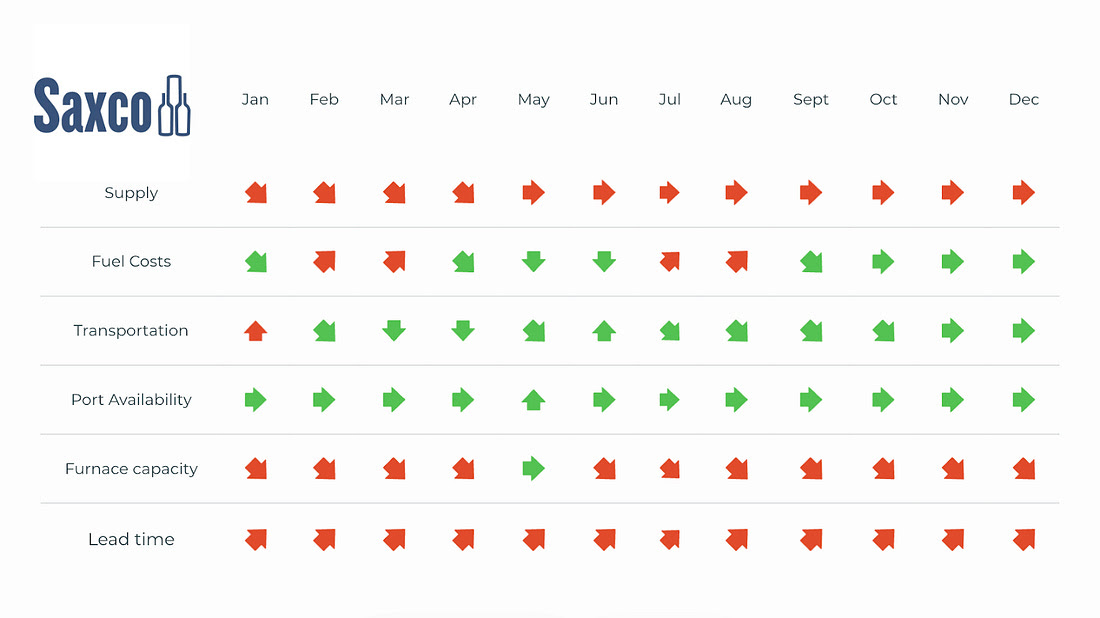
Another month of calm November typically marks the end of a new harvest and the middle of our busiest sales quarter. October’s government shutdown created unbelievable market uncertainty. But with the system back up and Thanksgiving almost normal, stability returned rather than the predicted surges or collapses by pundits from both sides. Still, questions remain about the future of our economic recovery prospects. For now, it is a reprieve, allowing us to regroup for the new year. Market dynamics The delayed reports from Commerce and the Bureau of Labor Statistics have started to trickle in, bringing some key takeaways: Unemployment is holding at 3.8%. Inflation easing to 2.3% YoY. Consumer spending down ~2% from Q3, but no hint of a cliff. As we close out the year and look to 2026, the focus will be on staying agile in both supply planning and capturing winery sales and marketing opportunities. The key trends persist: Steady demand, no major swings, and a growing gap between spe
00
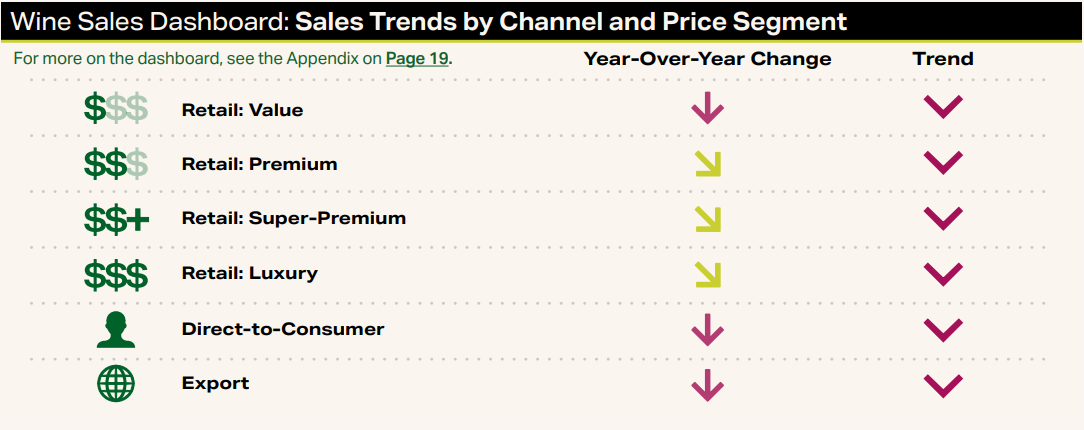
Price-sensitive consumers have kept a lid on wine sales this year, while grape sales are likely to remain slow. As for the moderation movement, a range of factors are contributing. It was a disappointing first half of the year for U.S. wine sales as a shaky economic backdrop quashed the signs of progress that were evident in late 2024. Nonetheless, there has been modest improvement in some areas since spring. Retail wine sales fell across price segments in the first half but declined at a slower pace in the second quarter than in the first (see Page 3). Following a bleak first five months of 2025, direct-to-consumer sales, while still down, firmed in June and July. Alternatively, exports deteriorated markedly in the second quarter as shipments to Canada collapsed. Unfortunately, I am not expecting much improvement in the near term. The economic outlook remains murky, but the Terrain team believes that slow economic growth, a gradually eroding labor market, and sticky
00

August 22, 2025

After a challenging 2024 harvest—the smallest in two decades—California wine growers are entering 2025 with cautious optimism, but also hard questions: How do you maximize yield, protect quality, and safeguard profits in a market still reeling from oversupply, economic pressure, and climate volatility? Growers who thrive this year will be the ones leaning on smarter, data-driven solutions to plan ahead, monitor operations in real time, and respond quickly when conditions change. 2025 Outlook: Smart Planning is Critical Looking ahead, stable weather patterns and healthy vines suggest a potential rebound in yield and quality. But uncertainty persists: global wine consumption has not fully recovered, and unsold inventory remains a real concern. Growers who proactively track operations, anticipate risks, and make informed decisions will be the ones best positioned to weather the storm. How AgCode Helps Growers Turn Insight Into Action AgCode’s software equips wine grower
00
July 17, 2025
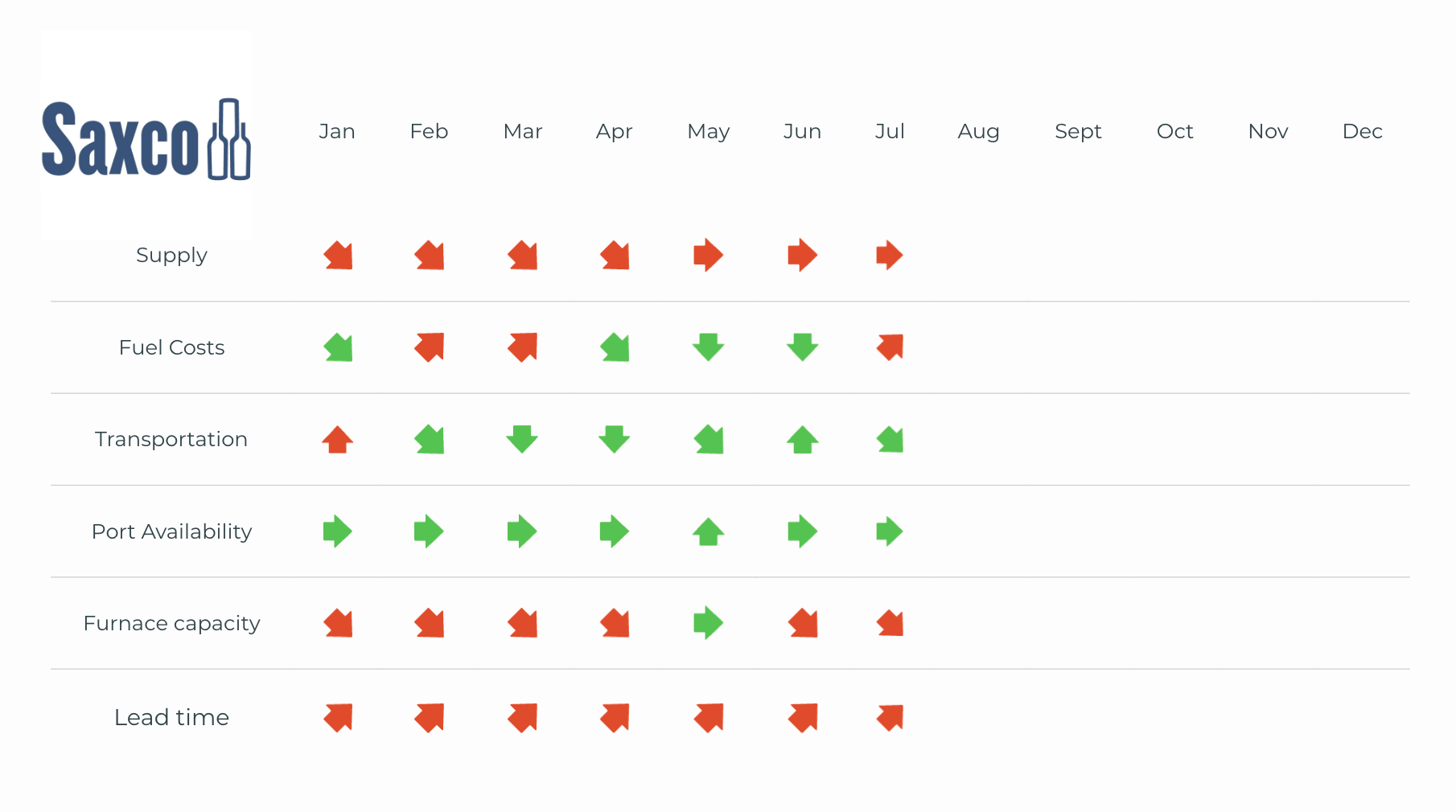
Packaging supply stable, but uneasy While June ushered in a more stable rhythm after May’s tariff-driven frenzy, underlying uncertainty continues to shape planning, procurement, and pricing across the packaging and logistics landscape. Supply remains steady across most categories, but stability doesn’t mean simplicity. US glass manufacturers, in particular, are contending with a mismatch between output and demand. Inventories have piled up amid sluggish ordering, especially from wine producers still reeling from compressed consumer spending and slowing DTC velocity. With tanks and warehouses more full than empty, some domestic furnaces are now eyeing Q3/Q4 production pauses as a measure to rebalance. After a brief reprieve in May, diesel prices rose again in June, increasing from $3.499 to $3.599 per gallon, a continued reflection of the volatile energy market. According to the latest Deloitte economic outlook, while core inflation is showing signs of moderation, ener
00
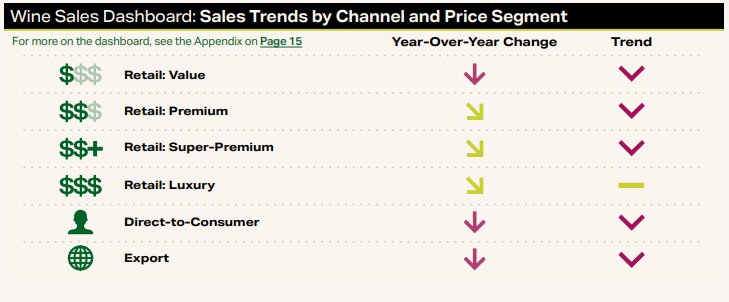
Economic uncertainty continues to dampen consumer confidence and wine demand, with no apparent threats to an abundant grape crop. Wine sales are off to a slow start in 2025 and the glimmers of progress evident in the second half of 2024 have mostly dissipated. I had initially expected to see progress continue in 2025, particularly in the premium and luxury segments, due in part to an improvement in consumer sentiment that began after the November election. This looks overly optimistic now. Consumer sentiment has plummeted over the last several months, though the hard economic indicators have generally remained positive. Nonetheless, I expect the labor market to soften and progress on inflation to stall as we move into the back half of the year, though the outlook remains extremely uncertain. Thus, wine sales are not likely to improve anytime soon. Consequently, the grape market has continued to soften. This is despite the fact that there will be likely less excess fruit this year becau
00


The calendar flip from 2024 to 2025 heralded several new packaging regulations, rulemaking updates, and bills with significant implications for consumer packaged goods in North America and Europe. Recent packaging legislation is reshaping packaging requirements for waste reduction, recyclable materials, circularity, and sustainability. However, actions by the Trump Administration may defer regulatory action at the U.S. federal level and shift packaging-related policies. EPR Packaging Laws Five U.S. states—California, Colorado, Oregon, Maine, and Minnesota—have passed extended producer responsibility laws for packaging. While each state's requirements vary, they share common goals of reducing packaging waste, enhancing recycling efforts, and holding producers (e.g., brand owners) accountable for the life cycle of their products. Since the start of the year, nine states have introduced or re-introduced EPR packaging bills. They include Washington, Tennessee, Hawaii
00
April 15, 2025

State of the Industry; The Wine Market and Consumer Are Evolving – So Should You In this data-driven session, Dr. Chris Bitter, Senior Wine and Grape Analyst for Terrain / American AgCredit, will break down the key trends shaping both retail and direct-to-consumer wine sales. He’ll examine the structural headwinds impacting the industry, provide a forward-looking outlook on wine sales, and highlight areas where innovative wineries are still finding growth. Wine consumption is declining, and that trend isn’t likely to reverse anytime soon. But beneath the headlines, there’s a more complex story—one that reveals important nuances, shifting consumer behaviors, and untapped opportunities for wineries willing to evolve. The brands that succeed in this new landscape will be those that understand the challenges, adapt to market realities, and embrace strategic change. This interactive session will also include live polling to establish industry benchmarks, allowi
00
March 17, 2025
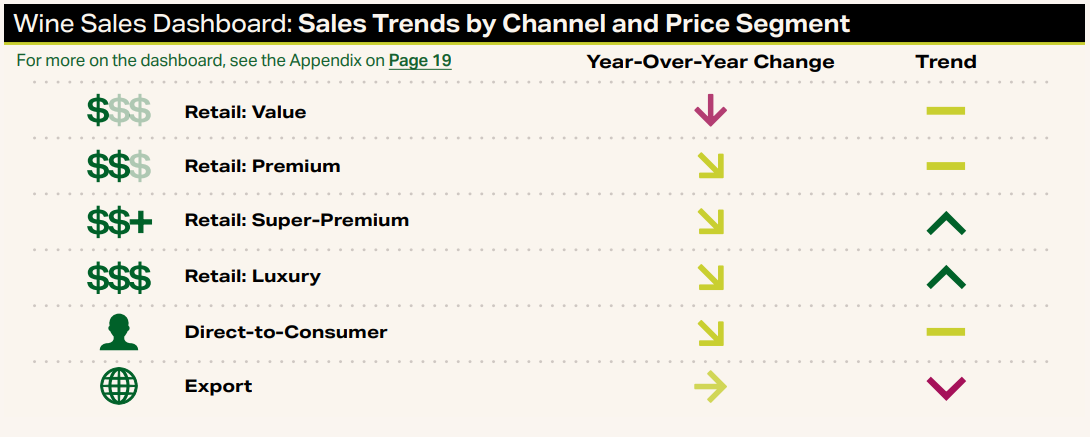
Flexibility and focus will be key this year, as the economic backdrop for wine sales has become murkier, and the grape market still looks long despite a short harvest in 2024. The 2024 numbers are in, and they confirm that off-premise wine sales have not bottomed yet. They are descending at a slower rate, though, due mainly to improvement in the super-premium and luxury segments. Alternatively, the slump deepened in the direct-to-consumer (DtC) and on-premise channels. The economy continues to sail along at a reasonable pace, and the labor market remains solid. But consumer sentiment, which has been treading water, took a dive in early 2025 due to intense uncertainty and negative inflation news. The Spring 2025 Issue of Winescape includes: Breaks down the 2024 grape crush numbers by variety and region Lays out key factors for a recovery in the grape market Reviews wine sales data for 2024 and shares the outlook for 2025 Download the Spring 2025 Winescape
00