


February 11, 2026
Everything Is Tasted, Everything Is TestedJuly 2, 2025
Boost Harvest Success with FOSS Wine Analyzers
In the ever-evolving wine industry, uncertainty and risk are constants, exacerbated by unpredictable growing and harvest conditions. However, your business doesn't have to navigate these challenges blindly. Why not leverage a simple, proven solution to mitigate risk and enhance your winemaking process?
Learn how FOSS analyzers like the OenoFoss™ 2 can revolutionize your operations, providing you with the insights you need just in time for the next harvest. Our experienced representatives are eager to demo how FOSS wine analyzers can provide instant data on crucial metrics such as alcohol and malic acid levels, and much more, throughout your winemaking journey.
April 23, 2025
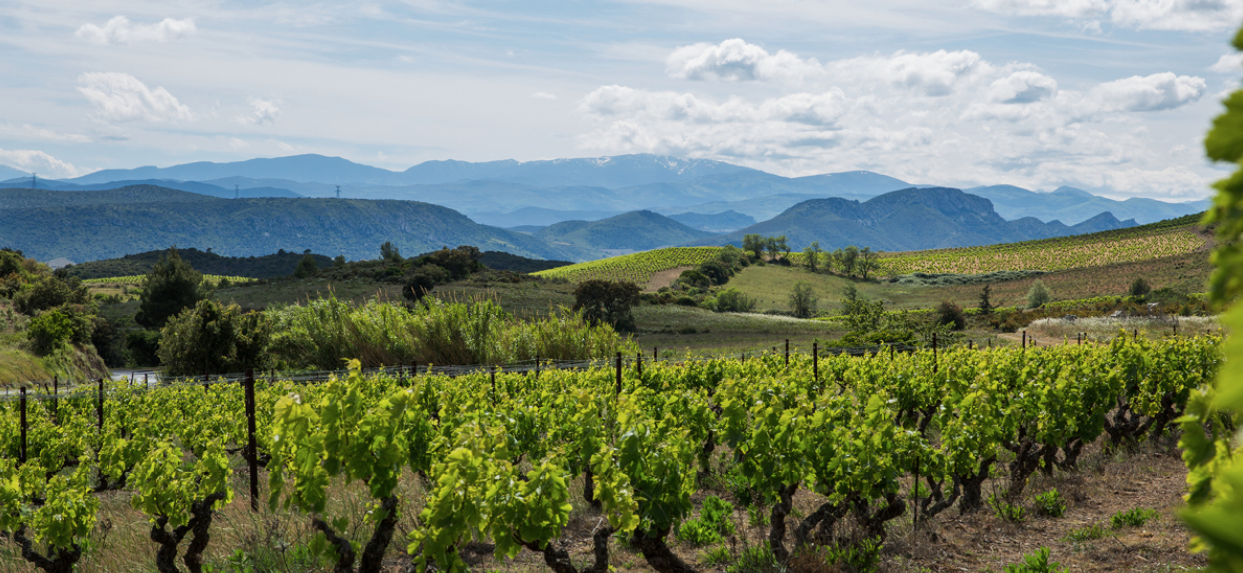
How Analytical Insights Help Craft Fine Languedoc WineHow Analytical Insights Help Craft Fine Languedoc Wine
By Drinks Business Magazine
In this Drinks Business article from 2024, the magazine reports on how FOSS analytical technology has helped Gérard Bertrand to maintain high quality in its award-winning wines.

Putting aside the oft-referenced factors of unique terroir, prestigious grape varieties or generations of experience, how does one make fine wine? The solution is increasingly found in small tabletop equipment that look more at home in a laboratory than an ancient cellar. For the last 25 years, FOSS Analytics has been producing such technology and helping winemakers get the best from their grapes.
Though the technology is complex, the premise is simple. By checking the chemical makeup of the wine-to-be, whether must, fermenting juice or a wine ready for bottling, winemakers can act quickly and precisely to make the best possible product. Using a FOSS machine, one can measure up to 30 parameters from a single sample, including sugar, acid, nitrogen and sulfur dioxide levels, as well as tannin ripeness.
For fine winemakers, where precision is key, the technology is often indispensable. Gérard Bertrand Group understands that better than most. It has been using FOSS machines to help in crafting its award-winning wines, which have taken home major international prizes and helped put the Languedoc on the map for fine wine.
Paul Correia, quality and CSR manager at Gérard Bertrand, spoke to Drinks Business about how such rapid analytical machines aid the producer’s winemaking.
These sorts of analytical instruments (ones that deliver multi-parameter results in a few seconds) came on the scene about 25 years ago. When did you start using such an instrument and why?
We started using this practice in 2004. Very quickly, we were pleased with the tool's reliability and efficiency. It saves time as a single instrument can provide us with a range of essential parameters to meet our high standards for producing excellent wines.
What were you doing for your wine analytics before adopting such a machine?
We used manual methods and/or enzymatic methods.
How has rapid analysis changed your winemaking?
This facilitated the analysis steps, which was very advantageous for us given the level of precision and detail we apply to our winemaking processes. It is a greatly appreciated time and efficiency gain, thanks to the fact that all parameters are analysed in a single machine. This solution for performing a complete analysis very quickly has revolutionised our way of working and has allowed us to gain autonomy in our analyses.
How does having a rapid analysis machine help you in crafting your fine and award-winning wines specifically?
The results are precise and reproducible, helping maintain consistent wine quality. It also enhances our responsiveness in verifying regulatory compliance during blending and throughout the winemaking process.
How do these machines change your day-to-day routines?
They have become indispensable tools that improve and contribute to the enhancement of the winemaking process.
How did you decide such a machine was worth the investment?
If there is one thing we never compromise on, it is the quality of our wines and the attention we give both in the vineyard and in the cellar. The technological choice was never debated and is still not debated today.
We quickly invested in technology because very early on, we knew that these tools would offer many operational advantages and would allow us to gain efficiency and achieve the level of excellence and rigour in winemaking that we are looking for. And indeed, we always consider the investment in technology to be worth it as long as it benefits the quality of our wines.
What ‘dream feature’ would you pick for a future machine?
We still need complementary devices to perform certain controls (oxygen, protein stability, cold stability, colour) because methods do not exist in FTIR to perform these controls, or they are not robust enough to apply our control plans. The all-in-one device is a dream. But is it desirable if it comes at the expense of reliability?
The WineScan™ 3 offers a prime example of modern analytical capability Get in touch to discuss how wine quality analysis can make a difference to your business.
March 21, 2025
Instant Additive Detection Makes Labeling a BreezeInstant Additive Detection Makes Labeling a Breeze
A new way to detect ascorbic acid, fumaric acid and sucrose in wine saves time and costs when checking for additives in finished wine. Tests take 30 seconds and do not involve the use of chemicals or reagents.

A rapid and convenient test for detecting additives in wine is now available for the WineScan™ 3 analyser.
Instead of using time-consuming enzymatic methods involving the use of chemicals and reagents, winemakers, bottlers and traders can test for the presence of sucrose, fumaric acid and ascorbic acid at the touch of a button. Results are presented within 30 seconds in the same way as with the the many other tests available with the WineScan 3.
Many Labelling Parameters in a Single Test
The availability of the three new additives tests comes at a time when the list of required declarations on wine bottles is growing. Among these, the new EU regulation introduced in 2024 states that information on ingredients, allergens, energy, and nutrition must be included in accordance with Regulation (EU) 2021/2117.
Together with the existing WineScan tests for alcohol and free and total SO2, the WineScan 3 can now deliver much of the data required for labelling in a single easy to perform test. Not only does this approach save time. Costs for chemicals and labour are reduced significantly and the risk of human error associated with manual tests methods is avoided. The fast detection of ascorbic acid also helps to avoid invalid tests for SO2 when using the Ripper method due to a reaction with the acid.
Ideal for Bottlers and Traders
The new parameters are available as a package or individually, depending on requirements. The need to test for additives is particularly important for traders and bottlers handling a lot of multi-source material. For instance, bottlers receiving deliveries of sparkling wine are likely to be interested in the presence of fumaric acid after it has been used to control malolactic fermentation.
An Expanding World of Analytical Insight
From grapes to bottle, WineScan 3 delivers reliable analytical data to meet quality goals with precision, every step of the way. Insights for winemakers and quality controllers include tests for ethanol, pH, malic acid and many more. The list of possible tests is constantly expanding, for example, the recently released WineScan 3 offers new opportunities such as the ability to test yeast assimilable nitrogen during fermentation and tannins in finished wine. There is also an option to test colour with a consistent and objective procedure that reduces the dependency on skilled staff.
When using the autosampler system, the WineScan 3 can perform up to 130 unattended tests per hour.
January 24, 2025
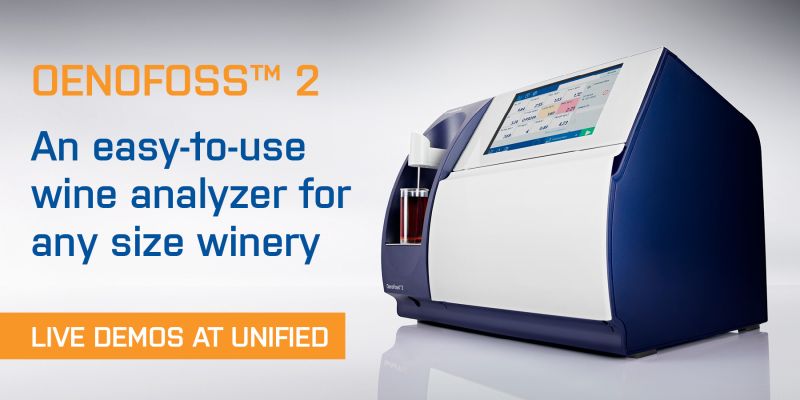
Fully Automate Your Wine Analysis Results in MinutesFor must, must under fermentation, finished wine and sparkling wine. The fast and easy-to-use OenoFoss™ 2 provides insight for more informed decisions such as when to pick grapes, how to control fermentation or when to bottle. Winemakers can reduce the risk of costly mistakes while gaining insights that help to push the boundaries of winemaking in step with new market opportunities.
• Fast and easy testing allows for repeatable and precise measurements run after run
• Accurate results without degassing or filtration needed on most samples
• Fully automated, no reagents or consumables, no sample prep
Join us for live demos at Unified 2025 in Sacramento, January 28-30 booth #1414.
https://lnkd.in/gnqp-kPK
November 27, 2024
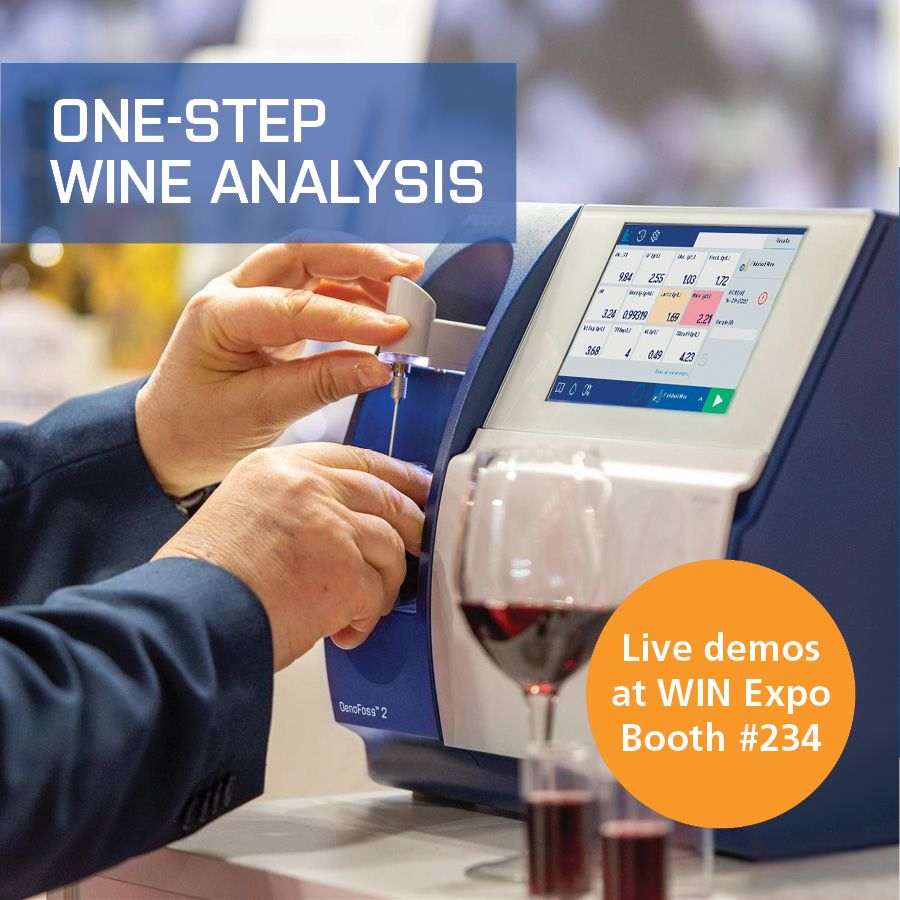
Discover the OenoFossâ„¢ 2 Wine Analyzer at WIN Expo Booth #234Planning to attend WIN Expo December 5? Stop by booth #234 to visit with our FOSS industry experts for live demos of the OenoFoss™ 2 wine analyzer. Learn more about this fast and easy-to-operate analyzer that provides accurate and precise measurements of key parameters. No reagents, consumables, or sample prep!
October 24, 2024
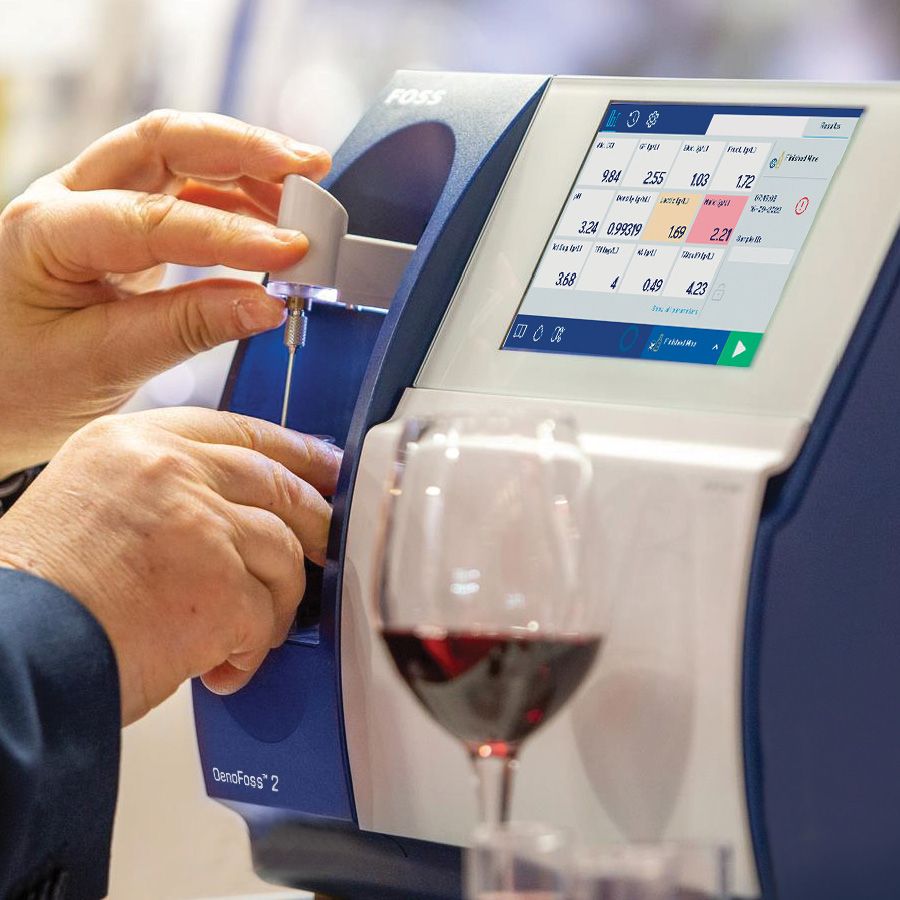
Boost Your Wine Production Efficiency with the One-Step OenoFossâ„¢ 2One-step wine analysis
- Accurate results without degassing of must or sparkling samples
- Fast and easy testing allows anyone to make reliable measurements
- Automatic cleaning between tests
Learn more about the OenoFoss™ 2
September 11, 2024
Always in the Know with Fermentation InsightsRoutine analysis helps to keep a close eye on the processes involved in winemaking, for example, with timely information that helps to avoid stuck fermentation. If you want to check every barrel, just go ahead. With rapid analysis to support you, you can push the boundaries of quality with powerful combinations of parameters available simultaneously.
Ahead of fermentation, you can check that the yeast has the right nutrients to grow. A test for Yeast Assimilable Nitrogen allows you to supplement nitrogen deficient must with diammonium phosphate at the start of fermentation to provide adequate nitrogen levels.
Testing also takes out the guesswork during fermentation by tracking the conversion of sugars to ethanol. The measurements also provide a valuable reference when tasting for those complex components, only discernable to the experienced palate.
For malolactic fermentation, rapid analysis tracks the conversion of malic acid to lactic acid with a simple convenient test. If you are using barrels, you can test each one at no extra cost.
Learn more in this video: https://youtu.be/SaknaGHAWAY
August 12, 2024
OenoFossâ„¢ 2: Save Time, Improve Efficiency
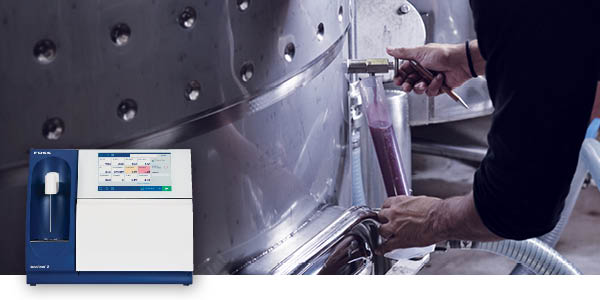
Don't miss the opportunity to enhance your winemaking process with the new FOSS OenoFoss™ 2. This advanced solution offers innovative ways to secure outstanding results for this year's harvest.
With OenoFoss 2, you can save valuable time and labor by e.g., performing direct tests on sparkling wine without the need to degass samples. This efficiency boost means more precise and faster results, directly impacting your bottom line.
Let’s discuss the benefits of the OenoFoss 2 platform and ensure you can implement this technology in time for the upcoming harvest.
Act now to stay ahead of the competition and maximize your production efficiency.
info@fossna.com | 952-974-9892, option 2
July 9, 2024
Compound Interest: Getting to Grips with TanninsWhile it’s widely understood that tannins play a crucial role in the fine wine ageing process, very little is known about how they behave in wine over time. Lucy Shaw speaks to oenologists and Masters of Wine to unpack the science behind tannins. Read more.

June 10, 2024
More Insight, Less Work and More Time for WinemakingThe WineScan™ 3 wine analyzer offers you an ever-expanding world of analytical insight. With WineScan 3, the flow of insightful test data becomes a simple and natural part of winemaking and laboratory operations.
https://lnkd.in/gvkiWAmR

May 10, 2024
Speed, Automation, and Consistency Improves ServiceOffering a low cost-per-sample, automated laboratory analysis provides a fast return of investment. Multiple analysis results from a single sample help to meet industry demands for increasingly detailed product information. Parameters include: Ethanol, sugars, organic acids, pH, colour, free and total SO2. Tests for all labelling requirements are completed within two minutes using only a small sample volume. The automation of tests reduces the risk of manual error while batch handling of up to 120 samples an hour ensures high throughput.
April 9, 2024
Free E-Book: Celebrating 25 Years of Modern WinemakingThe art of innovation
Online book reveals how an innovative approach to winemaking is safeguarding quality both for consumers today and for future generations of wine drinkers.
https://www.fossanalytics.com/en/News-Articles/Wine/online-wine-book
February 9, 2024
Keeping a Cool Head in a Warming ClimateThe Australian ‘Black Summer’ of 2019/20, which saw bushfires destroy swathes of vineyard land across the country was a dramatic reminder of the growing challenges facing winemakers around the world. We spoke to leading Australian winemakers and lab technicians to find out how agile decision-making is helping to deal with the consequences of global warming.
Offering alarming proof of the escalating effects of climate change, in November 2019 bushfires blazed through New South Wales, scorching more than five million hectares of land following Australia’s hottest and driest year on record. In December 2019, the fires swept through the Adelaide Hills, destroying 650 ha of vines in the region, and wiping out entire vineyards. Making matters worse, the smoke from the fires was far-reaching, rendering vineyard plots from Canberra to the Hunter Valley useless. Ravaging an estimated 24.3 million hectares of land in total and destroying over 3,000 buildings, the September 2019 to March 2020 bushfire season – Australia’s costliest natural disaster in history – became known as the ‘Black Summer’ due to the size, intensity and duration of the wildfires, which were caused by exceptionally dry conditions in the country.

Fire and smoke damage
Over 1,500 hectares of vineyards were destroyed by the wildfires, with the majority of the damage concentrated in the Adelaide Hills, Kangaroo Island, Tumbarumba and parts of northeastern Victoria. Among the producers worst hit was Vinteloper in the Adelaide Hills, which lost 95% of the vines planted at its 30 ha property. Owner David Bowley’s home was also destroyed in the blaze.
One of Australia’s most revered wine estates, Henschke, also suffered damage from the fires, losing 95% of the crop at its 25 ha Lenswood vineyard in the Adelaide Hills, along with two sheds and vineyard equipment. Among the losses at Lenswood were some of the oldest Pinot Noir vines in the Adelaide Hills region, which were planted by Tim Knappstein in 1983. At the time the fires hit Chardonnay and Pinot grapes were still hanging on the vines, but the levels of smoke taint were so high that owners Stephen and Prue Henschke abandoned hope of picking a single grape, leading to yield losses of 70% across the board.
While the havoc wreaked on the Adelaide Hills was brutal, it didn’t have a huge impact on the 2020 output of the Australian wine industry at large, as the region only accounts for 1% of the country’s total wine production and 1% of its exports in terms of value. The engine room of Australian wine production – the Riverland – emerged relatively unharmed, so in volume terms, the damage from the fires was minimal. The bigger problem facing producers was smoke taint, which was far wider-reaching than the fires, leading a number of top producers to scrap their 2020 vintages altogether, or produce a fraction of their usual output. The first vintage affected by smoke taint on a major scale since 1969, Wine Australia estimated that the combination of fire and smoke damage amounted to losses of around 4% of the country’s average tonnage – around 60,000 tonnes of grapes – in 2020. High levels of smoke taint forced Tim Kirk, chief winemaker and CEO of Canberra estate Clonakilla, to abandon the 2020 vintage entirely for the first time in the winery’s 49-year history. “Once the grapes were ripe enough we began sending samples off for testing. The results confirmed our worst fears: highly elevated levels of smoke taint. At that point we had no other choice than to write off the vintage,” Kirk says – a decision that cost the estate “multiple millions of dollars”.
Strategies for a hot climate
Helping Kirk in his hour of need was Yalumba’s chief winemaker, Louisa Rose, who offered him some of her Eden Valley Viognier and Shiraz. To protect her own vines in the fight against global warming, Rose has grasses growing between the vines and mulch to cool down the soils and preserve moisture, while canopies help protect the grapes from direct sun and trellising provides shading and keeps the grapes cooler, helping them to ripen more slowly. When things get really hot, Rose applies a fine layer of white clay called kaolin on her grapes, which acts like sunscreen, mixing it with water and spraying it on the vines to stop tissue damage from excessive heat, which is proving an effective way of maintaining acidity in the grapes and slowing down the ripening process.
Rose admits that when it comes to bushfires, there is very little that wineries can do to protect themselves in the event of one breaking out. “If there’s a bushfire next door to you there’s not much you can do about it, but a lot of research has been done in Australia around early detection of smoke taint, which impacts on picking and bottling decisions. You could turn your Pinot into a sparkling wine, for example, as there’s no need for skin contact that way,” she says. From a quality assurance point of view, using a FOSS WineScan™ analyzer enables Rose and her team to make quick and informed picking decisions. “It’s great to have that ease and breadth of analysis at a minute’s notice, which helps us with decisions around analytics. Winemakers make decisions on how a grape tastes, but it’s all about balance, and the numbers are really important to back up the decisions we make with our palates,” she says.
Chester Osborn, the charismatic chief winemaker at d’Arenberg in McLaren Vale, has various tricks up his sleeve when it comes to mitigating the effects of rising temperatures, from water management and canopy protection to composting and keeping nitrogen levels in the soil low in order to produce thicker and more resilient grape skins and a firmer pulp. He’s also rethinking his plantings to incorporate more heat-resistant varieties. “We’ve been working with hotter climate varieties for some time now from Spain, Italy, Portugal and the South of France. I’m very happy with how well these grapes grow in McLaren Vale,” he says. Among them are French varieties Carignan and Cinsault, Italian grapes Sangiovese and Sagrantino, and Spanish natives Graciano and Mencía, which are “producing solid, strong berries with good colour”, and, according to Osborn, “could be a replacement for Shiraz down the track”. When it comes to heat-resistant whites, Osborn is seeing success with Rhône trio Marsanne, Roussanne and Viognier, while he believes Italian white Fiano is “extremely well suited to McLaren Vale – perhaps even better suited than its homeland of Campania.”
Protecting quality
Prioritising quality over profit during the Black Summer of 2020 was Hunter Valley-based Tyrrell’s, which slashed its 2020 crop by 80% due to high levels of smoke taint, amounting to AU $3.5m in sales losses. “From mid-October we had bushfire smoke across various parts of the valley. We went through a series of tests for smoke taint with the Australian Wine Research Institute, and, based on the results, we made the decision to not pick anything that was over the recommended limits – around 80% of our crop,” says owner Bruce Tyrrell, who believes producers that allowed smoke-tainted wines from the 2020 vintage to enter the market risked damaging their neighbours’ reputations.
Frustratingly, Tyrrell reveals, there is no way to protect against smoke taint. “Grape selection is impossible because there is no way of determining it on a berry-by-berry basis. We have learnt to reduce smoke taint by about 50% with some fairly brutal processes in the winery, which means we can make decent commercial wine but no top-end wine,” he says. And while smoke taint analysis has improved dramatically in recent years, by the time you receive the results, the damage has already been done. “Smoke taint analysis is very good at the moment, however it only tells you what you’ve got when it’s too late,” says Tyrrell. “Sometimes it can take three years or more for smoke taint to show up on the nose or the palate of a wine. Luckily, we have the ability to test for the relevant compound and that can stop you spending money on a vineyard that’s never going to be any good.”
While making quality reds from smoke taint-affected grapes is almost impossible, whites and rosés are less impacted due to their different production methods. “You will never make fine reds from smoke-affected fruit, but some of the carbon products available did a good job with commercial whites and rosés in 2020 – we saw no bitterness in these wines and they sold very quickly,” reveals Steve Webber, chief winemaker at De Bortoli, who said careful pressings were paramount on whites and rosés in 2020. “There are certain enzymes that you can add to smoke tainted juice that can 'cleave' some of the smoky characters such as guaiacol, which are tied to grape sugars and subsequently can be removed more easily with activated carbon,” Webber adds.
One of the problems facing wineries blighted by bushfires is the cost of smoke taint analysis, which usually has to be outsourced. “Sensory analysis plays an important role in detecting smoke taint, but smoke taint precursor compounds are glycosylated and don’t have aroma or taste, so you don’t get a full idea of the potential scale of a problem,” says Jill Huckel-Hicks, a laboratory supervisor at Angove Family Winemakers in McLaren Vale. “Chemical analysis can now detect these compounds, but this requires expensive equipment and for most wineries this testing needs to be outsourced, which can become a costly exercise with a lengthy timeframe for results.” While there are currently no ways to protect against smoke taint in the vineyard, Huckel-Hicks points out that scrupulous harvesting, juice preparation and lab analysis can all help with managing smoke taint in wine.

More than a heat spike
While the recent wildfires have had devastating consequences, Angove’s chief winemaker, Tony Ingle, stresses that the effects of climate change aren’t limited to heat spikes. “It’s important to consider climate change as more than just an increase in average temperatures. It’s easy to look at the recent bushfires and record high temperatures and consider that’s the whole story then gear our reaction to these consequences, when we need to look at many other issues,” he says. “Climate change has meant increased flooding and high rainfall, as well as hailstorms and high winds during flowering and fruit set, so solely looking at heat can’t help us ride out changes in climate.” For Angove, taking a holistic approach and adopting organic viticulture and regenerative farming has helped to produce more resilient vines that cope better with the various climate challenges thrown at them.
Importance of analysis and early detection
Dr Eric Wilkes, general manager of Affinity Labs, which offers a comprehensive range of advanced analytical services for the drinks industry, reveals that smoke taint analysis has got to such a level now that it can effectively detect smoke taint in finished wines. “Smoke taint analysis is an area of ongoing research, however we're quite confident that our current testing gives a good indication of the risks of smoke impacts being evident in the final product,” he says. “Much of the advances in recent times have been around understanding the levels of the compounds that are tested that lead to discernible impacts in the final product. It has to be remembered that the compounds we're testing are naturally occurring within the grapes at some level, and so an understanding of what the base natural levels are is incredibly important to the assessment of risk.”
With bushfires proving increasingly problematic in Australia, Wilkes and his team have seen a rise in interest for their smoke taint testing services in recent years, “and a much greater awareness of the potential for smoke events to have an impact on final wine quality”, he says. Wilkes calls upon the FOSS WineScan on a daily basis when analysing various parameters in wines for his clients. “It’s an integral tool in our support of the wine industry and its producers. While it’s not directly involved in the analysis of smoke markers, the data it produces is incredibly important towards wine analysis, and contributes to the overall production of high quality wines in the face of climate change,” he says.
Looking ahead, Wilkes believes investment in R&D will be paramount for the Australian wine industry in order to safeguard its future. “Wineries need to continue to invest in research and development to better understand the impacts of fire events and how to mitigate those when they happen, as it’s very unlikely that we’ll see a decrease in such events invent the future,” he says. Steve Webber of De Bortoli, meanwhile, believes wineries should be factoring the effects of wildfires and smoke taint into their business strategies. “We need to factor in a vintage write-off every so often into our planning and pricing,” he says. “We have to do the same with poor flowering conditions in our cooler climates.”
Chester Osborn of d’Arenberg would like to see the Australian government ploughing more funds and resources into early bushfire detection. “People in helicopters and planes that can detect and put out fires before they become out of control could massively assist in reducing losses in hard to reach areas,” he says. Whatever the future holds, rising temperatures and increasing incidents of bushfires across Australia are a sad inevitability of global warming, meaning a nimble approach to both grape growing and winemaking is key if producers want to stay one step ahead in the ongoing fight against climate change.
https://www.fossanalytics.com/en/News-Articles/Wine/Keeping-a-cool-head-in-a-warming-climate
February 9, 2024
Modelling Global Wine QualityFOSS Senior Data Scientist, Kasper Winther Jørgensen, takes us on a tour of the data-modelling machine room where analytical instruments are programmed to recognize wine quality around the world.
Let’s start with the basics – what is data modelling and how does it work?
Our wine analyzers produce a spectrum of variables of dimensional data that we can play with. To make a measurement prediction we have to convert this spectrum into a usable value for the end user – who, in this case, is the winemaker. This is done by converting the spectrum into a so-called absorbance spectrum. This provides a raw data source for our modelling work.

You have to collect a lot of data in order to accurately describe all the kinds of variations that we can expect to find in a single wine sample. These analyzers can’t be used for milk, for example, they’re 100% specific to wine and we need to put the mathematics into the system in order for them to do their job.
One of the unique things about our innovative wine solutions is that they are built upon our entire legacy of data that we’ve collected over the years from our WineScan™ development program. We’ve been working in this sector of the market since 1999, continually collecting data, so we have around 25 years of experience to draw from. It’s got to the stage, where we have data reference points for all wines in the world now.
"The more data that you put into these models, the better and more reliable the result is that you get out of them." Kasper Winther Jørgensen
How do you create a new data model?
To make a model, we work with all the data that we have to hand. As a liquid, the wine sample is very homogeneous and therefore, the components we want to measure will be evenly distributed throughout.
Working with thousands of samples, we have a full spectrum of data to go on, and each spectrum has a reference value that we use in the lab. Measuring a spectrum is easy – it’s just a case of pushing a button. The samples are tested on a reference instrument in the lab, which uses the data to create the model.
The beauty of working at FOSS is that we already have all the wine sample data that we need, so we don’t have to go out and collect it – we can make use of the data at our fingertips. We input the data into the algorithms to predict new wine samples coming into the analyzer. Our data is so well structured and linear that we don’t need fancy methods to build our models – it’s very easy for us to do.
How much data do you need for it to be reliable model and how can you have a model that works for different wine regions around the world?
We spend a lot of time ensuring that we have covered what we consider to be the main components within a wine sample. We have winemakers on our team, who we work closely with to ensure that we cover all bases, from high sugar and high alcohol wines to low sugar, low alcohol expressions, giving us all the necessary combinations for validation. After nearly 25 years of data gathering, we have what we need to cover the whole world and every possible type of wine sample that may go into one of our machines.
Can you explain the role of infrared light in the analysis process?
When analyzing a wine sample, we look at the vibrational patterns in the organic compounds through infrared technology. We can measure for over 20 key components in a wine sample, from its alcohol and sugar level to tartaric acid – it all comes down to what the infrared can see within the sample. Generally, our instruments can detect any variable above 50 ppm. They have a source that emits infrared light that goes through a component in the heart of the instrument called a cuvette. This is a third of the thickness of a sheet of paper – it needs to be incredibly thin in order for the light to pass through it. When it does so, it’s modulated and we get a signal.
Different characteristics of the sample stop some of the light going through it so less light comes out on the other side. The sensor creates an infrared spectrum based on the amount of light that has come out. The instrument is programmed to recognize certain spectra, like tartaric acid, to give just one example. This will show up as a particular pattern, and it can work out the level of concentration from that. The more data the instrument can use to create the models, the more reliable the results and the more variables the instrument can cope with.
How is this infrared light used in the modelling process?
All the organic molecules in the liquid have bonds. When the light passes through the sample and if the light has the right frequency, then the bond will absorb the energy and won’t be detected on the other side.
Our measurements are a transmission, as we send light through the samples. We’re looking for what’s not coming through on the other side and how the light is absorbed by the wine sample. This gives us the fingerprint of the wine that contains all the molecules present within it, many of which overlap with each other. If we’re testing for malic acid, for example, we can build a model that predicts malic acid, apply this model to the spectrum to return a malic acid value. It’s a fairly easy process.
How unique is this data modelling concept?
We are no longer unique in using the modelling idea – our value lies in the fact that we were first-movers and we now have data that we’ve collected over the last 25 years. The data covers all the different wines in the world from a variety of growing seasons and vintages, which hasn’t been done before on such a scale, so makes us unique.
Are the analyzers updated from a data cloud, or would customers need to buy a new instrument if they want the latest updates?
The instruments are being updated remotely all the time by FOSS through a data cloud like a software update while your phone is on charge, so users don’t need to worry about it. Our FOSS analyzers are quite alike in nature, so if you have two different analyzers then you can have them in a network and can apply the adjustments to your whole fleet through the cloud.
What are the main things to consider about data modelling?
It’s important to know that a data model is never a fixed thing; you can always update it and change it. The value lies in the data that goes into the model, not the model itself.
The more data that you put into these models, the better and more reliable the result is that you get out of them. People often forget that and just look at the reference and predictions graph. Some less sophisticated wine analyzers may seem good to begin with, but as they don’t operate with the same level of core data, if there is a change in season or conditions that the machine doesn’t recognize, then the model won’t be able to handle the sample and you’ll be thrown off course.
https://www.fossanalytics.com/en/news-articles/wine/modelling-global-wine-quality
December 28, 2023
FOSS Provides Quality Wine Analyzers to Support an Agile Approach to Winemaking
Simple and easy-to-use wine analysis tools.
The availability of analytical data allows better decision-making throughout the winemaking process leading to more consistent quality and ultimately better business through improved brand and economy.
Stop by booth 1414 to meet with our industry experts where we will have live demos of the OenoFoss™ 2 and the new WineScan™ 3.
Not attending Unified? Contact our team to get connected to learn more. Call 952-974-9892, ext. 2
FOSS North America
Unified Symposium Booth: 1414
Who we are – FOSS is the leading global provider of analytics for the food and agricultural industries. We help producers maximize the value of their production while making the best possible use of valuable natural resources. Value for the customer and value for the environment go hand in hand.
November 9, 2023
FOSS Launches the WineScanâ„¢ 3 Wine Analyser
The latest WineScan™ 3 marks a milestone in wine analysis that ensures an expanding world of insight with less cost and less work than earlier solutions. Read more about the launch of the new solution and how it offers perfect timing for today’s wine industry.
Read full news release here: Why the new WineScan 3 analyser is the perfect tool to tackle today’s winemaking challenges (fossanalytics.com)
October 11, 2023
WineScanâ„¢ SO2WineScan™ SO2 ensures full control of the winemaking process from grape harvest to bottling. Ready-to-use calibrations allow simultaneous analysis of key wine quality parameters including free and total SO2.
Full control of the entire winemaking process. Analyse +20 parameters in 30 seconds. Convenient sulphite analysis in just 2 minutes. Low cost per sample. Intuitive operator interface.
Sample type
Must, must under fermentation, finished wine and sweet finished wine.
See how it works: https://youtu.be/q-SU9I3DLyk
June 6, 2023
The Secret of Quality ChampagneAs the cellar master of Krug, Julie Cavil has one of the most revered and respected jobs in Champagne. She explains the creative process behind the flagship Grande Cuvée, how Krug evolves over time and how the 2022 vintage is shaping up.

How did it feel to become Krug’s first female cellar master?
Rather than saying I’m the first female cellar master, I’d simply say I’m the eighth cellar master in the history of the house. It’s my job to perpetuate the dream of the house’s founder, Joseph Krug, each year with a new Édition of Krug Grande Cuvée. I’ve been with Krug since 2006 and prior to becoming cellar master, I was winemaking director and a member of the tasting committee alongside former chef de cave Eric Lebel. The transition was seamless for us. I work with an immensely talented team on many projects, which keeps my job interesting.
Krug Grande Cuvée is made from a blend of up to 120 wines from more than 10 vintages, how do you approach making a wine as complex as that?
We inherited a unique approach to Champagne creation from Joseph Krug. His dream was to craft the very best Champagne he could offer, every year, regardless of annual variations in climate. Paying close attention to a vineyard’s character, respecting the individuality of each plot and its wine, as well as building an extensive library of reserve wines from many different years allowed him to fulfil his dream.
Today, this library is home to around 150 wines, and each year I ‘audition’ some 250 wines of the year. Taking a plot-by-plot approach, I’m able to blend a new Édition of Krug Grande Cuvée and Krug Rosé every year. We achieve this complexity by cultivating the differences wherever possible, from vineyard to blending, to amplify each wine’s uniqueness and contrasts, so we can craft the most generous expression of Champagne in one bottle.
Have you made any stylistic tweaks to Krug Grande Cuvée since becoming cellar master?
It would be easy to change something – anyone could do that – whereas the true challenge is keeping Joseph Krug’s dream alive, cellar master after cellar master, and the same level of excellence blend after blend. This living legacy inspires me deeply. At Krug, there is no recipe. Each Édition of Grande Cuvée is completely new and original. Every year our inspiration is the same, but each Édition is a unique composition. Tweaking would imply a static profile, whereas every Krug Champagne is different. That being said, we base all our decisions on tastings – from the choice of the harvest date to the blend, as well as time in the cellars. Any adjustments would be a direct response to observations during tastings.
Launching the Krug iD has made Grande Cuvée more exciting for collectors, what ageing potential does the wine have and does it get better with age?
The Édition concept, which applies to Grande Cuvée and Krug Rosé, is a great way to highlight the uniqueness of each wine. Today, Krug Lovers can taste and play with different Éditions. Thanks to the Krug iD, they can also take a deep dive into the savoir-faire of their own bottles of Krug. This gives us the opportunity to share anecdotes, tips about food and music pairings, and expert ratings.
All Krug Champagnes will gain with the passage of time. As the years go by, new facets will be accentuated under time’s influence. Then it becomes a matter of personal taste – whether you prefer older Champagnes, but with the backbone of freshness that characterises all Krug Champagnes. With any bottle of Krug, you will always have the long, vibrant finish, which makes it age so beautifully over the decades. Time is not a constraint but an integral component of the Krug creation equation.
You have been gradually holding more bottles back of Krug Grande Cuvée each year, is this with the view to releasing the aged stocks at a later date?
We do so to offer Krug lovers a chance to explore the influence of time on our Champagnes in different ways. You can see this, for example, with A Tribute to Time, where we present two Éditions of Krug Grande Cuvée crafted ten years apart alongside one another. It is a way to shine a light on the precious influence of time on Krug and to follow the evolution of a specific Édition.
With your vintage wines, do you like them to display the signature Krug taste, or is it more important to reflect the characteristics of the year?
Krug vintage is the story of a distinctive year, interpreted by the house. The Krug style is the sum of all the choices we make during the creative process. A Krug vintage is more of a free interpretation. Each time I decide to craft a new vintage, it’s with the idea of telling the story of what happened in the tasting room after the harvest: what amazed us, surprised us and enchanted us.
How would you describe Krug’s signature style?
Krug Grande Cuvée is generous expression of Champagne with a fullness of flavours and aromas in which everyone can find something to stir their emotions. The delicious ripeness of the fruit enchants the nose and the lightness of the lemony notes on the palate delights the mouth, while the precise, contoured finish prepares the tastebuds for the next sip. It takes over 20 years to craft a new Édition of Grande Cuvée – a blend of over 120 wines from more than 10 different years – combining fresh fruit from the harvest with dried and candied fruit with the patina of time from our reserve wine library.
You’re a fan of precision viticulture, what are your latest developments on that front?
Everything we do, dream, imagine or develop is to strengthen our knowledge of the plots we work with, defining the characteristics of each through observations, decisions and tastings, as we see how it can contribute to our different compositions and how we may leverage its potential of expression. From the work done in the vineyard to the composition of the final blend, we discuss everything among the Tasting Committee so that we may all grow together and pass down our knowledge to the next generation. If you’re interested in delving deeper, the Krug Black Book is our made-to-measure tasting app that consolidates our notes, observations and knowledge.
Which older vintages of Krug are drinking really well right now?
Depending on a collector’s tastes and preferences, they may wish to discover older Éditions of Grande Cuvée, Krug vintages or Krug Collection to appreciate the influence of time on these blends. Using the Krug iD, they can discover the unique story of each bottle. As a creator I feel that each story is unique and equally precious. And since the longevity of all Krug Champagnes is nearly infinite when stored in good conditions, to me they are all excellent candidates.
What makes Clos du Mesnil and Clos d’Ambonnay so special?
Our clos are situated in renowned locations for Chardonnay and Pinot Noir respectively and, protected by walls for centuries, they benefit from unique microclimates to which their style can be partially attributed. These tiny village vineyards are the purest expression of a single grape, from a single plot, and a specific harvest year. Clos du Mesnil and Clos d’Ambonnay epitomise Joseph Krug’s plot-by-plot approach to Champagne creation.
What is the most challenging part of your job as cellar master?
Unsurprisingly, but without a doubt, it’s to re-create the dream of Joseph Krug every single year, regardless of variations in climate. It’s my biggest challenge but also my greatest joy and pride because each time my team and I give birth to a new Édition of Krug Grande Cuvée, it’s with the idea of paying tribute to Champagne, to the vastness of its terroirs and the diversity of its winegrowers.
How is the 2022 vintage shaping up so far – are you happy with the result?
The 2022 harvest was the longest I’ve seen since I joined Krug sixteen years ago, but it was also the most joyful. It began on 24 August and ended on 14 September. From North to South, and East to West, all grapes revealed themselves beautifully, regardless the cru or variety. It was like the planets were aligned. That’s being said, we can’t forget that 2022 was a year of extremes, including heat and drought that left their mark on the fruit. We now need time to observe, listen and taste. Only tastings and time will reveal the profiles of the wines that will be born from the 2022 harvest.
Have the increasingly extreme weather events, from heat spikes to spring frosts, meant you’ve had to tweak your winemaking approach in order to retain Krug’s character and consistency?
While everyone must adapt to the realities of climate change as we continue our efforts to minimize our carbon footprint, extreme weather events are a reality. Sometimes they affect the aromatic profile of the fruit, sometimes they destroy grapes before they can be harvested. This is why we have 150 wines in our reserve wine library, so even if a year has a low yield, we can still create Krug Grande Cuvée. If the wines of the year are lacking in freshness, I’ll look to wines from previous fresh years to balance the blend.
What are you up to at the moment and what’s in store for 2023?
Over the next few months my team and I will taste and appraise the 299 individual wines from the 2022 vintage, recording around 4,000 tasting notes before making any decisions about the final blends in April. I’m looking forward to our new winery opening at Clos d’Ambonnay this year. Four years in the making, it’s a project that aims to pass down to future generations the best conditions for the excellence of our wines, both for those who create them and for the environment.
https://www.fossanalytics.com/en/news-articles/wine/the-secret-of-quality-champagne
April 4, 2023
2023 North American Training CoursesUser and Maintenance Training and Certification courses are designed to provide certification-level training for FOSS analytical instruments and software, helping you get the most out of your instrument! Each training course includes instrument-specific user and maintenance instruction, and all participants have the opportunity to become certified maintenance providers for their respective FOSS instruments. Register today!


