March 1, 2026
Forest Origin ComparisonWhat does oak DO?
The most common answer is that oak adds complexity. Oak barrels can offer a simple wine greater depth and dimension, and elevate a great wine to a higher level.
The sensory influence of wood on wine is primarily due to oak lactones, vanillin, and a collection of volatile phenols.
The following are descriptors often used to refer to the contributions of oak, in no particular order:

- Vanilla
- Pencil shavings
- Dusty
- Nutty
- Bourbon character
- Coffee
- Toasty
- Smokey
- Cedar
- Cigar box
- Baking spices
- Coconut
- Sawdust
- Diacetyl / butterscotch
- Green (herbaceous)
- Sappy (resin, turpentine)
The Significance of Forest Origin
The oak barrel contributes to wine quality in several ways, beyond its long-time use as storage and transport vessel. Most important is its role as flavor enhancer, which is what makes the subject of forest origin (and their different flavor contributions) so interesting to winemakers.
The Variation in Oak Species
Oak is the common name for over 300 species of trees belonging to the genus Quercus. Oaks are widely distributed, and prolific, throughout the temperate regions of the Northern Hemisphere and at high elevations in some parts of the tropics.
Of the many species, only a few are suitable for cooperage for the simple reason that they must be non-porous (i.e. not leak). The most common oaks of Europe are Quercus petraea (also known as Q. sessilis) and Quercus robur (Q. pendunculata). In the United States, the predominant species is Q. alba, while Q. gerryanna (commonly referred to as Oregon oak) plays a small but increasingly important role.
Until about 25 years ago, oak was oak and little consideration was given to its origin. Today, a great deal of importance is placed on oak origin, not only origin by country but by specific, often quite small, areas within a country. This particularly applies to oak from France, possibly because it is only in this country that the regions of origin have been carefully defined. There is interest and great strides that have been made towards identifying the most significant regions for cooperage quality oak in the United States.
So, just how Important is Oak Origin?
Just as terroir is important in premium wine grapes, it is equally important in fine oak barrels.
There is no doubt that the origin of oak has a unique effect on wine matured in a barrel made from its wood, but is it THE most important factor, AN important factor, or a MINOR factor? Here is where the debate begins . . .
Most coopers and winemakers will agree that the most significant factor is the manner in which the cooper handles his oak. The cooper's "thumbprint" -- how the cooper seasons and stores the oak so it dries adequately, and how the barrel is fired -- sticks out above all other factors. This thumbprint or "house style" characterizes each barrel, regardless of other variables, including forest origin.
Yet there exists no consensus as to what is the next most important factor . . . is it forest origin, is it tightness of grain (regardless of forest origin), is it the amount of air-dry time, or is it yet another factor. This does not even touch on the influence of the winemaker and how he treats the barrel and the wine he puts into it. No two winemakers handle their barrels or wines the same way.
Reliability of Oak Supply
While oak may become available from exotic sources from time to time and in small quantities, availability of commercial quantities on a regular and continuing basis is most important. If not readily available, oak from a specific region cannot be reliably used. There are many competitive uses for high quality oak, such as veneer and furniture. Oak for cooperage purposes is more expensive to mill, and it requires specialized processing skills and proper cutting.
Changing political realities also affect ongoing oak supply, as evidenced by the changes in Eastern Europe in the 1980s.
These factors strongly influence which forest origins the cooper chooses to promote, and the resulting choices for the winemaker.
American White Oak
Barrels made from American white oak were originally produced for the bourbon industry. However, American oak barrels are increasingly being used by wineries, particularly given recent improvements in barrel fabrication and of course simple economics (top quality American oak barrels typically cost about half as much as their French counterparts).
American oak barrels have improved dramatically over the last ten years. In the past, only varieties with intense flavors such as Cabernet Sauvignon and Zinfandel were able to stand up to the more aggressive aromas and flavors that the American oak available at the time contributed. The reason for these dominant flavors was partly due to how the oak was coopered and seasoned.
Barrel makers have implemented changes based on their observations of French oak coopering techniques, involving longer air-dry time for the staves and toasting the barrels longer with more penetrating heat. These changes have transformed the character of American oak, rendering sweeter, subtler flavors and less dominant coconut and herbaceous notes.
Until recently, no effort was made to identify American white oak (Q. alba) by its specific area of origin. A guess could be made of the provenance by dentifying the mills at which the oak was cut. A recent study observes that
white oak forests of the eastern U.S. exist in four "eco-regions" or climatic zones, of which the "Eastern deciduous forest region" is the most vast (see map). Preliminary results from this study indicate definite sensory differences, which are now being explored on a larger scale. A few coopers are currently offering Q. alba barrels from oaks grown in specific areas of the eastern U.S. and the Great Lakes area, while other coopers prefer to focus on grain tightness as the most important factor in determining flavor contributions.
The theory is that regional designations for American oak would give winemakers more choices and greater control in matching barrels with certain regional characteristics to their winemaking style.
The Technical Reason why American Oak seems more "Oaky"
When comparing oaks from France and the USA, tests indicate that French oak gives about 2 1/2 times the extraction of total phenolics, but American oak adds more flavor and perfume on a comparative basis. However, the reason why American oak gives more oakiness in the wine per unit of extract is apparently due to the higher non-tannin phenolic fraction, which is approximately 21% as compared with 14% for French oak.
French Oak
In France, the predominant species used by coopers are Quercus petraea (also known as Q. sessilis) and Quercus robur (Q. pendunculata). Oak in France tends to grow on its own, although it does occasionally mix with small quantities of beech and other trees. Oak hybridizes naturally, and at last count there are at least 400 hybrids. Because of this, there is uncertainty among botanists as to oak identification in France. For this reason, oak from France is carefully identified by its region of origin, even though the specie may be the same.
Most of the forests of France (approximately 80%) are owned by the French government, and are managed by the Office National de Forêts, established by Napoleon II. All trees are sold by auction, prior to being cut. Oak trees for cooperage purposes are harvested when they are between 110-150 years old.
French Forest Origins
In France, special designations indicate the regions where oak has been cultivated and cut for centuries to produce vessels used to store wine and spirits. There are at least six major forest origins or regions that are commonly specified:
Limousin (li-moo-sahn) oak comes from the old French province of that name in the southwest of France, and is predominantly Q. pendunculata. The toughness and coarse (open) grain of the wood is a result of poor growing conditions, which tend to restrict vertical growth in favor of a shorter, larger diameter tree trunk. In France, Limousin is used almost exclusively for the maturation of Cognac.
Nevers (ne-vere) oak comes from the many forests of the Nievre Département in the center of France. The region is gently rolling and the soils are rich and moist. This oak is predominantly Q. sessilis. The trees grow tall and straight in forest conditions, which produces logs that are generally medium-tight grained.
Allier (ah-leay) oak comes from the Département of the same name immediately to the south of Nievre. The oak is fairly similar to that of Nevers, although usually more tight-grained in structure.
Tronçais (tron-say) oak differs in that it comes from a specific forest within the Allier Département. It is the best known of a number of forests deliberately planted for the ship building trade in the late 17th century. The forest is spectacular, growing in deep, fertile soils producing trees of great size with a very fine grain. The Tronçais forest is not large, and its limited production is in great demand by winemakers.
Bourgogne (boar-go-nya) oak comes mainly from the forests of Cîteaux, to the east of Nuits Saint Georges in the Département of Côte d'Or. Its characteristics resemble Limousin oak, but is medium-grained.
Vosges (voej) oak comes from the low mountain region in the northeast corner of France. The trees are tall with narrow trunks and the timber is medium-tight grained. This oak, which only became commercially available in the late 1970's, is increasingly in demand.
Eastern European Oak

Oak from the Baltic states, Serbia and particularly Hungary was very highly prized by barrel makers in the nineteenth and early twentieth centuries. The oak species throughout a crescent-shaped area, ranging from northern Portugal up through France to the Baltic states and down through Hungary and Romania, belong to the Quercus petraea and Quercus robur families. Yet a good deal of diversity in flavor and structure is evident depending on the precise microclimate, soil structure and density in which the trees grow.
Traditionally, the oak of the Hungarian forests of the northeast was highly sought after by French coopers. The taste of French oak, now considered integral to the flavor of red Bordeaux, was not appreciated in Bordeaux's traditional market in the early and mid-nineteenth century. Winemakers preferred the softer, smoother texture Hungarian oak offered their wines, perhaps because less charring of the barrels was practiced. The substitution of French oak for Baltic and Hungarian oak was prompted by political difficulties, including the Napoleonic wars.

A ready supply of Hungarian oak was once again available in the period spanning the late nineteenth century up to World War II, only to be cut off by changing political realities. It is only in the last twenty years that trade has been reestablished with French coopers.
In the Czech Republic, barrel production was primarily for the beer industry. The wine region of southern Moravia did require some cooperage for wine, but until recently, barrels were viewed only as storage vessels. Oak flavor in wine was considered undesirable. The development of export markets has encouraged more wine barrel production, and in depth studies of Bohemian and Moravian oak are now underway.
In Russia, the southern region of Adyghe, near the Black Sea, has been identified as having a large source of Q. sessilis. The less expensive cost of wood from this area has stimulated much interest.
Oak Origin Flavor Characteristics
The following flavor characteristics can at best be considered generalizations, and are the personal observations of the editor, Roberta Manell Montero.
Limousin (li-moo-sahn) perfumes and colors the wine (yellow-gold) rapidly with little finesse. Limousin tends to be fairly aggressive and "simple" on the palate, but adds an attractive vanillin note.
Nevers (ne-vere) contributes a spicy, almost cinnamon-like flavor, although it can initially seem aggressive in tannin if not toasted enough.
Vosges (voej) offers a sweet, subtle vanillin aroma that complements a fruity character. Above all, it offers a softer texture on the palate.
Allier (ah-leay) releases its perfume slowly with finesse, and seems to have a spicier oak component. It is well suited to red and white wines.
Tronçais (tron-say) located in Allier, releases its perfumes even more slowly, and offers a high level of finesse on the palate. It is typically the tightest grained French oak, which explains its slower rate of extraction.
Hungarian oak offers very similar flavors to French oak, but its most attractive characteristic is a soft, creamy mouth texture (especially early in the wine's development).
Czech oak has a sweet, nutty flavor with moderate but complex tannins. Most interesting is a floral note, which has been described as similar to mimosa, a sweet flowering tree from southern France.
Russian oak imparts a more intense flavor than French oak, but with a similar flavor profile, and is perhaps not as sweet on the palate.
American white oak is more aromatic and obvious in its wood character. Sensory descriptors range from dill and coconut to smoky and sweet vanilla. Q. Alba does offer more weight and intensity on the palate, but its overt character sometimes clashes with more delicate wines.
Oregon oak is quite different from American oak, and descriptors commonly used include toasty, resinous, caramel, coffee, spicy and herbal. It is slightly more phenolic than French oak.
March 1, 2026
Master Cooper American Oak Barrels Made in America Available Through Bouchard Cooperages.jpg)
Background:
Master Cooper American Oak made in America barrels is a premium American Oak barrel brand incorporating Vincent Bouchard’s savoir-faire that are coopered at a premium United States Cooperage.
Having being introduced on the market since 2015, the style of the barrels reflects elegance and balance. They highlight American Oak’s nuances while respecting and lifting the fruit rather than providing aggressive lactones and over the top oakiness, plankiness, dill and vanilla, which stylistically American Oak can have a reputation for.
.jpg)
Oak:
Only the highest of quality slow growth American White Oak that is seasoned for a minimum of two years is used. The barrels are available in three different forest selections:
Missouri
Missouri oak offers sweetness and vanillin notes while filling and broadening out the mid palette.
Pennsylvania
Pennsylvania oak, slightly more tight-grained than Missouri, brings subtle spice notes that accent the barrels proprietary toast.
Minnesota
Minnesota oak is the tightest grained of the selection and provides elegance and depth while respecting the varietal’s characteristics.
.jpg)
Proprietary Toast:
All barrels are toasted using Vincent Bouchard’s proprietary toasting method that includes toasting the barrel at a very low flame for a very long time and then allowing the barrels to slowly cool down at a consistent rate that is 100% repeated from barrel to barrel to ensure consistency. This style of toasting American Oak optimizes the oak’s essence while minimizing its’ undesirable characteristics. The barrel’s heads are toasted and 225 L / 228 L Bordeaux and Burgundy Export start at $450.00 a barrel.
If you are looking for Premium American Oak barrels that are not overly impactful and dominant and priced reasonably, the Bouchard Cooperages team invites you to trial some in your 2018 vintage programs.
March 1, 2026
New 100% Hungarian Oak Forest Specific Barrels from European Coopers.jpg)
For over a year now, Bouchard Cooperages has proudly represented one of Hungary’s principal Cooperages: European Coopers.
Founded in 1997, European Coopers is not Hungary’s largest cooperage, but they are very proud of the fact that they source 100% of their oak from Hungarian forests to create their barrels and use no oak from bordering Eastern European countries.
Vincent Bouchard, founder of Bouchard Cooperages, along with two other Italian families is a partner in European Coopers. With 38 years of experience in the cooperage industry, Bouchard provides European Coopers with technical advice and consulting.
Hungary has a long history of winemaking and coopering. During the French Napoleonic wars, France’s wine industry sourced barrels from Hungary because French oak trees at the time were reserved for building naval ships.
.jpg)
The quality of Hungarian oak barrels made significant strides after the fall of the Berlin wall in 1989, when Hungary opened up to the common market. This resulted in drastic qualitative improvements in both Hungarian winemaking and coopering.
What makes Hungarian Oak truly unique is Hungary’s mix of maritime and continental climates, unique volcanic soils, cold long winters, an abundance of Quercus Petraea oak trees and Hungary’s Forestry Services maintenance and preservation of the forests for coopering purposes.
European Coopers sources all of their Hungarian oak from two regions: the Tokay Mountains in North Eastern Hungary and the Mecsek Hills in South Western Hungary.
Hungary’s North Eastern Tokay region is characterized by a colder climate, higher elevation, rocky volcanic unfertile soils and significantly higher percentage of Quercus Petraea, all of which create a slow growing, tighter grained oak. When coopered, European Coopers’ Tokay oak barrels are elegant and less impactful, with perfumed aromatics that are very respectful of the fruit.
.jpg)
The climate in Hungary’s South Western Mecsek Hills is more maritime, hotter and experiences sporadic weather patterns. The elevation is lower, the soil is more fertile and there is more Quercus Robur, all of which create a faster growing and more open grained oak. When coopered, European Coopers’ Mecsek oak barrels are slightly more structural and tend towards more nut and oat aromas.
Regardless of the forest, however, European Coopers Master Cooper Kristóf Flódung prefers to source oak from the canyons and steeper sloped areas of both forests because he believes that in these areas there is greater competition between the trees. This competition makes the trees suffer and fight more to grow, resulting in a tighter grained oak that when coopered creates a more fruit respectful barrel.
European Coopers produces five different forest specific barrels that vary due to their percentages of Tokay or Mecsek. The barrels do best where the winemaker seeks less impactful oak characteristics to craft wines that are true to the varietal and honor the terrior. Priced below 700 Euros, European Coopers barrels offer amazing value and are becoming more and more popular in North America and throughout the world.
For more information on European Coopers, Bouchard Cooperages and barrel information, visit: Bouchard Cooperages and European Coopers.
March 1, 2026
Come See Bouchard Cooperages at the WIN Expo, November 30th for Access to 2 Expo DealsCome see Bouchard Cooperages at the WIN Expo on November 30th. Stop by our booth's #205, #304, #203, and #302 for 2 Amazing Expo Deals available only at the WIN Expo.
15% discount for any custom made Italian Montecchio Terracotta amphorae placed at WINEXPO 2017.
Fattoria Montecchio has been crafting small and large format winemaking amphorae from Impruneta clay for generations.
Impruneta clay is unique due to its’ special makeup of marl, sand, terracotta, and “galestro” which when cooked, allows for natural temperature stabilization, micro-oxidation and added texture on the palette. Amphorae are very respectful of the fruit on the nose
These vessels are used as fermenting and aging vessels amongst premium old and new world wineries.
.jpg)
15% discount for any custom made Italian Drunk Turtle Cocciopesto or Concrete amphorae placed at WINEXPO 2017.
Drunk Turtle crafts concrete and cocciopesto (ancient Roman concrete) tanks.
Cocciopesto is made of fragments of rocks, clay, sand, and terracotta and brought together with small quantities of a binding agent. These tanks allow for natural temperature stabilization, micro-oxidation, added texture on the palette and brightness in the wines.
These vessels can be used for fermenting and aging and have been adopted by top wineries around the world.
(1).jpg)
March 1, 2026
Chardonnay & Pinot Noir Stock Barrels from the Most Recognized and Exclusive Forests in FranceBouchard Cooperages is lucky to represent Tonnellerie Billon and Tonnellerie Damy, both located in Burgundy, who since their creation have stayed true to the forest and still make single forest barrels solely from the most recognized in France - Jupilles, Allier, Tronçais, Nevers, Bertranges, Cîteaux, Vosges and Jura.
France has over 16.15 million hectares of oak forests and similar to France's varied climate, certain forests have typicities that are true to that specific forest. Similar to how great vineyards have great terroirs, good oak forests for coopering have different soil types, microclimates, forest densities and weather patterns making that forest unique.
When it comes to France and it’s famous oak forests, the nation can thank Louis XIV. King Louis helped establish strict policies that helped conserve and replenish France’s oak forests for future generations even while the nation’s navy was at war with the rest of Europe. France’s reputation as the best winemaking nation on the planet created a symbiotic relationship with the quality of its’ oak forests used for coopering that soon became recognized internationally.
Since it’s inception in 1966, l’Office National des Fôrets known as the ONF has ensured that France's oak forests are restored, surveyed, protected and managed adequately. Because the ONF manages France’s more premium oak forests, 80% of all premium French oak destined for winemaking is purchased directly from the ONF.
Europe is rich in oak forests that span from Spain throughout France, to the tip of Germany and then back down towards Hungary in a “croissant” like shape.
March 1, 2026
Bouchard Cooperages Partners with Drunk Turtle to Provide Italian Cocciopesto Tanks
Drunk Turtle is a family owned company located just outside of Pisa in Tuscany, Italy that produces both concrete and Cocciopesto amphorae in large formats for the vinification and ageing of wines. Their amphorae are exported throughout different winemaking regions in the world and can now be found in North America through Bouchard Cooperages. 
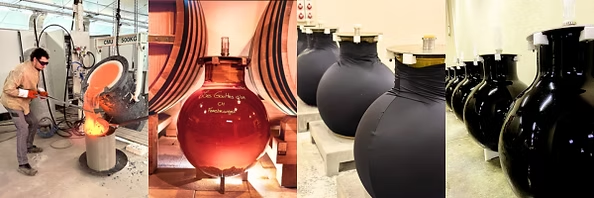
Drunk Turtle produces both concrete and Cocciopesto tanks, but they are most recognized for the latter. Cocciopesto is a natural building material first used by the ancient Romans to create vessels and aqueducts for wine and water. The patented compound is made of fragments or “cocci” of crushed terracotta and stone, sand, de-chlorinated water, and small quantities of a natural binding agent. The mixture is then left to air dry in a mold for three weeks, after which the amphorae can be customized for enological applications. Because the quantity of binding agent used is so small, the levels of heavy metals are extremely low—so low in fact that Cocciopesto amphorae have received alimentary certification from the prestigious TÛV laboratory in Germany, meaning an epoxy coating is not needed inside the amphorae.

The natural materials in Cocciopesto are extremely durable, and their contact with wine brings minerality, complexity, freshness and brightness to the wine. Cocciopesto amphorae are also porous, allowing for micro-oxidation; and their thickness provides thermal inertia, protecting the wine from temperature fluctuations. We encourage you to try these natural amphorae that have been used by our ancient ancestors for centuries.

March 1, 2026
World-Renowned Hungarian Oak Barrels - Bouchard Cooperages Partners with European Coopers
European Coopers is one of Hungary's three principal cooperages and is proud of European Coopersremaining independent since its establishment two decades ago.
After opening its markets and becoming part of the EU in 2004, there has been a resurgence in demand for Hungarian oak on the international wine scene. European Coopers produces premium Hungarian oak barrels that are everything you would expect from a quality driven artisan Cooper.
With over forty years of experience, Master Cooper Kristof Floding has been at the heart of European Coopers since day one in 1997. Kristof and his team control the entire process in house, from sourcing and selecting the logs, seasoning the staves, to producing and finishing the barrels.

European Coopers has first rights for sourcing tight grained Quercus Patraea logs from Hungary’s best forests: the Tokaj Mountains and Mecsek Hills located next to the Tokaj and Villány wine regions.
European Coopers is committed to using 100% premium Hungarian oak—no additional oak is sourced from neighboring Easter European countries. The staves are air dried for 36 months, fire bent and toasted over oak fires from the same oak. Stylistically the barrels lift and showcase the fruit, and soften and add length to the palate. In terms of power, they are slightly lower in impact than their French cousins. The barrels bring characters ranging from fresh bread, oats, and brown sugar through to roasted nuts, honey and caramel, depending on toasting levels.
Click here for more information.

March 1, 2026
Barrel Repair: How to Repair "Side" LeaksUse these 5 easy steps to repair end grain leaks on your wine barrels. Visit us for more barrel repair tips.
1. Wedges are best used to fix these kinds of leaks, which can occur in either head or side staves. The first step is to use a scrapper to uncover the source of the leak (important if wine is obscuring the surface).

2. Next, and most important, determine the direction of the grain. This is a side view of a stave where the grain is at an angle. The two lines on either side represent entry and exit of the grain leak. "X" marks the spot where the grain leak surfaces. The black line on the face of the stave indicates where the wedge must be placed to stop this leak. Angle of grain ascent determines this.

3. Then use a sharp-bladed chisel to make a hole BEFORE the grain exits. The wood chisel needs to cut ACROSS the grain where the wine is seeping, never lengthwise (this would aggravate the problem).

4. Cut the wedge width to the proper size and insert it into the hole you have made. Gently tap it into position; the wedge should fit snuggly.

5. Use the wood chisel to cut off the excess wedge portion, with the backside of the blade up to make a nice cut. Please note that if the blade of the chisel is dull, you will simply pull out the wedge instead of making a clean cut. Done!

March 1, 2026
Barrel Repair: How to Repair "End Grain" LeaksUse these 4 easy steps to repair end grain leaks on your wine barrels. Visit us for more barrel repair tips.
|
|||||
|
|||||
|
|||||
|
|||||
March 1, 2026
Follow These Steps to Prep Your Barrels and Minimize Use of Labor, Water and TimeHarvest is here, which means it's time to get those barrels ready! The following steps will allow you to minimize use of labor, water and time. This traditional method will prepare your oak barrels for use after only 24 hours!
For Immediate Use of the Barrels :
- Fill the barrel with five gallons of very hot water (180ºF). Tightly insert a bung in the barrel, then rotate the barrel from side to side, and allow the water to cool.
- If there are no leaks present and there is a vacuum when the bung is
removed, the barrel is liquid tight. If a vacuum is not present, go to step #3. - Stand the barrel upright.
- Fill the barrel with five gallons of warm water (80ºF to 120ºF).
- Turn the barrel on its side, roll it in order to completely wet the inside surface of the barrel, then stand it on the other head.
- After five to six hours, turn the barrel again, so that it is once more standing upright.
- The next day, check to see if the barrel is free of leaks. If some leakage is apparent, repeat steps 4 – 6. If there are no apparent leaks, proceed to fill the barrel with juice or wine.
Storing Wine Barrels Indefinitely:
If the unused wine barrels are to be stored for an indefinite period of time, keep the plastic film on the barrels to prevent them from getting dried out. When you are ready to use the barrels follow the above steps.
Extended Soaking:
If the soaking period is longer than a couple of days, you can always add SO2 and citric acid to keep the water fresh.
For more information visit us
Happy Harvesting!
March 1, 2026
Bouchard Cooperage Introduces Master Coopers Signature Barrel SeriesAfter 35 years of passion and dedication to the cooperage business, Vincent Bouchard is finally putting his signature on a barrel.
Bouchard Cooperages is very proud to announce the introduction of Master Coopers, a new global brand that draws on decades of experience in research and development from one of the leading experts in the world on barrel fabrication and application. The essence of the brand: Vincent Bouchard has developed a unique toasting recipe for each traditional region of barrel production. He will work together with highly selected master coopers in specific winemaking regions — top coopers who know their local customers, regional grape varietals and the style of barrels most desired for them — to craft a barrel that he believes will be an essential fit as a production component for the wines produced in those regions.
The first phase of the brand's introduction begins with Master Coopers Produit de Bourgogne.
Working closely with a select Burgundian Cooper with whom he has had the longest relationship, Bouchard has created a barrel that shows ultimate respect for terroir. In his words, "When a barrel is at its best, the fruit is the star of the show. Over the last 35 years, I have tasted through many varietals of wines from all over the world in thousands of barrels from all different Coopers. After a while, you begin to realize that each Cooper has a distinct signature. Some are quite overpowering, while others are almost invisible. Some add their impact on the nose, some in the mid palate, and others on the finish."
"What I wanted to achieve with the Master Coopers recipe is a complete integration of wood and wine throughout five stages of tasting: the nose, the front palate, the mid palate, the finish, and what in Italy we call the "retro gusto," where the wine comes back after spitting. The integration will be balanced in a way that shows a reverence for fruit and terroir. The barrel will play an important role, much like a full orchestra in front of the stage; but the spotlight will be on the stage itself, where fruit and terroir play the leading roles."
As a team, Bouchard Cooperages collaborates with Winemakers on specific grape varietals, terroirs, and winemaking styles to provide barrels that create a balanced integration throughout the five stages of tasting, often helping the Winemaker ameliorate what might be lacking in any of the five stages — fruit on the nose and front palate, roundness and support in the mid palate, substantial length, and retro gusto. Master Coopers Produit de Bourgogne barrels will feature 100% 3-year air-dry French oak from specially selected premier forests, and will be available in both the "Slow Blue" and "Slow Red" toasts: Slow Blue for Chardonnay and other whites; Slow Red for Pinot Noir and other delicate/aromatic reds.
March 1, 2026
BOUCHARD COOPERAGES 2013 NEWSSince 1979, Bouchard Cooperages has been steadfastly committed to providing Winemakers around the world with access to the finest quality, customfabricated French oak barrels at an affordable price. Today, we also offer American and Eastern European oak barrels, as well as a complete line of the highest quality French oak alternatives.
COLLABORATION
We take great pride in building long-term relationships with our Winemakers; because we believe that it is only through these evolving collaborations that we can best assist you in your passion to create great wines. Our International Barrel Consultants are always happy to visit with you, and if possible taste through your wines in order to help you find the best match for your particular varietal(s), terroir(s), and winemaking style. They travel the world and taste through thousands of barrels—we encourage you to utilize their ever-increasing knowledge to your benefit in your endeavors. Each spring we host a series of Winemaker Tasting Events in various wine regions throughout North America. At these increasingly popular events, we invite our Winemakers to taste great wines that feature our barrels and alternatives as we share the latest news in our collective passion.
CONSISTENCY
Our primary goal is to work with our Winemakers to help you develop and refine an oak recipe that is uniquely tailored to your individually crafted wines. Once the recipe is developed, we then work diligently with our family of Coopers in an on-going effort to achieve the highest levels of quality and consistency. Remember, it is often said that consumers will buy the first bottle of your wine based on the label, but the second bottle on flavor. We encourage you to examine our entire portfolio of oak products in order to enhance the unique character of each of the wines you craft.
CLICK HERE for complete 2013 Newsletter
March 1, 2026
Bouchard Cooperages represents Bordeaux Cooper: Tonnellerie Maury in North AmericaBouchard Cooperages is proud to introduce Tonnellerie Maury, a historic premium fourth generation Bordelaise cooper that specializes in barrels for Bordeaux varietals

HISTORY
Tonnellerie Maury & Fils is a traditional fourth generation cooperage that originated along the “quai des chartrons quartier” of Bordeaux in 1893. It is in this area of the city along the Garonne river that wine barrels were loaded onto ships and exported to Britain and soon after, around the world.
Tonnellerie Maury specializes in the 225 L Bordeaux barrel but also makes sizes ranging up to 500 L puncheons based on different oak grain tightnesses originating from different French oak forests from the center of France.

TODAY
Mathieu Maury who is a fourth generation cooper now manages Tonnellerie Maury. Mathieu has a strong reputation and image in the local Bordeaux market where 90% of his barrels are sold to Grand Cru Classé Châteaux throughout the region
Mathieu’s proximity to Bordeaux has allowed the brand to position itself as a preferred partner rather than a mere provider to Bordeaux’s greatest Châteaux.
Tonnellerie Maury is part of the PEFC (Programme for the Endorsement of Forest Certification), which is the world’s largest forest certification system that promotes sustainable forest management.

STYLISTICALLY
Tonnellerie Maury barrels focus on fruit purity, expression, aromatics, and structure. Maury provides the perfect balance of power and elegance with plush tannins and a generous but tight mid palate with exceptional length.
Medium toast provides a core of red fruit and a refined, even palate with fine-grained tannins. Medium Plus pushes dark fruit, violet and cocoa, while adding volume and remaining in balance.
Maury barrels allow the fruit to remain in focus while providing lift and fullness. The barrels are delicate enough for a lighter vintage but have enough personality and impact to excel in warmer vintages and richer wine styles. Fruit expression, elegance, and consistent mouth feel from entry to finish.

ABOUT BOUCHARD COOPERAGES:
Bouchard Cooperages is an independent broker and consulting agency that is celebrating 40 years of serving the North American and International wine industry with carefully selected and specialized cooperages that include:
Burgundy: Tonnellerie DAMY and Tonnellerie Billon
Bordeaux: Tonnellerie Maury
Hungary: European Coopers Hungary
United States: Master Coopers USA
Austria: Fassbinderie Schneckenleitner
Besides barrels, Bouchard Cooperages represents Canadell for oak alternatives and Chêne-oelogie for French oak tannins.
Non-oak oak related, Bouchard Cooperages works with Drunk Turtle for cocciopesto and concrete eggs, Montecchio for Impruneta terracotta amphorae and Vin et Terre for “grés” sandstone jarres.
Every supplier in the Bouchard Cooperages portfolio has a unique style, reputation and specialization to cater to different segments of the wine and beverage alcohol industry.
Please reach out to sales@bouchardcooperages.com for more information and their 2019 pricing and portfolio.

March 1, 2026
Supplier Story: TAVA 750L Ceramic Amphorae in Margaux at Château Durfort-VivensTava
Located in Mori Trentino, Italy, since 2010 Tava has been crafting technical ceramic amphora for winemaking. Produced from a patented mixture of local clay, the ceramic amphorae are fired at a temperature that results in a consistent 5% porosity, the same as on new oak barrels. The firing temperature can also reach a 2.5% porosity for whites or lighter reds that would benefit from a slower micro-oxidation. Tava amphora are found in: 320L, 750L, 1250L, 1600L or 2500L.


Ceramic for winemaking
Tava crafts ceramic amphora solely for winemaking with the most winemaker friendly of accessories and options. Since its inception in 2010, the classic "amphora" shape available in 320L, 750L, and 1600L. The 1600L can be equipped with a side hatch; it has been used both by white and red producers across the world.
NEW! Monolite Tank
Pressed by customers to offer an even larger ceramic tank that can be used both for fermenting and aging inside of, Tava responded. The 1250L and 2500L. Monolite tank's "tulip" conical shape allows for optimal cap extraction for fermenting reds inside but can also be used for fermenting and aging whites.

Château Durfort - Vivens
Located in Margaux on the Left Bank and recognized as a Second Classified Growth in 1855, the Château is now part of the Lurton family. The estate is now double certified in bio and biodynamic. The first wine consists of 90% Cabernet Sauvignon, 8% Merlot and 2% Cabernet. Since 2017, the Château's first wine is aged for 18 months in 70% new 225L oak barrels and 30% 750L Tava ceramic amphora, of which the Château collection now numbers over 200 of them.
Why incorporate Tava Ceramic Amphora?
Margaux and Bordeaux producers may be the last place you would expect to find Tava ceramic amphorae, but the Château are finding their contribution essential to expressing the purity of its local and historic terroir, and adding a freshness and vibrancy while maintaining it's old world winemaking style.
Château Durfort Vivens transitioned to using Tava ceramic amphora for three main reasons:
Reduce the amount of SO2 and sulfites added during the aging stage of their wines
Preserve the fruit and freshness in the wine
Aesthetic beauty and harmony inside of the cellar


March 1, 2026
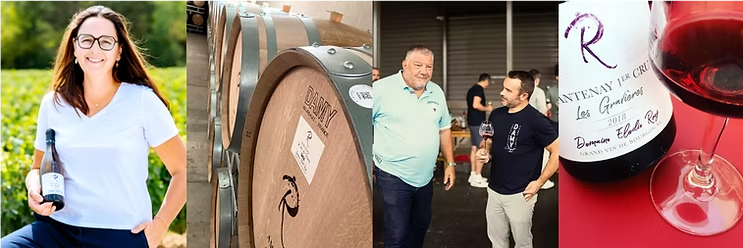
Supplier Story: Tonnellerie Damy and Domaine Élodie Roy
Bouchard Cooperages is very proud to represent Tonnellerie Damy, based in Meursault, one of the most prestigious cooperages in Burgundy.
Tonnellerie Damy, and its French Sales Manager Étienne Martin, work exclusively with their neighbor and client Domaine Élodie Roy in Maranges. This important producer uses Damy barrels exclusively for its production of chardonnay, aligoté and pinot noir. For those interested, the same Damy barrels Élodie Roy uses for the production of these wines are currently available from stock inventory in California, Oregon, Washington, Virginia and Ontario.

Tonnellerie Damy - Meursault, France
Tonnellerie Damy was founded in 1946 and is managed by third generation Jérôme Damy who overseas the production of 18,000 barrels per year. The cooperage represents a state of the art facility located in Meursault, Burgundy. The majority of Damy's barrels are made from single origin French Oak, sourced from the most desirable forests used for winemaking, and its barrels and puncheons are found in the most prestigious of cellars worldwide,


Élodie Roy - From lawyer to working in Anne Gros's cellar
Élodie comes from a family that cultivated vineyards in Cheilly-lés-Maranges in the Southern tip of the Côte de Beaune for decades and would sell the grapes in bulk to négociants. At a young age, Élodie pursued a career in law and banking but realized her true passion lay in wine. After going back to school for viticulture and enology, Élodie worked for 11 years until 2018 at the famous Vosne-Romanée Domaine, Anne Gros where she honed her craft.

Domaine Élodie Roy .. back to her roots
In 2018, Élodie reclaimed her family's heritage and returned to Cheilly-lés-Maranges to launch Domaine Élodie Roy. Élodie took over 24 acres between the appellations of Maranges and Santenay which are planted 85% pinot noir and 15% chardonnay and aligoté. Élodie implements sustainable viticulture with ploughed soils, natural grassing and terroir respecting vineyard work. Élodie's husband Étienne Martin has been the France Sales Manager for Tonnellerie Damy since 2000, with who she works exclusively.


Usage of Tonnellerie Damy at Domaine Élodie Roy
Étienne and Élodie are high school sweethearts and when asked about supplying his wife with Tonnellerie Damy barrels. Etienne comments "she is my favorite, but most difficult customer" with a grin on his face and twinkle in his eye.
Stylistically, Élodie only uses 20% new oak on her top cuvées therefore: "En Builet" Maranges chardonnay, Maranges "La Rue des Pierres" pinot noir and her standout Santenay 1er Cru "Les Gravières" pinot noir. When it comes to pinot noir, Élodie uses between 30% - 40% whole cluster and she favors minimal sulfur use at around 20 ppm of free SO2. Her wines are considered having freshness, brightness, elegance and structure and her barrel regime varies between the vintages.
Through tight collaboration with her husband Étienne at Damy, she favors a combination between high and low impact barrels in order to have balance and build complexity. For this reason, in her cellar you will mainly see a mix of Damy Allier, M+ toasted barrels for power, structure and aromatics and then Damy Exclusive (extra tight grain mix of Allier, Vosges and Jura with the famous LL++ toast) for restraint, focus and tension.


For questions or availability regarding stock Damy barrels, puncheons and pricing as well as other supplier stock availability, please see the stock reports from our California, Oregon, Washington, Virginia and Ontario warehouses below. Do not hesitate to reach out to your Bouchard Cooperages point of contact or sales@bouchardcooperages.com / +1 707 - 257 - 3882 for more information.
March 1, 2026
Spotlight on CANADELL Trie-Sur-Baïse - Midi-Pyrenées, FranceHistory:
In 1939, Lauriano Canadell from Catalonia Spain escaped Franco's regime and installed himself in Southern France. His journey in the French Oak industry started in the firewood and charcoal industries but soon after his son Jacques Sr. joined, they were selling higher quality oak to furniture makers and cooperages and founded their first workshop in Trie-Sur-Baïse.
Jacques Jr. Canadell:
In 1970 Jacques Jr. joined the company, and emboldened his family's DNA of being a forest operator and "merrandier" - cooperage stave producer. The family company increased its forestry activity in Central France and the Parisian region and created its second stave production supply hub in Ully-Saint-Georges right outside of Paris.
Today - Frédéric Canadell:
In 1999 Fourth generation frederic Canadell joined the family company and is the current CEO. Frédéric focused the company towards the cooperage industry through cooperage acquisitions in Burgundy, new cooperage startups in Southern France as well as the creation of an oenological line of premium French Oak adjuncts: CANADELL.
Adjuncts for Enology:
Initiated in 2000, Canadell delivers a full range of premium oak products that are classically made through fire or convection toasting. Canadell ensures the quality and consistency of its oak adjuncts by overseeing the entire manufacturing process, from selecting trees in the forest to seasoning, fabricating, toasting, and packaging. This 100% vertical integration gives winemakers full traceability and confidence in the impact its oak will have on their wine and products.
Fermentation Oak Chips:
Untoasted and toasted chips are the indispensable tool for a quick and efficient aromatic extraction. They are a flexible and economical method for oak extraction and contribution during fermentation and / or aging. They help add structure to wines, increase length and contribute tannin and color stability.
Dominos:
Dominos are perfect for the fermentation of whites and post fermentation aging of reds or whites. Due to their size and format, they are perfect for short aging and contribute oak flavors and aromas that are comparable to CANADELL'S staves.
Barrel Bung Inserts:
The bung inserts are to be inserted through the bung of the barrel and are available in different toast profiles. The results are barrel-like and intended for longer aging processes. Bung insert trials allow for the perfect opportunity to get familiar with CANADELL'S high quality oak profile.
Tank Staves:
Offered in a variety of both fire and convection toasts, CANADELL'S staves are extremely barrel-like with the fire-toasted staves showing more complexity and roundness on the palate while convection-toasted staves are more subtle and show better integration early on.
March 1, 2026
Design Improvements Made to Drunk Turtle’s Cocciopesto Eggs for Vintage 2018Drunk Turtle is a family owned company located just outside of Pisa in Tuscany, Italy that produces both concrete and cocciopesto fermentation and aging eggs or Opuses in small and large formats that are used throughout the world.


Cocciopesto is a natural building material first used by the ancient Romans to create vessels and aqueducts for wine and water. The patented compound is made of fragments, or “cocci”, of crushed terracotta, stone, sand, de-chlorinated water, and small quantities of a natural binding agent. The mixture is then left to air dry in a mold, after which the vessels can be customized for enological applications. The material is less basic and contains significantly less heavy metals than concrete, therefore only requiring a small tartaric wash.
The natural materials in Cocciopesto are extremely durable, and their contact with wine brings minerality, complexity, freshness and brightness. Cocciopesto Opuses are also very slightly porous, allowing for slight micro-oxidation. The vessels thickness and building components provides thermal inertia qualities, therefore naturally protecting the wine from temperature fluctuations.
Drunk Turtle Opus are available in sizes from 3.5HL to 25HL and are most popular with light reds and whites for building texture and softness on the palate, whilst retaining acidity, tension and promoting fresh fruit characters.
Bouchard Cooperages started importing Drunk Turtle Opuses to North America in 2017 and following the vessels success and customer feedback, they have decided to make several design improvements:
- Improved forklift friendly feet system to make Opus easier to maneuver inside of winery
- All accessory gaskets are now made of silicone which is the most sanitary option available
- 5-point system upper hatch door which is the best option on the market for increased strength and durability
- Shorter welded external hatch lip to make emptying of Opus after fermentation easier and more efficient
Bouchard Cooperages has brought in some extra stock Drunk Turtle Cocciopesto Opus 3.5 HL and 10 HL and invites you to try them for the fermenting or élevage of your 2018 wines. If interested, please reach out to: sales@bouchardcooperages.com or Tel: 707-257-3582


March 1, 2026
Bouchard Cooperages 2020 New Product Release: Tonnellerie Billon - Subtil, DAMY- Délicat and Maury - MC2Bouchard Cooperages that recently celebrated 40 years serving the wine industry is pleased to announce that Tonnellerie Billon from Beaune, Tonnellerie DAMY from Meursault and Tonnellerie Maury from Bordeaux will expand their 2020 offerings for the North America market with new coopering processes and toasts this year.
Bouchard Cooperages is an independent barrel broker representing a group of distinctive ultra-premium cooperages and suppliers from France, Hungary, Austria, Italy and America.
Tonnellerie Billon (Beaune) - “Subtil”
Subtil represents a wood preparation technique unique to Tonnellerie Billon that aims to remove the harsher tannins and organoleptic material from the wood in order to have faster integration and a more subtle impact of the oak and toast. This technique maintains Billon’s signature long finish and lift on the palate and is available from 225L / 228L – 300L.

Tonnellerie DAMY (Meursault) - “Délicat”
Délicat represents a barrel finishing technique unique to Tonnellerie DAMY that aims to soften the initial presence of the oak and elevate the integration and harmony between the fruit, oak and toast. This technique maintains DAMY’s signature mid-palate volume and roundness and is available from 225L / 228L – 500L.
Tonnellerie DAMY (Meursault) - Light Long Plus Toast
After the success and rise in demand for Tonnellerie DAMY’s Light Long Toast the Meursault based cooper is now offering an even longer toast called the Light Long Plus. The LL+ Toast takes one hour and a half on a consistent, constant and small ember fire. This light and extremely long toast allows for the varietal to be the center of focus while benefiting from the complexities that DAMY’s famous toast and oak nuances add to the wine upon integration.
Tonnellerie Maury (Bordeaux) “MC2” Toast
MC2 represents a unique extended light long double toasting technique that caters to an elegant and fresh expression of the varietal and promotes the vineyard’s typicities and complexities. This toast is available in all barrel sizes.
For more information, please feel free to contact Bouchard Cooperages at sales@bouchardcooperages.com or 707-257-3582.
March 1, 2026
Introducing TAVA Amphora – Handmade Italian Ceramic AmphoraBouchard Cooperages is extremely happy to announce our representation of TAVA: The Italian handmade ceramic amphora producer located in Mori Trentino Italy.

Acting as the exclusive distributor of TAVA in North America we believe that TAVA is the reference amphora for winemaking worldwide.
History
TAVA is a family-owned and operated company led by third-generation Francesco Tava and located in Mori Trentino, Italy. For over three generations, TAVA has been producing ceramic-based products. In 2013, Francesco Tava took over his family business and following successful tasting trials decided to reposition his family company toward producing ceramic amphora specifically for winemaking. With generational expertise in ceramics, the TAVA amphorae were entirely conceived and developed only for winemaking.
Today
TAVA amphorae are made from a patented mixture of local clay that is certified and tested regularly for composition and consistency, and is 100% natural free of any colorants or additives. TAVA amphorae have been developed through years of research with enologists and ceramic technicians and are currently used by over 1,500 wine producers in more than 30 different countries.

Production
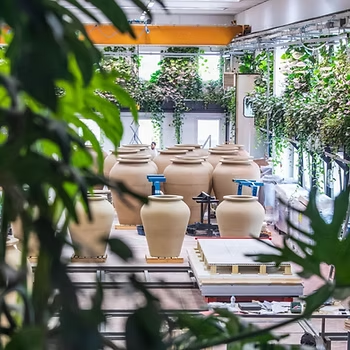
TAVA amphorae are entirely made by hand via setting ceramic clay in molds and are then fired at temperatures between 2192F and 2300F. The higher the temperature you fire at, the smaller the pores are on the amphorae, and hence the lower the porosity. During the initial drying process, humidity and temperature are controlled via evaporative coolers and the presence of vegetation inside the production site. The presence of vegetation is crucial for regulating humidity and temperature levels, thus bringing countless benefits to both worker's conditions and the final product. Each amphora produced has a serial number for complete traceability.
Porosity
The standard porosity of TAVA amphora is similar to that of an oak barrel at 5%. However, depending on the customer's request, the porosity can be higher or lower than 5% allowing for a slow and consistent rate of micro oxidation. The controlled porosity and therefore the oxygen permeability of TAVA amphorae is guaranteed by the know-how acquired through years of experimentation, and by the use of specific ovens characterized by high precision in temperature regulation, homogeneity, and control. No other amphora producer we are aware of has conducted the volume and detail of testing on oxygen transfer rates.

Research and Accessibility
TAVA has funded independent research activities that involved several independent laboratories, with detailed studies regarding porosity, sanitation and chemical inertia, available on our website. The study and understanding of how the firing temperature and firing gradient of amphorae could influence the chemical properties of ceramics was key in the development of the TAVA amphorae. The quality of the clay and the precise and controlled temperature of cooking give TAVA amphora a unique chemical inertia, which independent studies have proven to show no migration of metals or undesirable materials and no effect on the chemical properties of wine. The ceramic material tested, thanks also to its low porosity, proved not to be susceptible to microbial colonization and easy to sanitize.
Our experience and conversation with winemakers show TAVA Amphorae to be the most versatile in terms of user-friendly accessories, including forklift friendly stands and other unique options.
Winemaking & Styles of Wines
All three sizes (320L, 750L, 1600L) of amphorae are equipped with winemaking-friendly accessories including a sealable lid, tasting tap, full discharge valve, and pallet jack / forklift-friendly stand. The 1600L amphora can also come with an external hatch door.
Due to TAVA's standard porosity similar to that of an oak barrel, the amphora works best for the fermentation and aging of all styles of whites or the elevage of both lighter and more full-bodied reds. TAVA Amphora will respect your vineyard site and the typicity of the varietals while contributing texture to the palette and brightness and freshness from an aromatic perspective.


March 1, 2026
Côte d'Or" Translated in English to the "Golden Slope228L Burgundy Export Barrel represents an hommage to 100% French oak sourced only from the Côte D'Or département located within the region of Bourgogne-Franche-Comté.
The BILLON Cooperage located in Beaune France produces this barrel with 3-Y Air Dry French Oak sourced from the forests of Chatillon and Cîteaux. BILLON's *Subtil steam bending process is used to finish the barrel that is then available in different toast profiles.
By sourcing oak only from Burgundy’s Côte D'Or department, transport costs are reduced from the forests to the cooperage's "parque à bois" to create a style of barrique with a true Burgundian identity and spirit for your chardonnays and pinot noirs.
And YES, just like for BILLON's Richelieu, Acacia, and *Subtil barrels, it comes with painted (this time GOLDEN) rivets to help make it easier to identify in your cellar.