
March 1, 2026
The P.R.I.C.E. Benefits of Making Your Own NitrogenMarch 1, 2026
Atlas Copco Group Marks 140th AnniversaryAtlas Copco CEO Ronnie Leten marked the company’s 140th anniversary by ringing the opening bell at the NASDAQ MarketSite in New York’s Times Square on February 21.
The bell ringing signified the beginning of the day’s trading and the start of a yearlong anniversary celebration for the company. Leten was accompanied at the event by Maureen Ellis, an employee celebrating more than 40 years with Atlas Copco in the United States, select customers, and other company management and stakeholders.
View the event video by clicking here
Much has changed since 1873, but this has remained constant: Atlas Copco is committed to developing leading-edge technology and taking care of customers. The best way to celebrate 140 years is to acknowledge the employees and customers that made it possible and deliver on the company's commitment to innovation, sustainability and customer service.
Atlas Copco is an industrial group with world-leading positions in compressors, expanders and air treatment systems, construction and mining equipment, power tools and assembly systems. With innovative products and services, Atlas Copco delivers solutions for sustainable productivity. The company was founded in 1873, is based in Stockholm, Sweden, and has a global reach spanning more than 170 countries. In 2011, Atlas Copco had 37,500 employees and revenues of BSEK 81 (BEUR 9). Learn more at www.atlascopco.com .
Atlas Copco North America operates 109 locations and employs more than 4,600 people in the United States. The business unit earned $2.8B in revenue in 2012 or approximately one-fifth of the company’s overall revenue. Learn more at www.atlascopco.us .
March 1, 2026
Three Ways Winemakers Benefit from Onsite Nitrogen Gas Generators
With the grape harvest season gearing up in warmer climates, now is a great time for winemakers to weigh the benefits of onsite nitrogen gas generation against delivery of liquid nitrogen.
How is nitrogen used in winemaking?
While the very best wineries still use some traditional practices in the making of wine, such as harvesting grapes by hand, modern wineries often combine these traditional practices with modern manufacturing techniques. Because of its inert, colorless and odorless characteristics, nitrogen is used to prevent oxidation, which can alter the acidity, color, aroma and natural flavor of the wine.
Nitrogen is also used in the bottling process. Bottles are washed and dried with nitrogen before filling, and after filling and before corking the bottle is purged with nitrogen to eliminate the presence of residual air in the neck of the bottle.
Onsite Nitrogen Generation Reduces Costs
Winemakers (and other industrial manufacturers who require nitrogen for a variety of applications) can reduce nitrogen costs by 40-80% by switching to onsite generation, depending on current liquid nitrogen market prices. Bulk costs for delivered liquid nitrogen can range from $0.35 per hundred cubic feet to $1.50 per hundred cubic feet. And, when delivered in cylinders, the price can jump as high as $3 per hundred cubic feet.
Even with the capital costs associated with onsite nitrogen generation (for equipment such as nitrogen generators, air compressors, receivers, site preparation, power and associated maintenance), customers can realize a return on investment in as few as nine to 24 months depending on what equipment they already have at their facility. In each subsequent year, regular operational expenses can drop even further to about $0.11 per hundred cubic feet—just maintenance and energy costs.
Onsite nitrogen gas generators used to be economically viable only in very large applications. Through continual research and development, today’s high efficiency products ensure that generators are economically viable for even the smallest applications.
Increase Employee Safety and Reduce Environmental Impact
Remember the high school science classes where a teacher donned rubber gloves and dipped a delicate rose into liquid nitrogen before shattering the immediately frozen petals on a table top? With onsite nitrogen generation, the potential for exposure to the -320 degree Fahrenheit liquid nitrogen during the delivery and unloading process is automatically eliminated.
Additionally, onsite nitrogen generation helps reduce energy use and lower a facility’s carbon footprint. Consider the absence of diesel fuel and associated carbon emissions from truck delivery of liquid nitrogen and these benefits compound.
When considering all of the benefits of onsite nitrogen generation—greater efficiencies, quick return on investment, lower costs, safer work environment and environmental stewardship—the choice seems clear. Learn more about onsite nitrogen generation by visiting Atlas Copco’s onsite industrial gases microsite.
March 1, 2026
New energy savers GA 90+-160 air compressors from Atlas CopcoWilrijk, Belgium, August, 2014. Atlas Copco unveils the latest GA 90+-160 range of oil-injected rotary screw compressors, designed to reach new productivity levels and reduce operating costs. The patented screw element is packaged in a new enhanced design which improves the performances by up to 5% compared to the previous generation. New innovative features help to increase the availability and durability of the compressors.
Longer service intervals and reduced maintenance time
With its high-cooling capacity, GA air compressors can perform in all demanding operating conditions and up to 55°C/ 131°F. The intelligent control and monitoring systems, the Elektronikon® and the SmartLink®, offer many possibilities to optimize the compressor operation and further increase the savings. To reduce the operating costs, the new range offers longer service intervals and reduced maintenance time.
“At Atlas Copco, we innovate to maximize value for our customers.Efficiency is in our DNA and lowering the energy costs of our customers is our primary focus. But there is more we can offer: serviceability, ease of installation, integration, and monitoring. The new GA 90+-160 is another great example that our expertise lead to tangible benefits.” says Chris Lybaert, President Atlas Copco Oil-free Air division.
More energy savings, less CO2 emissions
“In today’s industrial environment, our customers are looking for solutions that improve sustainability, efficiency and productivity, while lowering operational risk.We are very proud to add this new GA 90+-160 range to our offering. More energy savings, less CO2 emissions, the Atlas Copco drive for efficiency continues.“ says Conrad Latham, Vice President Marketing, Atlas Copco Oil-free Air division.
- Michael Gaar, PR Coordinator,
Telephone: +32 (0) 3 750 80 88, e-mail: Michael.gaar@be.atlascopco.com
Atlas Copco’s Compressor Technique business area provides industrial compressors, vacuum solutions, gas and process compressors and expanders, air and gas treatment equipment and air management systems. The business area has a global service network and innovates for sustainable productivity in the manufacturing, oil and gas, and process industries. Principal product development and manufacturing units are located in Belgium, Germany, the United States, China and India.
March 1, 2026
Atlas Copco To Host Wine Tasting at 2018 Unified Symposium on January 25th, 12:00pm -3:00pm in Booth #1911Come grab some good wine, and our experts will catch you up on the latest winemaking technology. To learn more about the products we’ll have on display, please see the press release below. We are also taking one-on-one appointments with our product experts at this time.
Atlas Copco To Exhibit at 2018 Unified Wine & Grape Symposium January 24-25
Atlas Copco, a leading provider of sustainable productivity solutions, will exhibit at this year’s Unified Wine & Grape Symposium January 24-25 in Sacramento, CA, providing wineries with efficient solutions through state-of-the-art products and integrated systems including oil-free compressors, on-site nitrogen generators and low-pressure blowers.
The company also is hosting a wine tasting for show attendees from 12 p.m. to 3 p.m. on Thursday, January 25 at booth 1911.
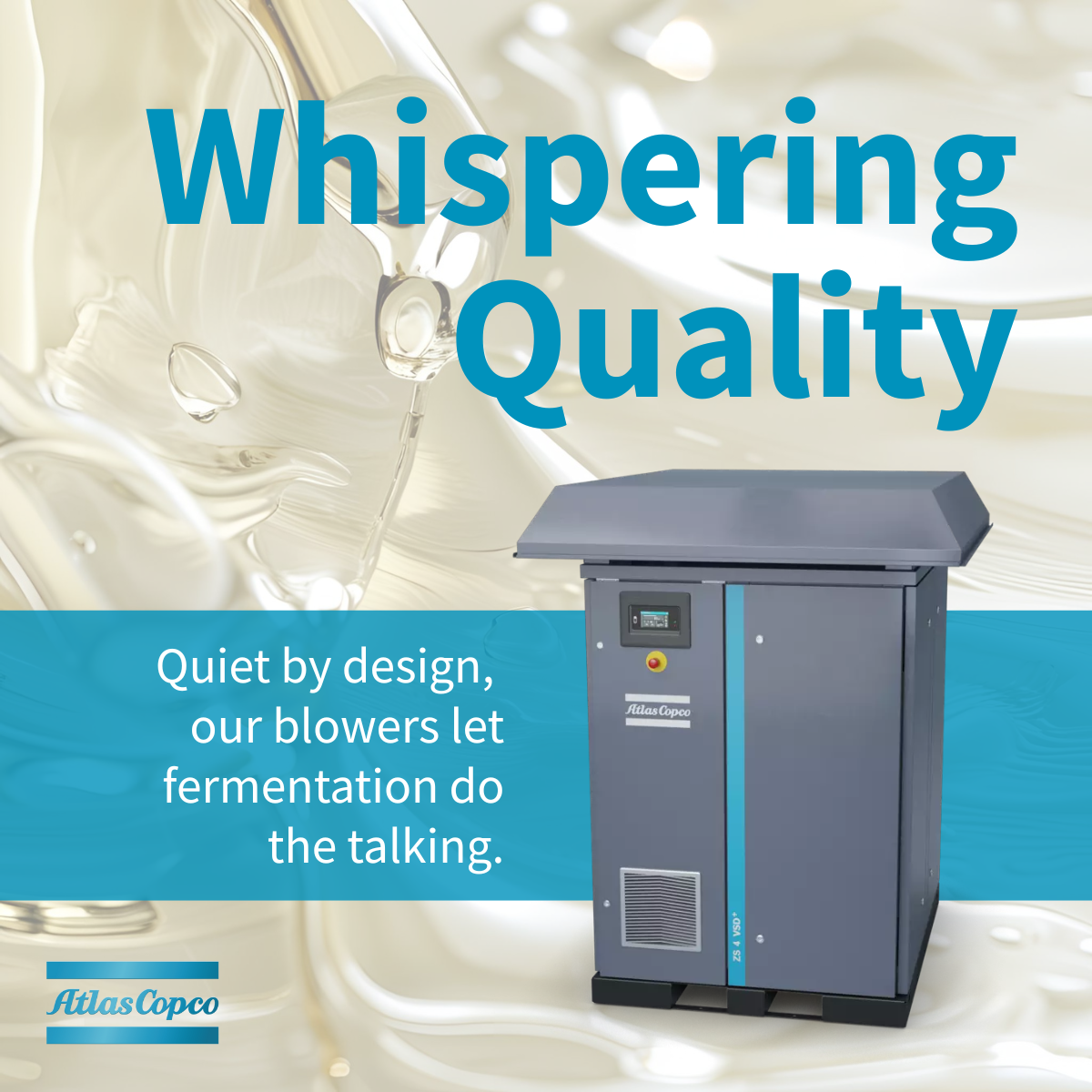
Wine makers at the Unified Wine & Grape Symposium can learn about Atlas Copco’s low-pressure blower system for waste water treatment systems. Many waste water treatment systems within the wine industry feature a paddle wheel-style aeration method, which offers little speed control and inconsistent oxygen concentration. Atlas Copco’s system is integrated with membranes throughout for better distribution of air. Additionally, VSD technology, adjusted through a Dissolved Oxygen sensor, monitors oxygen levels and contributes to better processing, ultimately reducing expenses.
Also featured at the Atlas Copco booth will be the NGP+ nitrogen generator, crucial for preventing oxidation in the winemaking process. The NGP+ nitrogen generators utilize a proprietary separation technology to provide users with an instant supply of up to 99.9 percent pure nitrogen. These on-site nitrogen generators are a cost-effective solution to buying bottled nitrogen, saving up to 50 percent of running costs when compared to other nitrogen generators.
The Unified Wine & Grape Symposium is an annual exposition encompassing a wide range of products related to the wine and grape industry with international representation in both sessions and exhibits.
Atlas Copco is a world-leading provider of sustainable productivity solutions. The Group serves customers with innovative compressors, vacuum solutions and air treatment systems, construction and mining equipment, power tools and assembly systems. Atlas Copco develops products and services focused on productivity, energy efficiency, safety and ergonomics. The company was founded in 1873, is based in Stockholm, Sweden, and has a global reach spanning more than 180 countries. In 2016, Atlas Copco had revenues of BSEK 101 (BEUR 11) and about 45,000 employees.
Atlas Copco Compressors LLC is part of the Compressor Technique Business Area, and its headquarters are located in Rock Hill, S.C. The company manufactures, markets, and services oil-free and oil-injected stationary air compressors, air treatment equipment, and air management systems, including local manufacturing of select products. The Atlas Copco Group, which celebrated its 140th anniversary in 2013, is among the Top 100 sustainable companies in the world and a member of the Dow Jones World Sustainability Index. Atlas Copco has also been recognized by Forbes, Thomson-Reuters and Newsweek, among others, for its commitment to innovation and sustainability. Atlas Copco Compressors has major sales, manufacturing, production, and distribution facilities located in California, Illinois, Massachusetts, North Carolina, South Carolina, and Texas. www.atlascopco.us
March 1, 2026
Specialty Tools & Attachments: 10 Years of 'Phenomenal Products'Mike Capps, an Atlas Copco dealer with Specialty Tools & Attachments in Wyoming tells us about his favorite products and why he and his customers have trusted Atlas Copco for more than 10 years. Check out Specialty Tools' website: http://www.sta-attachments.com.
March 1, 2026
Atlas Copco celebrates new headquarters in Oakland Technology ParkAtlas Copco Tools and Assembly Systems celebrates the opening of their new custom-built 120,000 sq.-ft. state-of-the-art headquarters in Oakland Technology Park. Atlas Copco CEO Ronnie Leten, senior members of the Atlas Copco management team, Swedish Ambassador to the United States Björn Lyrvall, the Mayor of Auburn Hills and Oakland County Executive L. Brooks Patterson, attended the opening day event on June 29, 2015 that included an official ribbon cutting and speeches by the visiting dignitaries and local officials.
The new facility will house approximately 225 employees from the former location on Dutton Road along with additional business units, and will add 50 jobs over the course of 12 months. The headquarters serves the motor vehicle, heavy industrial and general manufacturing industries, as well as the company’s growing aerospace business.

March 1, 2026
Manufacturing Today: Atlas Copco is "one of the leading providers of compressors in North America"Manufacturing Today recently wrote, "Atlas Copco has led the way in developing products that meet and anticipate the needs of its customers. That tradition of innovation continues to this day, and is evident in the company’s work as one of the leading providers of compressors in North America," in their interview with John Brookshire, President of Atlas Copco Compressors LLC based in Rock Hill, SC. Read more about their interview with John here
March 1, 2026
Why Your Facility Needs a Compressed Air AuditDoes your manufacturing facility need a compressed air audit? Learn how it can help reduce your compressed air energy cost by 30 percent or more.

(source: TheCompressedAirBlog.com)
How does a compressor room compressed air audit work?
The manufacturer chose to perform a data logging compressed air audit to find out which new equipment would help the company meet its goals of lessening its carbon footprint and reducing the environmental impact of its operations, in particular the amount of energy and water the company consumes. Local utility providers often offer rebates to companies who perform energy audits and reduce their energy usage. Plus, the results give companies an opportunity to explore more efficient options before making a capital purchase.
Conducting a compressed air audit won’t disrupt your facility’s operations, but rather is performed while the equipment is running. Engineers connect data loggers to the compressed air system and leave them onsite for a set period. Then the data is uploaded into software that produces a detailed report showing compressor demand on a daily basis and how much electricity is being used. Atlas Copco’s proprietary software for data logging can also simulate the potential energy savings should a manufacturer wish to invest in a variable speed drive compressor. With detailed calculations that predict energy savings in hand, facility and maintenance managers can more easily demonstrate the payback time and return on investment to justify making a capital purchase...
Read the full Compressed Air Blog article here
March 1, 2026
Atlas Copco's Commitment to Sustainable Productivity in the United StatesThis short video highlights how Atlas Copco works every day in the United States to achieve sustainable productivity.
Atlas Copco Compressors is an industry-leading global manufacturer and service provider of compressed air technology and quality air accessories, including nitrogen generators with 24/7 service support.
In each of the past five years, we have invested in opening new U.S.facilities to further support manufacturing, distribution and training for customers nationwide. Our sales and service representatives are right where our customers do business.
In 2013, Atlas Copco celebrates our 140th birthday. From our beginnings as a railroad manufacturer, we have grown our presence in the United States to over 100 locations and employ approximately 4,500 people.
The people of Atlas Copco are committed to your Sustainable Productivity.
March 1, 2026
Atlas Copco Launches New 8 Series Compressor RangeAtlas Copco has launched the 8 Series, a range of 10 new air compressors. All models in the 8 Series range fall below the 750kg limit and therefore require no special driving license to tow. Reliability, efficiency and higher utilisation levels, coupled with superior performance, enable the range to offer a maximum return on investment for rental and construction partners.
The compressors’ compact and lightweight package mean that despite incorporating a full-size fuel tank, aftercooler and generator, all models fall below 750kg. The largest compressor in the range can produce 5m3/min of air and can still be towed by a normal passenger car. However, the inclusion of a new and updated HardHat® canopy ensures the 8 Series models are tough enough for the harshest conditions.
Incorporating reliable Kubota engines, the compressors feature an anti airlock system for guaranteed starting. Service is made simple as all parts are easily accessible and the filtration uses a simple spin on system. Remarkably, the 8 Series only requires an hour’s total service time over two years of operation.
The 8 Series line-up initially comprises of 10 models, ranging from the XAS 38 Kd, with a free air delivery of 2m3/min, to the XAS 88 Kd, with an air delivery of 5m3/min. Two models in the range come with built-in generators.
Ben Van Hove, Vice-President, Marketing at Atlas Copco’s Portable Energy division, said: “The launch of the revolutionary 8 Series is the result of more than 10 years of continuous development. Throughout the design and engineering process, we have focused on advances that provide tangible benefits to our customers, without compromising a single aspect of design or performance. As a result, the 8 Series is versatile, efficient and a valuable ally in maximising uptime on site.”
The 8 Series range of compressors are available with a buy back guarantee from Atlas Copco, which ensures the compressors’ asset value and allows owners to easily calculate the capital return.
For further information please contact:
- Paul Humphreys, Vice President of Communications
+32 3 7508550 paul.humphreys@be.atlascopco.com
March 1, 2026
Check Your System for Leaks to Keep Costs Low
Leaks can be costly. A quarter-inch air leak at 100 psi can waste as much as $8,000 in energy costs per year. Depending on the age of the compressor system, as much as 20 percent of compressor costs are due to leaks. But while leaks are easy to see in your energy bill, they are harder to spot in the system. Some bigger leaks can be heard in a system walk-through, but almost 80 percent of leaks are inaudible. And these inaudible leaks – while small – account for a significantly larger portion of energy loss. Knowing where leaks commonly occur is a good first step to reducing your unnecessary energy costs.
Filters: Filters remove harmful contaminants from the compressed air. This makes end use safer and keeps the system cleaner, but the filters need to be maintained as well. When filters are clogged, lubricant aerosols, moisture and particulates remain in the airstream, coating the pipes and leading to system leaks.
Drains: When manual condensate drains are left open, compressed air is constantly leaving the system before end use. Solenoid valve drains on a timer may be on an interval that is longer than necessary, leading to wasted compressed air. To make sure compressed air doesn’t escape, make sure your manual valves are closed and any solenoid valves are on an appropriate interval for the condensate flow.
Piping and Connections: Did you know piping systems over five years old likely have leaks that account for 25% of compressed air usage? Frequently monitoring and maintaining your piping system can go a long way towards decreasing leaks and increasing energy savings. Improperly sized connections, like hoses and tubing, can lead to compressed air losses. Make sure your components are working together to save you air and money.
Leaks are a common problem, but they have an easy solution. Start a regular maintenance routine now to avoid costly leaks in the future. Your compressor system – and your energy bill – will thank you.
March 1, 2026
Consider Your Air Compressor’s Maintenance BudgetThe following is an excerpt from the article Consider Your Air Compressor’s Maintenance Budget featuring Trey Ragsdale, CTS product marketing manager, Atlas Copco Compressors. The full version can be read online or in the October issue of Maintenance Technology.
Large capital purchases, such as compressors, require careful planning and financial forecasting. After the initial cost, many organizations still have to pay down interest and principle. While they typically include those line items in their budgets, they often forget to factor in another crucial cost: annual maintenance. According to Atlas Copco’s Trey Ragsdale, while maintenance only composes about 5% to 10% of annual compressor-related expenditures, those costs can increase exponentially if maintenance is forgotten or deferred, causing unexpected and expensive downtime.
Compared with the overall life-cycle cost of compressor ownership, maintenance expenditures are minimal. A sound maintenance budget will help ensure they stay that way. To develop an accurate picture of these costs, Ragsdale, who’s with the company’s Compressor Technique Service (CTS) division in Rock Hill, SC, says it’s important for end users to pay attention to these seven aspects of their compressor systems:
Type of compressor
The type of compressor(s) you run can greatly affect service costs. For instance, oil-lubricated compressors have more oil to change than oil-free compressors, thus increasing the cost of service.
Installation conditions
Equipment installed in severe-duty applications may require more-frequent service. If your compressor is housed in a hot, humid, or dusty area, take that fact into account when planning your maintenance budget.
Keep Reading…
You can read the full article on developing an air compressor maintenance budget in the October issue of Maintenance Technology. Contact an Atlas Copco expert to start creating an air compressor maintenance budget for your facility.
March 1, 2026
Save the Date: WIN Expo on November 30th - We'll See You There!Join us in supporting those that were affected by the California wildfires and get free access to the latest products and services from over 300 of the industry’s best national suppliers and service professionals.
We’re attending the WINExpo at the Sonoma County Fairgrounds, Thursday, November 30th and want you to also! The 2017 WINExpo is the 6th Annual North Coast Wine Industry Expo Trade Show.
SAVE THE DATE
Booth # 710
Thursday, November 30, 2017
9:00 a.m. - 4:00 p.m.
Venue Location
Sonoma County Fairgrounds
1350 Bennett Valley Rd., Santa Rosa, CA 95404
March 1, 2026
Take Control of Your Nitrogen Supply: On-site Generation Saves Wineries Money and Prevents DisruptionsIn today's challenging landscape of rising costs and extreme competitiveness, wineries actively seek strategies to increase their profit margins. They are building their sales and customer bases by leveraging social media marketing, strengthening relationships with wine club members, and improving online accessibility. Simultaneously, wineries are increasing their efficiency by investing in automated machinery and artificial intelligence (AI) to gain efficiency and save time. They also install solar arrays to conserve energy and transition to self-generated gases to reduce costs. Many of these alternatives require capital expenditures (CAPEX). Still, they deliver long-term savings and improve the winery's environmental footprint ― a positive for an environmentally conscious younger demographic.
An untapped opportunity for many wineries is how they source the nitrogen winemakers use to battle wine's archenemy ― oxygen. Nitrogen sparging removes suspended oxygen in the juice, nitrogen purging evacuates air from bottles before filling and corking them to prevent oxidation, and nitrogen gas pressure pushes wine between vessels during packaging.

Challenges with Gas Delivery
Traditionally, wineries contract with gas companies to regularly deliver nitrogen cylinders or tank refills, a practice that has been used for many years. However, this dependence on external suppliers carries hidden costs, including wasted nitrogen left in the cylinders when "empties" are returned to the gas company. Additionally, a small percentage of gas losses from tanks daily are due to nitrogen being "boiled off" into the atmosphere. Safety risks are also a concern with high-pressure cylinders that weigh over 100 pounds. Furthermore, wineries end up paying for the 99.999% purity gas that companies produce, even though they don't always need such high purity levels.
The market shift from delivered gases to 'own production' has two main drivers, improving efficiency and taking control of your delivery schedule; delivery issues lead to delays that directly impact wine production.
"Producing your own nitrogen really puts you in control of your process. The cost savings are clear and the peace of mind that comes with this has been a game-changer for many wineries,” says Peter Asquini. "If you need nitrogen to make and bottle your wine, you need it immediately, so any disruption in supply presents significant problems for our customers."

Asquini is the Business Development Manager at Atlas Copco, a 150-year-old global air and gas equipment manufacturer. The company began making generators for on-site nitrogen production when their customers began searching for an alternative that would allow them to control their nitrogen supply. It offers nitrogen generators with either PSA (Pressure Swing Adsorption) or Membrane technology.
Benefits of On-Site Nitrogen Generation
Creating nitrogen at your winery removes the risk of missed deliveries, supply chain disruptions, and gas scarcity in some parts of the country, which can lead to gas company allocation limits.

This approach also shifts the cost structure from variable to fixed, mitigating risks inherent in delivery contracts, including price changes triggered by unforeseen circumstances and surcharges. And, unlike purchased gas, on-site generation allows wineries to customize gas purity (% of oxygen) according to what each step in the winemaking process requires.
Asquini highlights a recent customer's experience. "A large California winery with 24/7 continuous gas usage was concerned about costs and delivery issues and came to us for an alternative. We worked with them on the project and specifications and at the end of the process we installed a generator that let them begin generating nitrogen at their facility. Their costs went from over $23,000 per month for delivered bulk gas to $8,500 a month with self-generation.”
"CAPEX is a big issue, of course, and we're all very aware of the cost of capital," adds Paul Humphreys, Vice President of Communications at Atlas Copco Compressors. “Their projected savings over 15 years ― the lifetime of the equipment ― is over $2 million, and the business case and project payback really fitted with their business goals."
Discover Your Nitrogen Self-Generation Potential
The opportunity to save money, ensure consistent supply, improve worker safety, and reduce a winery's carbon footprint makes it worthwhile to evaluate the potential on-site nitrogen generation that can deliver for your winery. To obtain a payback analysis for installing nitrogen self-generation, visit www.atlascopco.com/BYOG.
If you're interested in learning more, please join us on July 20th for an in-depth webinar about the benefits of producing your own nitrogen.

March 1, 2026
Atlas Copco Releases AIRCUBE – A New Dimension in Compressed Air PackagingAtlas Copco has introduced AIRCUBE – a containerized range of plug-and-play compressor rooms that was launched specifically to meet the needs of customers who have space limitations or restrictions within their current facilities.

AIRCUBE delivers containerized compressed air facilities when and where they are needed, saving space in production facilities or eliminating having to wait for new buildings to be constructed, allowing businesses to ramp up their output quickly. Because the applications for compressed air containers are too diverse for a one-size-fits-all solution, AIRCUBE enables companies to select their own plug-and-play configuration by choosing from a wide variety of compressed air equipment and many different options.
An AIRCUBE can be equipped with fixed-speed or energy-efficient variable speed drive compressor(s) with sizes ranging from 15-110 horsepower, depending on the models chosen. Customers can then add the dryers, air receivers, filters, and any special add-ons that best meet their needs. Atlas Copco will assemble all of these products in a 20 or 40-foot ISO-certified sea container. The result being all components of an AIRCUBE containerized compressor room have already been certified, thoroughly tested, and made to work together.
“The AIRCUBE concept is a truly great option for our industrial customers,” said Trey Ragsdale, business line manager for industrial air products in the United States for Atlas Copco. “We are offering companies a top-quality, containerized compressor room that is tailored to their needs – the result is a true plug-and-play solution that provides operators with unrivaled flexibility, quality, reliability, and efficiency.”
AIRCUBE comes with a number of standard features, such as ventilation, internal power distribution, certification, and lighting. A wide array of options is available, including environmental add-ons, smart connectivity and control features, ISO 8573 filtration class options, and safety add-ons. The AIRCUBE container is built to withstand temperatures from 32°F to 110°F. Containers that can operate in low temperatures (-40°F) are available as an option. Containers that can work in even higher or lower temperatures or very high ambient conditions (-58°F-120°F) can be supplied on demand.
Atlas Copco Group & Atlas Copco Compressor Technique
Great ideas accelerate innovation. At Atlas Copco, we have been turning industrial ideas into business-critical benefits since 1873. Our passionate people, expertise, and service bring sustainable value to industries everywhere. Atlas Copco is based in Stockholm, Sweden, with customers in more than 182 countries and about 39,000 employees. In 2020, revenues were BSEK 104, approximately 12 BUSD.
Atlas Copco Compressor Technique partners with customers to turn industrial ideas into smart, connected air and gas solutions and leading-edge compressed air technology. By listening to our customers and knowing their needs, we deliver value and innovate with the future in mind.
Atlas Copco Compressors
Atlas Copco Compressors LLC is part of the Compressor Technique Business Area, headquartered in Rock Hill, South Carolina. Atlas Copco Compressors provides innovative solutions, including world-class compressors, air blowers, industrial coolers, vacuum pumps, quality air products, and gas generation systems, all backed with full service, remote monitoring, and auditing services. With a nationwide service and distribution network, Atlas Copco Compressors is your local, national, and global partner for all your compressed air needs. Learn more at www.atlascopco.com/air-usa.

March 1, 2026
Atlas Copco Compressors to Serve as Don Schumacher Racing’s Official Compressed Air Provider
Don Schumacher Racing (DSR) and Don Schumacher Precision Manufacturing (DSM) has named Atlas Copco the company’s official compressed air technology partner for the fifth consecutive year.
Atlas Copco Compressors LLC – a global leader in sustainable productivity – will provide high-quality air compressors, dryers, and accessories to drag racing's winningest team and its manufacturing arm through the partnership.
“The two ingredients we rely on for our racing operations and manufacturing centers are electricity and compressed air," said Mike Lewis, senior vice president at DSR. “Atlas Copco has been a reliable partner for many years providing quiet, efficient, compressed air at both our headquarters and on the track.”
Atlas Copco’s partnership with the company began in 2016 when DSR/DSM expanded the race shop and machining center, installing a new Atlas Copco, the GA 26 VSD+ air compressor system. The GA VSD+ series continues to provide DSR with substantial energy savings and a small footprint, and significant noise reduction.
The VSD (variable speed drive) compressor has reduced DSR/DSM's energy costs by adjusting the air supply to match demand. Atlas Copco has also provided AirNet piping systems to support the compressor.
We are proud to continue working with Don Schumacher Racing again in 2021,” said Paul Humphreys, vice president of communications and branding for Atlas Copco. “For obvious reasons, 2020 was a tough year, and we were impressed with how the entire team at DSR adapted, including making PPE equipment for first responders, and we can’t wait to see what they do on the track in 2021.”
DSR's championship race teams have also adopted Atlas Copco compressors in their trackside use. Crew members for Antron Brown, Jack Beckman, and Tommy Johnson Jr. use Atlas Copco's compressed air for their engine rebuilds.
Atlas Copco has a long, rich history of providing air compressors, blowers, and nitrogen generators to race shops, along with automotive and industrial customers across the United States. With a focus on efficiency and connectivity, Atlas Copco works to find the perfect product for its application and provides 24/7 service, support, and remote connectivity options.
The NHRA Camping World Series season started with the NHRA Gatornationals, in Gainesville, Fla., March 12-14. DSR's fleet of nitro-burning race cars all features Atlas Copco branding, as do DSR's transporters and technology trailers.
Atlas Copco Group & Atlas Copco Compressor Technique
Great ideas accelerate innovation. At Atlas Copco, we have been turning industrial ideas into business-critical benefits since 1873. Our passionate people, expertise, and service bring sustainable value to industries everywhere. Atlas Copco is based in Stockholm, Sweden, with customers in more than 182 countries and about 39,000 employees. In 2020, revenues were BSEK 104, approximately 12 BUSD.
Atlas Copco Compressor Technique partners with customers to turn industrial ideas into smart, connected air and gas solutions and leading-edge compressed air technology. By listening to our customers and knowing their needs, we deliver value and innovate with the future in mind.
Atlas Copco Compressors
Atlas Copco Compressors LLC is part of the Compressor Technique Business Area, headquartered in Rock Hill, South Carolina. Atlas Copco Compressors provides innovative solutions, including world-class compressors, air blowers, industrial coolers, vacuum pumps, quality air products, and gas generation systems, all backed with full service, remote monitoring, and auditing services. With a nationwide service and distribution network, Atlas Copco Compressors is your local, national, and global partner for all your compressed air needs. Learn more at www.atlascopco.com/air-usa.
March 1, 2026
Saving Money with Water-Cooled Chillers – What to Know
Are Industrial Chillers an essential part of your facility? If so, downtime is not an option and saving money is always a top priority.
Industrial water-cooled chillers help to maintain a consistent temperature in various industrial applications by removing heat from process water. Keep in mind that chillers aren’t cooling the equipment; they’re simply transferring heat! They are used in a wide range of industrial processes, including food and beverage, machine cooling, medical & pharmaceutical, plastics, and printing.
These chillers work to move unusable heat from one place to another in your process to protect the integrity of equipment, quality of end products, and applications. They are designed to cool water to a specific temperature, which is required for various industrial processes.
Water-cooled chillers are more energy-efficient than air-cooled chillers because they use water as a cooling source. With water being a better conductor of heat than air, it requires less energy to cool the same amount of heat. Water-cooled chillers also operate at lower temperatures, which further reduces energy consumption. This results in lower energy bills and long-term cost savings.
A chiller saves water and associated costs by recirculating and re-using the plant’s own water supply. The cost of cooling water can add up quickly, especially with continuously running equipment. When a chiller is added into the system, it can bypass the costs and need for a monitored, municipal water supply and wastewater discharge which can contribute to substantial savings within productions budgets. With the latest developments in technology, capital investment payback can be achieved rather quickly over the course of the equipment lifetime.
Water-cooled chillers also require less maintenance than air-cooled chillers, this is because water is a cleaner and more efficient cooling source than air. These chillers also have longer lifespans because they operate at a lower temperature, which reduces wear and tear on the machine’s components.
Using a water-cooled chiller can save your business money in several ways, including reduced energy consumption, lower maintenance costs, longer lifespan, and improved environmental performance. If you are considering a chiller for your facility, consider asking an expert about the benefits of a water-cooled chiller today!
March 1, 2026
What’s Your 2024 Compressed Air Resolution?
A new year means a fresh start and new resolutions. But have you thought about a resolution for your compressed air system? Doing so can lead you to energy recovery and added efficiency towards your operations. If you're not sure where to start, check out our five suggestions to think about as we kick off the new year.
Take a look UP
Your piping system could be the key to significant savings. With an air leak estimated to cost around $2,500 per year, those pipes are a potential goldmine for savings. Remember that not all air leaks are audible, so ultra-sonic equipment might be needed to inspect those pipes thoroughly. If you’ve never had an AIRScan, make 2024 the year to put that right.
Energy Recovery
Did you know that an air compressor could also be the key to reducing fossil fuel usage? By reusing the heat of compression, you can get a head-start on the need for warm water and, as one example, save thousands on your heating bill. In many instances, Energy Recovery Systems can also be fitted to existing compressors and don’t require much space.
Control Systems
Do you have the right tools to make your equipment work perfectly in harmony? A central control system will do the critical thinking for you and ensure your system is working efficiently. Most control systems can also work with multiple brands of air compressors. Remote connectivity, diagnostics, and early detection of any issues is a must for any production site as we embark on 2024.
Make Your Own Gases
Your make your own compressed air, so what about nitrogen or oxygen too? The good news is that if you have a compressor, you are likely already 50% of the way there. By adding a small generator, you have built the system you need to enable you to take control of your gas availability, delivery, purity and price!
https://www.atlascopco.com/nitrogen-usa
Have a Plan
“What if?” is a question we have all asked ourselves on multiple occasions. Since compressed air is critical to any site, what happens if your compressor is not working? Do you have a backup? Do you have a plan to allow essential predictive maintenance to happen? How will I cope if my production doubles or if I need to reduce my capacity? A compressed air plan is essential to your production facility and let us help you make one.
With these resolutions in place, you’re on the path towards energy savings optimized performance! If you have any questions or want to implement these resolutions, contact our team of experts to get you started in 2024.
https://www.thecompressedairblog.com/whats-your-2024-compressed-air-resolution
March 1, 2026
Signs It’s Time to Upgrade Your Chiller SystemIndustrial air-cooled chillers are crucial in maintaining optimal temperatures and ensuring efficient operations. However, like any other mechanical system, chillers have a lifespan, and using an outdated or inefficient system can lead to various problems. Upgrading your chiller system can bring numerous benefits, including enhanced efficiency, cost savings, and improved reliability. Here are some signs that indicate it might be time to upgrade your chiller system.
Increased Energy Consumption
One of the most noticeable signs that your chiller system is due for an upgrade is a significant increase in energy consumption. As chillers age, they tend to become less efficient, requiring more energy to achieve the same cooling output. If you notice a steady rise in your energy bills without a corresponding increase in usage, it’s a clear indicator that your chiller might be running inefficiently.
Frequent Breakdowns and Repairs
Regular maintenance is essential for the optimal performance of chiller systems. However, if you find yourself frequently calling for repairs and experiencing unexpected breakdowns, it’s a sign that your chiller is reaching the end of its lifespan. The cost of constant repairs can add up quickly, making it more economical to invest in a new, reliable system.
Inconsistent Cooling Performance
A well-functioning chiller should provide consistent cooling to meet your industrial needs. If you’re experiencing fluctuating temperatures or the system struggles to maintain the desired cooling levels, it’s a sign that the chiller is no longer performing efficiently. Inconsistent cooling can lead to product quality issues and affect overall productivity.
Outdated Technology
Advancements in chiller technology have led to significant improvements in energy efficiency, performance, and environmental impact. If your chiller system is more than a decade old, it’s likely that it lacks the modern features that newer models offer. Upgrading to a chiller with advanced technology can provide better control, monitoring, and energy savings.
Rising Maintenance Costs
As chillers age, the cost of maintaining them tends to increase. Components wear out, and finding replacement parts for older models can become challenging and expensive. If you’re spending a significant portion of your budget on maintenance, it might be more cost-effective to invest in a new system that requires less upkeep.
Environmental Concerns
Older chiller systems may use refrigerants that are harmful to the environment and no longer compliant with current regulations. Upgrading to a newer system that uses eco-friendly refrigerants can help reduce your environmental footprint and ensure compliance with industry standards.
Noise and Vibration Issues
Excessive noise and vibration are common signs of an aging chiller system. These issues not only indicate mechanical problems but can also disrupt the working environment and lead to further damage if left unaddressed. Modern chiller systems are designed to operate quietly and smoothly, improving overall operational conditions.
Expanding Operational Needs
If your business has grown and your cooling requirements have increased, your existing chiller system might not be able to keep up with the demand. Upgrading to a larger or more efficient system can ensure that your cooling needs are met without compromising performance.
Recognizing the signs that it’s time to upgrade your chiller system is essential for maintaining efficient and reliable operations. Increased energy consumption, frequent breakdowns, inconsistent cooling, outdated technology, rising maintenance costs, environmental concerns, noise issues, and expanding operational needs are all indicators that your chiller system may be due for an upgrade. Investing in a new, modern chiller system can bring numerous benefits, including improved efficiency, cost savings, and enhanced reliability, ensuring that your industrial processes run smoothly and sustainably.
If you have any questions about this, please reach out to our experts today.