Novonesis

9015 W. Maple Street, Milwaukee, WI, United States of America, 53214

March 1, 2026

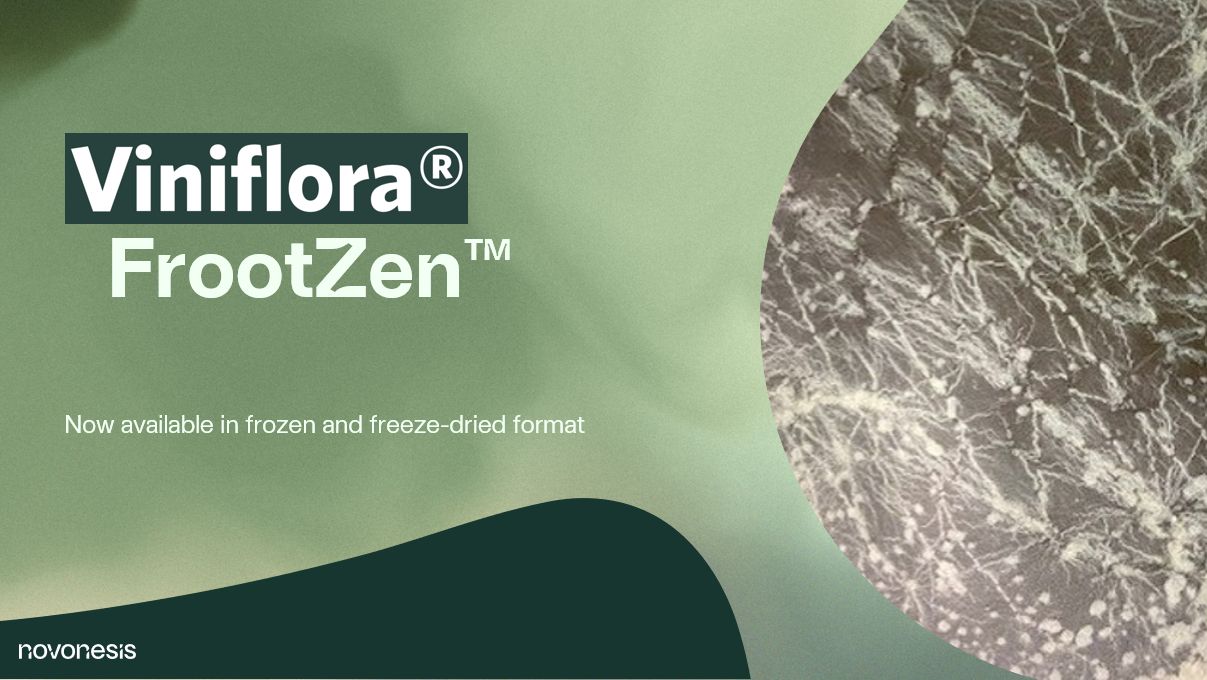
Viniflora FrootZen Now Available in Freeze Dried Format
Viniflora FrootZen is a pure strain of yeast Pichia kluyveri strengthening the fruity characteristics of the wine and ensuring bio-protection. FrootZenâ„¢ can be used at several stages of the process as a pre-fermentation product (on harvested grapes, on crushed grapes, or in must). The culture is recommended when making white and rosé but can also be used in red wines. The product is delivered in a user-friendly freeze-dried format.

March 1, 2026

The Most Sustainable Company in the World
We are extremely proud that we have just been ranked “The World’s Most Sustainable Company”

March 1, 2026

Yeast & Bacteria Trends in Winemaking
The Utilization of non-Saccharomyces vs. Saccharomyces Yeast, presented by Dr. Hentie Swiegers from Chr. Hansen’s Wine Innovation Department. The latest applications of non-Saccharomyces and Saccharomyces yeast producing unique and stylistic wines that are redefining winemaking.

March 1, 2026

Chr. Hansen Series: Troubleshooting Stuck MLF – Physiological Conditions (Part 3 of 7)
Welcome to the Gusmer & Chr. Hansen 7-Part Video Series! In this comprehensive journey, we address the common challenges winemakers face when dealing with stuck malolactic fermentations. From low cell counts to physiological conditions, low amino nitrogen to phenolic inhibition, and even pesticide residues, our series offers expert insights and practical solutions to overcome these obstacles. Join us as we guide you through each issue, equipping you with the knowledge and techniques to troubleshoot like a pro and elevate your winemaking skills. Get ready to unravel the secrets of successful MLFs with Gusmer and Chr. Hansen!

March 1, 2026

Chr. Hansen Series: Troubleshooting Stuck MLF – Low Amino Nitrogen (Part 4 of 7)
Welcome to the Gusmer & Chr. Hansen 7-Part Video Series! In this comprehensive journey, we address the common challenges winemakers face when dealing with stuck malolactic fermentations. From low cell counts to physiological conditions, low amino nitrogen to phenolic inhibition, and even pesticide residues, our series offers expert insights and practical solutions to overcome these obstacles. Join us as we guide you through each issue, equipping you with the knowledge and techniques to troubleshoot like a pro and elevate your winemaking skills. Get ready to unravel the secrets of successful MLFs with Gusmer and Chr. Hansen!

March 1, 2026

Chr. Hansen Series: Troubleshooting Stuck MLF – Medium-Chain Free Fatty Acids (Part 5 of 7)
Welcome to the Gusmer & Chr. Hansen 7-Part Video Series! In this comprehensive journey, we address the common challenges winemakers face when dealing with stuck malolactic fermentations. From low cell counts to physiological conditions, low amino nitrogen to phenolic inhibition, and even pesticide residues, our series offers expert insights and practical solutions to overcome these obstacles. Join us as we guide you through each issue, equipping you with the knowledge and techniques to troubleshoot like a pro and elevate your winemaking skills. Get ready to unravel the secrets of successful MLFs with Gusmer and Chr. Hansen!

March 1, 2026

Chr. Hansen Series: Troubleshooting Stuck MLF – Phenolic Compounds (Part 6 of 7)
Welcome to the Gusmer & Chr. Hansen 7-Part Video Series! In this comprehensive journey, we address the common challenges winemakers face when dealing with stuck malolactic fermentations. From low cell counts to physiological conditions, low amino nitrogen to phenolic inhibition, and even pesticide residues, our series offers expert insights and practical solutions to overcome these obstacles. Join us as we guide you through each issue, equipping you with the knowledge and techniques to troubleshoot like a pro and elevate your winemaking skills. Get ready to unravel the secrets of successful MLFs with Gusmer and Chr. Hansen!

March 1, 2026

Chr. Hansen Series: Troubleshooting Stuck MLF – Pesticide Residues (Part 7 of 7)
Welcome to the Gusmer & Chr. Hansen 7-Part Video Series! In this comprehensive journey, we address the common challenges winemakers face when dealing with stuck malolactic fermentations. From low cell counts to physiological conditions, low amino nitrogen to phenolic inhibition, and even pesticide residues, our series offers expert insights and practical solutions to overcome these obstacles. Join us as we guide you through each issue, equipping you with the knowledge and techniques to troubleshoot like a pro and elevate your winemaking skills. Get ready to unravel the secrets of successful MLFs with Gusmer and Chr. Hansen!

March 1, 2026

Wine's Invisible Allies and Foes Under The Spotlight

Chr. Hansen in new EU-funded project to characterize the community of microorganisms that lies at the heart of wine production

A new four-year project has received a grant of € 4 mill. from the Marie Skłodowska-Curie Actions European Training Network within the EU Framework Program for Research and Innovation.

In the project an international collaboration of scientists from a wide range of universities, research institutions, vineyards and private companies aims to characterize the community of microorganisms that lies at the heart of wine production. An improved understanding of the wine microbiome (exploring the relation between terroir and grape micro flora) will have significant effects on the wine industry.

Potential commercialization
“Chr. Hansen is the major industrial partner in this grant and the only one specializing in microbial solutions. One of the outcomes of this study might be the identification of microorganisms with novel application in the wine industry which can potentially be commercialized in future,” says Dr. Hentie Swiegers from Chr. Hansen’s Wine Innovation department.

Dr Swiegers moreover holds a seat on the executive committee of the project, which is led by Professor Lars Hestbjerg Hansen of the Department of Environmental Sciences at Aarhus University, DK.

Chr. Hansen’s role in the project will be to host training sessions for the 15 PhD students from six countries that are studying the vine (grapes) and wine microbiome to characterize it, thereby eventually providing science-based knowledge that can help winemakers control the processes optimally.  

“We take pride in being a partner in this project. Not only does it give us a sharp competitive edge in the industry, it is also a blue stamp of our high scientific profile,” notes Dr Swiegers.

Chr. Hansen is a leading global supplier of wine ingredients. Only last September the company was presented with the 2014 Frost & Sullivan Global Award for New Product Innovation Leadership in wine ingredients. The prestigious award was a recognition of Chr. Hansen’s recent product and technology launches that represent landmarks in enology.

Click here for more info


March 1, 2026

Chr. Hansen non-Saccharomyces yeasts, get the best from your wines

Now with three pure strains, all selected for their abilities to enhance flavor, aroma and mouth feel, Chr. Hansen has the widest selection of non-Saccharomycesyeasts. All strains are exclusively available through Gusmer Enterprises. Use Chr. Hansen non-Saccharomycesyeast in conjunction with your favorite Saccharomycesyeast for distinct wines, reminiscent of a “wild fermentation”, and with complete control.

• Enhance flavor, aroma, mouth-feel

• Reduce volatile acidity

• Ensure bio-protection

Click here to read more!

March 1, 2026

Join Us for Two Complimentary Technical Webinars Presented by Gusmer Enterprises

Manage your fermentations with Chr. Hansen’s range of Viniflora® non-Saccharomyces yeast.

May 19th from 8:30am-9:30am PST


Presentation Topics include:

  • Selecting the proper Viniflora® yeast strain for your wine
  • Using pre-fermentative yeasts to protect the must by preventing the growth of unwanted yeast and bacteria
  • Differentiating your wine by aroma intensification, acid production and mouthfeel perception through biological mean

Space is limited, please register today!

Speaker Spotlight:

Dr. Lorenzo Peyer
Chr. Hansen Senior Application Manager,
Dept. of Wine & Fermented Beverages

After completing his PhD, Lorenzo joined the department of Wine at Chr. Hansen as an Application Manager. Acting as a project manager, HACCP responsible, technical and bacterial enthusiast, Lorenzo is regularly travelling to wine‐making regions all over the world to conduct field trials and provide technical support for the Chr. Hansen Oenology products, as well as developing new concepts on other fermented substrates as fruit juices, coffee and water kefir.


Mastering Malolactic Fermentation – a deep dive into the life of your malolactic bacteria, Oenococcus oeni.

May 20th from 8:30am-9:30am PST


Learn more about malolactic fermentation to make it work consistently and efficiently with your wines. Innovative leader in fermentation management, Chr. Hansen, will be chatting about topics such as:

  • Selecting the proper Viniflora® bacteria strain for your wine
  • The magic number needed to start converting malic acid to lactic acid
  • Troubleshooting stuck malolactic fermentations

Space is limited, please register today!

Speaker Spotlight:

Nathalia Kruse Edwards
Chr. Hansen Senior Application Manager
Dept. of Wine & Fermented Beverages

After completing her MS, Nathalia joined the wine research and development team at Chr. Hansen as an Application Scientist. During her first years of employment, Nathalia had the opportunity to work vintage in various European regions to hone her winemaking skills. Today she is focused on Chr. Hansen’s oenology products leading the company’s global Wine Application Network, while also developing new concepts for other fermented beverages such as cider and fermented tea.

March 1, 2026

Volatile Phenols: Why Brettanomyces Is the Root Cause - Not Bacteria

Volatile phenols can only be produced by some Brettanomyces strains, as B.Bruxellensis is the only species having a functional Vinylphenol reductase enzyme, in wine. Read on to see how volatile phenols are synthesized in wine, the role of Brettanomyces and how to avoid it, and more. 

March 1, 2026

Enhance Fresh Fruit Forward Wines by Increasing Aromatic Complexity with Viniflora® Concertoâ„¢

Viniflora® Concertoâ„¢ is a pure strain of Lachancea thermotolerans to be used in combination with your Saccharomyces cerevisiae strain of choice. This non-Saccharomyces yeast strain has been carefully selected to mimic successful wild ferments, increase aromatic complexity, enhance fresh fruit forward wines, and develop a round mouthfeel. This is particularly recommended for white and red wines from warmer climates.

This specialty yeast is not intended to achieve complete alcoholic fermentation but to enhance wine complexity. Concerto has to be followed by a Saccharomyces cerevisiae yeast of choice to achieve a safe and fast alcoholic fermentation.

Key Features

  • Recommended for Mediterranean and medium body wines, Merlot, Zinfandel, Grenache, Tempranillo and Sangiovese
  • Integrates red and black fruit, spice
  • Increases total acidity (lactic acid formation)
  • Develops a softer palate
  • Alcohol tolerance is up to 10% (v/v)

Pack Size: 500 g

For more information, click here


March 1, 2026

Make Wines Safer for Your Customers

Lower histamine - Historically, the primary reason to use VINIFLORA® oenological bacteria from Chr. Hansen was to ensure a minimal production of histamine in the final wine.

When we launched the first VINIFLORA® freeze-dried products ready for direct inoculation in wine, our first customers were some of the most famous, sometimes iconic, wineries producing red wines in Europe and USA that applied a famous principle: “If we can make it safer for our customers, we have to do it’’.

And indeed, wines are safer when using VINIFLORA® oenological cultures, as we have selected strains from nature that are not able to produce histamine, putrescine and some other biogenic amines during malolactic fermentation. Spontaneous, wild bacteria may have the ability to produce a high concentration of biogenic amines, particularly histamine, putrescine and cadaverine during malolactic fermentation. Chr. Hansen’s team of experts know how to avoid this.

Today, our expertise in minimizing the production of histamine is renown worldwide, and we have helped several wine companies around the world to perfectly define their fermentation program to avoid the production of histamine, to name but one amine. 

This technical expertise now satisfies consumer demand in some part of the world, such as northern Europe. Ever more consumers are aware about the impact of histamine when they consume a moderate amount of wine. Red-face Syndrome and sometimes minor headaches are examples of symptoms associated with the presence of biogenic amines, and the alcohol contained in a glass of wine can enhance the absorption and the impact of histamine even at low concentration.

Developing wines that do not contain biogenic amines and, reduce the histamine level to the minimum in particular, is one of the niche markets the large category of red wines where Chr. Hansen is heavily involved, improving food and health. 

March 1, 2026

Produce Fabulous Wines Using the Best of Nature
Make great wines easily with Viniflora!
 
Viniflora® is a range of innovative yeasts and bacteria developed to meet the requirements and needs of todays demanding winemakers.

The worldwide growing success of Viniflora® is related to the high level of process control it gives and the superior return on investment achieved: better wines, higher safety, easier exportations... the list of benefits is long!

We propose 2 types of specialty products to winemakers:

VINIFLORA® SPECIALTY YEASTS: TO GET CLOSER TO WILD FERMENT COMPLEXITY WITHOUT THE RISK - learn more here

VINIFLORA® MALOLACTIC BACTERIA: HIGH QUALITY CULTURES TO SIMPLIFY FERMENTATION MANAGEMENT - Learn more here


March 1, 2026

Chr. Hansen receives innovation award from US wine industry

We are proud to announce the reception of an Innovation + Quality Award for our Viniflora® CONCERTOâ„¢, a specialty yeast to kick-start the alcoholic fermentation

The award was handed out at the 2016 edition of Innovation + Quality (IQ) held in Napa Valley, California; an annual forum for ultra-premium wineries focused on cutting-edge innovations that advance wine quality.

“We are proud to be receiving this accolade from an organization of the top high end wine producers in the US, which is an important market for us.

Award candidates were hand selected solely on criteria of innovation that lends itself to high-quality, ultra-premium winemaking, focusing on products that they believe are the best of the best. This honor will undoubtedly strengthen our market position and image as a reliable and innovative partner to the global wine industry,” says Dr Hentie Swiegers, Head of Chr. Hansen’s Wine Innovation department.

In photo: Chr. Hansen’s Hentie Swiegers (right) with Peter Mondavi Jr, a renowned wine maker and head of the Charles Krug-Peter Mondavi Family Napa Valley Winery. Peter, on the advisory board for the IQ Award, was impressed that our award winning yeast, Concertoâ„¢, had the ability to produce lactic acid from sugars and thereby help reduce alcohol levels naturally.


A microbial solution to defeat global warming impact on wines

The award winning product Viniflora® CONCERTOâ„¢ was launched a few years ago and is a natural alternative to push away uniformity and bring complexity to the wine.

The special strain of yeast partially converts the sugars present in the must into lactic acid, which increases the acidity in the wine and moderately reduces the alcohol/ethanol level. This meets increasing consumer demand for rounder, easier-to-drink wines with lower alcohol by volume (ABV), centered around 12-13%.

It also offsets the impact that increasing temperatures have on the grapes, causing dull, low acid, high alcohol and qualitatively less drinkable wine. Concertoâ„¢ is a natural weapon to give freshness and balance to heavy powerful wines from warm climate regions such as California, Australia and the Mediterranean countries.

In North America Viniflora® Concertoâ„¢ is available exclusively at Gusmer Enterprises Inc. who also markets other Chr. Hansen strongholds in the Viniflora® portfolio of yeasts and bacteria for winemaking.

Only in 2014 Chr. Hansen received a Frost & Sullivan “Global Award for New Product Innovation Leadership” for its proven track record in pioneering innovation for the wine industry and ensuring consumers high quality, safe and diverse wines.


Article from mynewsdesk.com

March 1, 2026

Better "Promise Consistency" Per Bottle

Take advantage of Chr. Hansen’s know-how in fermentation to deliver natural, authentic wines loved by consumers

Consistency, the secret to avoid uniformity!

  • Wine is now a global discussion topic and a global market. Brands and branding will become more important in the next decade, and a successful brand needs excellent product definition. This definitional effort will help develop the brief for winemakers, grape selection by grapegrowers and also all communication and promotional elements: final product color, general flavor profile, labels, bottles, etc.
  • In this global move to more wine brands, consumers are asking for authenticity to not compromised; instead they want it to be preserved, empahsized and better communicated. Winemaking improvements do not lead to uniformity; on the contrary these result in a better expression of grapes, terroirs and the diversity of winemakers’ styles.
  • With consumers coming from various regions of the world and occasionally countries with a low per-capita wine consumption, delivering information about where the wine is made and how it is made will be key. Consumer demand for unbiaised and authentic information will become the rule. Consumer expectations are pretty clear about what should be in the bottle: organic grapes, processed by the most natural processes possible, with limited adjunctions of products such as sulfites.

To deliver wines enjoyable all around the world, winemakers and wineries now have to focus their attention on fermentation management

  • With 5 to 10% of the wines having their quality downgraded during the winemaking process, focusing on better practices that will preserve the initial potential is the way to improve the overall quality. This focus on fermentation management is becoming a primary objective for many advanced winemakers and wineries: it is a sustainable, natural way to improve the volumes produced and the quality, creating value for wineries and consumers. 
  • Viniflora® products help winemakers to focus, improve and better manage their alcoholic and malolactic fermentations to avoid early downgrades or spoilages during wine maturation at a later stage. Our bio-protective cultures and our expertise in fermentation management and bio-protection are renown all around the world. We are committed to protecting and preserving the inherent potential in grapes once harvested, and this helps create authentic and natural wines that both winemakers and consumers can enjoy and be proud of!

March 1, 2026

Low-Alcohol Wines

How can Chr. Hansen’s know-how in fermentation help deliver low-alcohol wines?

Consumer demand for more digestible, low-alcohol wines is growing, but global warming is making the task harder!

  • Global warming is clearly raising the sugar concentration of grapes: the higher the number of warm, and sunny days, the higher the sugar concentration in grape, which has with one final consequence: more alcohol in the final wine. Alcohols, particularly ethanol, are produced by yeasts converting sugars into ethanol and many other things (flavors for instance) as soon as the grapes are crushed.

Today, we can identify two types of demands regarding lowering the alcohol content in wines: 

  • Lowering alcohol in wines containing 13 to 15% alcohol by 1.5 to 2.0% and therefore rusulting in containing an alcohol maximum of 11% to 13% 
  • Developing wines with a 9 to 11% alcohol content.

These two categories of products, despite both representing lower-alcohol alternatives, are radically different.

On one hand, consumer demand is focused on a limited, alcohol reduction that would bring the level of alcohol to a maximum value between 11 and 13% without affecting the wine’s sensorial properties. Technically, it involves removing alcohol or not producing the same amount of alcohol per liter of wine, which is not an easy task if one aims at retaining the same organolepic qualities.

The second category requires more ‘product development’ to get an ideal, final wine with a balanced flavor, no residual sugar, enough body to be easily identified by consumers as being a wine, yet with a low level of alcohol from the very beginning, i.e., even at the time the grapes were harvested and crushed.

Viniflora® specialty yeasts and bacteria can help develop wines in both these product categories. Picking the grapes earlier in the season, when they have a lower level of sugars, is an excellent way of reducing alcohol content in wines. Chr. Hansen’s expertise in fermentation management can help in designing global solutions for lower alcohol yet full-of-taste products!

March 1, 2026

The Secret to Success in Making Good Yet Non-Sulfited Wines

Our proactive approach with bio-protective cultures helps reducing sulfite content

Consumer demand is evolving rapidly within the wine industry. The megatrend about ‘natural and pure’ products is also affecting wine demand. Consumers want winemakers to minimize the use of exogeneous products, such as preservatives. 

This is clearly leading a worldwide trend within the wine industry for lower sulfite content and even the development of no-sulfite wine ranges.

Replacing sulfites whenever possible:

The secret to success in making good yet non-sulfited wines is to clearly assess why sulfites are used during the winemaking process and replace this activity with natural solutions.

Consumer demand crossed with new technical knowledge leads to one main aim: no more sulfites in winemaking.

Chr. Hansen has been a participant in the quest to replace sulfites in wines since the very beginning. Today, the influential book How to make great wines without sulfites? states it very firmly: to fight against the development of undesired microorganisms, the best way is to use well-know, safe and highly concentrated microbial solutions from the Viniflora® range developed by Chr. Hansen.

In red wines, the use of Viniflora® protective cultures helps develop wines made without sulfites and those that use 5–15 ppm sulfites only at the very end of the process during bottling. The absence of sulfites until then makes this final addition extremely active against the growth of spoilage organisms.

Chr. Hansen's cultures for bio-protection

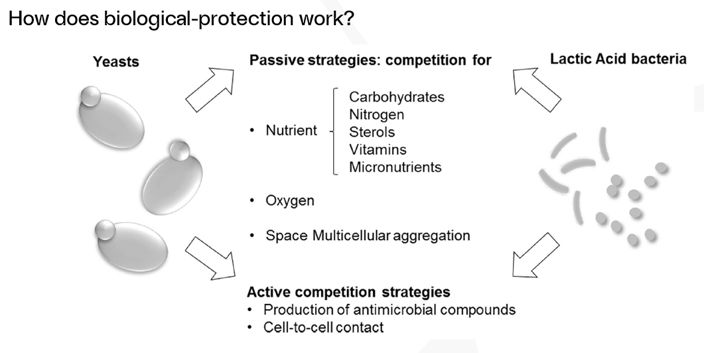
Our range of specialty yeast products helps contain the development of unwanted yeasts during pre-alcoholic fermentation phases such as cold soak, pre-fermentation maceration. Our strain of Torulaspora delbrueckii performs particularly well in these conditions.

Within our range of oenological bacteria, our new Lactobacillus plantarum (NoVAâ„¢), which helps suppress Acetobacter and molds, our Oenococcus oeni strains CH16 or CH35, which fights against the development of Brettanomyces in red wines during maturation, and CiNeâ„¢ are fantastic innovations to lower the level of total sulfites when producing wines.

Planning on launching a new range of non-sulfited wines? Or do you simply want to improve your winemaking process by implementing better practices to dramatically reduce sulfites? 

Then contact our technical experts!

March 1, 2026

Make the Wine You Really Had in Mind with Viniflora® Bacteria

Natural Solutions for Malolactic Fermentations and Bio-Protection.

Oenological bacteria

With our broad knowledge regarding lactic acid bacteria and fermentation management, we have created a range of malolactic bacteria covering all types of winemaking applications and bringing to winemakers the best strains of Oenococcus oeni and Lactobacillus plantarum for their wines.

Our approach is quite simple: grapes production and alcoholic fermentations are currently well managed and controlled by viticulturists and then by winemakers. However there is a lack of focus on malolactic fermentation management, destroying an important part of the good work previously done! 

The Viniflora® bacteria range is made up of several strains selected to cover the main needs identified through our constant dialogue with winemakers but also in assessing consumers’ current and future demands.

Sophisticated flavor profiles to reflect wines diversity 

Viniflora® strains can help modulate the amount of diacetyl (buttery, creamy flavors) produced during malolactic fermentation, from no production (with CiNeâ„¢) to the highest possible conversion rate with CH35, giving wines an additional layer of complexity.

Winemakers can also select the strain to use in relation to the final flavor profile they expect, for instance by improving fruit flavor intensity with NoVAâ„¢, CiNeâ„¢, CH16 or Oenos 2.0 in red, rosé or white wines. This flavor intensity modulation is a natural process where selected strains of bacteria show their ability -or absence of ability- to convert some types of flavor precursors that are already present in the wine.

Efficient solutions to lower a wine’s final sulfur content and get more authentic wines 

The CiNeâ„¢ strain is now widely used in white and rosé wines to manage malolactic fermentation without impacting the flavor profile of the wine. Winemakers can now achieve this secondary fermentation in wines that traditionally do not go through malolactic fermentation: rosé wines or fruit-forward white wines from aromatic grape varieties: Sauvignon Blanc, Riesling or Viognier. 

The primary consequence is a wine stabilized through a microbial solution instead of being stabilized by sulfites that are classically used to kill microorganisms and avoid the development of unwanted bacteria. 

Highly concentrated products to maximize bio-protective effects and ensure a smooth fermentation

Chr. Hansen brings winemakers some powerful tools to control their malolactic fermentations through a range of high-quality bacteria products ready for direct inoculation: the 'DVS®' technology. The different Viniflora® strains are able to cover a large spectrum of wine applications: from difficult base wines for sparkling wines coming from cool or cold areas to high-alcohol wines produced in extremely hot climates. In all cases, managing MLF speed is a key success factor. In some cases, wineries seek the fastest solutions possible, and that is when CH11, Oenos 2.0, CH16 or NoVAâ„¢ become very good options to answer this ‘need for speed.’ In some other cases, a slowdown may be needed, making CH35 and CiNeâ„¢ the ideal strains to select