
Filter Post Type
NewsVideoProductEventLink
Sort:
Most Recent
1–10 of 10

February 24, 2026

The word “brand” is notoriously difficult to define in marketing. If we were talking about a ranch brand—the kind seared onto livestock to signify ownership—that’s easy to understand. But in marketing, a brand is not a physical thing. It’s a symbolic construct. It’s not the label on the bottle or the winery’s logo or even the product itself. Rather, it’s the entire perception a consumer holds in their mind about your company, your wine, your people, and everything you collectively represent. A brand is a conceptual identity that differentiates you from your competitors. It can be shaped by your name, your origin story, the design of your label, the personalities involved in your winery, your tasting room experience, your packaging, your email tone, your partnerships, or even how you respond to a customer complaint. All these elements come together to form the intangible yet powerful idea of your brand. It is, quite literally, eve
00

LAST-MINUTE WAYS TO SUPPORT WINE AND JOIN COME OVER OCTOBER Come Over October launched in 2023 with a simple but powerful premise: wine has connected people for 8,000 years, and October is the month to honor that. The campaign invites us to slow down, gather with friends or family, and make wine the centerpiece of togetherness. In just one year, it’s grown from a spark to a movement. Thousands have embraced the idea, from consumers hosting casual dinners to wineries, retailers, and restaurants using the campaign to remind people that wine isn’t just a beverage—it’s a culture, a history, and a human connection poured into a glass. For the industry, it’s a chance to reframe wine as essential, not optional, in modern life. The wine industry needs this now more than ever. The pressures are piling up. Research from Stanford and other institutions is eroding the belief that “wine is good for your heart”, and the U.S. Surgeon General has recommende
00
For winery owners and vineyard managers, pest control is a constant, and often underestimated, challenge that plays a critical role in maintaining both quality and reputation. From preventing insect infestations in the cellar to keeping pest birds from nesting in structures or feasting on ripening grapes, protecting your property is a full-time job. And while birds might not seem like a major threat at first glance, their impact on both infrastructure and visitor experience can be significant. If you’re wondering why it’s important to keep starlings, pigeons, and other pest birds away from your winery and vineyards, read on. Pest Birds Disrupt the Guest Experience Wineries often pride themselves on providing a scenic and relaxing environment. But birds congregating around tasting patios, walkways, or event spaces can quickly disrupt the guest experience. Excessive bird droppings, noise, or aggressive behavior can leave a poor impression - and possibly negative reviews - e
00
.jpg)
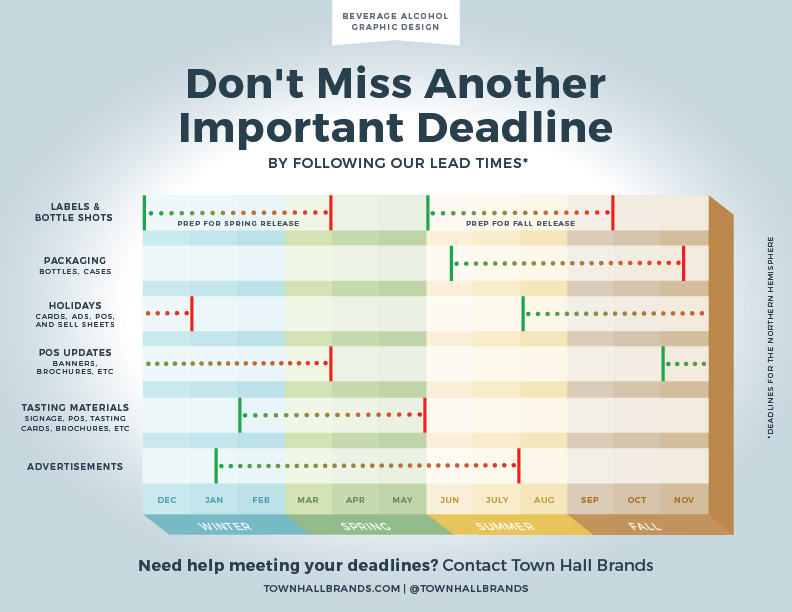
It’s hot outside, summer is in full swing, and the fruit is growing. The farthest thing from many minds is the holiday season but planning now will make sure that you are not panicking in the fall. Now is the time to prepare for stock and inventory requirements, secure in-store stacks and displays with retailers, and prepare to have adequate merchandise and marketing materials on hand for the heavy sales push of October, November and December (OND). Will you be making a special offer? If so, what kind of materials will you need? Do you need long lead ads created, or a campaign developed? Or do you need special packaging? Maybe you want to create a library release, or a box set? Starting the design process now allows time for new materials and campaigns to be fully created and ready to go when consumers turn their focus to holiday shopping in the fall. Feel like you are always scrambling to get design assets done? Town Hall Brands has created a guide, so you won’t miss anoth
00
May 19, 2025
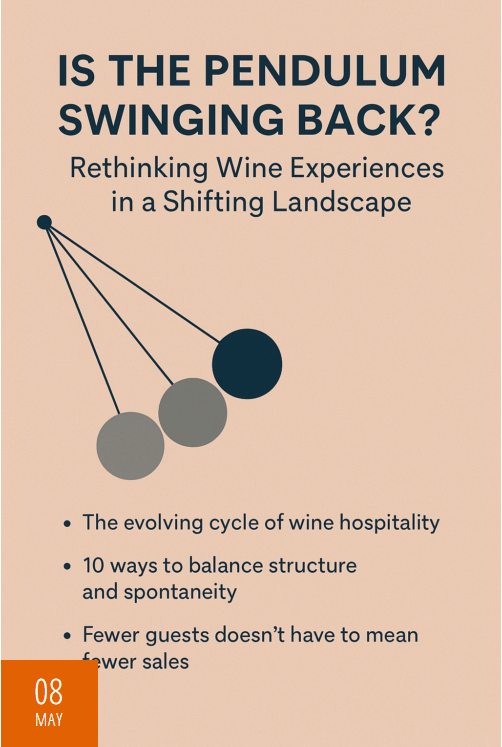
Like any other industry, the wine industry is cyclical. What goes around tends to come back around. And what can we learn from those trends—besides the fact that leg warmers were never cool, even in the ’80s? Wine hospitality began with casual, bar-style tastings—one host, multiple guests, and a quick pour-and-go approach. Over time, we introduced more educational options: tours, guided tastings, and eventually, more intimate seated experiences. Then came the pandemic. It acted as a litmus test for tasting room strategy and showed—on a large scale—that time with guests matters. More time meant greater satisfaction, higher wine sales, and more club signups. The reservation model also revealed something powerful: those who took the time to book were more intentional. They came to taste and to buy. And the ROI of seated, guided experiences reflected that. Fast-forward five years, and many tasting rooms now default to seated tastings. But… is the pendul
00
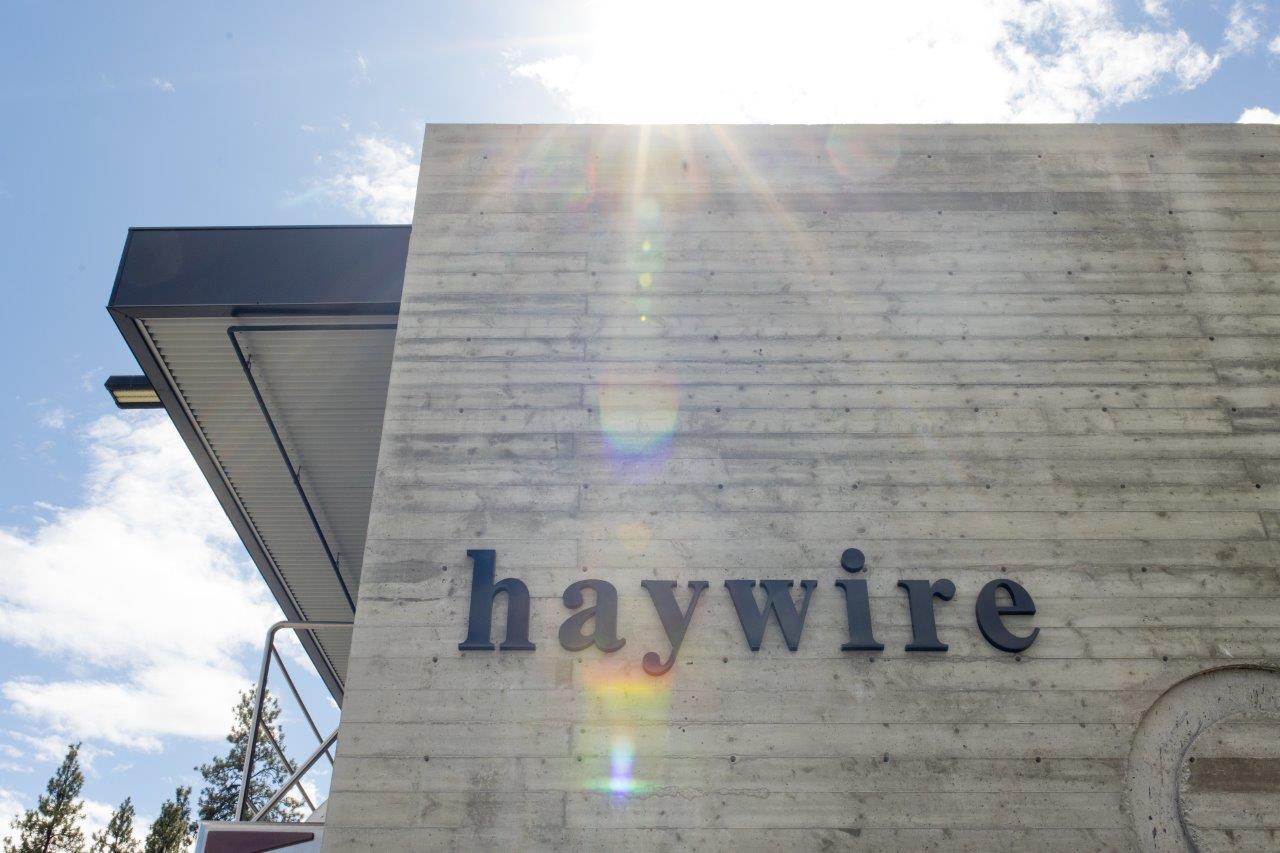
With visitor season in full swing, it is essential to guide visitors on how to find the winery, where they are, and inform them about ongoing activities upon arrival. This requires providing various signs, ranging from directional signage to entrance, parking, and washroom signs. Sign at Canada's Anthony Buchanan WinesWhile signs may seem purely functional, they offer an excellent opportunity to extend the brand and its personality. Assuming significant investment has been made into branding, packaging, and logo, it is crucial to maintain the integrity of the 'mother brand' across all elements, including signage. Here are some functional ways signs can be used and how they should tie into the brand. Sign at Okanagan Crush Pad in Canada First, it is important to attract people off the street and into the winery. Once inside, visitors should easily find the areas they are looking for, items on sale, or any special highlights. Location, bylaws, or municipal regulations will in
00

February 21, 2025
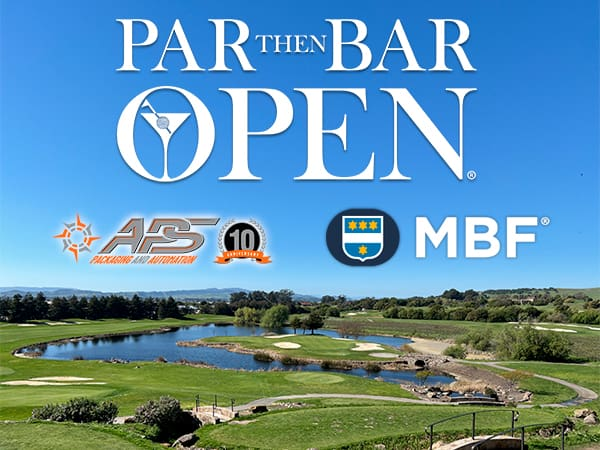
Par Then Bar Open Golf Tournament: Where Wine Industry Networking Meets Opportunity Beyond branding—connect with key decision-makers in a relaxed, high-impact setting The Par Then Bar Open® (PTBO) Golf Tournament, presented by APS Packaging & MBF North America, will be held on May 16, 2025, at Eagle Vines Golf Club in American Canyon. The tournament is celebrating its 5th anniversary this year, so it is your chance to be part of an exclusive wine industry tradition that blends competition, camaraderie, and connection. This event is more than just a day on the greens—it’s a unique opportunity for wine industry vendors to build valuable relationships, enhance brand visibility, and foster meaningful relationships within the wine and spirits community. Why Sponsor PTBO? Sponsoring PTBO isn’t just about having your logo on a sign—it’s about engaging directly with key decision-makers in a relaxed and social setting. With attendees ranging f
00

Wine clubs are essential for many wineries, providing a reliable revenue stream, helping with financial forecasting, and creating a community of brand ambassadors. Club members often account for a significant portion of wine sales, both within and outside their allotments, making clubs a critical aspect of a winery’s success. This guide provides unique ideas for enhancing your wine club, including experiential benefits, loyalty rewards, and sales strategies for growth, both online and in person. Create Unique Wine Club Offerings With so many wine clubs to choose from, let’s start with what makes your wine club unique. To truly stand out and captivate your wine club members, pushing the envelope on exclusivity and personalization is key. Here are some innovative ideas to elevate your wine club’s offerings: Enhanced Experiential Benefits Collaborative Experiences: Forge partnerships with local artisans, chefs, and businesses to create one-of-a-kind experiences. Collabo
00
2024 may well be one of the most challenging years in recent history for the American wine industry. Let’s change that. Multiple Alarm Bells At the recent Unified Wine & Grape Symposium in Sacramento, several prominent experts in various fields sounded the alarms during the enormously popular “State of the Industry” session attended by several thousand industry members. Wine Economist Mike Veseth compared the present with the distant past when similar clouds were on the horizon. Wine market analyst Danny Brager cited several troubling trends in consumer demographics, beverage preferences, anti-alcohol pressures, and apparent wine industry apathy. Steve Fredricks of Turrentine Brokerage repeatedly urged California wine grape growers to immediately tear out 30,000 acres of vineyards—roughly the total in New York State for grape juice, wine, and table grapes–to alleviate the current and chronic excess supply situation. Let’s Get to Work! We possess
00
March 23, 2021
California’s Proposition 65 warning regulations were recently amended to modify the delivery of the required state warnings for alcoholic beverages. The modified regulations somewhat ease compliance, as they will now allow for the required warning to be provided to the customer electronically for alcoholic beverages ordered online or via catalog. However, they muddle the standard for other orders that are placed for delivery. Proposition 65, adopted in 1986, generally requires in California for a statement to be provided before the purchase of products that contain certain chemicals that may cause cancer or reproductive toxicity. Stores are generally required to post signs along-side listed products. The warning methods and language are product-specific, but there is also a requirement that, for products that are sold on line, the warning be provided via electronic device to the customer, without requiring the purchaser to seek out the warning, prior to or during the purchas
10