
Filter Post Type
NewsVideoProductEventLink
Sort:
Most Recent
Tagged:wine chemistry
1–5 of 5



Today we invite you to visit our website and take a closer look at the offerings from Gravity Analytical Laboratories (GAL). We are happy to have launched a new section of our site devoted to GAL and all that we do in the lab, including individual analysis and analysis panels. Gravity Analytical Laboratories (GAL) At GAL, we are inspired by the innovative technology available to the field of enology and its ability to inform the winemaking process. You may have read informative blog posts authored by our GAL chemists or watched one of our recent videos filmed within the lab. We are so excited to share with you all that is possible on your winemaking journey with Gravity. Be sure to bookmark gravitywinehouse.com/analytical-laboratories as we will be adding more offerings to this page over time!
00
Our laboratory is equipped with a broad selection of fine-tuned and precise equipment that provides an in-depth analysis of your wine. We are happy to be expanding our offerings over the next few months to continue helping you produce the best product possible. We can use a PCR to test for Brettanomyces, Lactobacillus, and Pediococcus in wine. These are three microbes that are often the culprit of microbial spoilage. What is PCR? Polymerase Chain Reaction, or PCR, mimics the DNA replication process that occurs prior to cell division within in a cell. This common molecular biology tool amplifies the target DNA if it is present in the sample. Download Lab Offerings PDF
00
Original Post Although used in winemaking for centuries, many consumers remain skeptical about the importance of sulfur dioxide (SO2) in creating shelf-stable wines. In our second video from the Gravity Wine House Chemical Analysis Laboratory, we discuss the role of added SO2 in wine freshness and flavor, as well as how to measure and maintain optimal SO2 levels in wine. Whether you’re an enology student looking to learn more about SO2 measurement or a wine drinker trying to understand the importance of this compound in your favorite beverage, join our chemists for another trip into the wine lab! Feel free to join our mailing list to receive updates and emails with new educational posts. The signup form can be found here.
10
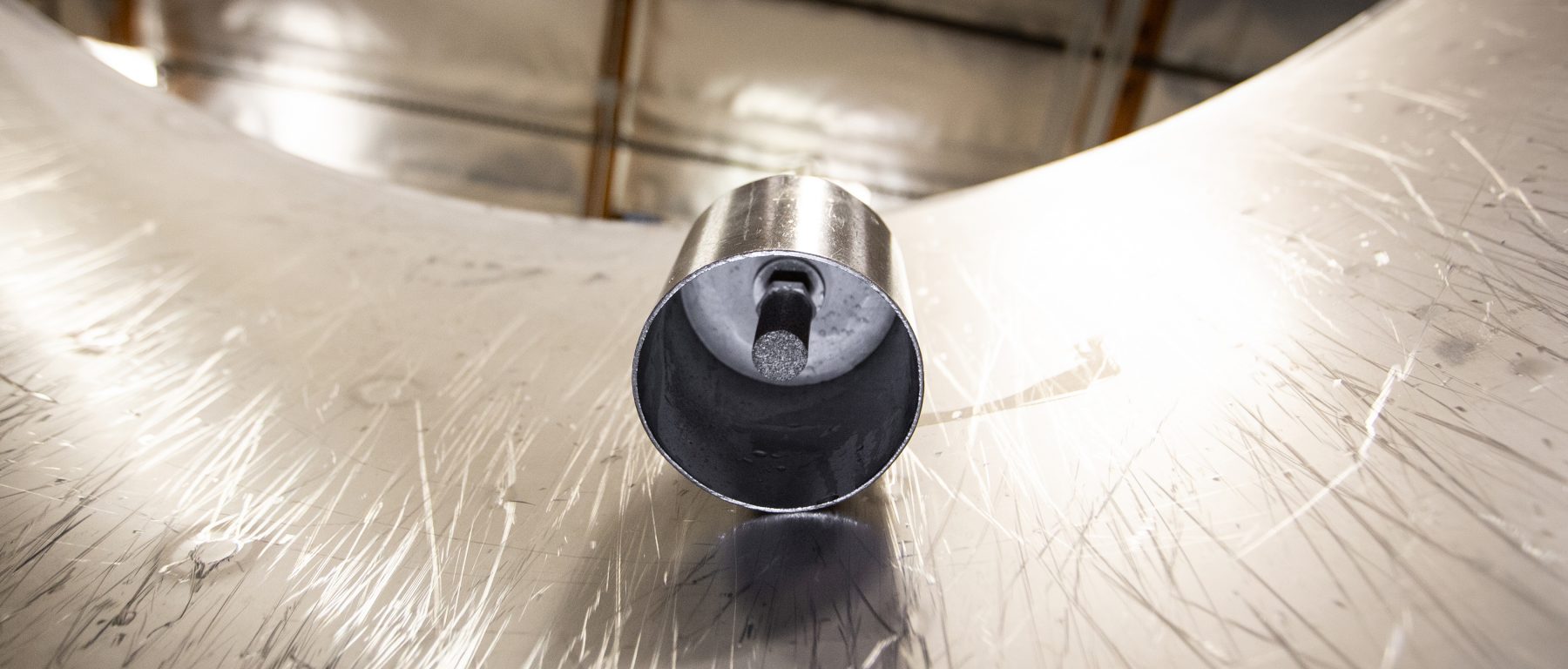
Original Post When one thinks about winemaking, gasses may not be the first item that comes to mind. However, there is a small family of gasses that play an important part in the winemaking process. Gases can be used to transfer (push) wine, to protect wine and to adjust the level of other gasses in the wine (add or remove). You will often see high-pressure cylinders of gasses around the wine cellar. Some of these gases classify as what is called an “inert gas,” meaning they are extremely non-reactive. This is great because that gas will not react with the wine or any other gas. Other gasses are used simply for their physical or chemical properties. Before discussing gas use in the winery, it must be noted that many gases can be extremely dangerous to work around and all OSHA guidelines must be strictly followed. Gases can be particularly dangerous in confined spaces. View of "Gassing Bell" used in the winery. A gassing bell equipped with a diffuser stone allows
00