
Filter Post Type
NewsVideoProductEventLink
Sort:
Most Recent
Tagged:wine barrels
1–6 of 6
As the wine industry reels following a string of economic setbacks, it has been hoping for a rebound. Conversations swirl around whether the sales decline is slowing or if a portfolio realignment to focus on premium wines could reposition the brand for success among consumers who are drinking less. Cure-alls for capturing the Gen Z and Millennial consumer abound, along with Instagrammable images of happy young women in hats. Technological innovation thrives, bringing solutions and automating processes from weeding to bottling and streamlining online direct-to-consumer sales. Almost all the worries are real, and experimentation is essential. But, in the end, wine is a nuts and bolts business. Winery owners tally up the costs and the sales revenue at the end of the harvest season and set about readjusting as necessary. Lately, the costs have been outstripping the profits at a greater rate than ever. It’s why we see dead vines and bare earth where vineyards were thriving yesterday a
00
March 23, 2023

NAPA, CA. (March 22, 2023) – Cooperages 1912 is growing their collection of premium wine barrel brands with the addition of Maison Moussié. Made with a noventique style – which combines innovation and authenticity – Maison Moussié creates luxury barrels positioned for high-end wines. Founded by Thomas Moussié, the company was acquired in September 2022 and will be the sixth premium barrel brand in the Cooperages 1912 collection. Maison Moussié is best known for their Petra Collection. These barrels are toasted with a unique and patented heated stone toasting technology invented by Moussié. The non-combustion process uses natural stones and water elements combined with heat to create barrels that are evenly toasted and consistent. Currently, lava rock and jadeite are being utilized for toasting material. However, any stone that can absorb and transmit heat with the proper conductivity can be utilized in this process. “Thomas Mou
00

March 6, 2023

Every Painstaking Step It Takes to Make the World’s Best Wine Casks
Superior grapes require superior oak casks. Radoux uses old-school and high-tech methods for the best barrel results. Here's how they do it.
00
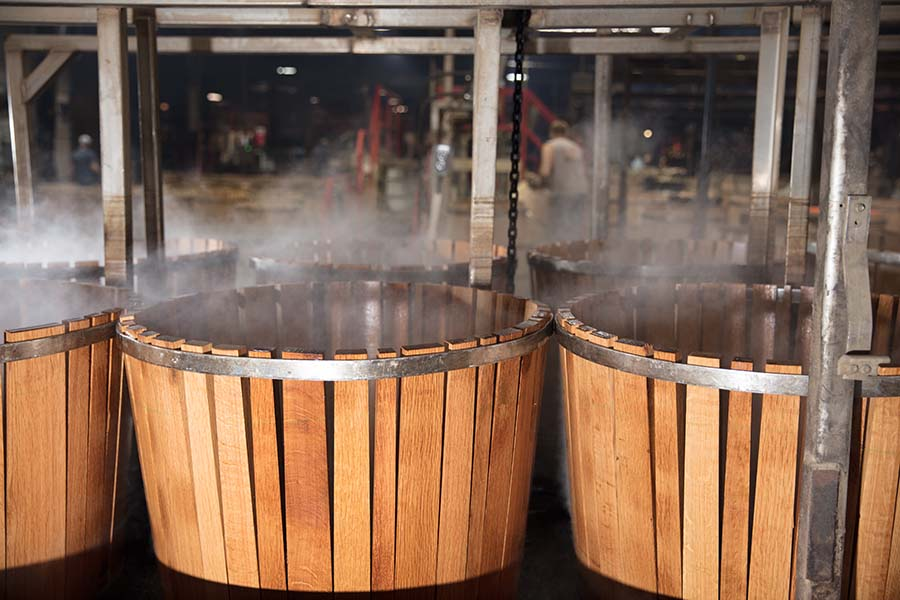
Wine barrels are beautiful and elegant (we might be biased of course), but there is a world of science and technology swirling just below the surface. We’ve been discussing it in our Oak 101 Series (start here if you want to catch up). Today, we want to talk about a step in the process that is key to creating the barrel itself: bending the barrel. Heat is required to soften the staves so they can be shaped into a barrel without breaking during the process. When softened, the wood increases in malleability. Think of a hard caramel candy: it is brittle until it’s heated, then it softens and can be shaped. The same thing goes with wood! There are several methods of heat bending that can be used to safely shape the staves, and each creates different chemical results after the barrel is toasted. Of course, this means wines aged in barrels with different bending techniques have different sensory characteristics. For the purpose of today’s post, we are going to explore the t
00

Consistently achieving specific organoleptic targets This is the next article in our Oak 101 Series. Make sure to read our last Oak 101 Series blog on toasting chemistry before diving in to this one. Next up in our Oak 101 Series, we are going to take all the chemistry you learned in the last two blog posts and explore how to use it to get a consistently toasted barrel – time after time. Why is this important? Because what a winemaker wants even more than a great tasting barrel, is a great tasting consistent barrel. When they fall in love with a barrel, they expect it to taste the same every year. As a cooper, one of our biggest responsibilities is to deliver on that expectation, and we take it very seriously. Gone are the days when coopers toasted barrels using only sight and smell. Oak science has proven that color is not a direct indicator of flavor. The same level of color can be achieved via a short or long toast by adjusting the toasting temperature, which leads
00

One of the coolest parts of our job is showing customers how a barrel is made. When you see barrels in a wine cellar, it’s easy to overlook the amount of technology and craftsmanship packed into each one. Reactions to a cooperage tour often result in a new appreciation for the process and have even been known to elicit some big “aha” moments from winemakers. What we don’t often get to share is the process before a barrel is made – when it’s just an idea. Today, we are taking a step back and telling the story of how a World Cooperage barrel concept comes into being. How each one of our 100+ profiles started as a thought and finished as a barrel. World Cooperage is committed to consistency, innovation, and distinctive barrels. That means we keep our ears to the ground to stay in tune to winemaker’s needs. Our account managers are constantly assessing winemakers’ feedback during sales consultations and tastings. We want to ensure there
00