
Filter Post Type
NewsVideoProductEventLink
Sort:
Most Recent
1–3 of 3

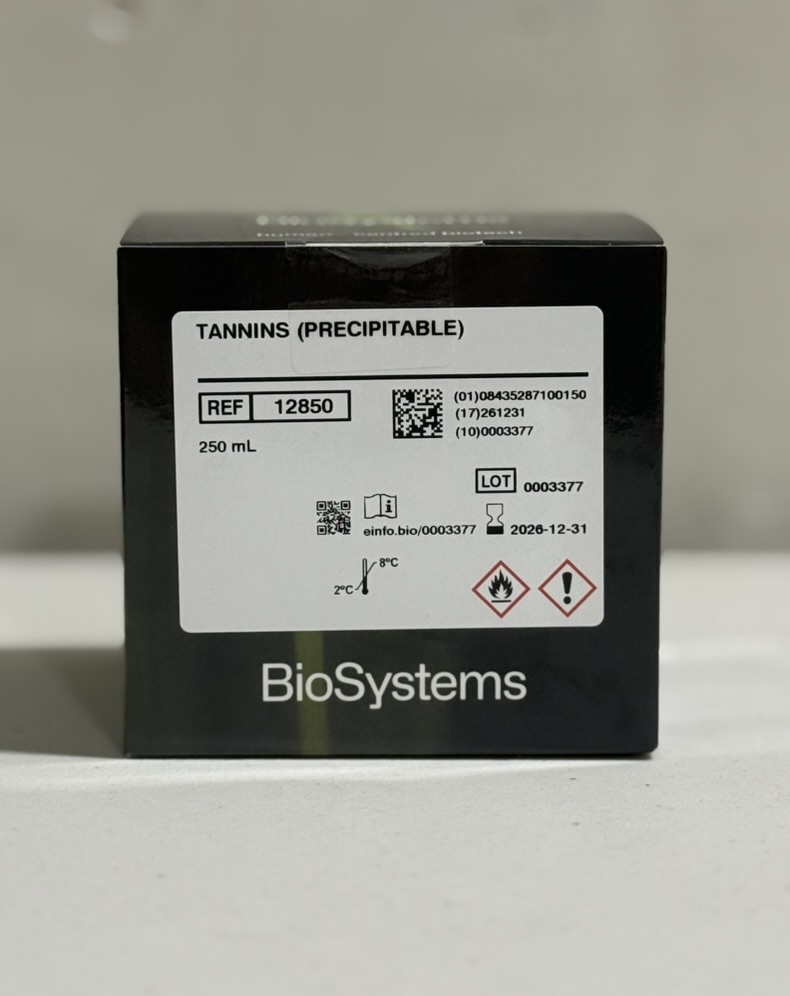
Tannins are a group of phenolic compounds found naturally in the skin, seeds and stems of grapes used in wine, as well as in the barrels where wine is aged. Traditional methods of tannin determination require the preparation of specific reagent solutions and are demanding in time and preparation. The Tannins kit is based on the methylcellulose precipitable method (MCP), improving its usability and stability. The MCP technique captures both tannin types and pigment-bound forms, giving a clearer picture of a wine’s structure and future evolution. Our analyzers use UV-Vis spectrophotometry, which measures light absorption at specific wavelengths associated with tannins. This provides an objective, accurate and reproducible measurement of tannin content, allowing the winemaker to control its extraction during maceration, its evolution during aging and its influence on the stability and final quality of the wine. Are you curious to learn more about measuring tannins? Pleas
00
Did you know BioSystems enzymatic reagents work perfectly on manual spectrophotometers? BioSystems reagents are known for their precision and stability, but they’re not limited to automated systems. They can be used just as easily on any manual spectrophotometer. - No complex prep - Long stability (open or closed) - Excellent repeatability - Fully supported and stocked in the US by Admeo If you’re running enzymatic assays manually, you can still benefit from BioSystems quality and reliability without changing your workflow. We would love to speak with you about your lab's QC process!
00

Many wine cellars rely on two manual and time consuming wet chemistry methods to determine free and total sulfites in their product. For speed, they turn to the Ripper Method. For accuracy, they turn to the Aspiration Method (also known as Modified Monier-Williams or Aeration Oxidation/AO). Both require dedicated glassware, tools, and solutions. Additionally, both are partially subjective as a color change, indicating an end-point, must be determined visually by the operator. For wineries already automating enzymatic testing of common analytes (including glucose and fructose, malic acid, acetic acid, and more), there is an easier option! Both the Free and Total Sulfite reagent kits from Admeo provide data that tracks well with data from the Aeration/Oxidation method1 when used on automated spectrophotometric analyzers like the Y15. This allows both accuracy and speed from just one method, with very little user input - translating to time and money saved in your cellar. In the past, fr
10