Filter Post Type
NewsVideoProductEventLink
Sort:
Most Recent
1–10 of 21
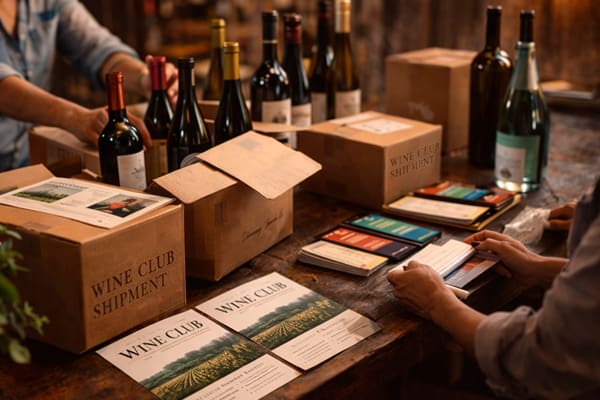
Why Wine Clubs Aren’t Working, And What’s Replacing Them For many wineries, the biggest challenge today isn’t attracting new customers; it’s keeping the ones they already have. Wine clubs once represented the most stable revenue engine for wineries. Members signed up, shipments went out quarterly, and predictable revenue flowed in. It was the foundation of direct-to-consumer success. But that foundation is cracking. Recent industry data reveals a troubling trend: nearly 40% of wine club members cancel within the first year. In a market where customer acquisition costs are climbing, and competition for attention has never been fiercer, losing members at this rate isn’t just a retention problem; it’s a profitability crisis. The math is unforgiving. If acquiring a new club member costs hundreds of dollars in marketing, tasting room labor, and incentives, losing them before they’ve generated meaningful lifetime value means wineries are bleeding money with every signup. And yet, some winer
00
February 24, 2026

The word “brand” is notoriously difficult to define in marketing. If we were talking about a ranch brand—the kind seared onto livestock to signify ownership—that’s easy to understand. But in marketing, a brand is not a physical thing. It’s a symbolic construct. It’s not the label on the bottle or the winery’s logo or even the product itself. Rather, it’s the entire perception a consumer holds in their mind about your company, your wine, your people, and everything you collectively represent. A brand is a conceptual identity that differentiates you from your competitors. It can be shaped by your name, your origin story, the design of your label, the personalities involved in your winery, your tasting room experience, your packaging, your email tone, your partnerships, or even how you respond to a customer complaint. All these elements come together to form the intangible yet powerful idea of your brand. It is, quite literally, eve
00
January 26, 2026

The New Year has often been seen as a marketing reset. New goals, new mindsets, new opportunities. However, by the time Q1 arrives, many brands still rely on superficial “New Year, New You” messages that no longer match how consumers actually behave in January, February, and March. In 2026, the opportunity isn’t to shout louder about resolutions—it’s to align your brand with how people are realistically thinking, spending, and socializing in the first quarter. According to multiple consumer studies, roughly 80% of New Year’s resolutions fade by mid-February, yet spending habits, social rituals, and emotional priorities continue well beyond January. That gap is where smart marketing lives. For wine brands, Q1 isn’t about reinventing but staying relevant. The most effective early-year messaging connects with consumers by addressing their desire for connection, value, simplicity, and meaningful experiences that don’t feel indulgent or e
00

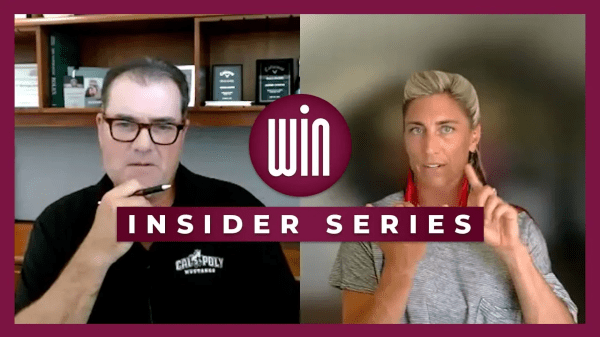
In this WIN Insiders episode, George interviews Beth Vukmanic, Executive Director of Vineyard Team and manager of the SIP Certified sustainable vineyard and winery certification programs. Beth shares her fascinating journey from professional harpist (and being born in a Volkswagen Rabbit!) to leading one of California’s most important sustainability initiatives. She explains how Vineyard Team, founded in 1994 by progressive growers, promotes sustainable farming through education, collaboration, and the SIP Certified program that emphasizes accountability in social equity, soil health, water efficiency, and habitat preservation. Beth discusses the program’s evolution from a 1996 self-assessment checklist to a comprehensive certification now spanning California, Michigan, and Oregon, plus its growing market value as consumers demand sustainably produced wines. She also shares her passion for fitness through her “Beth Size” brand and highlights the One of Ours Me
00
June 19, 2025
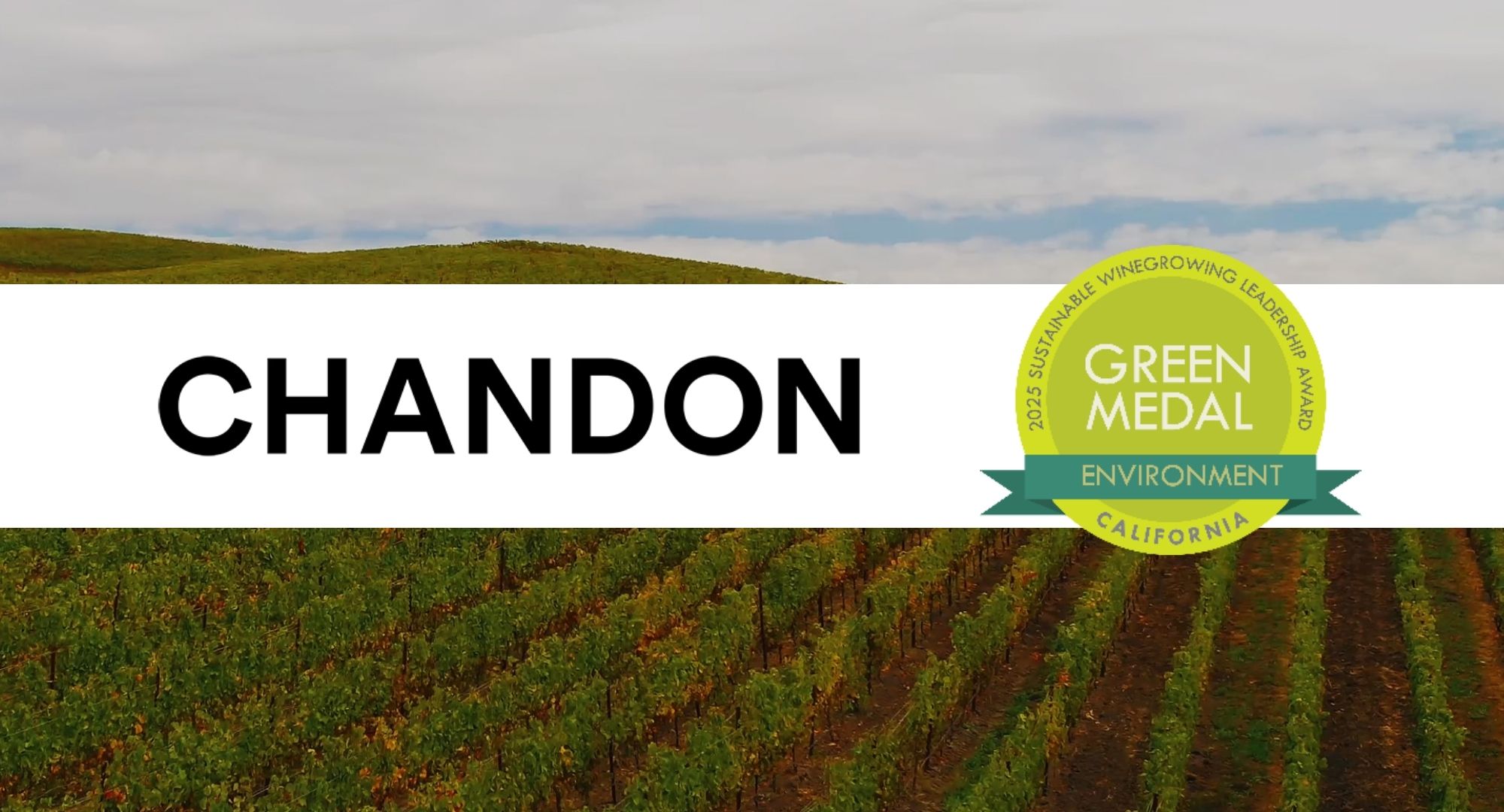
A case study on using irrigation automation to conserve water, cut energy use, and elevate vineyard performance. CHANDON has consistently demonstrated innovation in environmental practices, resource efficiency, and community engagement, setting a new benchmark for sustainable viticulture. The California Green Medal Awards were established in 2014 to recognize vineyards and wineries that lead the industry in the areas of environment, economic development and social equity. As we all work towards a more sustainable future of agriculture, this recognition highlights the effort of vintners and winegrape growers striving to protect the environment and enrich the community. CHANDON’s 2025 California Green Medal Environment Award CHANDON’s Carneros vineyards are irrigated using a combination of surface water and reclaimed water sourced from the City of Sonoma, while the Yountville site relies primarily on recycled water from the winery’s own wastewater tr
00
Depending on your wine or spirits brand, the cocktail of channels you depend upon to drive volume in 2025 may look different than it did five years ago. You might lean more heavily upon E-Premise and Direct to Consumer sales. Still, nothing moves cases like a placement in strategic national accounts, regional chains, and high-volume independents in the right markets. The natural consequence of devoting more attention to emerging channels is less time to devote to traditional 3-tier sales strategy without investing in more resources. Under these constraints, it’s more important than ever to focus your team’s efforts in the market with a well-researched, highly-targeted plan of attack. A crucial roadmap resulting from this research is a Key Account Target (KAT) list. By selecting the accounts capable of driving the most volume for your brand and focusing your sales team’s time and efforts — to the neglect of the rest of your available account universe &mda
00

Using Weather Data to Gauge Spray Drift Risk Sustainable Ag Expo I November 12 I 2:00-3:00 pm The regulatory situation of spray drift is changing, with increasing penalties for infractions. Mark Battany's presentation will explain the weather conditions that lead to drift and how data tools can help growers and applicators avoid spraying at high drift risk periods. CE Approved: 1 DPR - O; 1 CCA - IPM Get Tickets! --- Mark graduated with a B.S. in Agronomy from Colorado State University and an M.S. in Hydrologic Sciences from UC Davis. He subsequently spent two years at the Institute of Sustainable Agriculture in Cordoba, Spain as a Fulbright scholar. Mark worked for the UC Cooperative Extension from 2001 until 2024, initially as the Viticulture Farm Advisor and later the Water Management and Biometeorology Advisor for San Luis Obispo and Santa Barbara Counties. Now retired from UC, Mark will continue to work diligently
00

LISTEN IN to Sustainable Winegrowing's Marketing Tip Monday! What does it mean to farm sustainably? Sustainable farming is a collection of practices spanning from water and energy conservation, to soil health and biodiversity, and social equity. There are so many examples of sustainability in action to point to right outside of your window: Native landscaping: minimal irrigation and maintenance needs. Cover crops: promote soil health and provide refuge for beneficial insects. Alternative energy sources: reduce reliance on fossil fuels. Owl boxes & raptor perches: birds of prey feast on vertebrate pests. One topic that sustainable farmers get asked about often is pest management. In this Sustainable Story Marketing Tip, learn how Presqu’ile Vineyards utilizes technology to manage bird pests in a more environmentally and economically sustainable way. Safely Keeping Birds at Bay Birds like finches and starlings are common vineyard pests. They damage fruit and canopies,
00

The sustainable winegrowing community is growing! Its members are here because they believe in the cause. They value our planet and its human and natural resources. They know that through sustainable agriculture practices, we have the power to improve the health of the people and the planet now and into the future. There are a lot of buzzwords today surrounding eco-friendly production: Regenerative Sustainable Climate smart Carbon footprint Social equity Did you know that the sustainable winegrowing community touches all of these points? 1. Regenerative. From the block to the bottle, making wine is a science. Growers and vintners alike must understand and work with nature to make a quality product, and sustain their business for years to come. That’s why sustainable winegrowers use practices that protect and regenerate natural resources: Enhance soil health and biodiversity by planting cover crops and using compost and biochar. Support native wildlife species by preservin
00
March 12, 2024

If you are happy with your current sales level and are on track to hit all of your depletion and revenue goals in 2024, this article is not for you. Just hit your back button and return to whatever you were busy doing before this headline caught your eye. But if growing your sales and hitting your goals are high on your list of things that occupy your waking (or supposed-to-be-sleeping) hours, please read on. Why a Great Product Isn’t Enough to Achieve Sales Success Here is an interesting observation: Most wine and spirits companies need to grow their sales. Some of them quite desperately. The typical methods they deploy to attack this objective almost always involve the same twelve things: Craft compelling stories to sell their products Emphasize the features and benefits of their products Pursue awards and accolades Spend small fortunes on social media and influencer marketing Spend even larger fortunes on brand awareness Pursue liquid-to-lips opportunities Conduct marke
10