
Filter Post Type
NewsVideoProductEventLink
Sort:
Most Recent
1–10 of 34

January 22, 2026
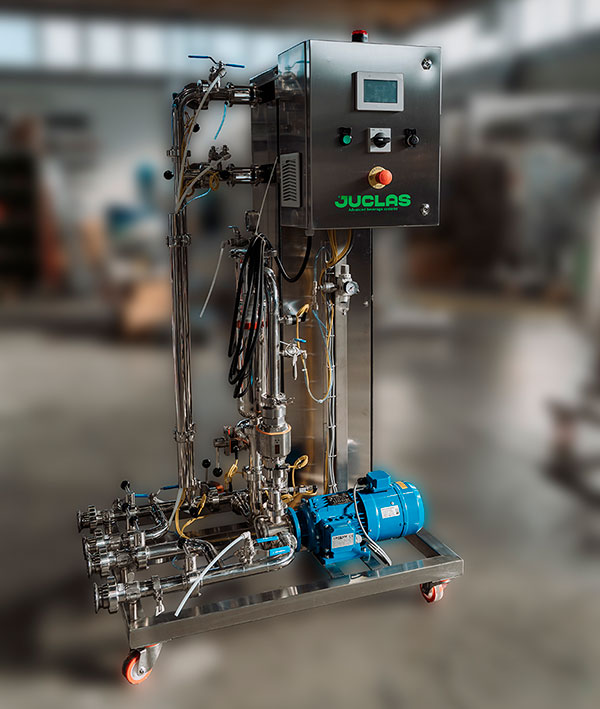
Techniques available to winemakers, especially for those crafting fine white and sparkling wines, have continued to evolve through the years, providing more sophisticated options for fine-tuning the style and complexity of their finished products. Winemakers frequently use cross-flow filtration for clarification and microbial stabilization of wine. The tangential flow of juice across the filter’s membrane surface limits clogging and allows continuous cleaning of the membrane. This technology is well-suited for wineries seeking very fine clarification during post-fermentation processing. However, its highly automated machinery can be too expensive for smaller wineries, and its high product loss level is more impactful for small batch processing of high-quality wines. “Today, these smaller wineries use cross-flows from mobile services or manual systems, very likely pad filters,” says Massimiliano Buiani, Chief Operating Officer for JUCLAS, USA. “Pad filte
00


Membrane filter cartridges are an essential tool for wine clarity and microbiological stability, but they do not have to be a disposable expense. With the right regeneration practices, wineries can restore flow, maintain sterility, and significantly extend cartridge life, which reduces both cost and waste. Instead of replacing filters as soon as they show pressure spikes or reduced throughput, regeneration allows winemakers to return a used cartridge to near-new performance. The result is better filtration economics and more predictable bottling runs. The Case for Regeneration ✔ Restores flow and keeps pressures low ✔ Preserves pore integrity for sterile filtration ✔ Minimizes premature replacement ✔ Reduces landfill waste and supplier spend ✔ Protects wine quality through consistent performance Most clogged filters are not worn out. They are simply loaded with colloids, yeast, and fine solids. Regeneration removes that load and resets the membrane. Typical Regenera
00

JUCLAS Micro-Oxygenation Meets Enologica Vason Tannins Oxygen, when applied with precision, is one of the most powerful tools in winemaking. In small, controlled doses, it supports yeast metabolism and prevents reductive problems. It promotes the polymerization of tannins and anthocyanins, fixing color and improving the structure of red wines. The JUCLAS MICRODUE® PLUS system ensures that oxygen is delivered with absolute accuracy. When combined with the right tannins from the Enologica Vason range, the result is a complete solution for wines with intense, stable color and elegant balance. MICRODUE® PLUS The safe use of oxygen to add value to wine Precision micro-oxygenation Volumetric piston dosing: accuracy and repeatability Up to 6 dosing points (expandable to 30 with Multipoint) Oxygen dosage: 20 mL/h to 54 L/h per point Portable and intuitive MICRODUE® PLUS guarantees precise, safe, and flexible oxygen management, creating the ideal co
00
August 18, 2025
After a wet winter and a slow start to spring, California is now experiencing an unusually cool summer. While the extended hang time may sound ideal at first glance, many winemakers are concerned, and for good reason. Persistent cool, damp weather during the growing season brings with it an entirely different set of vineyard and cellar challenges, from disease pressure to delays in ripening. If you haven’t already, it’s time to start thinking about how this season’s cooler conditions may affect your fruit, and how to plan ahead to protect your wine’s quality. What’s the Problem with a Cool Summer? Cooler-than-average temperatures, especially when paired with humidity or late rains, can lead to several problematic outcomes in the vineyard: Delayed Ripening: Grapes take longer to reach phenolic maturity, and sugar accumulation may lag behind flavor development. This can result in unbalanced fruit and longer hang time on the vines. Increased Disease Pressure:
00
Achieving tartrate stability is critical for delivering wines that hold up in bottle and on the shelf. One tool that has become increasingly popular for this purpose is carboxymethyl cellulose (CMC), but not all CMCs perform the same. Understanding how CMC works, and how to properly use it, can help you avoid hazes, filtration issues, and color instability. How CMC Prevents Crystal Formation CMC helps prevent potassium bitartrate (KHT) crystals from growing by binding to the crystal surface. It does this through electrostatic attraction between the negatively charged carboxymethyl groups in CMC and the positively charged surface of the KHT crystals. The strength of this interaction depends on the molecular structure of the CMC, meaning that different CMCs vary in their effectiveness. Protein Stability: A Crucial First Step Some CMC products, particularly those with longer polymer chains, can interact with proteins in wine and cause hazes. Protein stability must be confirmed before any
00


New Article: Winemaking Mannoproteins 101 Why Mannoproteins? Traditional lees stirring releases a broad range of mannoproteins from yeast cell walls, many of which can influence wine quality. While their primary function is to support colloidal stability, many winemakers also report additional benefits, such as improved mouthfeel and other enhanced sensory attributes. Selected mannoprotein preparations deliver this effect with greater precision. Selective & Targeted Unlike natural lees aging, purified mannoproteins are isolated for specific colloidal stabilizing benefits. Effective & Practical It can be added at specific stages without the need for extended aging or frequent stirring. Consistent & Controlled Provide reliable results without the variability of prolonged lees contact. READ THE FULL ARTICLE Featured Mannoproteins CLARISTAR® is a specialized mannoprotein for cold stability that prevents tartrate precipitation without refrigeration. FINAL TOUCH P
00

New Bench Trial Kits: Wine Improvement & Aging and Wine Finishing By popular demand, we are excited to introduce two new bench trial kits that include a selection of tannins, mannoproteins, and more. The two kits are organized by winemaking stage to ensure product contact times are compatible with your production. Improvement & Aging Kit This bench trial kit contains a selection of tannins from our portfolio that can help improve aroma and structure after fermentation or during aging. Shop Now Finishing Kit This bench trial kit contains a selection of mannoproteins and tannins that can be used 24-72 hours prior to bottling for last-minute adjustments. Shop Now
00

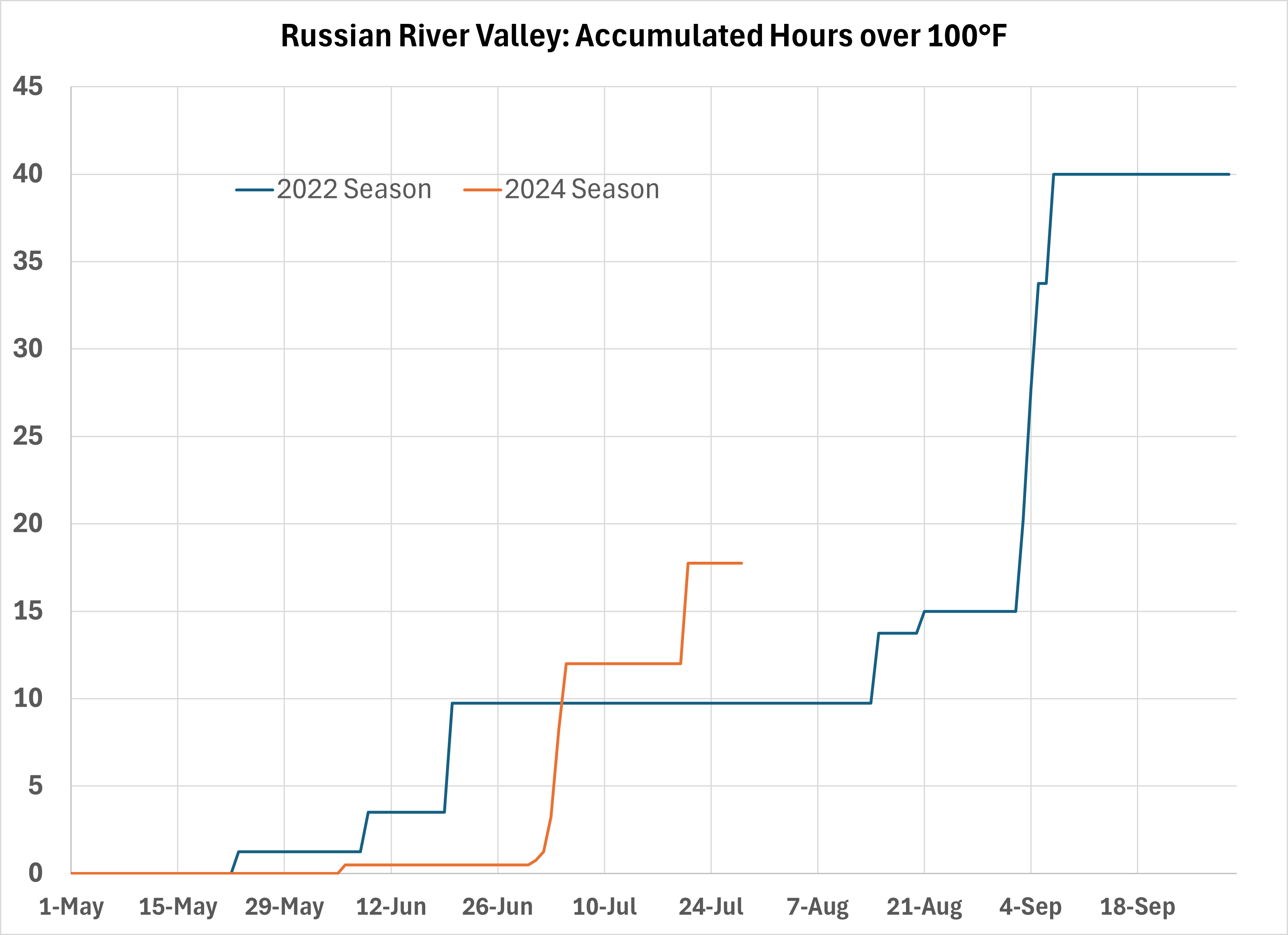
We are wrapping up a particularly hot July. The last time I had to write about heat stress was 2022, so this year seems to be making up for 2023’s persistent coolness. We all remember 2022. We had a couple hot days in late June that did quite a bit of damage in some vineyards. Then in late August, the sun parked itself right on top of California for three weeks, frying everyone’s hope of a decent harvest. This year, the heat has come earlier and hasn’t quit. One measure Mark Greenspan and I like to look at is amount of time temperatures exceed 100°F and 105°F thresholds. Anything over 100 usually slows down vine growth and metabolism. Anything over 105 causes serious damage. Here’s a comparison of 2022 and 2024 so far in the Russian River Valley. And here’s Calistoga… At least in Calistoga, 2024 is just a shifted version of 2022. Now, these are ambient air temperatures. Fruit exposed to full sun can be as much as 15°C (27°F) over
00

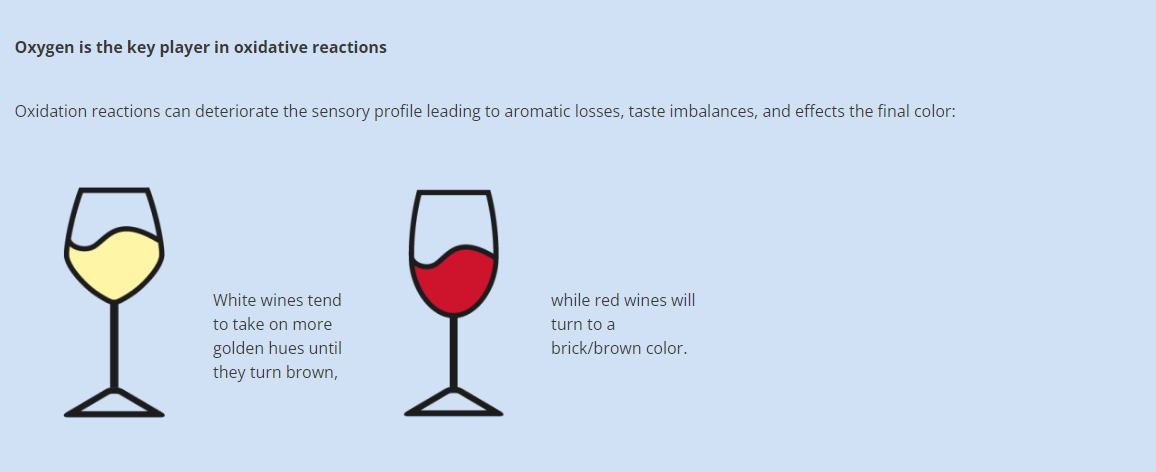
Oxygen causes important transformations as early as the moment grapes are harvested, and these changes continue throughout the winemaking process until ageing and bottling. Oxygen is present in about 20% of the air we breathe and is essential for all organisms that inhabit this planet. Without this element, life on Earth would not be possible and, for this reason, everyone benefits. This rule applies to everyone, or almost everyone, because in the world of winemaking, this is not always the case. Oxygen management must be carefully monitored to prevent excessive oxidation reactions that can negatively impact the final quality of wine. It is important to apply specific tools and techniques that allow for proper and natural ageing, while maintaining and preserving quality. Which Type of Oxidation Is It? Enzymatic Oxidation: Occurs mainly in must by polyphenoloxidase. The most important are tyrosinase and laccase (in the case of grapes affected by Botrytis cinerea). These enzymes ca
00

By OLIVIER CAILLE, Fermentis Technical Manager – Yeast Derivatives And ANNE FLESCH, Fermentis Technical Sales Support Manager Wine – The Americas By using yeast derivatives, you can do more than just facilitate fermentation. You can also get out of a stuck fermentation, stabilize your color, bring roundness and better resist to oxidation. Our expert, Olivier Caille, helps you clearly understand the advantages offered by derivatives at all stages of winemaking. “We know that time is precious for winemakers and that the fermentation process is not always easy to master” begins Olivier. “Offering efficient fermentation solutions is our way to help them focus on their creativity and core business. Over the last years, as the result of extensive research, Fermentis has launched several new yeast-derived technical products, which are classified into two families : fermentation aids and functional products.” The first ones improve and acc
00