
Filter Post Type
NewsVideoProductEventLink
Sort:
Most Recent
Tagged:nutrition
1–3 of 3
July 21, 2025
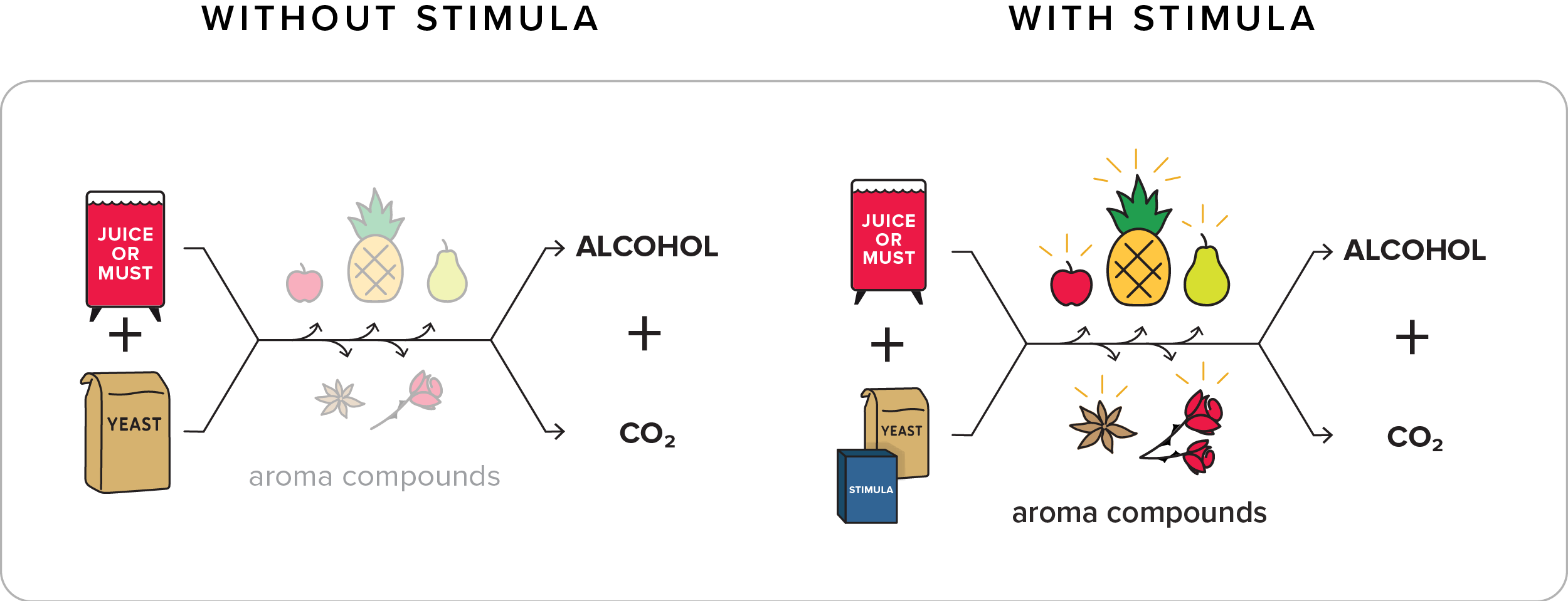
STIMULA™ nutrients go beyond yeast assimilable nitrogen (YAN). These innovative nutrients stimulate specific yeast metabolic pathways involved in aroma production. During fermentation, STIMULA™ nutrients supply additional amino acids, peptides, and specific vitamins and minerals that are crucial for the yeast’s secondary metabolism, boosting the production and/or release of key aromatic compounds like esters, thiols, and terpenes. Yeast produce esters as a natural byproduct of alcohol fermentation. STIMULA CHARDONNAY and STIMULA CABERNET are specifically formulated with the right nutrients to maximize ester production. Some yeast produce enzymes that convert odorless varietal aroma compounds into their odor active forms. STIMULA SAUVIGNON BLANC, SYRAH, and PINOT NOIR provide yeast with key micronutrients needed to maximize production of those enzymes. LEARN MORE
00
Mastering Yeast Nutrition How to Make a Fermentation Nutrition Plan Proper yeast nutrition during fermentation is key to preventing sluggish/stuck fermentations, preventing off-odors, and maximizing aroma. Scott Laboratories has always recommended making three nutrient additions at specific time points and our fermentation nutrition planner helps determine the right nutrient and dosage for each stage. READ GUIDE When to add Nutrients and Why Yeast Rehydration This nutrient addition helps get yeast into "first gear," supplying necessary vitamins and minerals required to adapt to the new environment and begin growth. 2-3°Brix Drop This nutrient addition "steps on the gas pedal." It helps yeast multiply during their growth phase and reach the maximum cell count that will finish fermentation. 1/3 Sugar Depletion At this stage, yeast have reached their maximum cell count. This nutrient "tops up the gas tank" and helps yeast sustain and com
10


We can finally say that 2022 Harvest has started across the PNW. California's been harvesting for some weeks now, while Oregon and Washington are just starting. The first comments from the industry report a smaller harvest in terms of yield, with smaller berries but, generally speaking, higher quality due to the concentration of color and varietal aromas. Some of the aspects winemakers and vineyard specialists have had to deal with are not small or easy; several areas were first hit by frost, some by excessive heat and drought, and others by both. One of the common issues we experienced at JUCLAS USA is juice coming in with initial high values of VA. This particular compound can lead to the loss or suppression of aromatics, and an unpleasant sensation in the back of the throat when tasting the wines. As far as available solutions, at JUCLAS USA we recommend the use of the EASYFERM, our automated rehydration system. The EASYFERM will manage the nutrition, rehydration, and
00