
Filter Post Type
NewsVideoProductEventLink
Sort:
Most Recent
1–10 of 70
Join Vineyard Team and Paso Robles Wine Country Alliance for a focused half-day 2026 Industry Update designed to help you navigate what’s happening now—and what’s coming next! Hear directly from industry experts as they break down the trends, risks, and opportunities shaping grape growing in 2026. 📅 Wednesday, May 20 | 9:00 am-12:00 pm; tickets include lunch from 12:00-1:00 pm ➡️ at Springhill Suites in Atascadero 🎟️ Reserve your spot* >>> https://secure.qgiv.com/for/2026tailgatesevents/event/2026-industry-update/ --- Event sessions include: 📊Grape Market Update & Industry Outlook Get clarity on what’s happening in the grape market and what it means for your operation: - Key trends shaping pricing and demand - Vineyard removals and supply outlook - What to expect in the next 12+ months Speakers: Audra Cooper & Eddie Urman (Turrentine Brokerage) --- 💰 Grants & Funding Opportunities Panel Learn how to access and successfully use available funding: - Where to
00

Spring is an active time in the vineyard, and in the market. As the 2026 growing season takes shape, the Turrentine team is looking forward to connecting with growers, vintners, and industry partners across key regions. We’re excited to share insights, listen, and engage in meaningful conversations around today’s grape market and the challenges shaping our industry.
Here are three upcoming opportunities to connect with Turrentine Brokerage:
Lodi Grape Day
Mike Needham will be speaking at this year’s Lodi Grape Day, offering a timely update on the Central Valley grape market. His presentation will cover current pricing dynamics, supply trends, and what growers can expect heading into harvest. Lodi continues to play a critical role in the California wine landscape, and this event is always a valuable forum and well attended.
Wednesday, May 6, 2026 at 9:00 am
Jackson Hell - Lodi Grape FEstival Grounds, 413 E Lockeford St,, Lodi
Three Valleys Growers Tal
00
March 18, 2026
Event Type: Seminar
Location: Springhill Suites 900 El Camino Real Atascadero, California 93422
Date: 5/20/2026
Join Vineyard Team and Paso Robles Wine Country Alliance for a half-day Industry Update bringing together growers, experts, and advocates for a timely pulse check on grape markets, grower resources, and state-level developments shaping our region in 2026. This ticketed* event includes lunch and will feature: Grape Market Update & Industry Outlook – A look at current bulk wine and grape market trends, supply and demand dynamics, and what they mean for your business decisions this season. Grants & Funding Opportunities Panel – Moderated by an experienced grower, this conversation brings together funding and program specialists who work directly with agricultural grants and cost-share programs. Learn what opportunities are available, how to position your operation for success, and what makes a strong application. Policy & Advocacy Update – Michael Miiller of the California Association of Winegrape Growers shares key statewide developments and policy prioriti
00
March 16, 2026
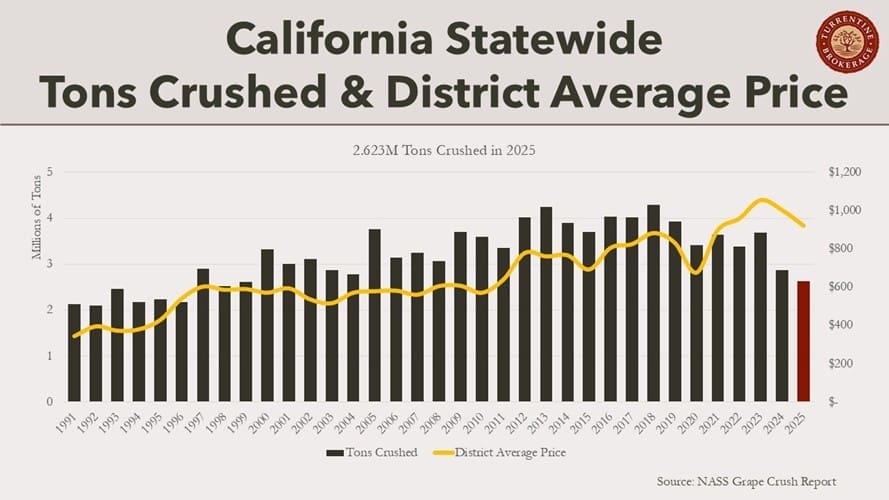
March 13, 2026 (Novato, CA) — Following the release of the Preliminary 2025 California Grape Crush Report, Turrentine Brokerage, the largest California grape and bulk wine brokerage company, has issued a market assessment characterizing the 2025 vintage as one of the most challenging for the wine industry since Prohibition. According to the new state data, the total tons crushed came in at 2.62 million tons, a figure that is above initial projections and well above what was felt by the industry. This statewide volume is 8% below 2024 and 23% below the 5-year average. Total red wine production declined by 9% and white wine production declined by 6%. “The decrease in tons is still very positive news for the industry overall,” said Steve Fredricks, President at Turrentine Brokerage. “The 2025 vintage highlights the industry’s directional shift of declining production and an overall restructure of the industry. 2025 represented continued challenges for grower
00

January 16, 2026

The 2026 State of the U.S. Wine Industry Report, published by Silicon Valley Bank and authored by Rob McMillan, provides a comprehensive, data-driven assessment of current conditions in the U.S. wine market. Built on more than 25 years of industry research, the report combines results from SVB’s annual winery survey, its Direct-to-Consumer (DTC) survey, demographic and cohort consumption modeling, and a wide range of third-party wholesale, retail, and population datasets. The conclusion is clear: while the industry continues to face structural headwinds, wineries are not experiencing these conditions equally. A widening performance gap has emerged between those adapting to changing demand and those struggling to do so. 2025 Performance: A Difficult Year for Many By nearly every measure, 2025 was a challenging year for the U.S. wine industry. Roughly half of the surveyed wineries rated the year negatively, citing slowing demand, rising costs, margin pressure, and inventory ch
00

January 9, 2026
Afternoon Brief, January 9
00

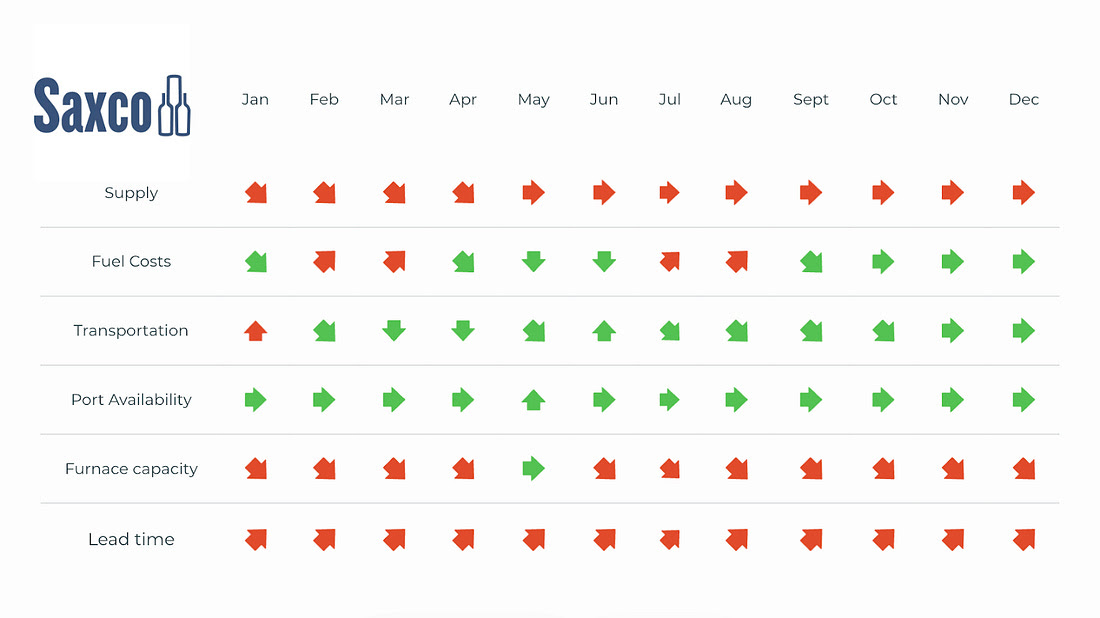
Another month of calm November typically marks the end of a new harvest and the middle of our busiest sales quarter. October’s government shutdown created unbelievable market uncertainty. But with the system back up and Thanksgiving almost normal, stability returned rather than the predicted surges or collapses by pundits from both sides. Still, questions remain about the future of our economic recovery prospects. For now, it is a reprieve, allowing us to regroup for the new year. Market dynamics The delayed reports from Commerce and the Bureau of Labor Statistics have started to trickle in, bringing some key takeaways: Unemployment is holding at 3.8%. Inflation easing to 2.3% YoY. Consumer spending down ~2% from Q3, but no hint of a cliff. As we close out the year and look to 2026, the focus will be on staying agile in both supply planning and capturing winery sales and marketing opportunities. The key trends persist: Steady demand, no major swings, and a growing gap between spe
00
Incremental buying keeps bulk market ticking over In its ‘World Production Outlook: First Estimates 2025’, published in late November, the Organisation of Vine & Wine (OIV) estimated global wine production at between 228 and 235 million hectolitres. The mid-range projection – 232 million hectolitres – would, the OIV stated, represent a 3% recovery from the provisional 2024 figure of 225.8 million. We suspect the OIV’s midrange projection could be an overestimate, as it includes a questionable expectation of the US harvest: rather than larger as the OIV states, California’s 2025 crop is widely assumed to have come in even smaller than 2024’s twenty-year low. Widespread non-harvesting of uncontracted grapes meant a disparity between crop potential and the tonnages that in fact crossed the scales. The OIV’s estimate of Italy’s harvest could also be downwardly revised, after reports that some deleterious effects from adverse condit
00

November 10, 2025
American Canyon, CA — WineDirect Fulfillment is proud to highlight its long-standing and evolving partnership with Jackson Family Wines, a collaboration built on shared values, innovation, and a commitment to excellence. At WineDirect Fulfillment, partnership is the foundation of everything we do. We operate as an extension of our clients’ organizations, working closely to plan, optimize, and execute fulfillment strategies that drive results. Our partnerships extend beyond our clients to include suppliers, communities, and industry peers, all united by a common goal: delivering exceptional value and impact. Since 2018, WineDirect Fulfillment has partnered with Jackson Family Wines to deliver scalable, efficient, and customer-focused solutions. What began as a solution to a shipping need has grown into a dynamic, multi-faceted partnership. Together, we have developed solutions across disciplines including martech integrations, sustainable packaging initiatives, and
00

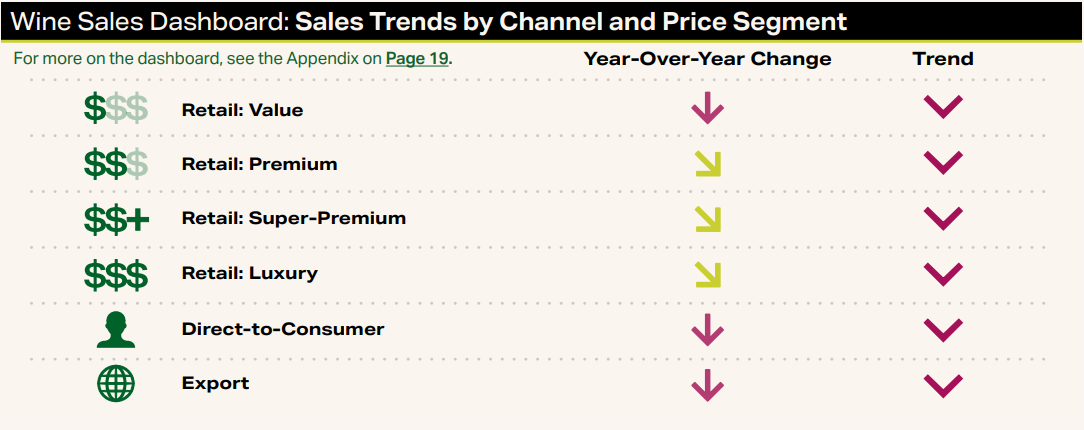
Price-sensitive consumers have kept a lid on wine sales this year, while grape sales are likely to remain slow. As for the moderation movement, a range of factors are contributing. It was a disappointing first half of the year for U.S. wine sales as a shaky economic backdrop quashed the signs of progress that were evident in late 2024. Nonetheless, there has been modest improvement in some areas since spring. Retail wine sales fell across price segments in the first half but declined at a slower pace in the second quarter than in the first (see Page 3). Following a bleak first five months of 2025, direct-to-consumer sales, while still down, firmed in June and July. Alternatively, exports deteriorated markedly in the second quarter as shipments to Canada collapsed. Unfortunately, I am not expecting much improvement in the near term. The economic outlook remains murky, but the Terrain team believes that slow economic growth, a gradually eroding labor market, and sticky
00