
Filter Post Type
NewsVideoProductEventLink
Sort:
Most Recent
1–10 of 179

Four 2026 Napa Valley Grape Listings from One Source This month’s featured grape offerings bring together four red varietals from the same seller, giving wineries a focused opportunity to explore multiple lots through one point of contact. From the bold color and structure of Petite Sirah and Petite Verdot to the depth, lift, and blending flexibility of Cabernet Sauvignon and Cabernet Franc, this collection offers winemakers a practical way to build or refine a 2026 red wine program with intention. Whether you’re sourcing fruit for a standalone bottling, strengthening a Bordeaux-style blend, or planning ahead for the coming harvest, these listings provide a strong starting point for conversations around availability, fit, and program needs. Cabernet Franc An expressive red variety that can bring lift, aromatics, and finesse to blends or standalone bottlings. View Listing Petite Verdot A classic blending variety with color, tannin, and aromatic intensity for Bordeaux-style program
00

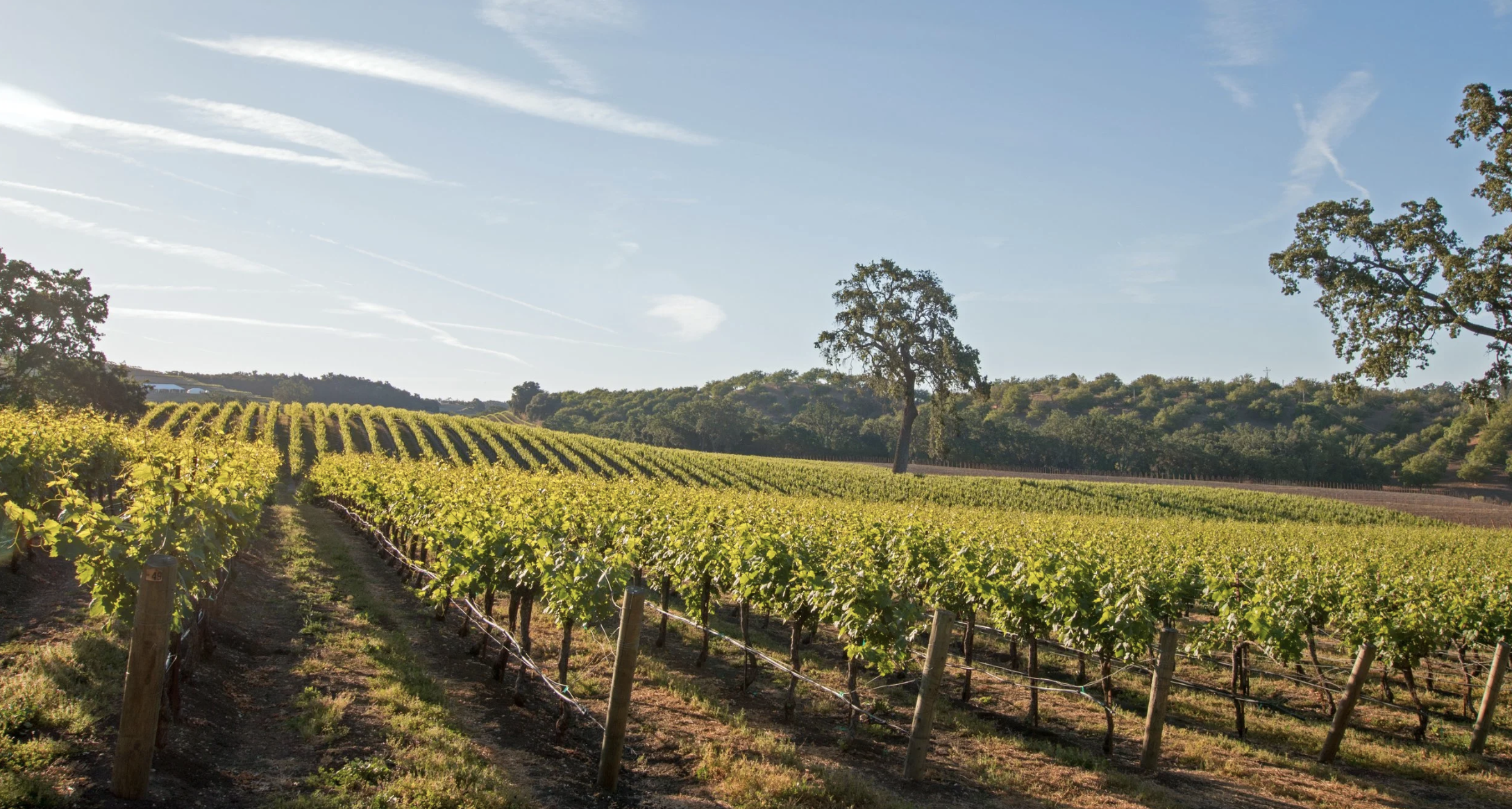
2025 Dry Creek Valley — Cabernet Sauvignon This excellent bulk wine listing features over 8,600 gal. of 2025 Dry Creek Valley Cabernet Sauvignon from Lytton Manor Vineyard, a site known for its certified organic farming and deep-rooted commitment to sustainable viticulture. Grown in one of Sonoma County’s most sought-after Cabernet regions, this offering reflects the balance, structure, and varietal purity that Dry Creek Valley is known for — delivering fruit well-suited for premium standalone bottlings or strategic blending programs. Backed by a long-standing reputation for quality and consistency, Lytton Manor Vineyard provides both pedigree and transparency, with direct access to availability details and grower insights through the listing. Whether you’re sourcing fruit for your core program or exploring new vineyard partnerships for the future, this is an opportunity to secure Cabernet Sauvignon from a trusted and proven source: View Listing Good Wine
00
Your next customer will see your winery before they ever taste your wine. They'll see it on Instagram while planning a weekend trip. They'll see it on your website while deciding whether to book a reservation. They'll see it in an email while considering whether your wine club is worth joining. And in every one of those moments, they're making a decision based on what your visuals tell them about who you are. This isn't a trend. It's how people buy now. According to a 2023 study by Cloudinary and Harris Poll, 75% of online shoppers say product photos are the most influential factor in their purchase decisions. That number holds across categories, and it holds in wine. The difference is that wineries aren't just selling a product. They're selling an experience, a place, a feeling. Which means your visual content has to do more work than a product shot on a white background. It has to make someone want to be there. Most wineries know this on some level. Fe
00

2.62: A Historic Reset by Steve Fredricks The release of the preliminary 2025 California Crush Report confirms an evolutionary shift in the state’s wine landscape. With the total crop recorded at 2.62 million tons, the industry has hit its lowest production level since 1999. This marks the second consecutive small harvest, resulting in a staggering one-million-ton decrease in tons harvested compared to just two years ago. For the consumer market, this translates to roughly 73 million fewer cases available between the 2023 and 2025 vintages, reflecting a deliberate, industry-wide effort to bring wine production back into balance with current demand. The impact of this contraction was felt most acutely in California’s interior regions. While coastal areas saw a 51,000-ton decrease compared to 2024, the interior experienced a much sharper drop of 170,000 tons. This disparity highlights a significant trend: acreage is being removed from production at a higher rate
00
March 16, 2026
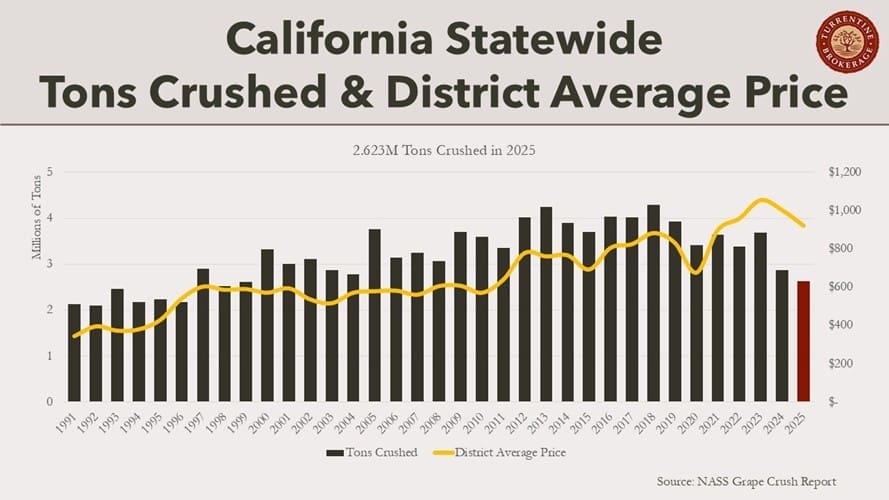
March 13, 2026 (Novato, CA) — Following the release of the Preliminary 2025 California Grape Crush Report, Turrentine Brokerage, the largest California grape and bulk wine brokerage company, has issued a market assessment characterizing the 2025 vintage as one of the most challenging for the wine industry since Prohibition. According to the new state data, the total tons crushed came in at 2.62 million tons, a figure that is above initial projections and well above what was felt by the industry. This statewide volume is 8% below 2024 and 23% below the 5-year average. Total red wine production declined by 9% and white wine production declined by 6%. “The decrease in tons is still very positive news for the industry overall,” said Steve Fredricks, President at Turrentine Brokerage. “The 2025 vintage highlights the industry’s directional shift of declining production and an overall restructure of the industry. 2025 represented continued challenges for grower
00
We’re not debating calories or whether that charcuterie board counts as an appetizer or dinner. We're talking about the IRS tightening the rules for deductible meals. Starting January 1, 2026, some winery meals that have historically been deductible will become completely nondeductible. Same harvest crew. Same pizza. Different tax result. Here is what changes and what does not. 1. Harvest Meals on Winery Premises Zero Deduction Beginning in 2026 If you provide meals at the winery so employees can keep working, those meals will no longer be deductible starting in 2026. That includes: Crush pad dinners Bottling day lunches Late night production meals served on site For years these were deductible. Beginning in 2026, they are not. If harvest meals are a routine part of your operations, this is worth budgeting for now. 2. Occasional Overtime Meal Reimbursements Possibly Still 50 Percent Deductible If an employee unexpectedly works late and you reimburse them for dinner, tha
00
November 18, 2025
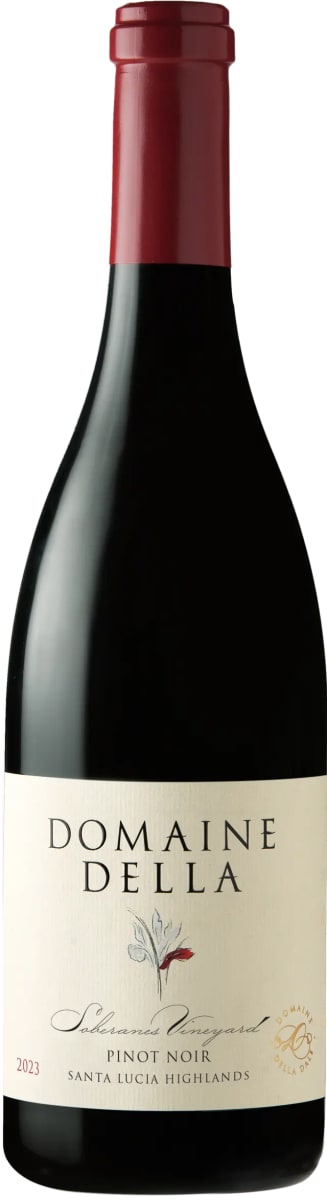
Domaine Della 2023 Soberanes Vineyard Santa Lucia Highlands Pinot Noir Takes Top Prize November 18, 2025 — Winners have been announced in the 2025 Harvest Challenge Wine Competition. After two spirited days of judging, Domaine Della 2023 Soberanes Vineyard Santa Lucia Highlands Pinot Noir took the top prize. It was also awarded Best of Show Red Wine and Best of Monterey County AVA. Coming in at 98 points, judges praised the wine as “warm and spicy” with “fig and nutmeg.” Other descriptors included “meaty,” “prosciutto,” and “dried rose petal.” With entries from across the globe, the Harvest Challenge bases judging on a group of vineyards (or even vines) from the same region, belonging to a specific appellation and sharing the same type of soil, weather conditions and grapes that combine to give personality to the wine. In other competitions, this terroir is ignored. At the Harvest Challen
00

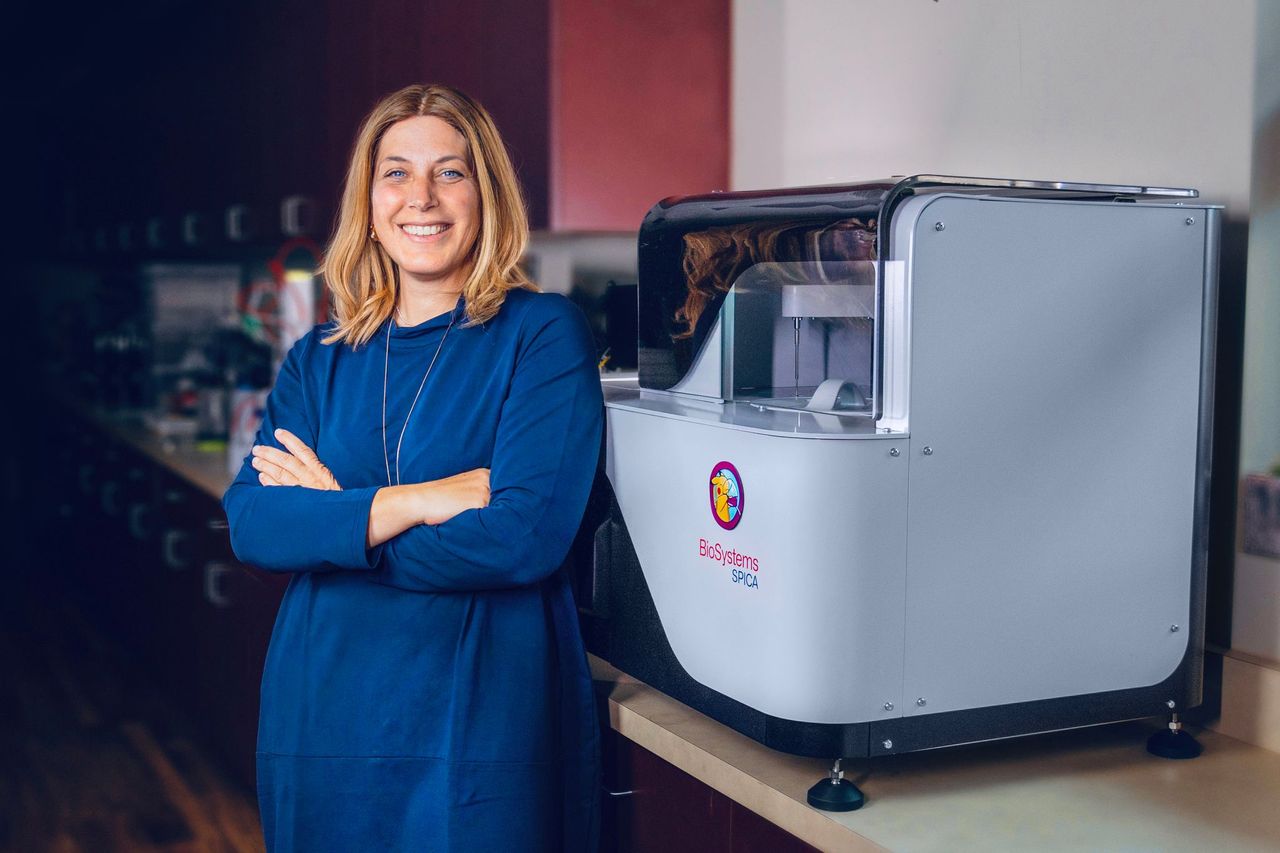
🍇 How much do we appreciate feedback from our clients? A ton! 🍇 It was a joy to hear how Alicia Wilbur's experiences with SPICA has influenced QC at Herzog Wine Cellars: "With SPICA, our ability to track lots in real time has been game changing. The volume of wine we produce and in the myriad of styles we make (still, effervescent, dry, sweet, red, white, sterile, non-sterile, etc) kept growing in volume and complexity. We needed something that could keep up with all the parameters we were tracking. In most cases, we have tripled the output on analysis; this has allowed us to spot problem lots and track them immediately, as well as track the efficacy of our problem remediation. Because we can check so many parameters simultaneously, we are able to manage cellar health much more proactively. We went with SPICA for several reasons: Robust industry presence of the Y15 autoanalyzer, the fact that SPICA technicians have real world winemaking and win
00


Facebook/Meta: Turning Fans into Wine Club Members Expanding on insights from our Wine Club Scorecard, this post explores one of the most underused yet powerful tools for wine club growth: Facebook. While platforms like TikTok and Instagram often grab attention, Facebook remains one of the most effective drivers of wine club engagement and conversion when paired with Meta’s advanced targeting and advertising tools. With 72% of wine consumers aged 35–65 actively using Facebook, this is not just a social network—it’s an opportunity to build real relationships, deepen loyalty, and guide new members into your wine club. Yet most wineries still treat Facebook as a newsfeed instead of a growth engine. Sporadic posts, static bottle shots, and low engagement can’t compete with a thoughtful strategy that uses Facebook the way it was meant to be used: to connect, converse, and convert. Let’s explore how to turn Facebook into a true wine club acquisition chann
Wine Club GrowthWine Club MarketingFacebook for WineriesMeta AdvertisingWine Club AcquisitionSocial Media Strategy for WineriesDigital Marketing for WineriesWine Club RetentionFacebook AdsWinery Community BuildingCustomer EngagementHow to Grow a Wine Club with FacebookBest Facebook Strategies for WineriesWinery Marketing Tips 2025Using Meta Ads to Increase Wine Club MembershipWine Industry Marketing InsightsWine Club ScorecardWIN Series 2025DTC Wine MarketingvinSUITE Insights
00
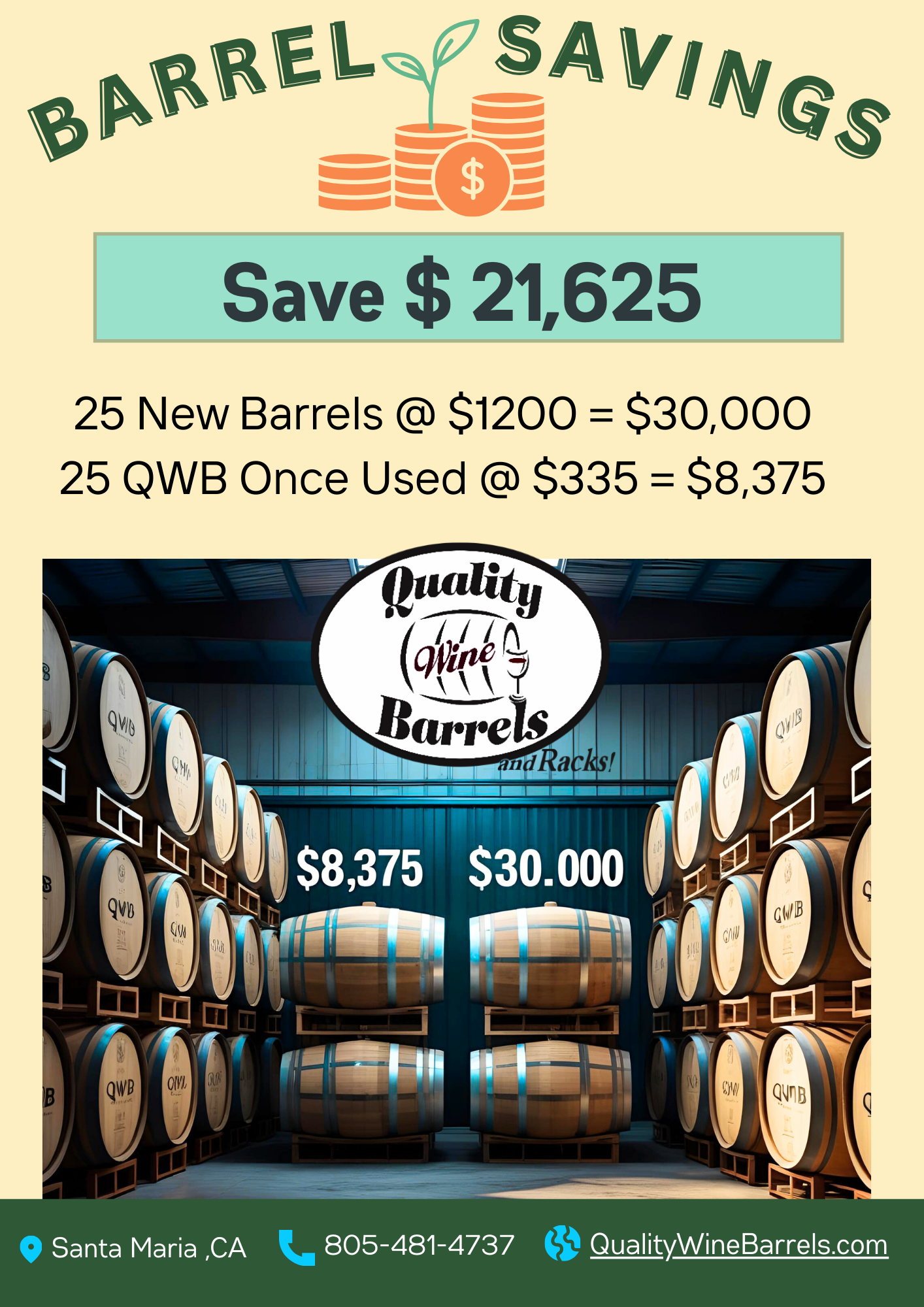
Harvest season is here, and with the market softer than usual, we know every dollar in your program has to pull its weight. The good news? You don’t have to choose between quality and cost. With the right mix of barrels, you can hit your flavor goals and protect your budget—leaving more resources for fruit, labor, and marketing. At Quality Wine Barrels, we see more wineries turning to used and recoopered barrels as the smartest way to stretch their budget without giving up the integrity of the vintage. It’s a strategy that delivers in the glass and on the bottom line —and we’re here to help you build the mix that makes the most sense for your program. The Simple Math (That Adds Up Fast) At-a-glance price snapshot New French oak: typically $1,200+ each Once-filled French oak: $335 each A 25-barrel example New French oak: 25 × $1,200 = $30,000 Once-filled French oak: 25 × $335 = $8,375 Savings: $21,625 And that’s just one cycle. S
00