Filter Post Type
NewsVideoProductEventLink
Sort:
Most Recent
1–10 of 43
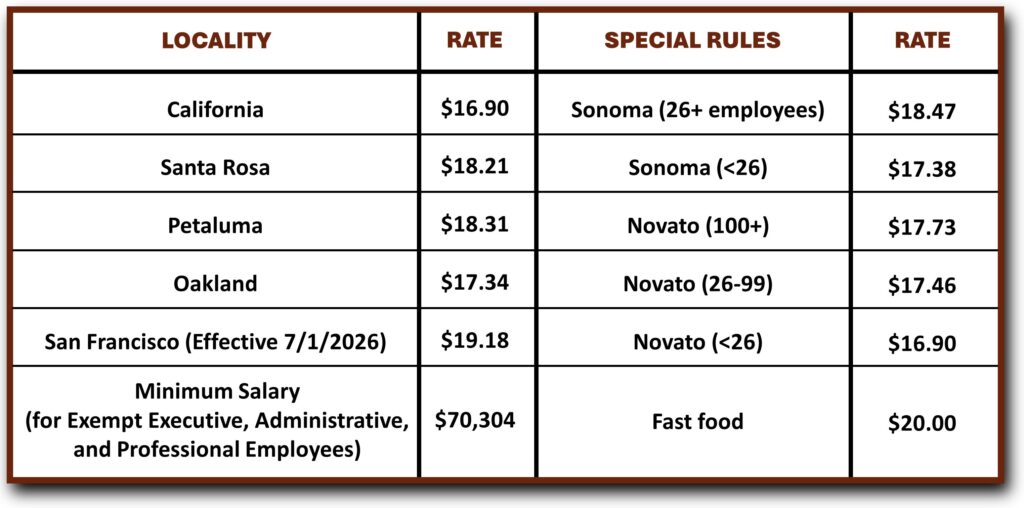
It is time to dust off the employee handbook, review your policies and procedures, and make sure they comply with all the new laws, regulations, and interpretations that went into effect during 2025, became effective in late 2025, or January 1, 2026. Below, we have identified our “top 10” changes. Please keep in mind there were hundreds of laws, regulations, and changes implemented at the local, state, and federal levels throughout 2025. This summary highlights selected changes most likely to impact California employers and is not intended to be exhaustive. So, if you need a handbook/policy review or have any questions, please call us! 1 – Minimum Wage Update: Updates happen every year. It’s best to put a calendar reminder in November, to make sure your payroll is ready! Action: Review your payroll to ensure all employees are being paid the new minimum wage, send written notice of the wage change to affected hourly employees, and be sure your salari
00
November 20, 2025
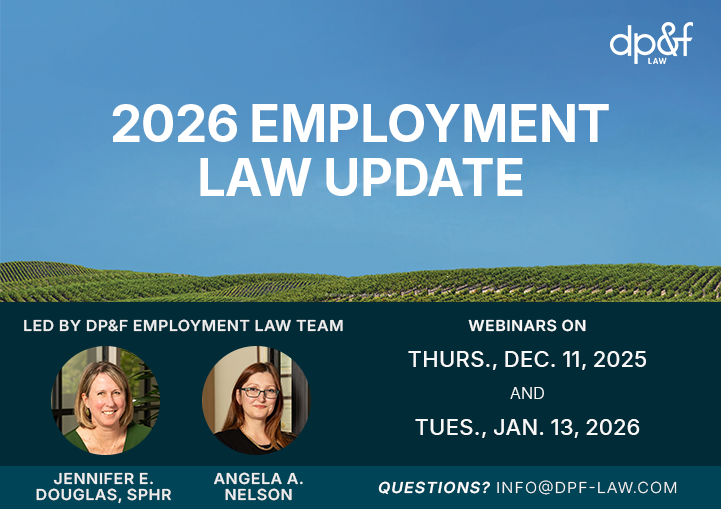
DP&F partner Jennifer E. Douglas, and employment law attorney Angela A. Nelson, will be presenting two 2026 Employment Law Update webinars this winter, sharing updates for California employers on December 11th, 2025 and January 13th, 2026. Each session will feature a legal update for changes to employment law in 2026, including updates to employer pay data requirements, minimum wage increases, tip theft laws and new stay-or-pay contracts. Jennifer and Angela will also address ongoing employment law requirements that continue to cause employers difficulty. There are two dates to choose from, one on Thursday, December 11th, and one on Tuesday, January 13th. The topics covered will be the same for both sessions, and registration links are below. Webinar Registration December 11, 2025 | January 13, 2026
00
November 19, 2025
Event Type: Webinar
Date: 1/13/2026
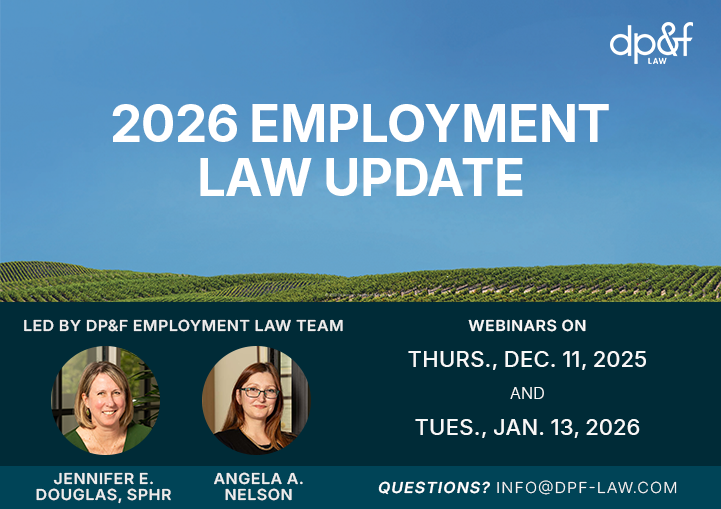
DP&F partner Jennifer E. Douglas, and employment law attorney Angela A. Nelson, will be presenting 2026 Employment Law Updates, sharing updates for California employers on December 11th, 2025 and January 13th, 2026. Each session will feature a legal update for changes to employment law in 2026, including updates to employer pay data requirements, minimum wage increases, tip theft laws and new stay-or-pay contracts. Jennifer and Angela will also address ongoing employment law requirements that continue to cause employers difficulty. There are two dates to choose from, one on Thursday, December 11th, and one on Tuesday, January 13th. The topics covered will be the same for both sessions, and registration links are below. Webinar Registration December 11, 2025 | January 13, 2026
00
November 19, 2025
Event Type: Webinar
Date: 12/11/2025
DP&F partner Jennifer E. Douglas, and employment law attorney Angela A. Nelson, will be presenting 2026 Employment Law Updates, sharing updates for California employers on December 11th, 2025 and January 13th, 2026. Each session will feature a legal update for changes to employment law in 2026, including updates to employer pay data requirements, minimum wage increases, tip theft laws and new stay-or-pay contracts. Jennifer and Angela will also address ongoing employment law requirements that continue to cause employers difficulty. There are two dates to choose from, one on Thursday, December 11th, and one on Tuesday, January 13th. The topics covered will be the same for both sessions, and registration links are below. Webinar Registration December 11, 2025 | January 13, 2026
00
August 5, 2025
If you employ full-time staff, seasonal crews, or part-time help in Oregon’s wine industry, there’s a new law that could change how you approach labor planning and workplace disputes—especially during your busiest seasons. Oregon Senate Bill 916 (SB 916) makes Oregon the first state in the country to offer unemployment insurance (UI) benefits to both public and private sector employees who are engaged in a labor strike. Why Provide Unemployment Benefits to a Striking Workforce? Lawmakers behind the bill say it’s about fairness. Their argument is that workers who are lawfully on strike shouldn’t be forced to choose between standing up for better conditions and being able to pay their bills. They point out that most strikes in Oregon don’t last long—about eight or nine weeks on average—and believe a short-term safety net could lead to more productive negotiations. But not everyone agrees. Many employers, especially in agriculture and manufa
00

February 24, 2025

GROWING FORWARD: Navigating Workforce Challenges Insights on Migrant Labor and Immigration Compliance Understanding how to secure a stable workforce while remaining compliant with federal laws has never been more critical. As immigration policies continue to evolve and enforcement intensifies, agricultural employers are facing urgent questions about labor security, compliance, and the risk of workforce shortages. Many employers are wondering: What visa options are available to legally hire and retain workers? How can I avoid costly compliance mistakes and DHS audits? What are my rights during an ICE site visit? How do I ensure my employment verification processes are secure? Join us for a comprehensive session on how to secure your labor force and best to remain compliant with federal immigration laws in the Trump era. We will discuss nonimmigrant as well as immigrant visa options for your employees as well as how to best avoid a DHS audit of your HR files. Session Panel: Ally B
00
Event Type: Conference
Location: Online
Date: 3/12/2025
Session 1: Navigating Workforce Challenges: Insights on Migrant Labor and Immigration Compliance Broadcast Date: March 12th, 2024 – 10:00 am (PT) The Trump administration’s stringent immigration policies pose a significant challenge for agricultural employers. Initiatives aimed at mass deportations of undocumented immigrants can lead to labor shortages in sectors like agriculture that are heavily reliant on immigrant labor. In California, heightened immigration enforcement has already caused a substantial decrease in field workers reporting for duty, with reports indicating that up to 75% of workers did not show up following intensified raids. These policies may exacerbate existing labor shortages and threaten the timely harvesting of crops and disrupt farming operations. Join us for a comprehensive session on how to secure your labor force and best to remain compliant with federal immigration laws in the Trump era. We will discuss nonimmigrant as well as immigrant visa op
00

A new year brings new employment laws. Stay compliant and consistent by making it your New Year’s resolution to schedule a handbook review with our Leap Solutions HR Team today!
00
July 24, 2024
What is PAGA? Since 2004, California’s Private Attorneys General Act (“PAGA”) has allowed an individual employee to “stand in the shoes of” the State to recover civil penalties from an employer for Labor Code violations—not only for violations against the single employee bringing suit, but for violations against all aggrieved employees. In this way, a PAGA lawsuit is a representative action like a class action. However, PAGA actions do not play by the same rules as class actions. How is PAGA different from a Class Action? Because an employee bringing a PAGA action is (in theory) acting as a private attorneys general to enforce State laws, PAGA actions are not treated like traditional civil lawsuits. Instead, they are treated as administrative enforcement actions brought by the State. For this reason, many of the limitations on class action lawsuits do not apply to PAGA actions. For example, PAGA actions cannot be waived, worker class certification an
00
March 20, 2024
Session 2: New Regulations Impacting the Wine Industry Date & Time: Wednesday, April 10th – 10:00 AM (PT) Seemingly, each year brings new laws and regulations that impact the wine industry and present a maze of compliance issues. This session will feature four experts addressing four areas where new regulations impact vineyards and wineries. FTC Enforcement and Trade Practice Compliance: As part of the current administration’s initiative to increase competition and assist small and medium-sized businesses in the alcohol beverage market, there’s been a renewed focus on federal trade practices that govern how industry members interact. In addition, the Federal Trade Commission has launched an antitrust investigation focused on one of the nation’s largest alcohol beverage distributors. Given these developments, industry members should brush up on the world of trade practice restrictions in order to avoid any potential pitfalls. Bottle Bill:
00