
Filter Post Type
NewsVideoProductEventLink
Sort:
Most Recent
Tagged:ellagitannins
1–1 of 1

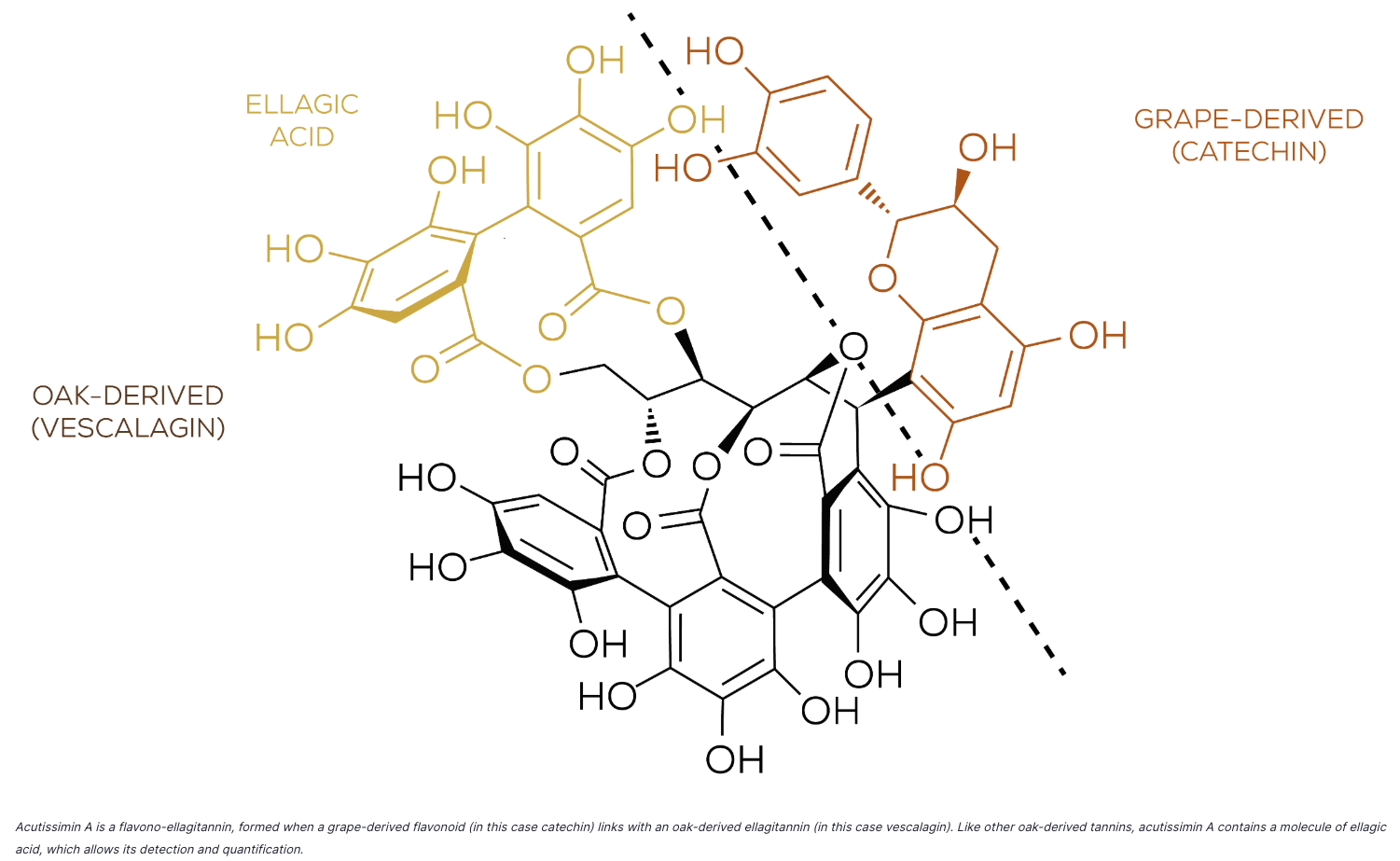
It is widely accepted that oak tannins can have a very significant influence on the tannic structure of wines. Besides their influence on mouthfeel, oak tannins are also antioxidants, and are viewed with renewed interest for their protective effect against wine oxidation. This hasn’t always been the case. Measuring tannins contributed by oak barrels (or barrel alternatives) is a challenging task. Analysis methods have consistently failed to adequately measure these compounds in wines, preventing both researchers and winemakers from fully understanding and assessing their impact. Why Do Oak Tannins Seem to Disappear in Wine? Oak tannins are ellagitannins, relatively complex molecules containing ellagic acid as a main building block. Ellagitannins belong to a class of tannins known as hydrolysable, due to the fact that they easily degrade in acidic aqueous solutions, like wine. Degradation by oxidation is also a cause of their decline in wine. For a long time, it could be ar
00