
Filter Post Type
NewsVideoProductEventLink
Sort:
Most Recent
1–9 of 9

March 24, 2026
WineAmerica: Embracing the Painful Necessity of Change
By Jim Trezise Wine is dying. The vital signs are alarming, the symptoms are clear, the causes are serious, and the prognosis is grim. The symptoms:
00

February 10, 2026

After 30 years of moving up and to the right, the American wine industry hit a wall. Not a temporary slowdown or a soft patch. A structural shift that requires a fundamentally different marketing playbook. 2025 was the reality check. 2026 is the year wineries either adapt or watch their customer base age out beneath them. The data is now unambiguous: wine sales dropped approximately 6% in 2024, marking the steepest decline in decades according to SipSource industry data. More troubling than the headline number is what's driving it. This isn't a recession blip or a bad vintage. It's a fundamental realignment of who drinks wine, how they buy it, and what they expect from the brands they choose. Here are the five trends reshaping the US wine market and what they mean for your brand's survival. The Demographic Disruption The wine industry built its growth on one generation: Baby Boomers. That generation is now aging out. The Wine Market Council's 2025 U.S. Consumer Ben
00


The wine club isn’t dying. It’s being rewritten. Wine clubs in 2026 still matter, but the way wineries build and grow them has fundamentally changed. What has changed is the lifestyle of the people in them. In 2026, the strongest force shaping wine club behavior is the Millennial generation — not because they are the only wine buyers, but because the way they live, spend, and subscribe has become the default expectation for everyone else. They are running households, hosting friends, raising families, managing busy schedules, and making more intentional purchasing decisions than any generation before them. That reality is quietly transforming what a wine club needs to be. Why lifestyle now matters more than allocations Wine clubs used to compete on bottles: how many, how rare, how discounted. That’s not how people experience wine anymore. Most members don’t think in terms of allocations or case sizes. They think in terms of how wine fits into their lives &
00


With Moisture-Loc, you can protect them from excessive heat and evaporation, ensuring they stay healthy and hydrated. Say goodbye to leaf burn and drying out.
00

Dirt, grease, grime – they’re sticky, smelly, even gross – and they have one job at your facility. To stay put and resist all attempts at cleaning. And you may be helping them to stay put! “Wait a sec!” you say. ‘We use pressure washers and floor scrubbers regularly.” Great! But if you don’t regularly maintain and service your equipment, performance can steadily decline over time – and cost you. The result? Sub-standard cleaning that you may not even realize is happening until the cracks ooze dirt and your shoes stick or slip to the floors. Are you OK with that? Today, companies are working hard to save money, and that includes seeking to extend equipment life. But there comes a point where your machines need help – and ignoring it can cost you. Here are 8 critical warning signs that your cleaning equipment is failing to evict the dirt. Pressure washers – Warning Signs Did you know? Regular maintenance sig
00


It's not for the faint of heart Going no-till certainly has been picking up steam in recent years, and overall it’s a good thing. When I first got involved in viticulture back in 2010 I was living in Italy. Like a lot of Mediterranean viticultural areas, there was a tendency to disc everything all the time. If you didn’t have a barren wasteland with vines poking out of it, you weren’t a good farmer. Anything you couldn’t get to with a tractor you sprayed with herbicide. One of my first vineyard jobs in Italy was spraying glyphosate out of a backpack sprayer all spring. I felt like I was in the final scene of the Godfather! Minus the dying part. Herbicide: the new four-letter word Mentalities have shifted since then both in Europe and here in the states. All in all it’s a good shift. We’ve all seen places that have gone on for years and years using herbicide to a point where you don’t even need to spray it anymore because that soil is so d
00
September 1, 2022
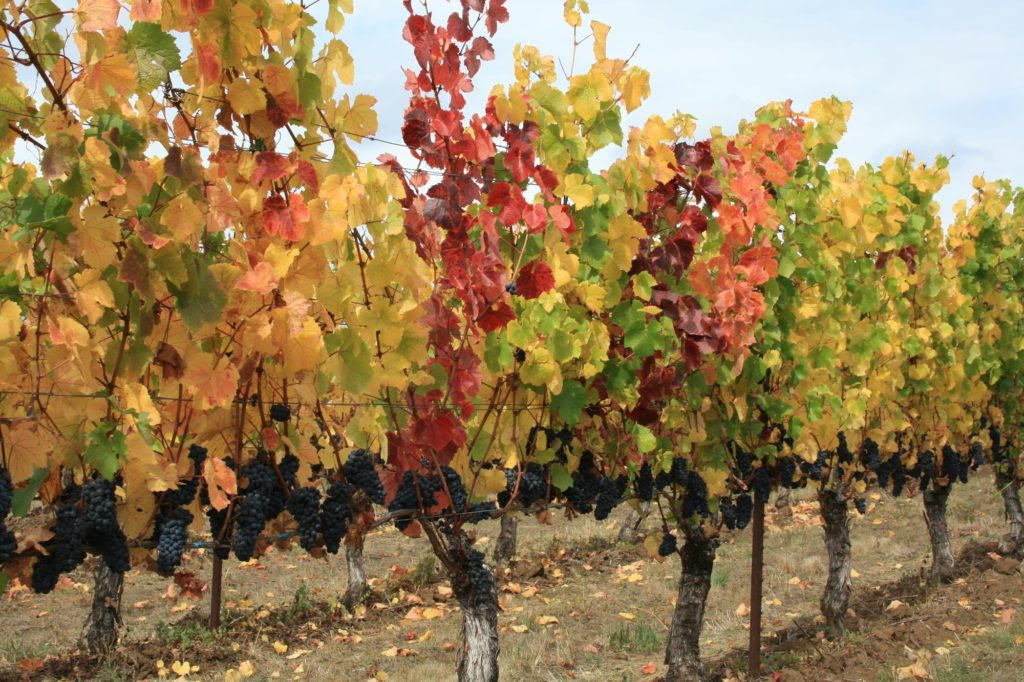
You know it’s harvest season when the winemakers emerge from their cavernous abodes and start making appearances in the vineyard. It’s a magical time, I mean, sometimes they bring donuts! But they also bring with them some funny ideas about irrigation methods, mostly that you make better wine by curtailing water in the weeks leading up to harvest. It’s a silly one-size-fits-all approach. Here’s why. Thou shalt not irrigate after veraison…why is this wrong? I’m not sure the logic here, but I think this comes from some idea about “concentrating flavors” and not letting them get diluted by irrigation. It’s ironic given how much watering-back is done in California wineries. More than that though, it’s physiologically erroneous. At the start of sugar accumulation, the grape berry partially severs contact with the xylem almost exclusively allowing the influx of sucrose-laden sap from the phloem. Excess water is not going to blim
00

America’s workers are more stressed than ever, and an increasing number of people are also struggling with mental health issues. Sadly, the number of people dying from drugs, alcohol, and suicide hit record levels in 2019. When someone is battling addiction or has mental health issues, it affects all aspects of their life, including work. Stress can have a significant adverse impact on business. It costs employers an average of $300 billion a year in stress-related health care and missed work, according to a Harris Poll conducted for Purchasing Power. That’s why more employers are stepping up to provide their workers with benefits to support behavioral health and emotional wellbeing. Employee assistance programs Employee assistance programs (EAPs) offer a set amount of free therapy sessions, typically topping out at five to eight per year. But for many people who are experiencing mental health issues, this may not be enough. Some employers are offering EAPs that cover a h
00

June 9, 2020

If you want to grow a luxury wine brand, marketing to more affluent customers can be a winning strategy. Affluent customers-- or, if you prefer, “high net worth” customers-- have the disposable income to spend on luxury items (like wine) and enjoy exploring new brands.
The key to marketing to this demographic is changing your perceptions of what the affluent are like. What do you picture when you hear the word “affluent”? An older couple, sitting in the back of a limousine, drinking champagne and talking about their place in the Hamptons?
No doubt those people exist, but the face of affluence has changed dramatically in recent years. They can be of any generation--large numbers of the affluent are millennial or Generation Z. They are into social causes more than conspicuous consumption. And they are very tech savvy.
All this means that the playbook that worked 10 or 20 years ago needs to be tossed and replaced with something different. He
00