
Filter Post Type
NewsVideoProductEventLink
Sort:
Most Recent
Tagged:drought
1–10 of 15
February 27, 2024
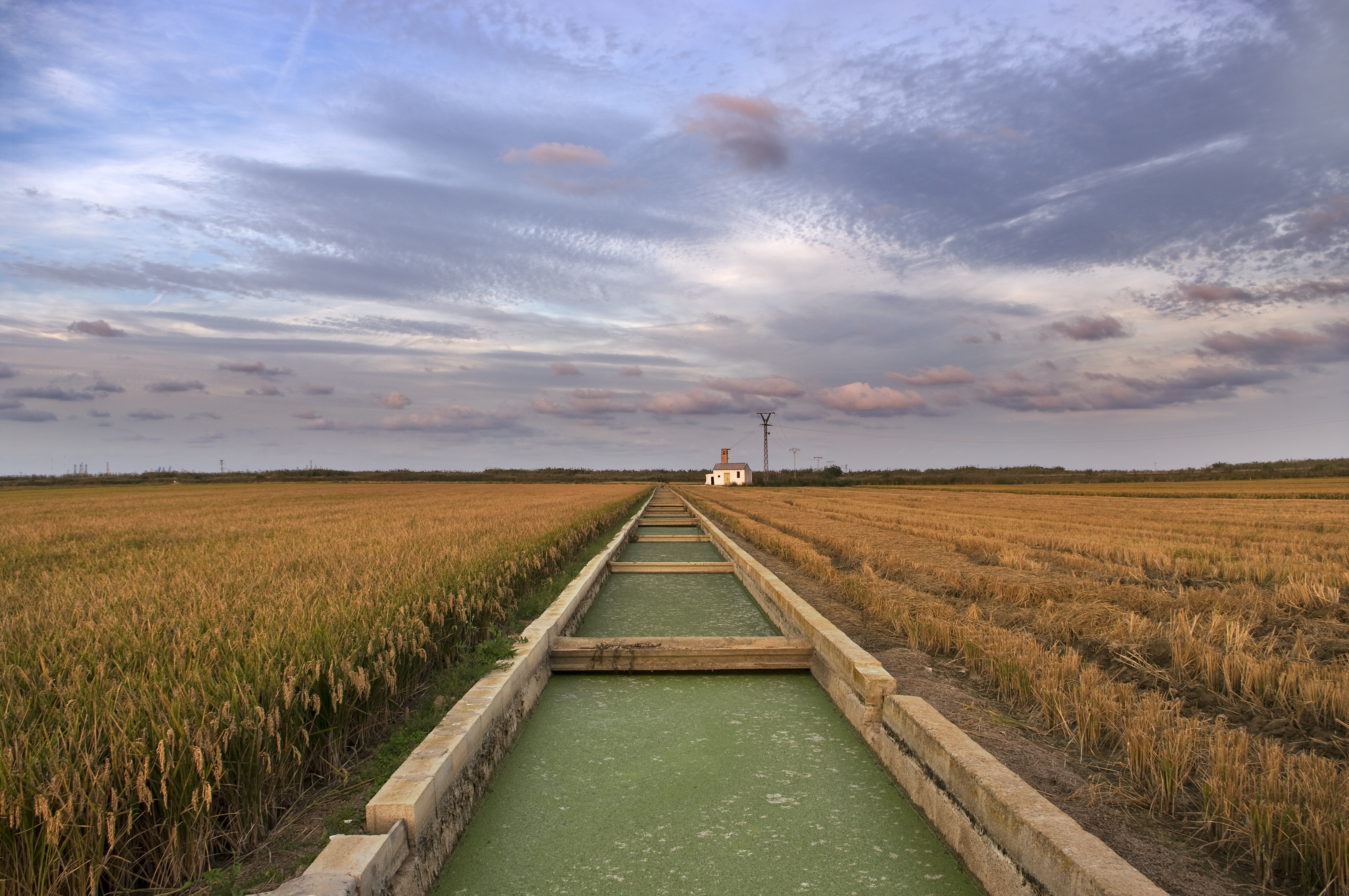
I recently had the opportunity to sit down with Timothy Parker of Parker Groundwater Consulting in Sacramento, CA. Loni Lyttle: So, I wanted to talk to you today about groundwater recharge. California, along with the rest of the western United States has been in a long drought and is facing serious issues with groundwater depletion not to mention subsidence, where the land is actually sinking due to overdrafting the aquifer. But then we get these two wet years in 2023 and 2024 (so far) with above average rainfall. I think this lulls people into a sense of security about California’s water situation and I’m not sure it’s that simple. I’m not a hydrogeologist so I wanted to get in touch with someone who knows more on the subject. Tim Parker: You are right – the surface water reservoir drought is over but our groundwater reservoirs are still in drought conditions. So there’s a lot of recharge going on and we don’t always know how
00
February 7, 2023
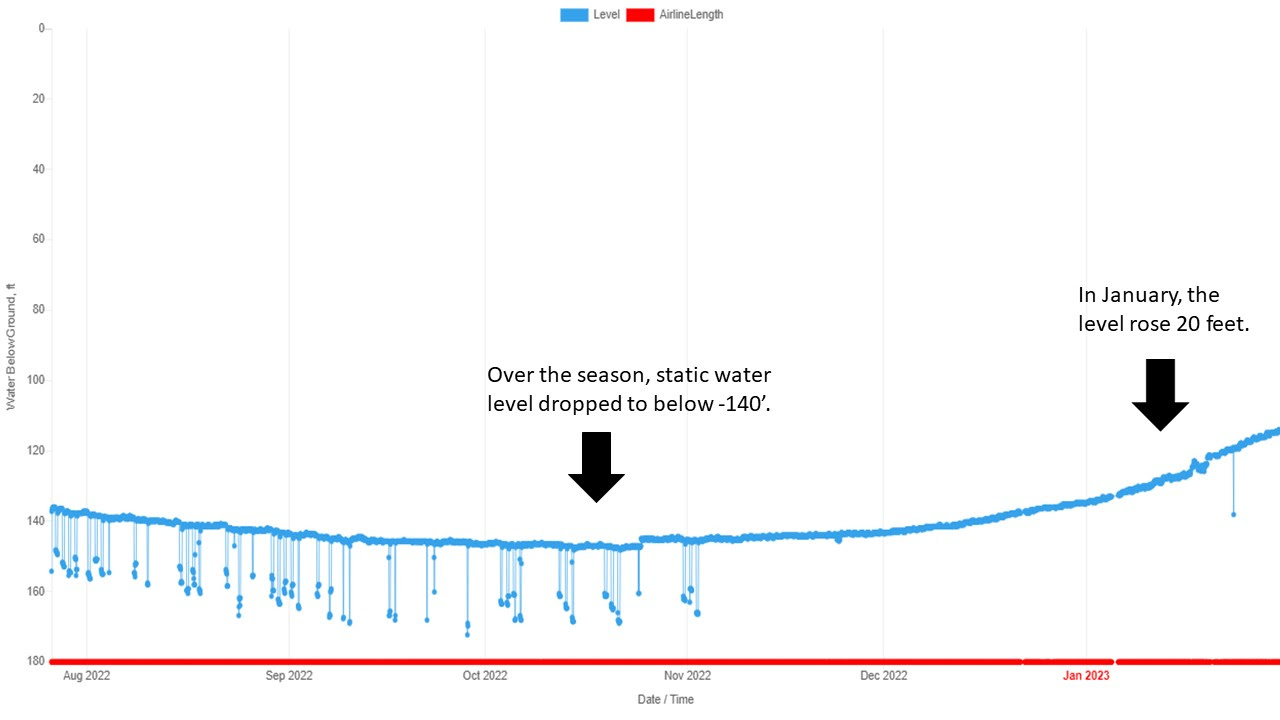
California was hit by some torrential rain in January. In our last post, we explored how that rain had affected soil moisture. In some cases, the water percolated right through and left the soil dry again. In other cases, the rain filled the soil to field capacity. It all depends on the soil’s water holding capacity. The rain we get now probably won’t have much of an effect on the coming season. By the time we get shoots pushing, even heavier soils will most likely need some water. That is assuming we don’t get some rain in the early Spring, when it really matters. Heavy rains can fill ponds as well as underground reserves of water. That’s where winter rain becomes important. Soil moisture in the early part of the season helps establish a canopy. At some point though, you may need to irrigate. It’s hard to do that if you don’t have any water. Last year Advanced Viticulture started an exciting partnership with The Well Bubbler. This device measures we
00

In this exclusive by CNBC, Lumo is featured as one of the promising startups that's tackling water scarcity through it's smart irrigation technology. This video has been cut and edited using footage from the original video, which can be found here - https://www.cnbc.com/video/2022/09/22 To learn more about Lumo's smart irrigation technology, visit www.lumo.ag.
00
This month, Congress (barely) passed the Inflation Reduction Act, known colloquially as "The Climate Bill." This bill puts an unprecedented $369 billion towards reducing carbon emissions and investing in domestic energy production and manufacturing. A big slice of this is ear-marked for agriculture. How much you ask? Let's see... $4 billion is included specifically for drought-assistance for the West and the Colorado River Basin via the Bureau of Reclamation. $14 billion is going to support rural electric cooperatives' transition to cleaner energy and help farmers invest in renewable/more-efficient energy. This is the single largest investment in home-grown biofuels...ever. $5 billion is going to protect communities from wildfires and combat the climate crisis through climate-smart forestry. $25 million is going towards climate-smart ag and soil health innovations. Some of this can be a little nebulous, but one very clear point is that $20 billi
00
This week is supposed to be hot. Really hot. Any temperature over 105 degrees will cause damage and usually the surface of exposed fruit is 10-15 degrees F hotter than ambient temperature. We’re probably going to see some of that this week. A loose canopy protects fruit better than a tight VSP. For those growers that got roasted in June of 2021, it’s déjà vu all over again. The earlier in the season that heat damage hits, the worse it is. There’s the obvious fried fruit, but last year we saw damage to vascular tissue in the rachis as well as possible enzyme degradation that affected ripening for the rest of the season. The typical response we see from growers is to lay on the irrigation. That’s fine…but it probably isn’t going to help you that much. Having ample water in the soil will allow the canopy to transpire better and cool itself down, but it will do little to save this year’s crop. Berries just don't transpire mu
00
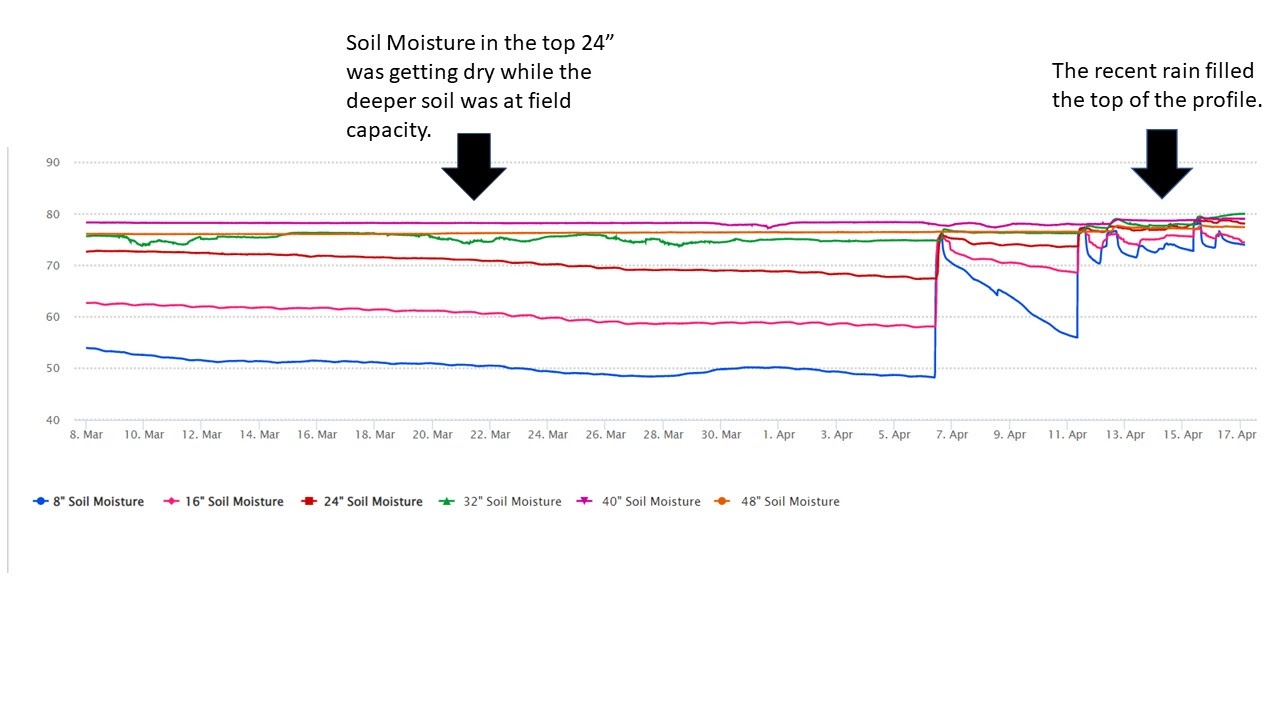
So, it rained...But what does this mean for my soil moisture? Is my profile full or did this recent rainstorm barely make a dent? That depends on a lot of factors. Here at AV, we love our data. Let’s take a look at some of it! Here's a site we monitor in the Alexander Valley. Below we see soil moisture percentage graphed out at varying depth levels. The top of the soil was getting dry, but thanks to the rain, the whole profile is full now. Now let's take a look at the soil moisture percentage of a different site. This location has a very light-textured soil. A closer look at the recent rain reveals that the rainwater has already redistributed into the deeper soil. It won't be long before this site needs another irrigation. Knowledge is power. Some vineyards hold water better than others. Which case is yours? A soil moisture probe will tell you a lot about how much water you have, where it is, and how easy is it for your vines to access it. Want to see f
00
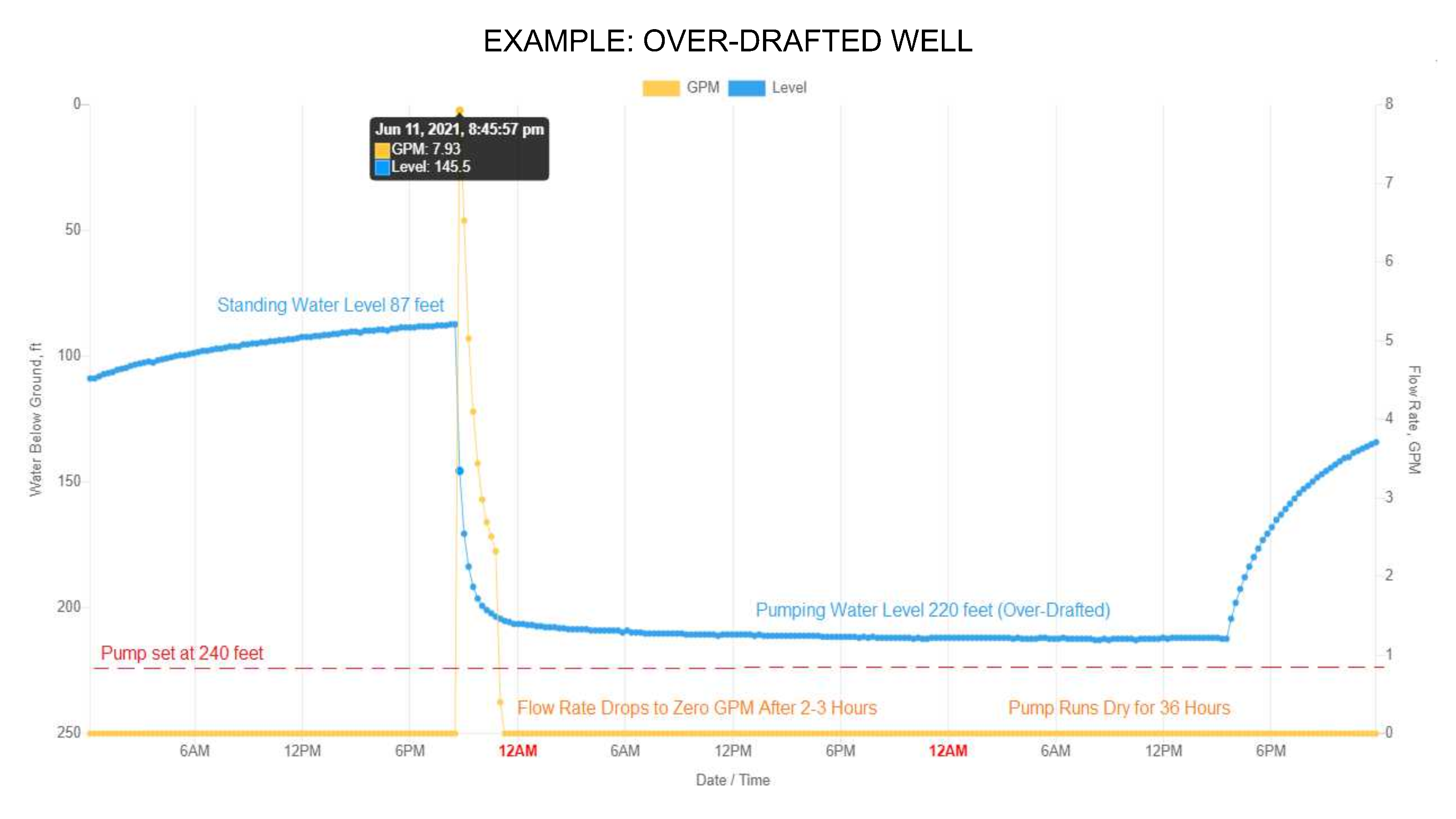
We're looking at another dry year ahead. Monitoring your ground water is essential to ensure you make it through next season. Did you also know that running your pump with insufficient water can severely damage the pump and possibly melt your well casing?! You might not even know you're doing it. Take a look below at the readout from the Well Bubbler, AV's newest partner in well-monitoring and water management: The water in this well drops down to 240 feet and then sucks air for 36 hours! If the farmer continues to over-draft the well like this, he/she may need to make major repairs to his/her well...most likely in the middle of the growing season. The Well Bubbler allows you to set up alerts if your pump starts overdrafting the well, saving you costly repairs and prolonging the life of your pump. The Well Bubbler uses a flexible airline to cheaply and effectively monitor your well. There's no risk of clogging your pump with a metal transducer and less
00
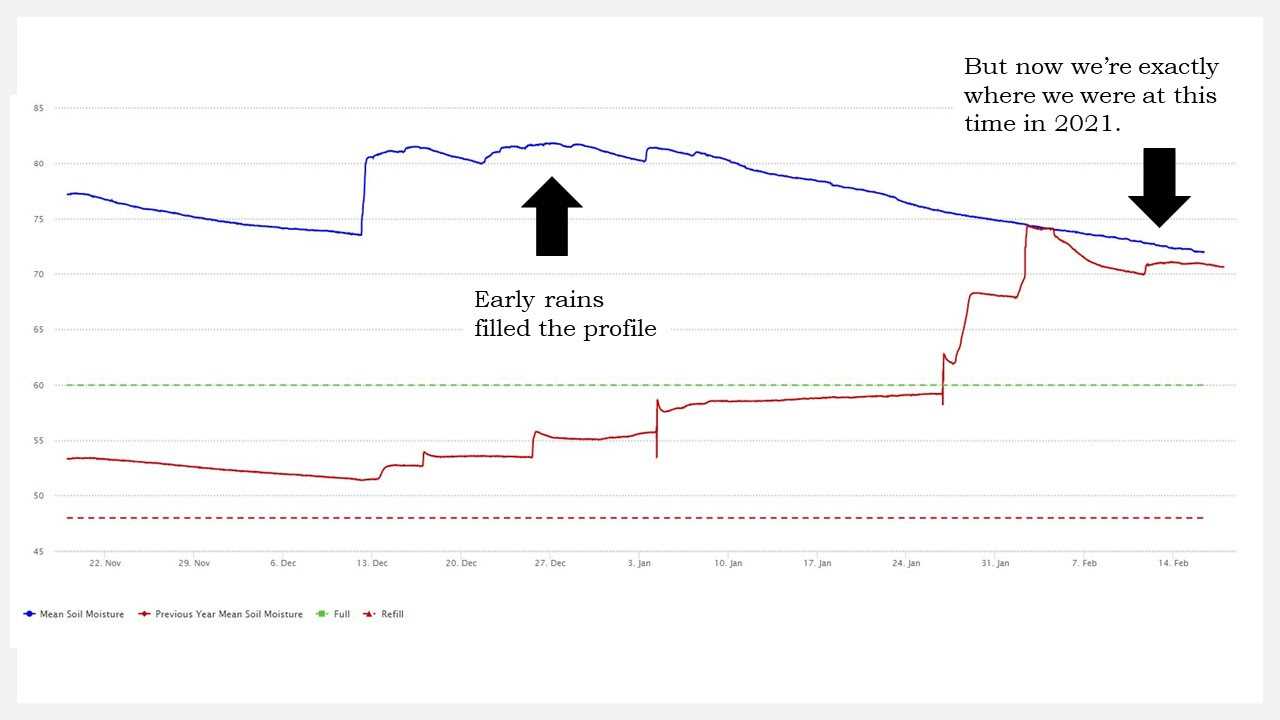
Things certainly were looking up a few months ago. Harvest ended. Nothing in Sonoma or Napa caught fire. And we even got rain! A lot of it. Here in Windsor, we finished out 2021 just south of 20 inches of rain for the fall season. But then that was it. I may not have made it through dry January, but the weather did. Now we’re looking at a February that’s just as temperate. Roll the footage… We love our soil probes here at AV, so let’s take a look at how this year stacks up against its parched predecessor. Below is a Napa site. Now keep in mind, we had some rain in February of 2021, but as you can see the moisture reserves that we accumulated in the fall have left us exactly where we were last year, and that’s not a comforting place to be… Ditto in the Russian River Valley… So is 2022 going to be just as hard? Yes and no. One of the major problems last year was running out of water. If you use surface water-fed ponds, the early rains w
00
FEBRUARY 2, 2022 | INDUSTRY NEWS & OUTLOOKS | MATT CLARK, SENIOR INDUSTRY ANALYST AND KALYN WALSH, CREDIT COMPLIANCE ANALYST, AMERICAN AGCREDIT In 2021, the wine industry began to recover from an unusual and challenging year in 2020. Wine sales sharply improved from the previous year, when pandemic-related restaurant and bar closures spurred a precipitous decline in wineries’ sales at restaurants and tasting rooms. Wine sales improved around 10 percent in 2021, according to Wines Vines Analytics and bw166, and analysts expect demand for wine to remain healthy in 2022. Overall demand for wine grapes has improved, driven by a limited reopening of tourism, restaurant and event traffic. Many expect to see modest improvements in wine sales and grape values in 2022. Rising input prices from supply chain disruptions, labor shortages, drought, and general inflation may narrow margins for some operators. As the economy was reopened in a limited fashion, wine sales bega
00
December 6, 2021
The three GSA Boards (Groundwater sustainability agencies) will hold public hearings to review and consider adoption of Groundwater Sustainability Plans on the following dates and times: Sonoma Valley Monday, December 6. The public hearing will begin no earlier than 4:15 p.m. The meeting will be held virtually, via Zoom at https://scwa-ca-gov.zoom.us/j/87939906214?pwd=QXRiRmVtMEFvWjl5cm42VUNkbkpXUT09 Go to https://sonomavalleygroundwater.org to review the GSP and for meeting agenda and materials. Petaluma Valley Wednesday, December 8 The public hearing will begin no earlier than 5:45 p.m. The meeting will be held virtually, via Zoom at https://scwa-ca-gov.zoom.us/j/82780290360?pwd=SVl4Q2hQSWJiTndXeUNZM3FVREYzUT09 Go to https://petalumavalleygroundwater.org to review the GSP and for meeting agenda and materials. Santa Rosa Plain Thursday, December 9 The public hearing will begin no earlier than 1;15 p.m. The meeting will be held virtually, https://us02web.zoom.us/j/8333541972
00