
Filter Post Type
NewsVideoProductEventLink
Sort:
Most Recent
1–2 of 2

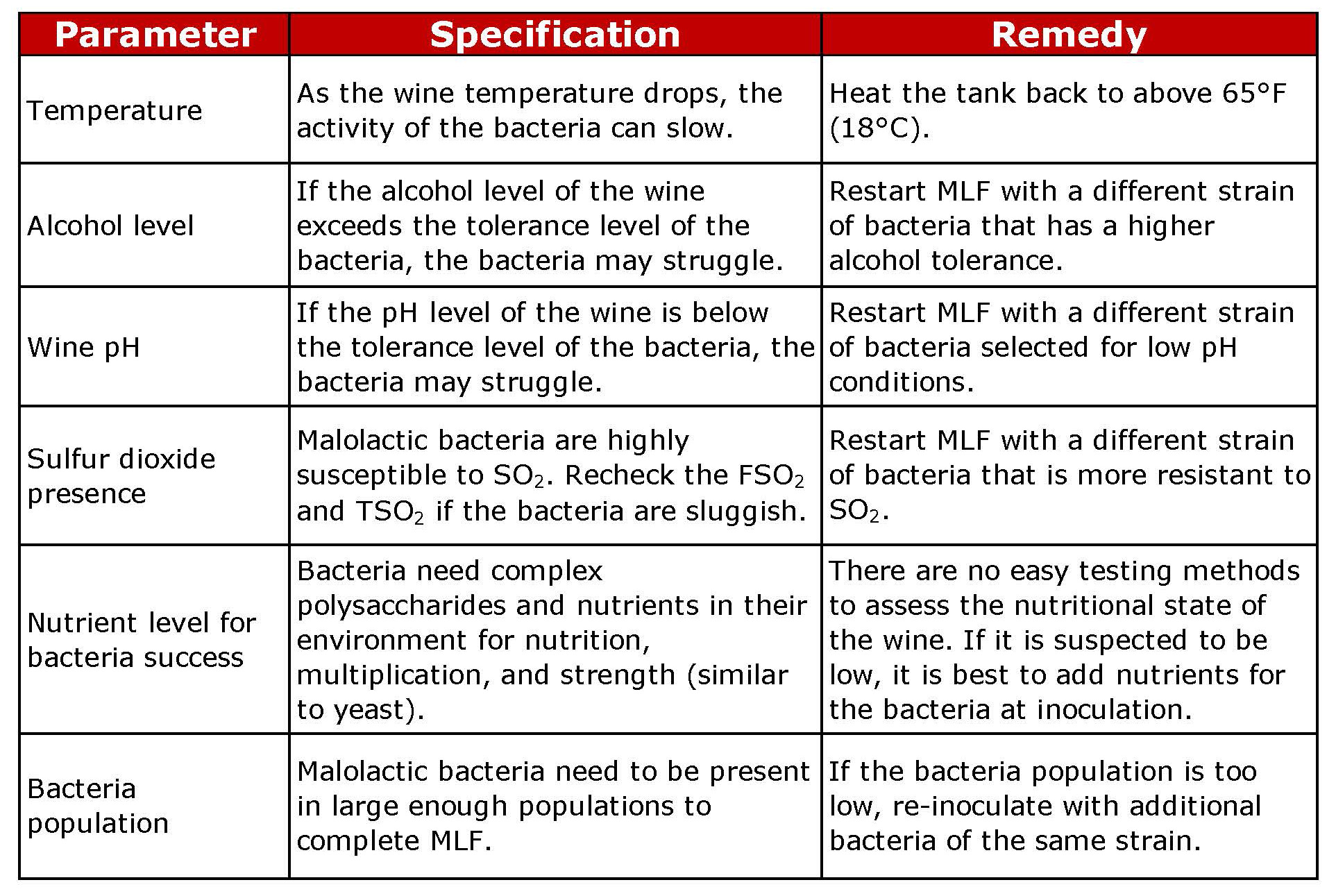
Malolactic fermentation (MLF) is a secondary bacterial fermentation that converts malic acid into lactic acid in wine. It is a common step in winemaking and is necessary for some wine styles. This process creates aroma and flavor compounds and reduces the acidity of the wine, which increases the roundness of the mouthfeel. MLF can occur naturally during or after primary fermentation or can be induced by inoculating the wine with a selected bacterial strain. It is much slower and less turbulent than primary (alcoholic) fermentation; taking weeks, even months, to complete, and truly testing the patience of an enologist. The fermentation is complete when malic acid levels are measured below 0.1 g/L. Recommended practices for a successful MLF: For easier acclimatization, keep the wine below 15% alcohol and above pH 3.1. Consult the recommendations for your selected strain of bacteria for specific parameters. Maintain a temperature between 63–77°F (17–25°C) to acti
00

September 6, 2022
Wineries are busy, and no time is busier than harvest. A typical year is always a scramble, but labor shortages, pandemic restrictions, wildfires, and climate change forcing an early crush can accelerate that into a mad dash. As a result, any way to save time is appreciated. One shortcut some winemakers use is throwing dry yeast into the juice without rehydrating it (directly inoculating). It sounds innocent enough and checks a to-do item off their list faster than the hour or so it takes to rehydrate yeast. But winemakers may not realize that this technique may result in a fermentation that takes several days to start or becomes sluggish/stuck. So, they could be saving an hour only to lose days. This technique may also diminish the wine’s aromatic expression, resulting in a less fruity and flavorful wine. For example, Sauvignon blanc requires the action of yeasts during fermentation to convert the precursors in grapes to the thiols that produce the wine’s typical tropical
00