
Filter Post Type
NewsVideoProductEventLink
Sort:
Most Recent
Tagged:crush pad
1–6 of 6

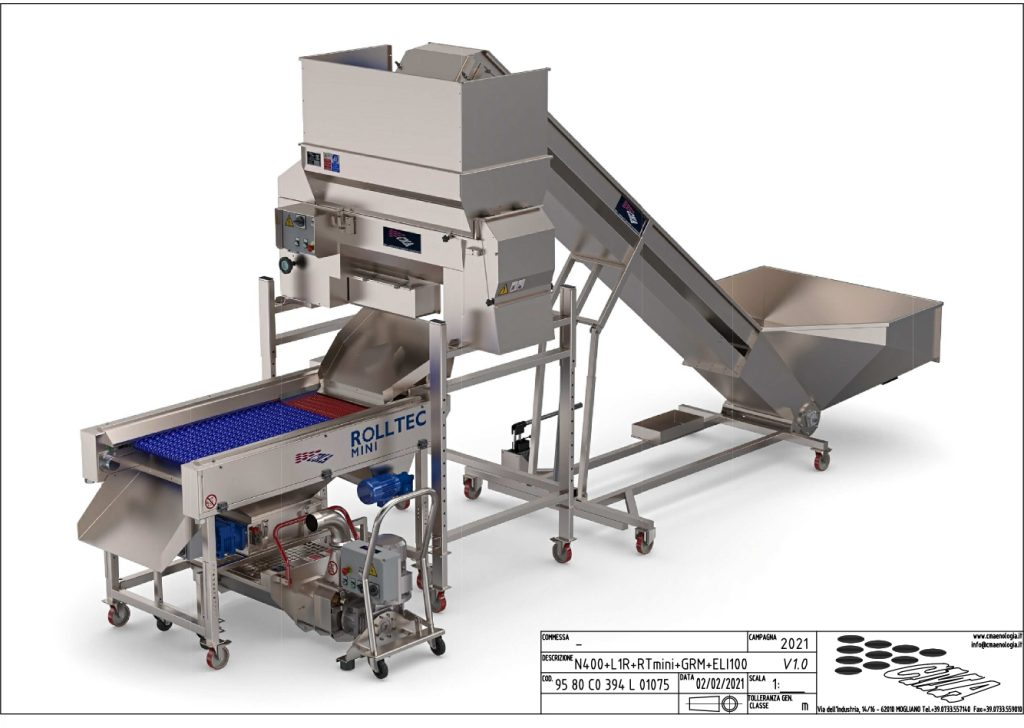
Harvest season is when everything happens at once—and the equipment you rely on needs to do more than just keep up. For small and mid-sized wineries producing between 2,000 and 20,000 cases annually, efficiency and flexibility are essential. Whether you’re dealing with hand- picked grapes, machine harvested fruit, varying varietals, or tight crush pad space, your destemmer-crusher needs to deliver quality results without slowing you down or locking you into a rigid setup. That’s where the right equipment makes all the difference. You need something that’s not just capable—but configurable. Not just powerful—but versatile. A Crush Pad Essential: Meet the Lugana 1R At Prospero Equipment Corp., we’ve been supporting wineries for over 50 years, and we know how important the right tools are for maintaining wine quality from grape to glass. We also know how important productivity and efficiency is in the crunch-time of harvest season; that’s wh
00
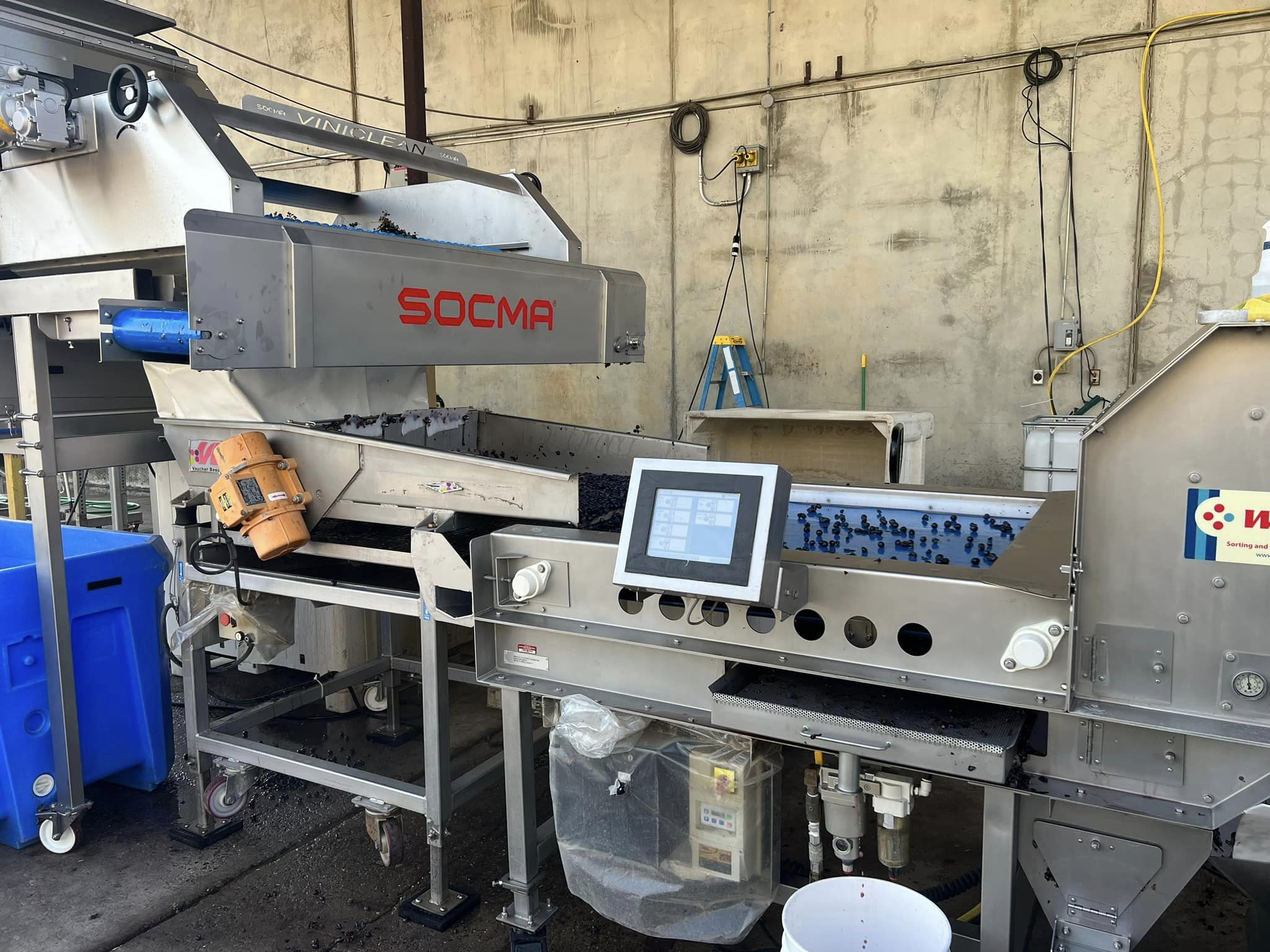
WECO is proud to introduce our new crush pad solutions from SOCMA! We will be doing demos all harvest and would love to show you what we can do with our new elevators, de-Stemmers, shaker equipment, etc.. SOCMA receiving equipment, plus WECO Sorting = Caviar going into tank
00

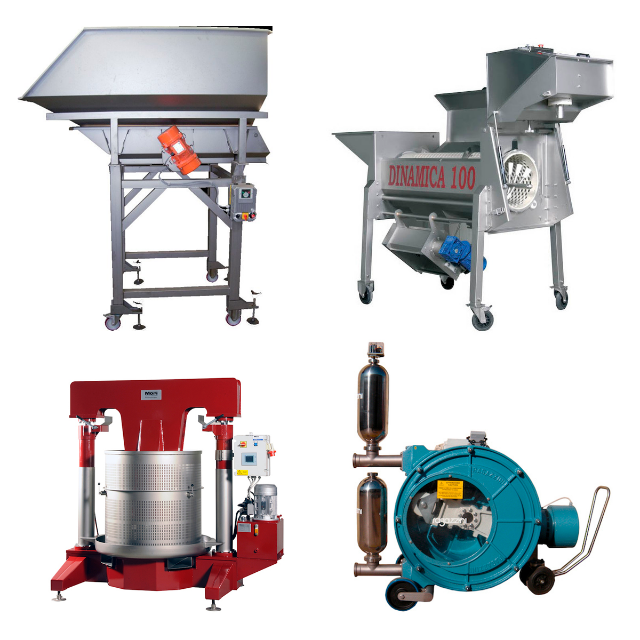
We will be on-hand at Unified, booth A1 to discuss your winery & crush pad plans for harvest 2023 and beyond. We will showcase the Sraml Membrane Press, Mori Basket Press, Ragazzini Peristaltic Pump, and our semi-automatic bottling line, among other things. Representatives from many of our trusted manufacturing partners will be in our booth to answer your questions as well. You can talk to folks from Graver (Membrane Filtration), Sandpiper (Air Diaphragm Pumps), Mori (Presses & Crush Pad Equipment), and Ragazzini (Peristaltic Pumps).
00
March 7, 2022

Santa Rosa, CA: TCW Equipment is pleased to announce its partnership with PROTEC equipment, the unequivocal leader in optical sorting technology. Protec produces innovative products for the food, wine-growing, seafood and agricultural sectors. This alliance was established to collaborate on improving the U.S. based representation and service to the wine industry for PROTEC’s line of optical products. PROTEC’s optical sorters utilize entirely novel computer vision methods not available in any other machine on the market. The result is fruit that is more cleanly and effectively processed than with competitive optical sorters. In truth, there is no competition. Optical sorting provides incredible benefits to winemakers that can't be matched with manual sorting. While some traditionalists initially sniffed at the concept of computers sorting grapes, those same purists have been won over the huge advantages optical sorting offers: greatly reduced labor costs, increased
00
In Part One of our guide to building a crush pad we looked at receiving and processing grapes for fermentation or pressing. Let's now take a look at presses. The question of basket vs. membrane press comes up frequently, so let's address it upfront. Basket vs. Pneumatic Membrane Presses Since we're focusing on crush pads processing anywhere from 3 to 20+ tons per hour of grapes, we'll look at the two most popular options for crush pads of this size: basket and pneumatic membrane presses. Basket Presses For a deeper dive you can check out our Guide to Basket Presses. But as a general overview, basket presses have a "platen" (large flat plate) that is connected to one or more hydraulic pistons. The pistons push the platen down slowly until it reaches the grapes held in a cylindrical basket. These hydraulic pistons are capable of generating tens of thousands of pounds of force. As this force reaches the grapes and is distributed over the surface of the
00

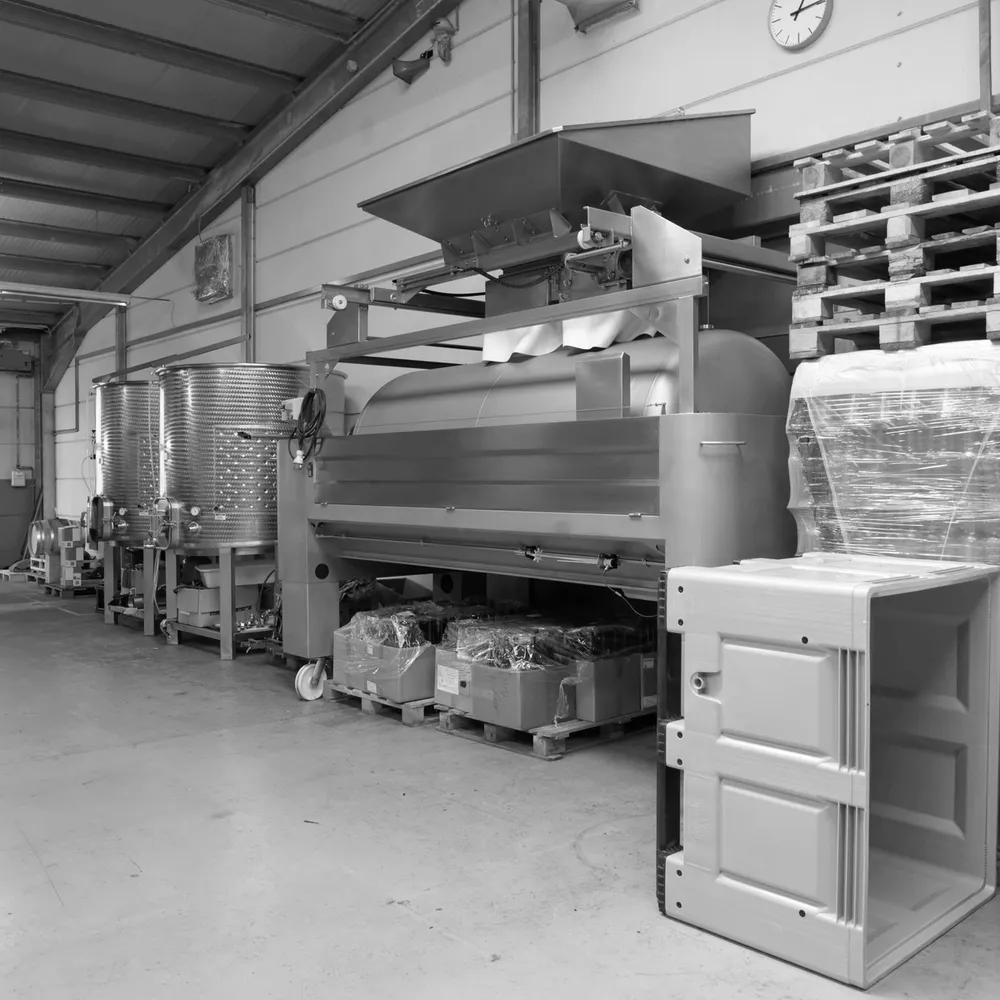
Building a crush pad to commercially process wine grapes at scale may be daunting. Luckily we've been doing it for years, and we have a few tips. Here are some ways you can use equipment to make harvest something to look forward to, not fear. This is a two-part series. In part one we'll take a look at everything up to the press. In part two, we'll take a deeper dive into presses. Step One: Receiving Grapes The first thing to consider is how you'll be receiving grapes, and how you'll be feeding the grapes into your processing equipment. In the US, grapes are typically moved in bins—they're referred to as macro bins, T-bins, or just plain old "bins". Given that bins are the most common way to receive grapes, they are also the most common way to load them into and out of crush pad equipment. This being the case, a forklift-mounted bin dumper tends to be a pretty crucial piece of equipment. You'll want to talk to a forklift sales company about t
10