
Filter Post Type
Sort:
Most Recent
110 of 56
vinSUITE’s New vinSIGHT Helps Wineries Predict and Prevent Lost Sales
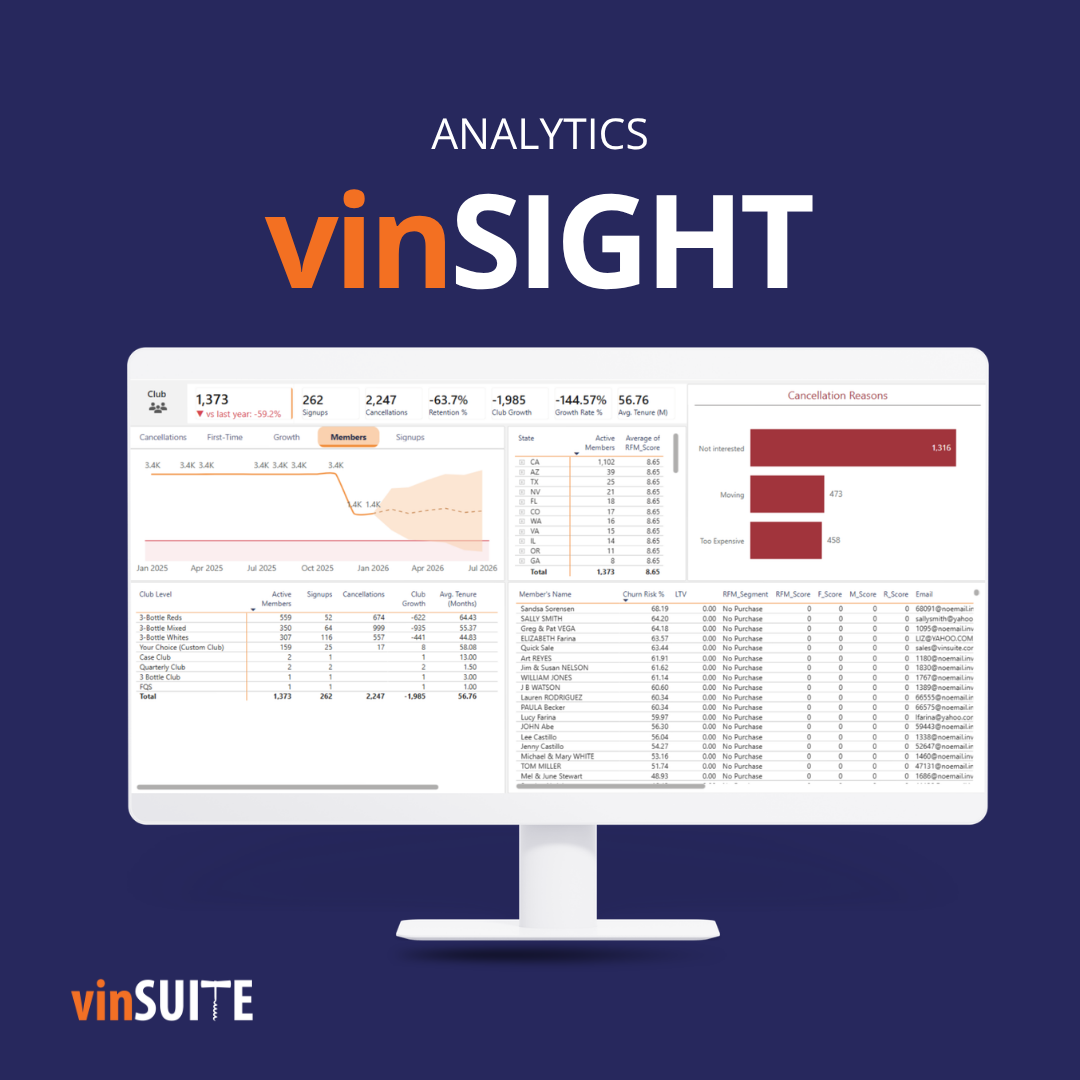
Combating declining consumption and tasting room visits is the current pressing priority for small and medium-sized wineries whose primary source of revenue has been direct-to-consumer (DtC) sales. Waiting for the situation to change is no longer an option. Instead, wineries are turning to their existing customers to maximize short-term revenue and draw in new customers to rebuild their base.  This task can seem daunting, but wineries with the vinSUITE integrated DtC software platform have a powerful new tool at hand. The recently released vinSIGHT transforms the sales data automatically collected by vinSUITE into actionable insights. This new predictive analytical platform analyzes the winery’s historical customer behavior patterns and predicts wine club churn with up to 94% confidence, enabling wineries to prevent revenue loss before members cancel. Jimmy Wu, vinSUITE’s President, explains: “By the time wine club churn shows up in standard reports, that revenue is already l
00
The Wine Club Retention Crisis
Why Wine Clubs Aren’t Working, And What’s Replacing Them For many wineries, the biggest challenge today isn’t attracting new customers; it’s keeping the ones they already have. Wine clubs once represented the most stable revenue engine for wineries. Members signed up, shipments went out quarterly, and predictable revenue flowed in. It was the foundation of direct-to-consumer success. But that foundation is cracking. Recent industry data reveals a troubling trend: nearly 40% of wine club members cancel within the first year. In a market where customer acquisition costs are climbing, and competition for attention has never been fiercer, losing members at this rate isn’t just a retention problem; it’s a profitability crisis. The math is unforgiving. If acquiring a new club member costs hundreds of dollars in marketing, tasting room labor, and incentives, losing them before they’ve generated meaningful lifetime value means wineries are bleeding money with every signup. And yet, some winer
00

Wine Club Scorecard

For Winery Owners, GMs & Wine Club Managers


Your Wine Club Deserves Better Than a Best Guess


Talk to enough wine club managers and a pattern starts to emerge. The club is running. Shipments are going out. Members are renewing, mostly. And yet there is this persistent, low-grade frustration that things could be doing so much more, and nobody can quite agree on what better actually looks like or where to start.


That is not a people problem. It is not even really a strategy problem. It is what happens when you are managing something genuinely complex without a clear baseline to work from.


Wine clubs are one of the most valuable revenue channels a winery can have. Done well, they create reliable recurring income, deepen customer loyalty, and turn occasional buyers into genuine advocates. But they are also difficult to manage well. You are balancing member experience, logistics, pricing, retention, acquisition, and brand storytelling all at once. And most teams are doing it without any real benchmark for how they are performing relative to what is possible.


You fix what is loudest, not necessarily what matters most.

So decisions get made on feel. Churn ticks up and the instinct is to throw a discount at it. Acquisition slows and suddenly everyone is debating whether to restructure the club tiers. Revenue per shipment plateaus and nobody is quite sure if that is a pricing issue, a product issue, or just the market.


What the best clubs do differently

The wineries that run their clubs well tend to have one thing in common: they have taken the time to actually understand where they stand. Not in a vague, gut-check kind of way, but specifically. They know their retention rate and what is driving it. They know which member segments are most valuable and why. They know where their acquisition funnel leaks and what a realistic cost per new member should look like. That clarity changes how they make decisions.

Most clubs do not have that clarity. Not because the people running them are not capable, but because nobody ever gave them a framework to build it from. That is the gap the Wine Club Scorecard was designed to fill.


What you actually get

The Wine Club Scorecard is a free assessment built specifically for winery owners, GMs, and wine club managers who want an honest read on how their club is performing. It covers the areas that actually drive club health: member retention, acquisition strategy, engagement, revenue per shipment, and overall club structure.


You answer a series of questions about how your club operates today, and what comes back is a genuine report with benchmarks, clear data on where you stand, and specific steps you can take to improve. Whether your club has 200 members or 2,000, the output is the same: real information you can act on.


The whole thing takes about five minutes. And the conversations it tends to start, with your team, with ownership, with whoever makes decisions about where to invest, are usually long overdue.


If you have had that nagging sense that your club is running but not quite performing, this is a good place to start. Not because it will hand you a magic fix, but because you cannot fix what you have not clearly identified. A lot of wine clubs are leaving real money and real member relationships on the table, not out of negligence, but simply because no one has stepped back to look at the full picture.


Now is a good time to look.

Free report. Benchmarked data. Clear next steps. Takes five minutes.

Take the Free Scorecard wineclubscorecard.com


© 2026 WineClubScorecard.com  ·  Built for the wine industry.

00
What’s Driving Winery Growth in Today’s Market?
From hospitality-driven visitation to loyalty and strategic partnerships, the Wine Sales Symposium explores where revenue growth is coming from now The path to winery growth looks different than it did even a few years ago. Today’s most successful wineries are not relying on a single channel or a single tactic. Instead, they are building growth through a combination of stronger customer experiences, deeper retention strategies, and brand partnerships that extend reach beyond traditional wine audiences. At this year’s Wine Sales Symposium, several sessions will explore how these shifts are reshaping sales and marketing strategies across the industry. One of the most important changes is happening in hospitality and visitation. Consumers—especially Millennials and Gen Z—are increasingly choosing experiences that feel personal, memorable, and aligned with their identity. For wineries, that means visitation is no longer simply about tasting wine; it’s about de
00
Why Visual Content Is No Longer Optional for Wineries
Your next customer will see your winery before they ever taste your wine. They'll see it on Instagram while planning a weekend trip. They'll see it on your website while deciding whether to book a reservation. They'll see it in an email while considering whether your wine club is worth joining. And in every one of those moments, they're making a decision based on what your visuals tell them about who you are. This isn't a trend. It's how people buy now. According to a 2023 study by Cloudinary and Harris Poll, 75% of online shoppers say product photos are the most influential factor in their purchase decisions. That number holds across categories, and it holds in wine. The difference is that wineries aren't just selling a product. They're selling an experience, a place, a feeling. Which means your visual content has to do more work than a product shot on a white background. It has to make someone want to be there. Most wineries know this on some level. Fe
00
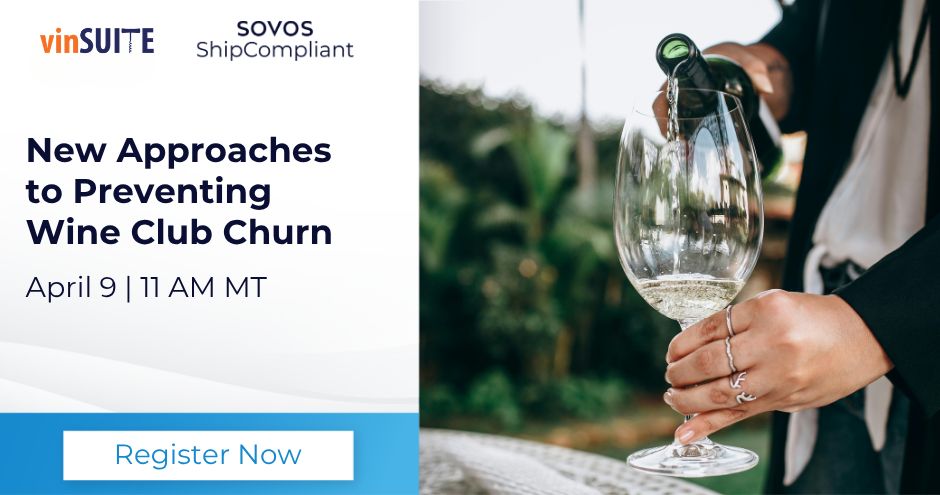
New Approaches to Preventing Wine Club Churn
Wine club churn has always been a challenge, but the stakes are even higher as the direct-to-consumer (DtC) wine shipping channel has entered a period of sustained contraction. With 2025 seeing the largest year-over-year declines in both DtC wine shipment volume and value — according to the 2026 Direct-to-Consumer Wine Shipping Report — the channel is smaller, more concentrated, and increasingly reliant on a pool of higher-end customers. Stabilizing revenue in this environment means wineries must be more focused than ever on retaining customers in your winery’s wine club. In practice, churn rarely begins with a cancellation request. It typically starts with subtle changes in behavior that are easy to overlook in standard reports. This webinar will discuss: What those signals are — where and how to look for them How early churn forecasting differs from traditional churn reporting Which member behaviors tend to signal increased churn risk before cancella
00
The Shopify Winery Stack Is Finally Complete
Five years ago, running a winery on Shopify meant duct-taping a lot of things together. Great for e-commerce. Okay for DTC. Difficult for wine clubs. Not really designed for tasting rooms. That's changed. The combination of Shopify's platform investments and a handful of wine-specific apps has created something genuinely new: a single operational stack that connects your tasting room, your wine club, your online store, and your loyalty program under one customer record. That convergence has real operational consequences — and it's why an increasing number of wineries are consolidating everything onto Shopify. Here's what's actually different. Your Card on File, Finally Done Right One very frustrating limitation of running a winery business on Shopify used to be simple: Shopify didn't let you vault a customer's payment card and charge it later for anything other than a subscription — not from your POS or your back office or sales team for one-tim
00
Build-a-Box Wine Clubs: Why Member Flexibility Drives Better Retention
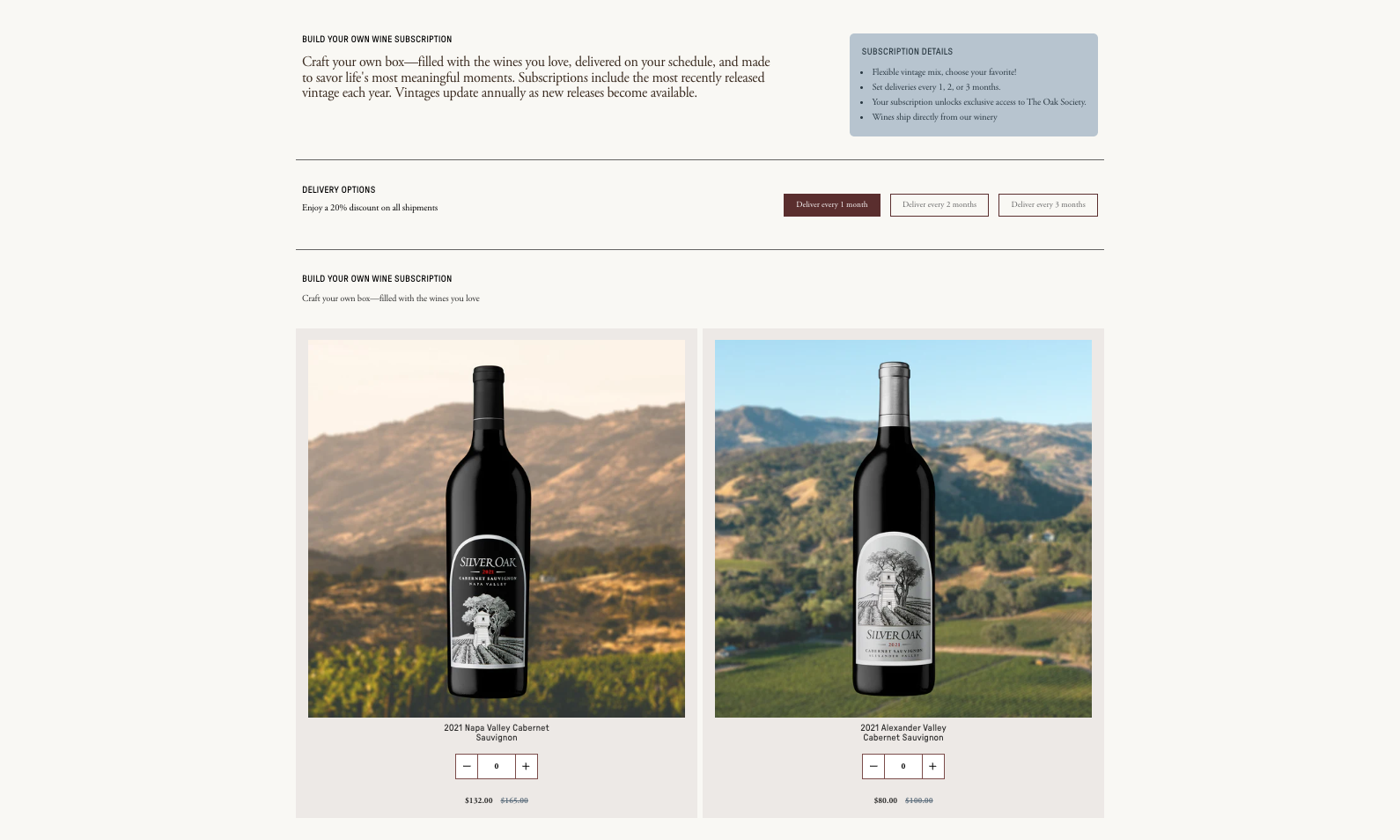
For a long time, the standard wine club model was simple: you pick the wines, you set the price, members sign up and receive what you ship them. Curated. Chef's kiss. Non-negotiable. That model still works — for the right clubs and the right member base. But the world has shifted. Members who joined in the past few years have been shaped by Amazon, Stitch Fix, and a dozen other subscription experiences that gave them control. They've come to expect customization as the default, not a premium. And the data backs this up. Wine clubs that offer member customization see measurably lower churn, higher average order values, and stronger long-term engagement. Not because flexibility is inherently better — but because it removes one of the most common reasons members leave. The Cancellation You Could Have Prevented When you look at why wine club members actually cancel, a consistent pattern appears: "I already have too much wine." "I don't dr
00
Best Wine Club Management Software for Wineries (2026 Quick Guide) Your wine club is likely your most predictable DTC revenue stream. Members buy on schedule. They purchase more outside of shipments. They refer friends. According to Silicon Valley Bank’s State of the U.S. Wine Industry Report, direct-to-consumer revenue, particularly wine clubs, remains one of the most controllable and margin-protective channels for wineries. Yet many wineries are still running their wine club: Manually Across disconnected systems On software not built for winery operations That friction quietly costs money every week. What Wine Club Software Should Actually Do in 2026 At minimum, your system should: 1. Increase retention Flexible club levels and shipment schedules Clear, automated member benefits Customization options that members value 2. Reduce revenue leakage Automated expired card updater Clean billing workflows Fewer manual errors 3. Speed up tasting room enrollment POS-connected s
00
2026 Wine Sales Symposium Registration Now Open
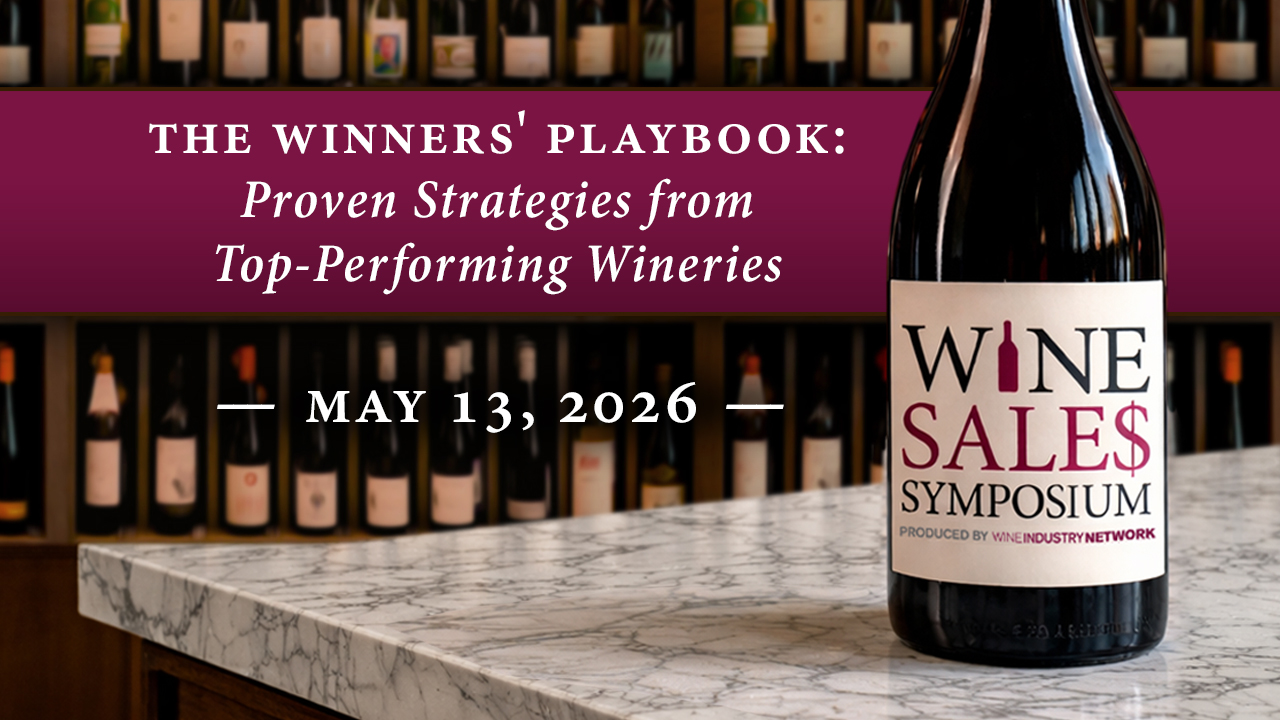
Join winery leaders and industry experts to explore the strategies shaping the future of wine sales. The wine industry is entering a period of significant change. Consumer behavior is shifting, visitation patterns are evolving, and the traditional paths to market are being redefined. To succeed in this environment, wineries must rethink how they attract customers, build lasting relationships, and grow their brands. The Wine Sales Symposium, taking place on Wednesday, May 13, brings together winery leaders and industry experts for a full day focused on the strategies shaping wine sales today and in the years ahead. This year’s program explores critical topics that will cover: • Hospitality Innovation: Reimagining tasting room experiences to attract Millennials and Gen Z through values-driven programming, experiential design, and strategic partnerships • Wine Club and Customer Retention: Data-driven approaches to reducing churn, building membership value,
00