
Filter Post Type
NewsVideoProductEventLink
Sort:
Most Recent
1–10 of 14

March 11, 2026
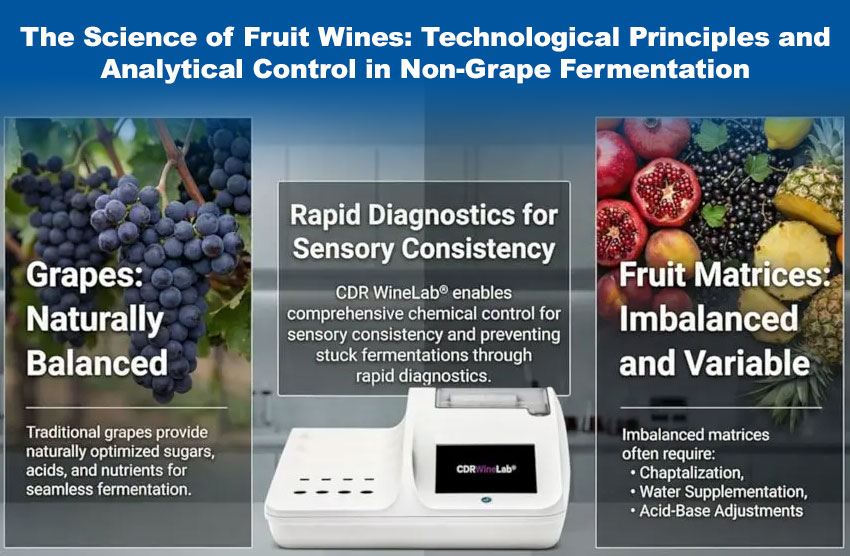
** CDR WineLab In-Stock - Immediate shipping available ** The Science of Fruit Wines: Technological Principles and Analytical Control in Non-Grape Fermentation Defining Fruit Wines: Chemical and Technological Distinctions In modern oenology, fruit wine production has transcended its origins as a rural craft to become a highly specialized sector of food science. The transition from artisanal production to a global industrial category relies on a deep-seated understanding of the unique chemical matrices presented by non-grape fruits. Unlike viticulture, where the raw material is often naturally optimized for fermentation, alternative fruit substrates—such as pomegranate, fig, and various berry species—exhibit diverse polyphenolic profiles and acid concentrations that demand precise technological interventions to ensure product stability and commercial viability. Fruit wines are characterized as non-distilled alcoholic beverages, typically containing 5% to 13% alcohol
00


Maintaining wine balance in a changing climate Climate change is reshaping the wine industry. In many wine regions, each year seems to set new records for the hottest or driest growing season, followed by the earliest harvest dates yet. Such accelerated ripening is disrupting grape physiology; phenolic and aromatic development fall out of sync, sugar levels soar, and acidity drops away (1). So how can we adapt and build a more resilient wine sector? The answer to this question is multifaceted. In the vineyards, grape growers are rethinking their management practices, adjusting canopy architecture, introducing shading or optimising irrigation (1,2). Some are reaching for higher altitudes or moving further from the equator in search of cooler conditions (1). Others are trialling alternative heat- and drought-tolerant varieties, from long-forgotten cultivars to newly bred plant material. In the cellars, winemakers may turn to pragmatic solutions such as dilution or blending strategi
00


Please join us for a free webinar hosted by Admeo, where we’ll explore two powerful tools, FLASH2 and EasyCheck automated analyzers. EasyCheck is an automated analyzer for tartaric and calcium stability FLASH2 is an automated titrator for pH, TA and SOâ‚‚ You’ll hear directly from: Ben Eyer, Product Specialist at Admeo Jacopo Rossi, Analytical Division Sales & Service Manager at Steroglass Together, they’ll share real-world examples about how these analyzers are transforming quality control in wineries across the globe by saving time and money, allowing you to make decisions about your wines quickly. Whether you're a winemaker, lab manager, or quality lead, this webinar will give you actionable insights into automating your workflow and creating efficiency with automation. Date: July 10 Time: 9:00am-10:00am PST Microsoft Teams: Click here to register now We look forward to having you join us!
00

Please join us for a free webinar hosted by Admeo, where we’ll explore two powerful tools, FLASH2 and EasyCheck automated analyzers. EasyCheck is an automated analyzer for tartaric and calcium stability FLASH2 is an automated titrator for pH, TA and SOâ‚‚ You’ll hear directly from: Ben Eyer, Product Specialist at Admeo Jacopo Rossi, Analytical Division Sales & Service Manager at Steroglass Together, they’ll share real-world examples about how these analyzers are transforming quality control in wineries across the globe by saving time and money, allowing you to make decisions about your wines quickly. Whether you're a winemaker, lab manager, or quality lead, this webinar will give you actionable insights into automating your workflow and creating efficiency with automation. Date: July 10 Time: 9:00am-10:00am PST Microsoft Teams: Click here to register now We look forward to having you join us!
00
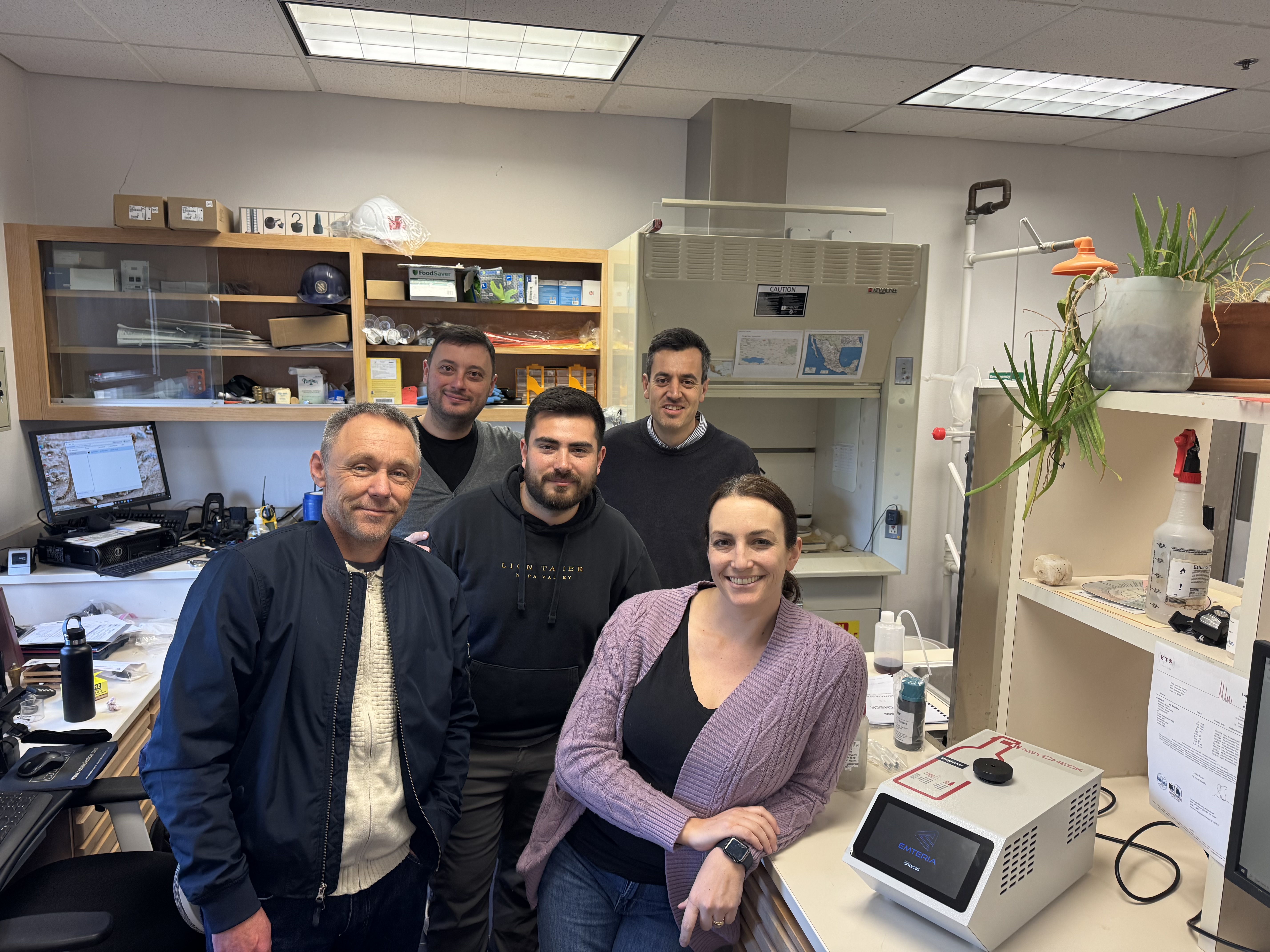
EasyCheck has found a wonderful home at Hess Persson Estates - congratulations on being the first EasyCheck installation in the US!🍷 It was awesome implementing cold and calcium stability in your winery's lab, Amanda Curley! We are thrilled to support your saving time and energy consumption with this Steroglass analyzer. Are you curious if automation would be useful for your lab? Please reach out, we would be happy to chat with you!
00

One of the joys of winemaking is mastering the process itself — gaining enough knowledge to tweak it to create signature wines. It takes years to reach this level of expertise, and those years are filled with experimentation. Many winemakers prefer to use precise measurements to guide their decision-making process. Winemakers monitor sulfite levels following fermentation, typically every 4‒8 weeks, to ensure sulfite levels remain constant until the wine is bottled. Unfortunately, taking measurements like these can be tedious when done manually, often taking 12‒15 minutes per sample. For a winery with 50‒70 lots, these checks could require an entire week of dedicated lab work each month. Visual assessment of the meniscus in a burette means that the resulting data can lean toward subjectivity. Most winemakers wouldn't dream of skipping these important measurements. Yet, the time needed to do them manually and the risk of inaccurate results are impediments to a streamlined pro
00
September 9, 2024
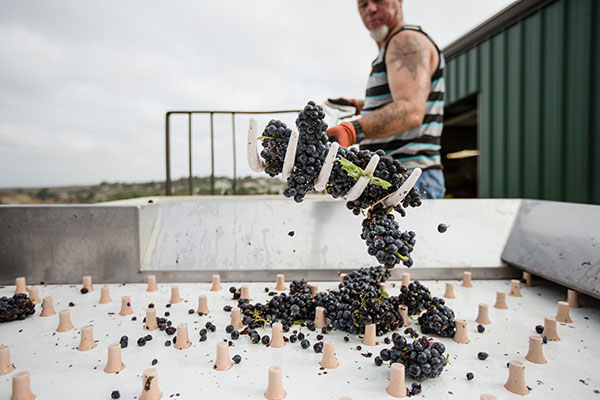
The 2024 wine grape harvest began on time in August, with Napa and Dry Creek Valleys starting in the first week and Livermore's white grape harvest beginning mid-month, two weeks earlier than last year. Other regions have also reported their season starts as the weather shifts from cool to hot, putting vineyard managers in a race against the clock to avoid sunburn damage. “With the California harvest well into picking what seems to be a beautiful harvest year, wineries are deeply into harvest preparation,” notes Eglantine Chauffour, the Director of Enology at Bucher Vaslin North America (B.V.N.A.). “By now, I’ve usually started hearing about specific challenges from our winemaker customers, but there have not been many this year beyond a few cases of sunburn. The harvest looks great, and when the vintage is perfect, as it's looking so far, we recommend a few things to optimize it.” A good time to think about replacing sulfur A successful vintage i
00

During a recent fining trial of a problematic wine that was fermented with a problematic yeast, the conversation briefly touched on protein stability and I started reminiscing about the very first blog that I wrote for Laffort South Africa. Said blog post (click here to read it) was about bentonite and its affinity for various proteins or the lack thereof. Bentonite – Jack of all trades, master of some Whether you love it or hate it, this bentonite stuff really is a very versatile oenological additive. For those that are a bit hazy (see what I did there) on the subject, here is a quick recap on what bentonite is and what it does. Bentonite, which is essentially a very useful negatively charged clay, is mainly composed of plates of silicon and aluminium oxide, along with calcium and sodium ions. Upon rehydration, the above-mentioned plates separate, thereby creating a huge surface area that allows the sodium and calcium ions to interact with positively charged heat unstable prote
00

March 13, 2023

American wineries are looking for ways to capture the attention and hearts of younger consumers. One key to success is to speak to these generations’ core values. For many wineries, that means making wines that are vegan, non-allergenic, organic, or sustainably made and packaged — or all of those things. Whichever combination they choose means changing how they grow grapes, make wines, and prepare and market them. Vineyards spend years revising their farming practices to gain certified organic designations. Winemakers switching to vegan wine must evaluate additives to ensure none were sourced from animals, birds, or fish. Seeking certification for organic, vegan, or sustainable wines demands viticulturists, winemakers, and bottlers to examine and often measure progress in every step of their process. They must consider water and energy usage, carbon footprint, and packaging alternatives like lighter bottles or flat, stackable cartons. They have to ensure workers are treated
00

August 22, 2022
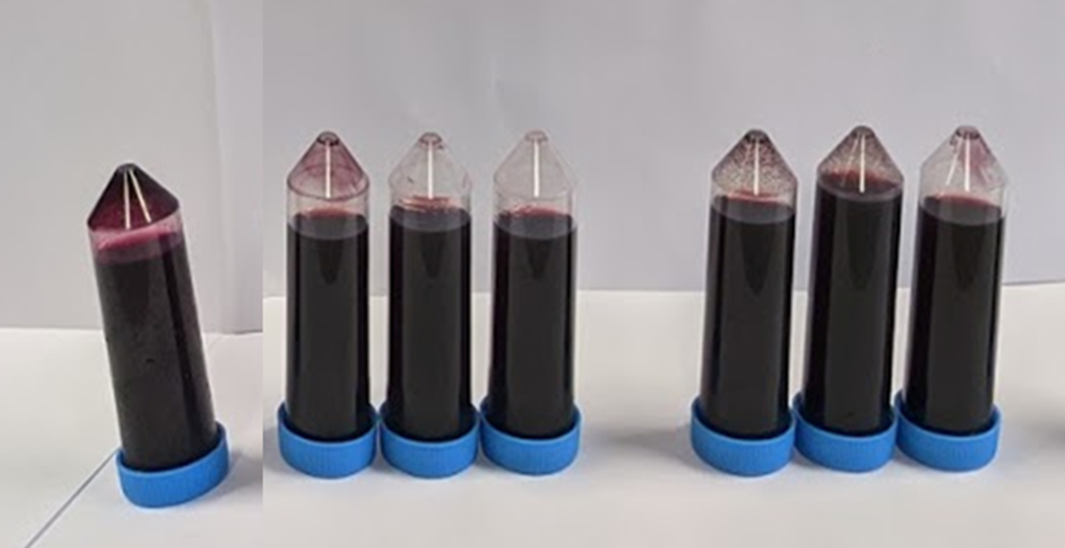
The recent approval of Potassium Polyaspartate by the TTB opens a whole new scenario of opportunities for winemakers and beverage professionals regarding tartaric stabilization. But what are the details you have to keep in mind when considering this ingredient with stabilizing functions? Calcium stability, along with protein and color stabilities, play a major role in the preservation and correct integration of the ingredient into your wines. Comparative market trials after product developmentWhen developing the ingredient, the studies and research carried out by Enologica Vason, demonstrated for example, that the old 'magic number' for Ca concentration is not valid anymore when using KPA, thus needing a new safe threshold. But where should you stand for protein stability? And color preservation? And how about the tools to measure these parameters? Reach out today to your local JUCLAS USA technical expert to know more about Potassium Polyaspartate, the guidelines, and good cel
00