
Filter Post Type
NewsVideoProductEventLink
Sort:
Most Recent
Tagged:Wine Law
1–6 of 6
January 30, 2026
This blog post summarizes the process by which licensed wineries can obtain local government approval for events in Napa County held pursuant to their California Department of Alcoholic Beverage Control (“ABC”) Type 93 Estate Tasting Permit. As discussed in our prior post, last year Governor Newsom signed into law AB720, granting California wineries that hold an ABC Type 02 winery license the ability to host events, up to 36 times per year, where they exercise tasting room privileges for wine manufactured by or for the winery on either: (1) property adjacent to the licensed premises or (2) a nonadjacent vineyard provided that such property or vineyard is owned by or under the control of the winery. (Cal. Bus. Prof. Code 23399.03.) Neither ABC nor Napa County have provided guidance as to what degree or proof of “control” is required. Under AB 720, these new Type 93 estate tasting events are also subject to local land use controls that can “restrict, but no
00
September 7, 2023
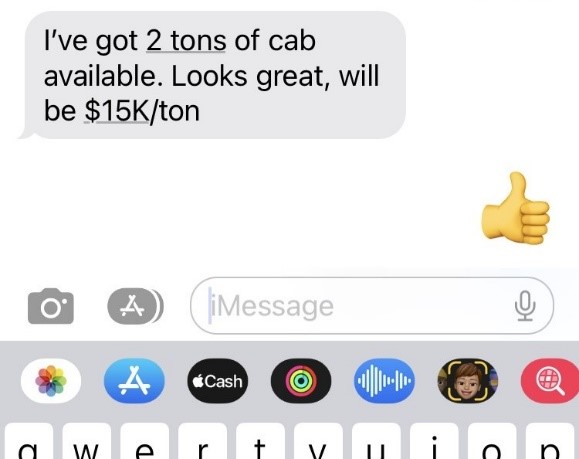
Harvest is underway in wine country. During this season there is increased demand for skilled labor, transportation, and crush facilities. Buyers and sellers of fruit have a short window to make deals. A busy harvest season also lends itself to casual communication about crops, like this: Now, did you just tell your friend you are happy for him, or did you just commit to buying $30K worth of fruit? According to at least one Canadian court, the thumbs-up 👍 emoji could qualify as acceptance of a contract. A recent decision from the Court of King’s Bench in Canada discussed the “new reality in Canadian society” facing courts as the forms of communication broaden. The Canadian court examined a dispute between a farmer and grain buyer over an alleged contract for 87 metric tons of flax, to be delivered in November 2021. The grain buyer and farmer spoke by phone, and the buyer texted the farmer a photo of the contract signed by buyer for November delivery. The t
00
May 4, 2022
On, April 5, 2022 the Napa County Board of Supervisors adopted a new “Micro-winery Ordinance”, allowing Napa Valley winegrape growers to produce and sell wine at their family farms. The Ordinance will go into effect May 5, 2022. The Ordinance will amend the Napa County Code to allow farmers to obtain a use permit for a “micro-winery” via approval by the zoning administrator, instead of the planning commission. This change allows applicants under the Ordinance to avoid public hearings, potentially reducing costs of acquiring a use permit. Note however that a new winery application, even without a planning commission hearing, is still complex, requiring detailed materials from architects, engineers, and potentially other experts. The Ordinance allows micro-wineries to produce small amounts of wine primarily made from estate-grown fruit, provide limited on-site tastings, and make direct consumer sales. Applicants must follow the below requirements to qualify: Zonin
00
September 29, 2021
This week, Governor Gavin Newsom signed three bills that expand certain winery off-site tasting room privileges and grant alcohol beverage manufacturers the right to advertise and promote charitable donations in connection with the sale of alcohol. The laws will become effective on January 1, 2022. We have summarized the new bills and how they amend current law below. Number of Winery Off-Site Tasting Rooms (SB 19) Under current California law, Type 02 wineries are permitted to operate tasting rooms only at their licensed Type 02 premises (i.e., the same premises where the winery’s wine is crushed and fermented), and at an off-site Duplicate Type 02 premises (where crushing and fermentation of wine is not permitted). Current law permits a winery to operate only one off-site Duplicate Type 02 tasting room. SB 19 amends Section 23390.5 of the California Alcoholic Beverage Control Act (“ABC Act”) to increase the number of Duplicate Type 02 locations
00
July 2, 2021
On June 23, the U.S. Supreme Court held that a California regulation allowing union organizers to enter an agricultural employer’s property is unconstitutional. The regulation, on the books since the mid-1970s, requires farms to permit unions to speak with and recruit farmworkers in the hour before and after work and an hour during lunchtime for up to 120 days each year. (Cedar Point Nursery v. Hassid (U.S., June 23, 2021, No. 20-107) 2021 WL 2557070.) In the case, a strawberry plant nursery and a fruit shipment company sued the California Agricultural Labor Relations Board arguing that the regulation gave farmworker unions an easement to enter and conduct business on their land without authorization or compensation. The Court agreed, holding that the regulation took away the agricultural employer’s right to exclude trespassers from its private property, amounting to a “taking” of company property without “just compensation” in violation of the Fifth
10
November 30, 2020
In 2018, California adopted the most extensive privacy provisions in the United States, the California Consumer Privacy Act of 2018 (CCPA.) Emulating provisions adopted in Europe’s General Data Protection Regulation (GDPR), the CCPA gives California consumers of certain, generally larger, businesses rights relating to the use and sale of personal information like names, addresses or internet purchasing history. In general, the CCPA provides consumers with the right to learn what categories of personal information are collected or sold; to request businesses delete their personal information or opt-out of the sale of their personal information; and creates liability for failing to reasonably protect consumers’ personal information.
California residents voted 56%-44% in the November 2020 election to amend and expand the CCPA through the passage of Proposition 24, the California Privacy Rights Act (CPRA). Proposition 24 imports more of the GDPR’s provisions, providing
00