
Filter Post Type
NewsVideoProductEventLink
Sort:
Most Recent
1–10 of 75
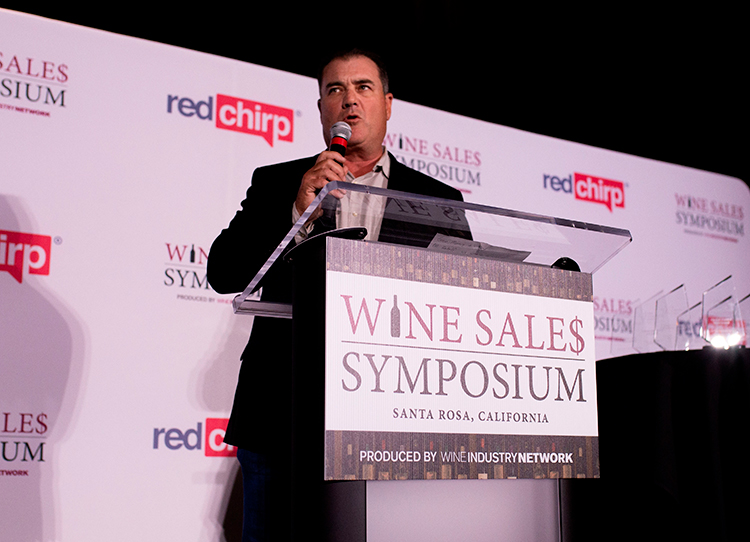
Winery leaders and industry experts explore the strategies shaping the future of wine sales. The wine industry narrative over the past two years has been dominated by decline: falling consumption, shrinking distributor portfolios, and weakening consumer loyalty. The headlines suggest an industry in freefall. But the reality is more nuanced - and more useful. Yes, overall wine consumption continues to face pressure. Consumer behavior is fragmenting in ways that challenge traditional approaches. But the full story isn’t simply decline. It’s divergence. Some wineries are still growing. Some categories are holding steady while others contract. Some sales channels are thriving while others struggle. The difference often comes down to whether wineries have adapted their strategies to match the market that exists today, not the one that existed three years ago. At Wine Industry Network’s Annual Wine Sales Symposium on May 13, Dr. Chris Bitter will present research on what’s actually happening
00
April 30, 2026

The wine market is no longer simply in a slowdown – it is in structural correction.
Distribution routes are tightening, consumer behavior is shifting, and the assumptions many wineries relied on even two years ago no longer hold. Wholesale channels that once provided stable revenue are consolidating or disappearing. Tasting room traffic has become inconsistent. Consumer loyalty has weakened.
This isn’t temporary turbulence. It’s a fundamental reshaping of how wine reaches customers and which wineries succeed in doing so.
Winery owners are facing hard questions: Should I double down on wholesale or pivot to direct-to-consumer? Do I chase new customer segments or deepen relationships with existing ones? The challenge isn’t a lack of options. It’s knowing which move to make first when resources are tight, and the margin for error is slim.
The Distribution L
00
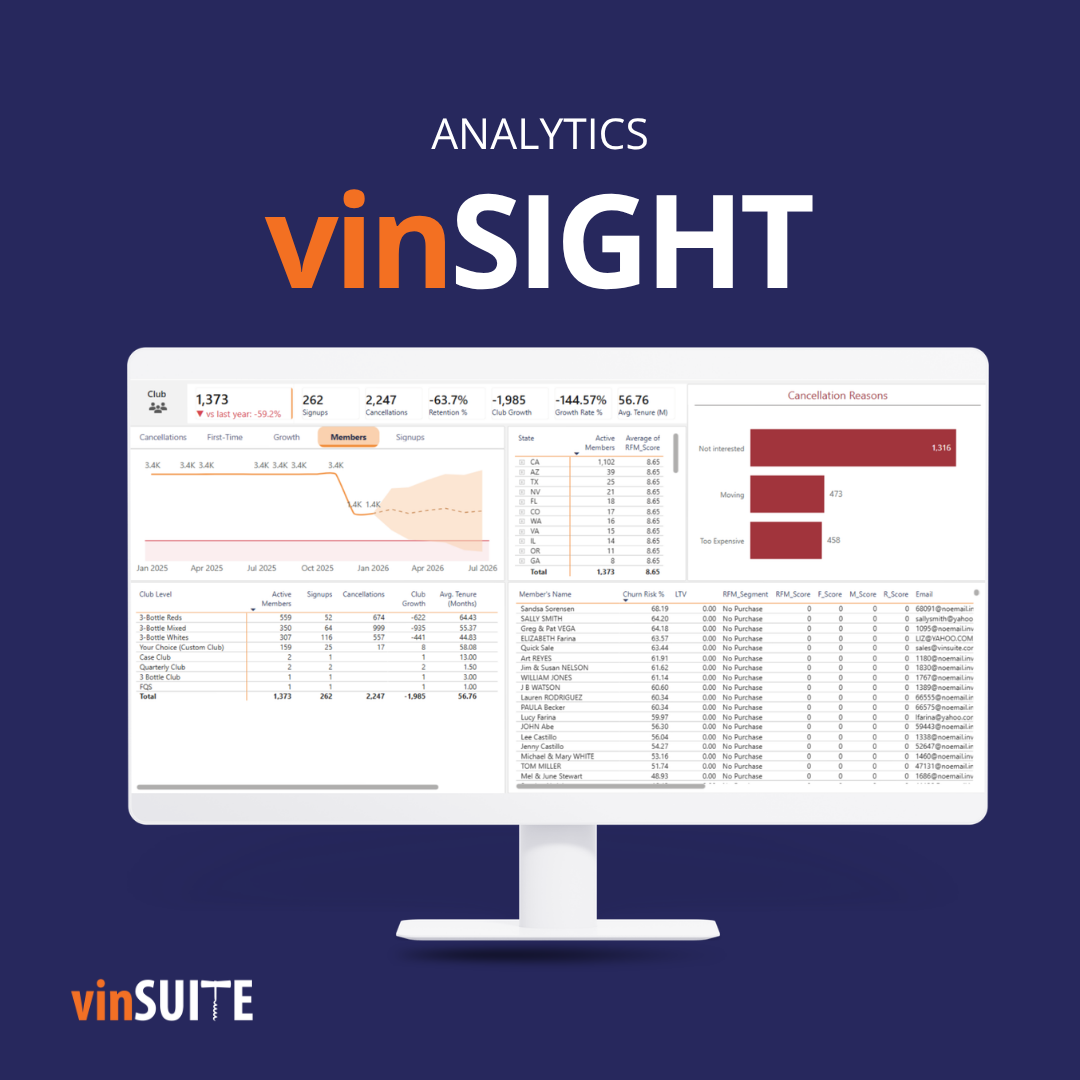
Combating declining consumption and tasting room visits is the current pressing priority for small and medium-sized wineries whose primary source of revenue has been direct-to-consumer (DtC) sales. Waiting for the situation to change is no longer an option. Instead, wineries are turning to their existing customers to maximize short-term revenue and draw in new customers to rebuild their base. This task can seem daunting, but wineries with the vinSUITE integrated DtC software platform have a powerful new tool at hand. The recently released vinSIGHT transforms the sales data automatically collected by vinSUITE into actionable insights. This new predictive analytical platform analyzes the winery’s historical customer behavior patterns and predicts wine club churn with up to 94% confidence, enabling wineries to prevent revenue loss before members cancel. Jimmy Wu, vinSUITE’s President, explains: “By the time wine club churn shows up in standard reports, that revenue is already l
00
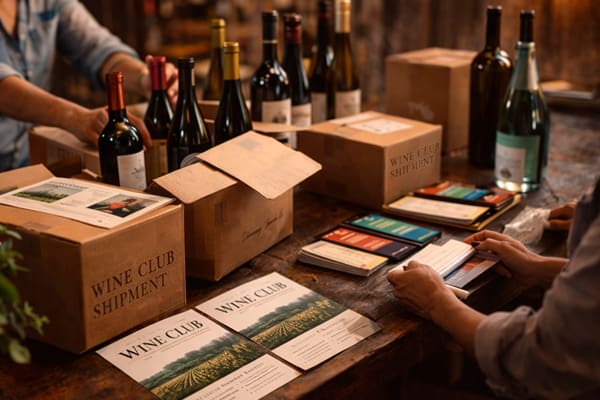
Why Wine Clubs Aren’t Working, And What’s Replacing Them For many wineries, the biggest challenge today isn’t attracting new customers; it’s keeping the ones they already have. Wine clubs once represented the most stable revenue engine for wineries. Members signed up, shipments went out quarterly, and predictable revenue flowed in. It was the foundation of direct-to-consumer success. But that foundation is cracking. Recent industry data reveals a troubling trend: nearly 40% of wine club members cancel within the first year. In a market where customer acquisition costs are climbing, and competition for attention has never been fiercer, losing members at this rate isn’t just a retention problem; it’s a profitability crisis. The math is unforgiving. If acquiring a new club member costs hundreds of dollars in marketing, tasting room labor, and incentives, losing them before they’ve generated meaningful lifetime value means wineries are bleeding money with every signup. And yet, some winer
00

From hospitality-driven visitation to loyalty and strategic partnerships, the Wine Sales Symposium explores where revenue growth is coming from now The path to winery growth looks different than it did even a few years ago. Today’s most successful wineries are not relying on a single channel or a single tactic. Instead, they are building growth through a combination of stronger customer experiences, deeper retention strategies, and brand partnerships that extend reach beyond traditional wine audiences. At this year’s Wine Sales Symposium, several sessions will explore how these shifts are reshaping sales and marketing strategies across the industry. One of the most important changes is happening in hospitality and visitation. Consumers—especially Millennials and Gen Z—are increasingly choosing experiences that feel personal, memorable, and aligned with their identity. For wineries, that means visitation is no longer simply about tasting wine; it’s about de
00
March 31, 2026
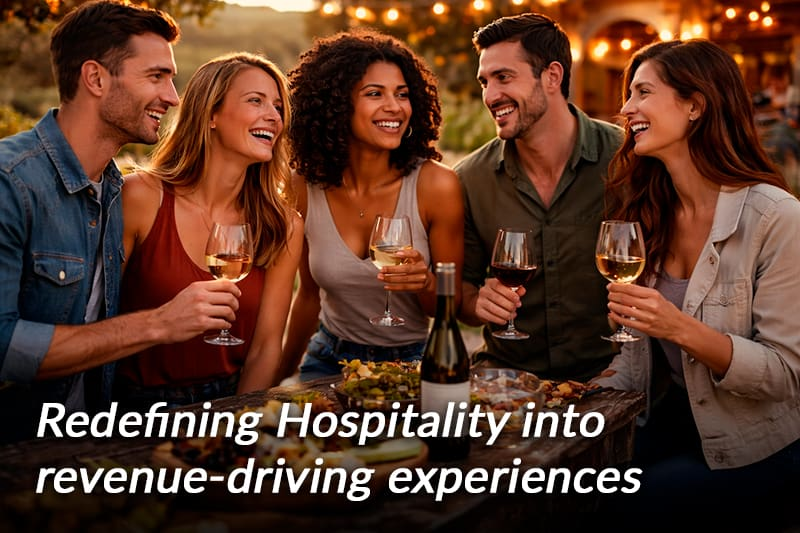
The tasting room used to be the heart of the winery business model. Walk-ins became club members. Club members became brand ambassadors. Revenue flowed predictably, and the formula worked. That’s changing. Visitation to wine regions is softening and tasting room traffic that wineries once counted on is declining. The cohort that’s most noticeably absent? Millennials and Gen Z, the consumers who should be building the next generation of wine loyalty. For many wineries, the drop-off has been gradual enough to rationalize. Blame the economy. Blame changing drinking habits. Blame competition from craft beer and cocktails. But the reality is harder to swallow: younger consumers aren’t avoiding wine country because they don’t like wine. They’re avoiding it because the traditional tasting room experience no longer competes with how they want to spend their time and money. And if wineries don’t adapt, they risk becoming relics of an industry that waited to
00
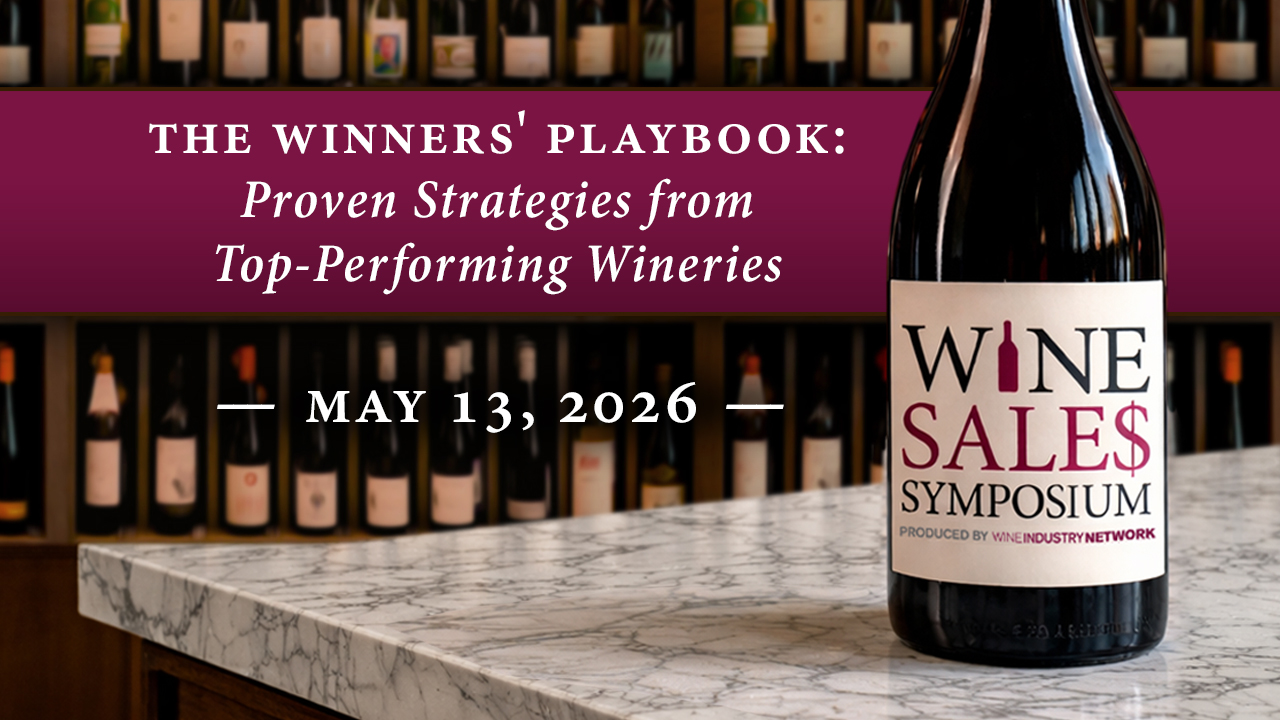
Join winery leaders and industry experts to explore the strategies shaping the future of wine sales. The wine industry is entering a period of significant change. Consumer behavior is shifting, visitation patterns are evolving, and the traditional paths to market are being redefined. To succeed in this environment, wineries must rethink how they attract customers, build lasting relationships, and grow their brands. The Wine Sales Symposium, taking place on Wednesday, May 13, brings together winery leaders and industry experts for a full day focused on the strategies shaping wine sales today and in the years ahead. This year’s program explores critical topics that will cover: • Hospitality Innovation: Reimagining tasting room experiences to attract Millennials and Gen Z through values-driven programming, experiential design, and strategic partnerships • Wine Club and Customer Retention: Data-driven approaches to reducing churn, building membership value,
00
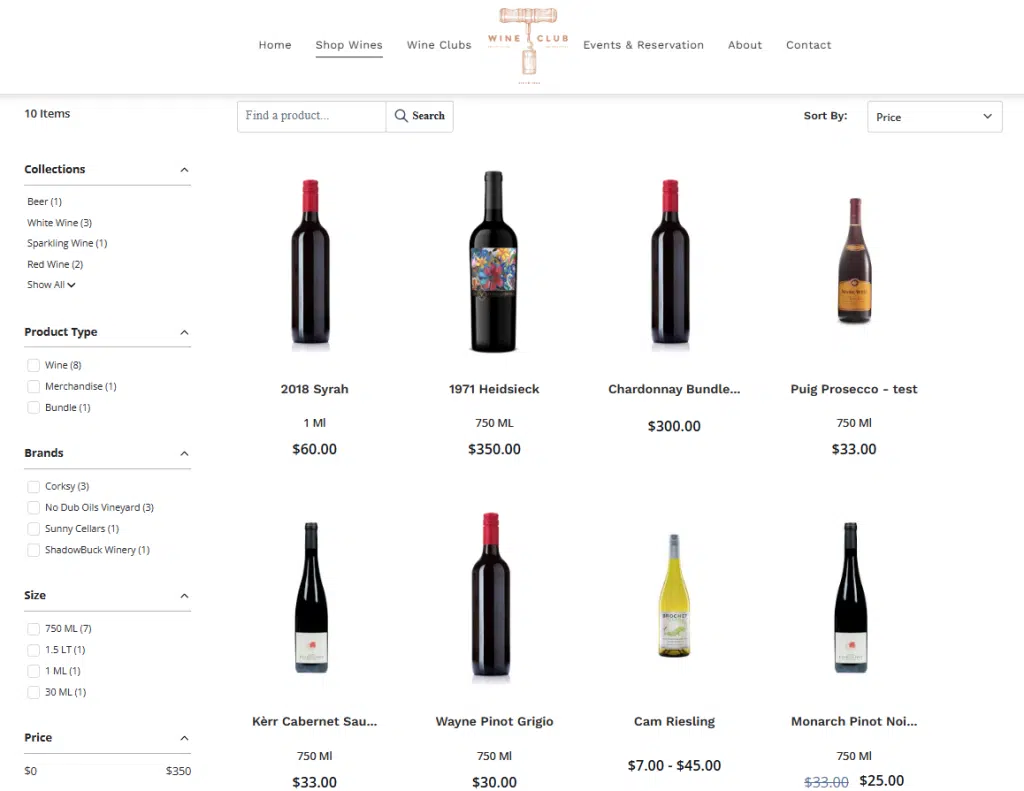
A few years ago at the DTC Wine Symposium, a panelist joked about the modern winery website formula: the guy, the dog, the truck, and the vineyard. Beautiful backdrop, strong lifestyle photography, a thoughtful founder story. Polished, absolutely. Strategically distinct, rarely. The critique wasn’t about branding. It was about structure. Most winery websites aren’t broken, but they aren’t built as decision environments either. Calls to action are unclear, revenue pathways are buried, shipping surprises appear late, and wine club often lives in isolation instead of throughout the buying journey. After auditing winery sites across regions and production sizes, the pattern is consistent: performance is constrained by friction, not effort. Most wineries don’t have a traffic problem. They have a conversion architecture problem. Before increasing ad spend or launching another promotion, run a winery website audit — on your phone. Start at the homepage and move t
00
Event Type: Conference
Location: DoubleTree by Hilton Hotel Sonoma Wine Country · Rohnert Park, CA
Date: 5/13/2026
The Wine Sales Symposium is an in-person event dedicated to providing actionable insights, expert advice, and industry predictions for wineries looking to grow sales and profits. This year’s program will kick off with an in-depth look at how the wine category is performing overall and what the key indicators could mean for sales in the near future. Sessions will explore how AI is influencing which wines get discovered and sold, how top-performing wineries are turning wine club churn into long-term retention, how visitation is being redefined through identity and experience, and how producers and sales leaders are adapting to distribution shifts and economic pressure. With a focus on data-driven decision-making, consumer behavior, and sales optimization, the symposium offers practical takeaways that wineries can implement immediately. Whether it’s enhancing guest experiences, improving customer retention, or leveraging new marketing channels, this event is designed to help
00

It shouldn’t feel this hard Running a winery is complex. Your technology shouldn’t make it more so. But for many wineries, the day feels like this: Double-checking reports Reconciling numbers across systems Fixing small workflow gaps Wondering if the data is actually right Putting out quiet operational fires None of it feels dramatic. It just feels… heavier than it should. That’s what missing pieces cost. Calm Commerce looks different. It looks like: One unified system across POS, clubs, eCommerce, CRM, and reporting A data-centric Shopify integration that keeps customer records centralized Direct QuickBooks integration that removes month-end cleanup Reporting that leads directly to action Fewer workarounds. Fewer surprises. Fewer “why is this happening?” moments When systems are aligned, the business feels aligned. Clearer decisions. Less second-guessing. More control. If you’ve been following this series, you’ve seen the cost
00