
Filter Post Type
Sort:
Most Recent
110 of 10

Wine Club Scorecard

For Winery Owners, GMs & Wine Club Managers


Your Wine Club Deserves Better Than a Best Guess


Talk to enough wine club managers and a pattern starts to emerge. The club is running. Shipments are going out. Members are renewing, mostly. And yet there is this persistent, low-grade frustration that things could be doing so much more, and nobody can quite agree on what better actually looks like or where to start.


That is not a people problem. It is not even really a strategy problem. It is what happens when you are managing something genuinely complex without a clear baseline to work from.


Wine clubs are one of the most valuable revenue channels a winery can have. Done well, they create reliable recurring income, deepen customer loyalty, and turn occasional buyers into genuine advocates. But they are also difficult to manage well. You are balancing member experience, logistics, pricing, retention, acquisition, and brand storytelling all at once. And most teams are doing it without any real benchmark for how they are performing relative to what is possible.


You fix what is loudest, not necessarily what matters most.

So decisions get made on feel. Churn ticks up and the instinct is to throw a discount at it. Acquisition slows and suddenly everyone is debating whether to restructure the club tiers. Revenue per shipment plateaus and nobody is quite sure if that is a pricing issue, a product issue, or just the market.


What the best clubs do differently

The wineries that run their clubs well tend to have one thing in common: they have taken the time to actually understand where they stand. Not in a vague, gut-check kind of way, but specifically. They know their retention rate and what is driving it. They know which member segments are most valuable and why. They know where their acquisition funnel leaks and what a realistic cost per new member should look like. That clarity changes how they make decisions.

Most clubs do not have that clarity. Not because the people running them are not capable, but because nobody ever gave them a framework to build it from. That is the gap the Wine Club Scorecard was designed to fill.


What you actually get

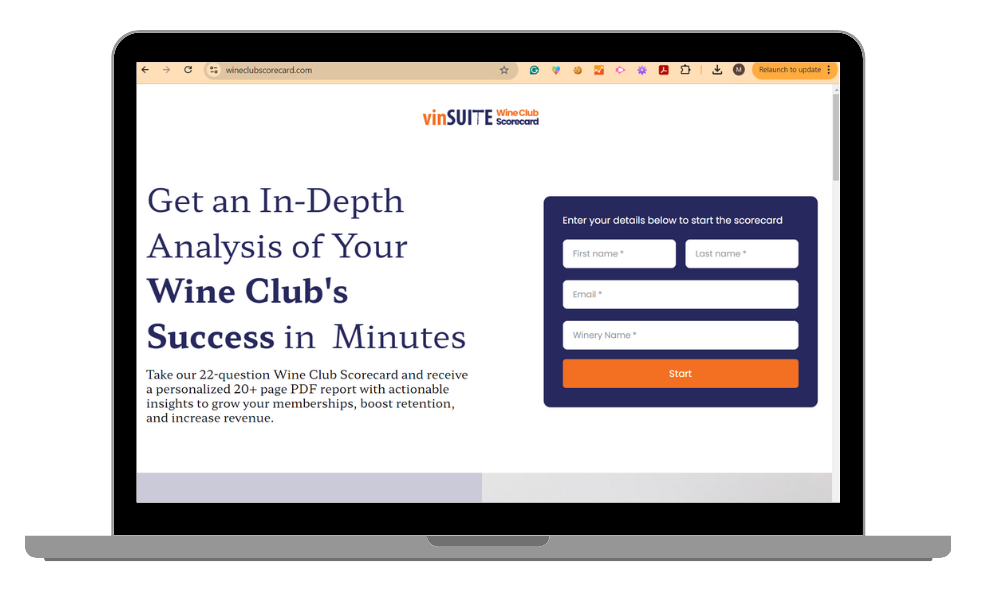
The Wine Club Scorecard is a free assessment built specifically for winery owners, GMs, and wine club managers who want an honest read on how their club is performing. It covers the areas that actually drive club health: member retention, acquisition strategy, engagement, revenue per shipment, and overall club structure.


You answer a series of questions about how your club operates today, and what comes back is a genuine report with benchmarks, clear data on where you stand, and specific steps you can take to improve. Whether your club has 200 members or 2,000, the output is the same: real information you can act on.


The whole thing takes about five minutes. And the conversations it tends to start, with your team, with ownership, with whoever makes decisions about where to invest, are usually long overdue.


If you have had that nagging sense that your club is running but not quite performing, this is a good place to start. Not because it will hand you a magic fix, but because you cannot fix what you have not clearly identified. A lot of wine clubs are leaving real money and real member relationships on the table, not out of negligence, but simply because no one has stepped back to look at the full picture.


Now is a good time to look.

Free report. Benchmarked data. Clear next steps. Takes five minutes.

Take the Free Scorecard wineclubscorecard.com


© 2026 WineClubScorecard.com  ·  Built for the wine industry.
00
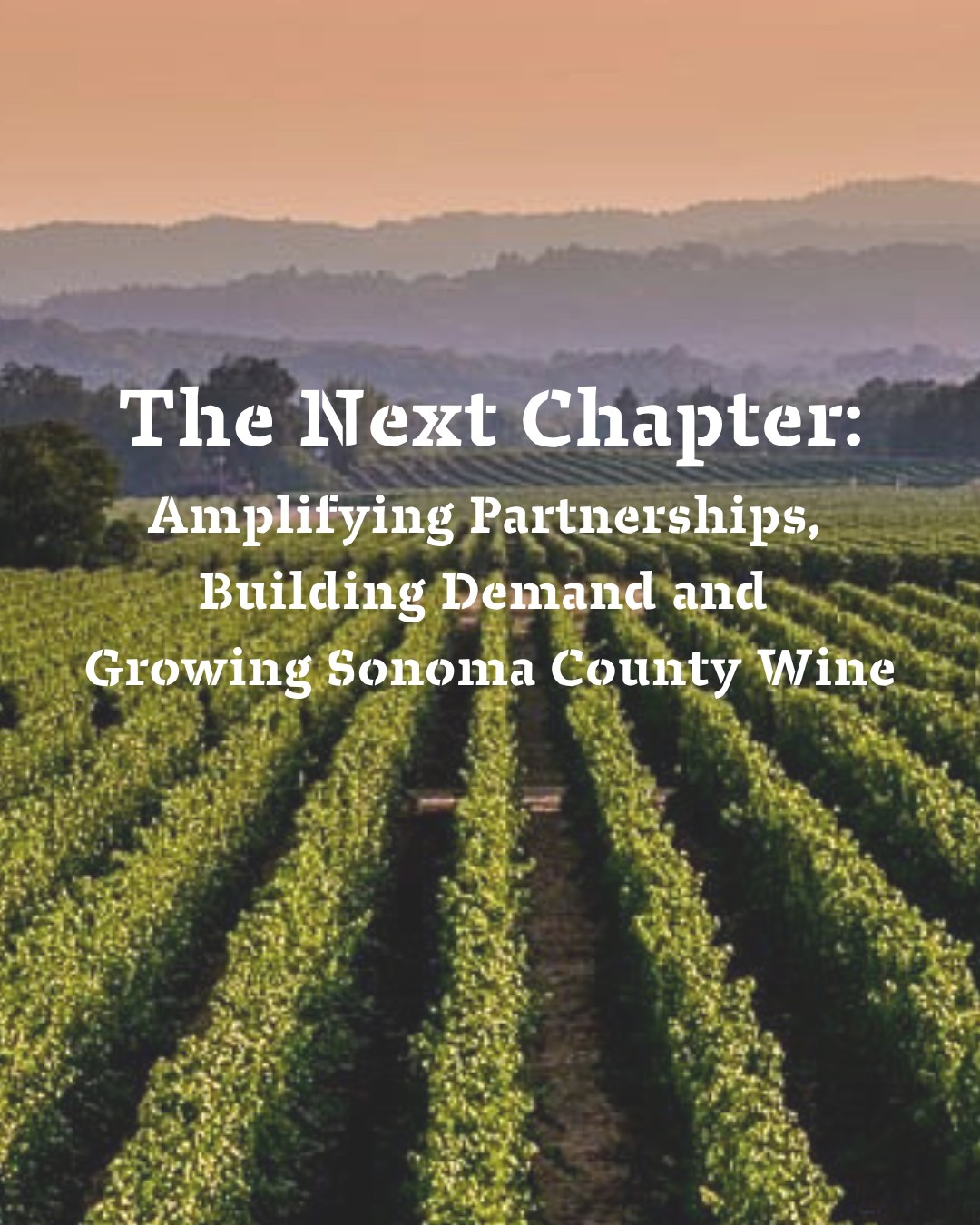
The Next Chapter: Amplifying Partnerships, Building Demand and Growing Sonoma County Wine
Sonoma County Winegrowers Reorganizes to Scale Proven Collaborations and Unlock National Growth Opportunities  At its annual Dollars & $ense meeting today, themed, “The Next Chapter: Elevating What Works and Expanding What’s Possible,” Sonoma County Winegrowers (SCW) announced a strategic reorganization and renewed organizational focus to build demand, expand partnerships, and increase sales of Sonoma County wines to support long-term grower success. The moves reflect a proactive response to an evolving marketplace and are designed to ensure Sonoma County remains competitive, relevant, and well-positioned for future growth. Moving forward, Jennifer Dieckmann, currently Chief Operating Officer of Sonoma County Winegrowers, will assume the role of Executive Director and COO, leading the organization’s day-to-day operations, program execution, and team leadership, while maintaining operational excellence and strengthening grower and stakeholder engagement
00
The Archetype Advantage: Using Brand Archetypes to Build a Loyal Wine Club
The wineries with the most loyal wine clubs aren't the ones with the best discounts. They're the ones with the strongest emotional identity. This will sound counterintuitive to anyone who's ever tried to stem club churn by sweetening the deal with free shipping or an extra bottle. But the data tells a different story. Companies with strong emotional connections to customers outperform competitors' sales growth by 85%. Not 8.5%. Eighty-five percent. The question isn't whether emotional connection matters. It's how you build one. Enter brand archetypes: a framework rooted in Jungian psychology that helps wineries create the kind of deep, identity-based loyalty that discounts can never buy. When wineries align their story, experience, and messaging with a core archetype, wine club loyalty stops being a battle against churn and becomes a natural expression of who they are. What Are Brand Archetypes? (And Why They Work in the Wine Industry) Brand archetypes are 1
00
The State of the U.S. Wine Industry: Key Insights from the 2026 SVB Report
The 2026 State of the U.S. Wine Industry Report, published by Silicon Valley Bank and authored by Rob McMillan, provides a comprehensive, data-driven assessment of current conditions in the U.S. wine market. Built on more than 25 years of industry research, the report combines results from SVB’s annual winery survey, its Direct-to-Consumer (DTC) survey, demographic and cohort consumption modeling, and a wide range of third-party wholesale, retail, and population datasets. The conclusion is clear: while the industry continues to face structural headwinds, wineries are not experiencing these conditions equally. A widening performance gap has emerged between those adapting to changing demand and those struggling to do so. 2025 Performance: A Difficult Year for Many By nearly every measure, 2025 was a challenging year for the U.S. wine industry. Roughly half of the surveyed wineries rated the year negatively, citing slowing demand, rising costs, margin pressure, and inventory ch
00
Facebook/Meta: Turning Fans into Wine Club Members
Facebook/Meta: Turning Fans into Wine Club Members Expanding on insights from our Wine Club Scorecard, this post explores one of the most underused yet powerful tools for wine club growth: Facebook. While platforms like TikTok and Instagram often grab attention, Facebook remains one of the most effective drivers of wine club engagement and conversion when paired with Meta’s advanced targeting and advertising tools. With 72% of wine consumers aged 35–65 actively using Facebook, this is not just a social network—it’s an opportunity to build real relationships, deepen loyalty, and guide new members into your wine club. Yet most wineries still treat Facebook as a newsfeed instead of a growth engine. Sporadic posts, static bottle shots, and low engagement can’t compete with a thoughtful strategy that uses Facebook the way it was meant to be used: to connect, converse, and convert. Let’s explore how to turn Facebook into a true wine club acquisition chann
00
Millennial-Focused Wine Marketing: Connecting with Gen Z & Gen Y Consumers
Your Current Marketing Won't Work for Younger Wine Drinkers The generational shift in wine consumption is happening faster than most wineries are prepared to handle. According to Wine Intelligence's US Wine Consumer Trends 2025 report, millennials will surpass baby boomers as the largest wine-consuming demographic by value this year. Meanwhile, the oldest members of Gen Z (born 1997-2012) are now turning 28 and developing their own distinctive wine preferences. The problem? Most wineries continue marketing as if their primary audience is still over 55. The messaging, channels, and tactics that worked for boomers actively repel younger buyers. Let's examine what actually works when marketing to these crucial demographics. What Younger Wine Consumers Actually Want Millennial Wine Drinkers (Ages 29-44) Millennials approach wine fundamentally differently than their parents: What They Value: Transparency about production methods and ingredients Sustainable and ethical busines
00
vinSUITE Launches Revolutionary Wine Club Scorecard Assessment to Help Wineries Maximize Growth and Optimize Their Wine Clubs
vinSUITE Launches Revolutionary Wine Club Scorecard Assessment Personalized 20+ page reports provide wineries with strategies to improve wine club acquisition, retention, and member value. Napa, CA, October 22nd, 2024 – vinSUITE, the leading provider of direct-to-consumer (DTC) software for wineries,  is transforming how wineries grow and optimize their wine clubs with the launch of its innovative Wine Club Scorecard. This powerful new resource provides wineries with a personalized, 20+ page report filled with data-driven insights and strategies that can unlock the full potential of their wine club programs.  Leveraging over two decades of experience helping wineries grow their DTC channels, vinSUITE developed the Wine Club Scorecard to deliver critical insights in under 10 minutes, without disrupting daily operations. With wine clubs contributing as much as 39% of DTC revenue according to Silicon Valley Bank’s 2024 State of the Wine Industry Report, optimizing
00
Taste Sustainable Wines for FREE This ReSIProcal February!
This February, wine club members of nearly 30 wine brands across four California counties and Michigan State can claim two complimentary tastings at any other participating club’s tasting room. Why? Because these tasting rooms have joined ReSIProcal February! Participating tasting rooms’ wines are made with SIP Certified® sustainable grapes, cultivated by sustainable farming practices that show care for the people and the planet. ReSIProcal February is a way to connect these like-minded brands and spread awareness of their good work. Participating locations include Baileyana Winery, Cambria Winery, Castoro Cellars, Niner Wine Estates, Vina Robles, Foxen Vineyard, McIntyre Tasting Studio, Shady Lane Cellars, and many others. Wondering if you’re a member of a participating wine club and can claim these complimentary tastings? Visit the ReSIProcal February event page at https://sipcertified.org/resiprocal2024 to see a list of all participating brands. Tasters have
00
Marketing Your Mission: How to Leverage Your Sustainable Story
Marketing Tip Monday Water Management at Shale Oak Winery While consumers name food and beverage as one of the most important industries when it comes to sustainability, more than 1 in 4 US adults said they don't know what makes a product sustainable (2022 Morning Consult, What Sustainability Means to Consumers). There is a need for consumer education on sustainability, and this is a great opportunity for your brand! Welcome to Marketing Tip Monday with SIP Certified. We know customers are looking for wines labeled as sustainable. While our longer-form episodes help you learn about the latest science and research for the wine industry, these twice-monthly micro podcasts will help you share your dedication to sustainable winegrowing so you can show your customers that you share their values. You can help educate your customers by sharing specific things that your brand does to be sustainable. Build a bond over your mutual care for the health of the people and the planet!
00
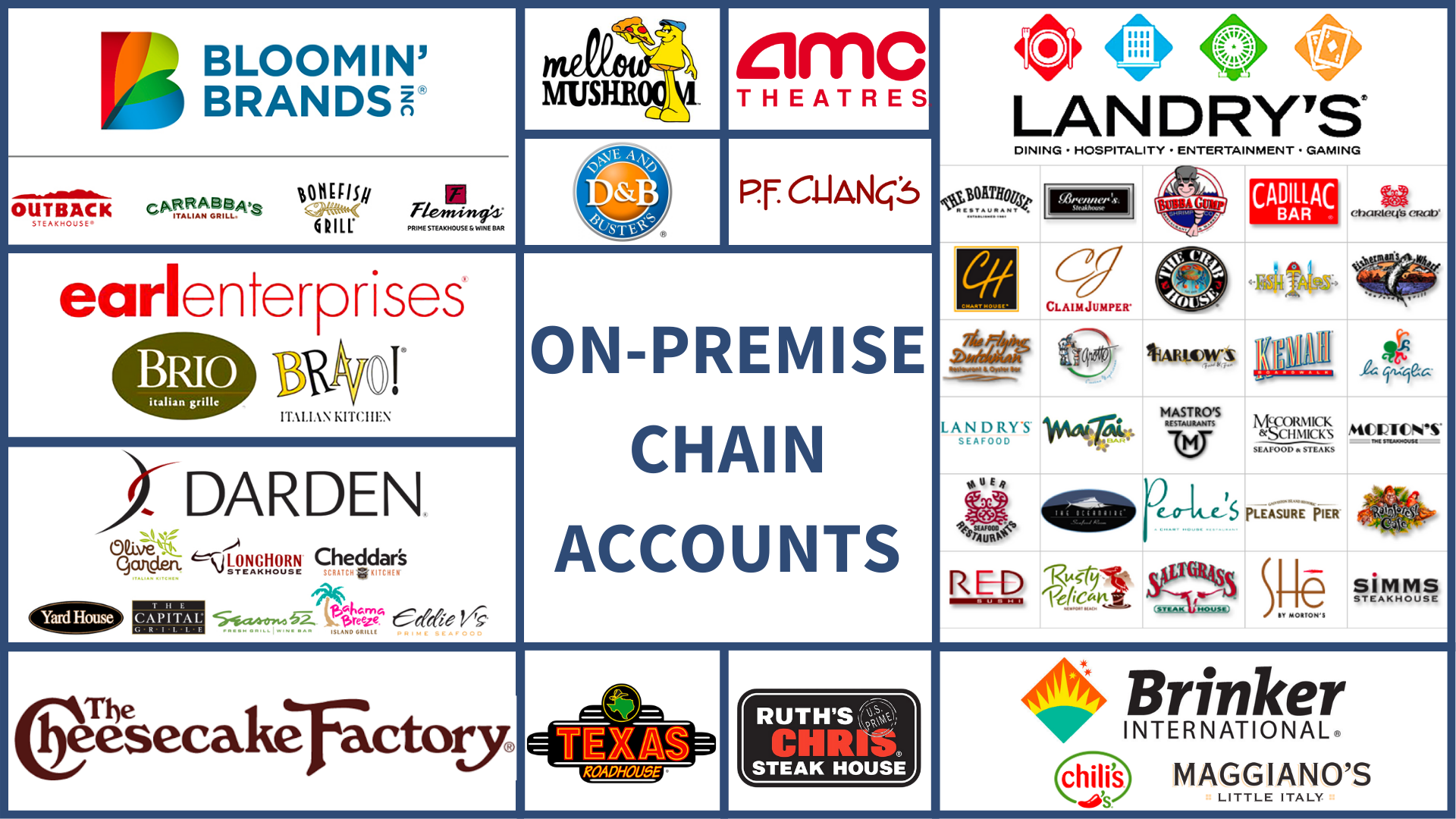
The Definitive Guide to Sales Success with On-Premise Chains
Overview The on-premise national accounts arena is one of the most complex, expensive, and time-consuming channels to pursue in the wine sales game — it’s also the most misunderstood! This guide will help set you up for success and shave months (if not years) off the learning curve.  Keep an open mind as you read; what most people think is required to succeed in this arena is entirely disconnected from reality. What constitutes a “chain?” When considering an on-premise chain, it should meet all of the following criteria Three or more store locations One central decision-making process Licensed to sell beer, wine, or spirits Using this definition, we at Andavi Solutions estimate the total number of on-premise chains in the US to be around 2,000 chains with a total number of stores of just under 40,000.  The indisputable attractiveness of on-premise chains Five things make on-premise chains a highly desirable quarry for selling adult be
00