
Filter Post Type
NewsVideoProductEventLink
Sort:
Most Recent
1–10 of 60
Why Wineries Need Influencer Marketing Now Here's a number that should reshape how you think about marketing: 69% of consumers trust influencer recommendations more than information coming directly from a brand That's not a slight edge. That's a fundamental shift in how people decide what to buy. For wineries, this matters more than it does for most industries. Wine is a considered purchase wrapped in uncertainty. Your potential customer is standing in a tasting room or scrolling through an online store, wondering: Will I like this? Is it worth the price? Am I making the right choice? Influencer content answers those questions in ways traditional marketing cannot. When a trusted voice says "I tried this Pinot and it's incredible with grilled salmon," that carries weight. It's a peer recommendation disguised as content. Instagram and TikTok now drive wine discovery among younger audiences, and 87% of Gen Z consumers say they're willing to buy products
00
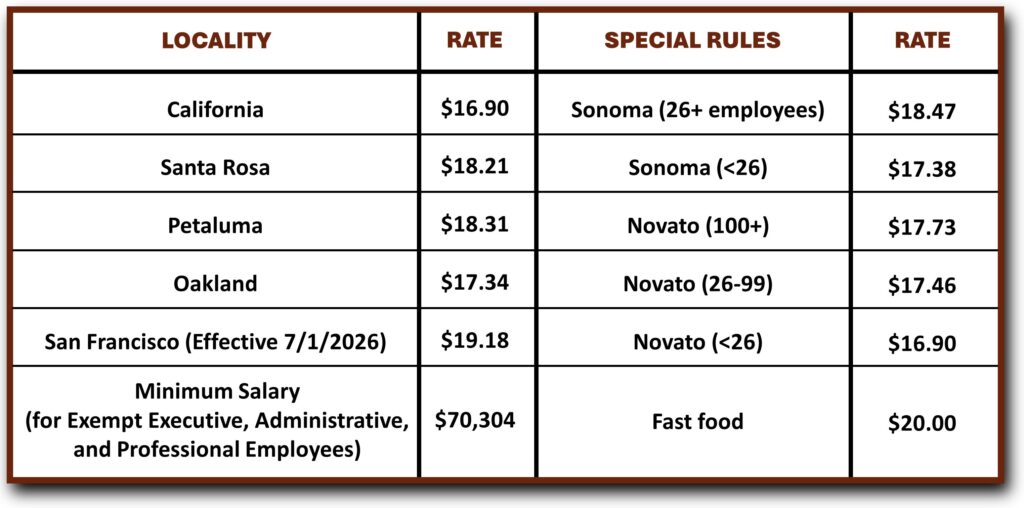
It is time to dust off the employee handbook, review your policies and procedures, and make sure they comply with all the new laws, regulations, and interpretations that went into effect during 2025, became effective in late 2025, or January 1, 2026. Below, we have identified our “top 10” changes. Please keep in mind there were hundreds of laws, regulations, and changes implemented at the local, state, and federal levels throughout 2025. This summary highlights selected changes most likely to impact California employers and is not intended to be exhaustive. So, if you need a handbook/policy review or have any questions, please call us! 1 – Minimum Wage Update: Updates happen every year. It’s best to put a calendar reminder in November, to make sure your payroll is ready! Action: Review your payroll to ensure all employees are being paid the new minimum wage, send written notice of the wage change to affected hourly employees, and be sure your salari
00
January 14, 2026
With the expected continuing market correction of the alcohol beverage industry to consumer demand, wine producers are preparing for potential bankruptcies or shuttering of trade purchaser businesses at the distribution and retail levels. This article explores how alcohol beverage producers should prepare for trade disruption caused by bankruptcies. Bankruptcy is governed by federal law, and bankruptcy cases are exclusively handled in federal bankruptcy courts. When a business files for bankruptcy, its creditors (including suppliers with unpaid invoices) face significant uncertainty as to their ability to get paid. Alcohol beverage producers should be aware of three key issues that will impact their contracting relationships and products in the market in the context of the bankruptcy of a distributor or retailer: (1) the effect of an automatic stay; (2) the potential for recouping certain inventory; and (3) the potential of having certain payments received from the entity filing for b
00
.jpg)
January 13, 2026
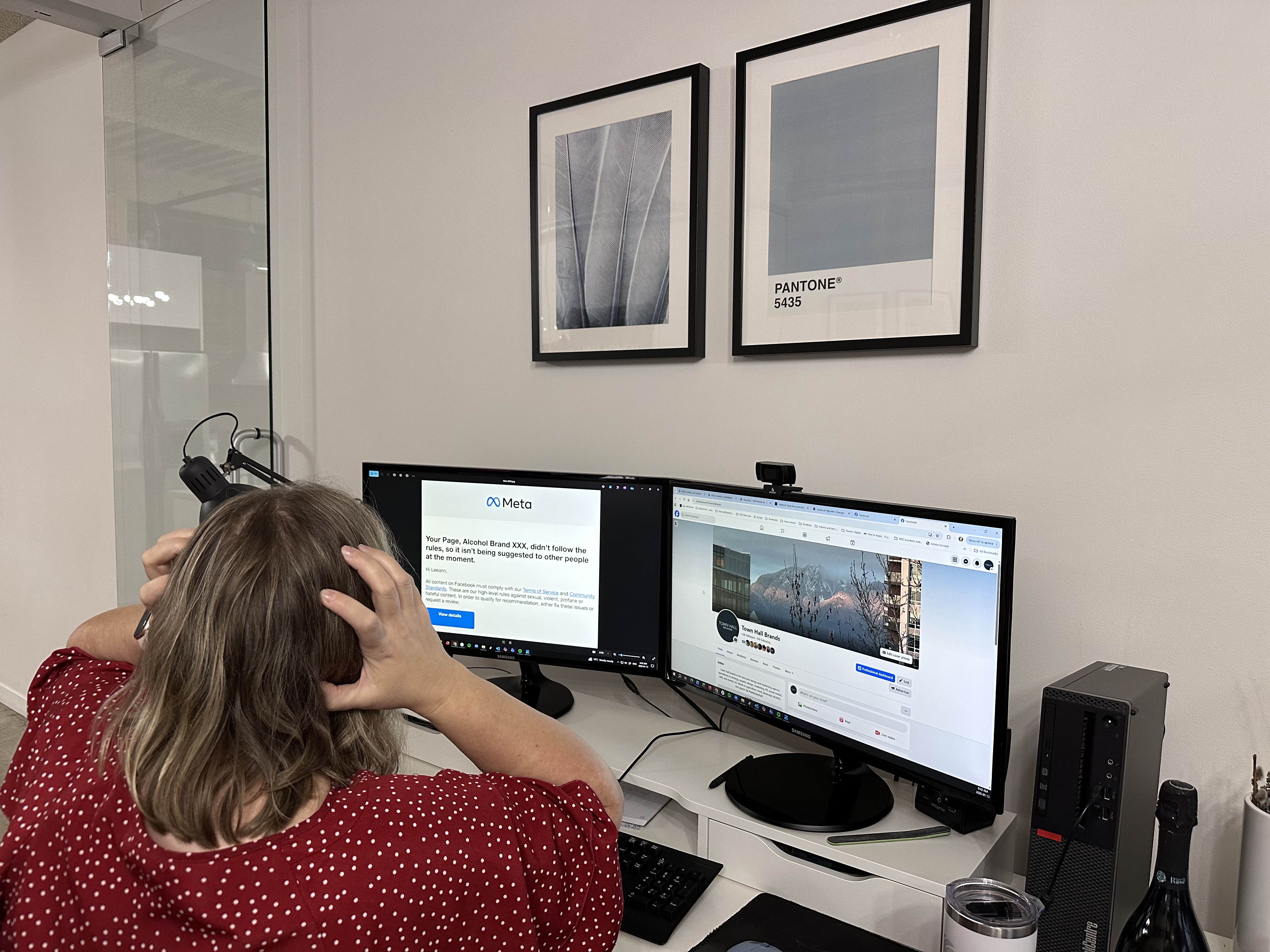
By Leeann Froese, Town Hall Brands Over the past few months, wineries across North America have begun receiving a vague but unsettling notification from Facebook stating that their Page is “not being suggested to other people at the moment.” In many cases, there are no visible violations, no content removals, and no clear explanation. Pages remain live. Accounts remain in good standing. But organic discovery has narrowed. This is not a glitch, and it is not necessarily a punishment. It is a platform decision, and it has real implications for how wineries should approach marketing in 2026. This is not a compliance failure Most wineries encountering this issue are fully compliant with Facebook’s Community Standards. Their content is allowed to exist on the platform. What has changed is recommendation and amplification, which Facebook controls separately under its Terms of Service. In other words, a Page can follow every rule and still be excluded from algorithmic d
00
December 5, 2025
POSTED BY Theresa Barton Cray As we near the close of a challenging year for the alcohol beverage industry, suppliers are understandably looking for creative marketing campaigns to boost sales. Unfortunately, given the highly regulated world of alcohol beverage marketing, creative marketing ideas can sometimes hit the proverbial brick wall of regulatory restrictions. All is not lost, however, and there is still room for creativity provided suppliers work within the parameters of alcohol beverage regulations. To start, below are some common pitfalls that suppliers should avoid when marketing their alcoholic beverages in California and elsewhere. Retailer Partnerships Suppliers should closely examine any new marketing programs that involve or mention licensed alcohol beverage retailers. Partnerships with, or sponsorships of, retailers are in most cases going to run afoul of the tied-house laws in California, and in most other states, which prohibit suppliers from giving (directly
00
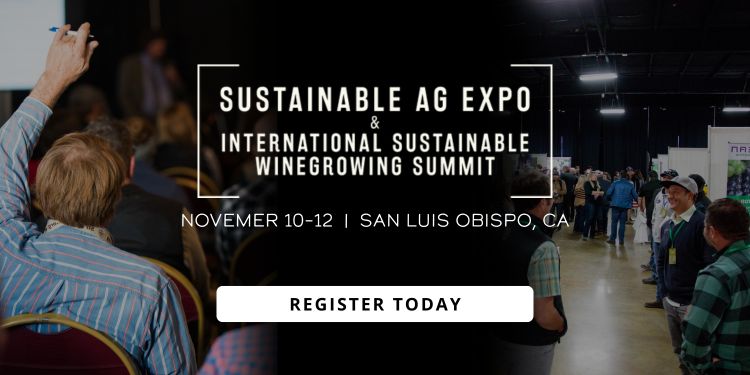
This year’s Sustainable Ag Expo packs serious value for your professional development. Whether you’re earning DPR or CCA hours (or both!), we’ve got you covered with a mix of in-person and on-demand sessions designed to fit your schedule. Total CE Hours Available: 13 Online Courses - open through November 28, 202511.5 DPR (incl. 3 L) 13.5 CCA 16 In-Person Seminars - November 11-12 in San Luis Obispo7.5 DPR (incl. 1 L) 17 CCA Proactive Steps for Complying with CA Pesticide Laws and Regulations Tuesday, Nov. 12 | 3:30–4:30 PM Speaker: Mel Graham, County of San Luis Obispo Department of Agriculture Get practical guidance for staying compliant with California’s pesticide use requirements. Learn about common violations, how to avoid them, and what’s coming in 2025 and 2026. Calibration of Vineyard Sprayers Online | Oct. 13-Nov. 28 Speaker: Dr. Andrew Landers, Professor Emeritus, Cornell University Fine-tune your spray precision!
00

October 20, 2025

Winery crush season is an exhilarating time, brimming with activity as grapes are transformed into exquisite wines. However, this seasonal surge also brings significant wastewater challenges. With increased flow volumes and high-strength organic loads, it’s critical for wineries to ensure their wastewater treatment systems are up to the task. That’s where STS comes in, offering a Start-Up Special to help wineries stay ahead of the game. Why Wastewater Treatment Matters During Crush Season Crush season is a period of intense production that can push wastewater treatment systems to their limits. Spikes in flow and organic load can disrupt biological processes, leading to system upsets, potential permit violations, and costly downtime. These issues not only affect compliance but could also impact operations, creating unnecessary stress during an already busy season. To help Napa and Sonoma County wineries avoid these pitfalls, STS has introduced a limited-time start-up servic
00
September 3, 2025
Texas Just Changed the Rules for SMS Marketing Here's What DTC Wineries Need to Know If you’re a U.S. winery using SMS marketing -- or even just considering it -- you need to know about a new Texas law that quietly went into effect on September 1, 2025. Senate Bill 140 (S.B. 140) expands the state’s telemarketing laws to include promotional text messages, and it applies to any business texting Texas residents, regardless of where that business is located. For small, family-owned wineries already navigating a shrinking market, this law could introduce new compliance risks, legal exposure, and operational headaches. And while I’ve long been an advocate for SMS wine marketing, we can no longer recommend it for most wineries unless they’re either exempt from S.B. 140 or have a customer base concentrated in Texas. Let’s break down what’s changed -- and what you can do about it. ⚖️ What S.B. 140 Actually Says S.B. 140 updates the
00
September 1, 2025

Your Customers Check Texts Faster Than Emails, So Why Are You Still Only Relying on Inboxes? The typical American checks their phone 96 times a day, that's once every 10 minutes. While your carefully crafted email campaign sits unopened among dozens of others, text messages get read within minutes. The numbers don't lie: SMS messages have a 98% open rate compared to email's paltry 20-30%. Even more telling, 90% of text messages are read within the first three minutes of delivery. For wineries competing for attention in crowded digital spaces, this isn't just a nice-to-have channel, it's the most direct line to your customer's attention. Why SMS Works Specifically for Wine Brands Wine isn't software or fashion, it's experiential, emotional, and often enjoyed in specific moments. This unique position makes SMS particularly effective for wineries in ways other industries can't match. First, wine consumers are increasingly mobile-first. When planning wee
00
August 4, 2025
Starting January 1, 2026, a new Oregon law will significantly reshape how liability works in private construction projects. Under Senate Bill 426 (SB 426), property owners and general contractors can now be held liable for wage theft committed by subcontractors, even those buried deep in the contracting chain. Oregon Gov. Tina Kotek signed SB 426 into law on June 9, 2025. It’s a landmark move—and one that raises the stakes for compliance. Here’s what Oregon businesses need to know, and how they can start preparing now. What’s the Big Change Under SB 426? If you’re a property owner or GC in Oregon, SB 426 brings a shift in risk you can’t afford to ignore. The law says you are jointly and severally liable for unpaid wages, penalties, and benefits owed by any subcontractor working under your contract—even if you weren’t directly involved and had no knowledge of the issue. In short, it’s no longer enough to say, “That wasn’t
00