
Filter Post Type
NewsVideoProductEventLink
Sort:
Most Recent
1–9 of 9


Event Type: Webinar
Location: Zoom
Date: 3/3/2026
In the world of wine, the tasting room is more than a beautiful space—it’s the center of your business and the heart of your brand. Whether you’re exploring a career in the wine industry or already managing a tasting room, this course offers a comprehensive look at how to build and sustain a profitable, professional and customer-focused tasting room experience. In this online course, you’ll examine how a successful tasting room functions as both a destination and a core business strategy—shaping how customers experience your brand and driving direct-to-consumer (DTC) growth. Through in-depth exploration of business planning, space design, staffing, digital integration and customer engagement, you’ll gain insights into how each of these elements contributes to a thriving tasting room. You’ll also learn strategies for wine club development and exceptional sales and service. Throughout the course, you’ll build a practical toolkit—compl
00

August 27, 2025
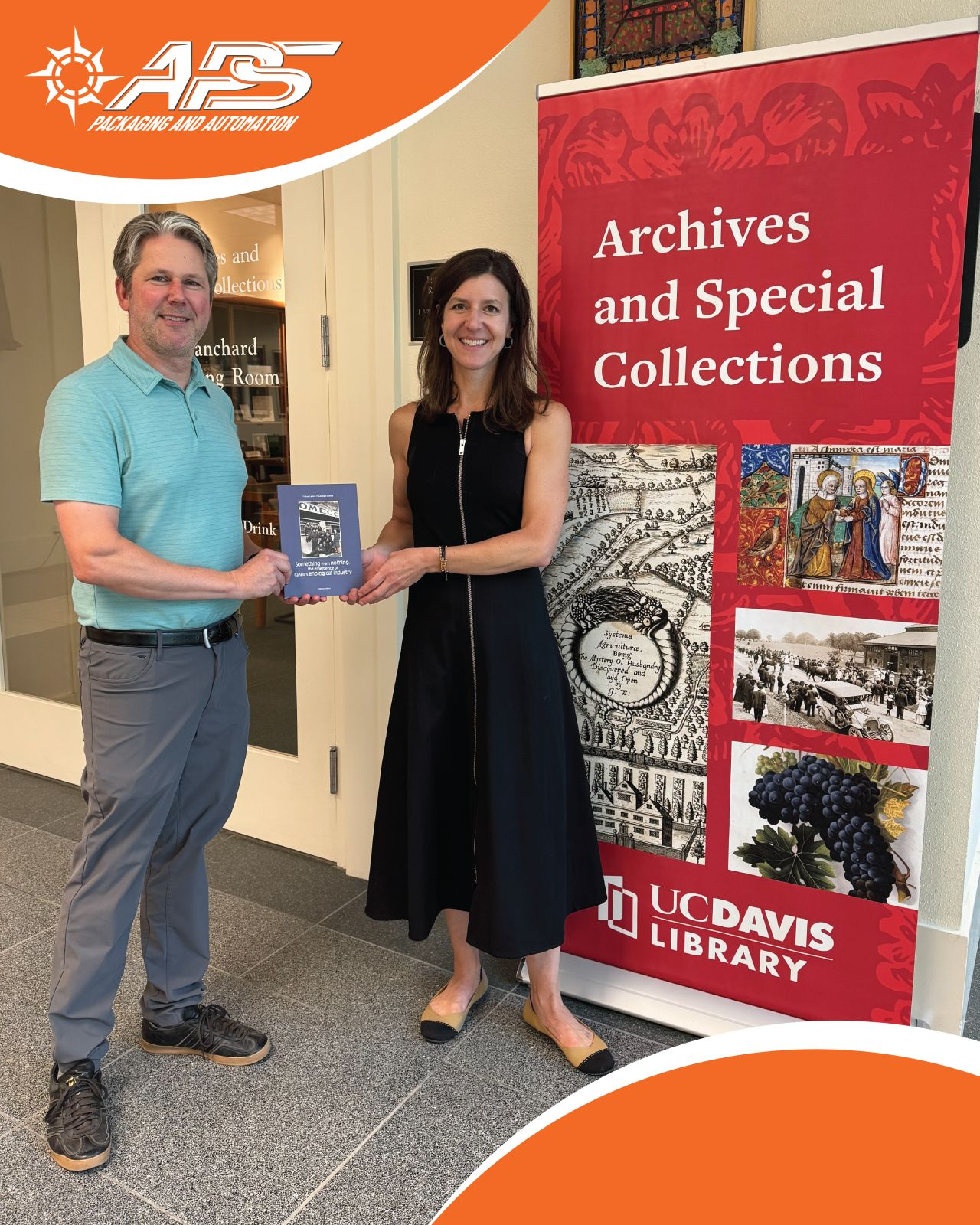
📚 We are honored to share that a significant part of APS Packaging's heritage is now at the UC Davis library! 🇮🇹 APS Packaging is a California-based company with Italian roots. Fulvio Lavina & Giuseppe Billella's book "Something from Nothing: The Emergence of Canelli's Enological Industry" details the development of the famous wine industry in Canelli. ⚙️ The continuous growth of the industry created a need for better winemaking and bottling equipment, which led to the establishment of advanced equipment and machinery producers. 🍇 It is our mission to educate aspiring winemakers about the historical importance of automated machinery in the wine industry. Students now have access to the book and can learn more today!
00
October 9, 2024

Assessing the Feasibility of Regenerative Management for California Vineyards Sustainable Ag Expo I November 13 I 9:00-10:00 am This presentation will show the preliminary results of a three-year, large-scale project performed in various vineyards in California. The project explores the benefits and tradeoffs of compost use, no-till, and sheep grazing for soil health, vine yield, and nutrition. The presentation also includes an economic analysis of the practices. Get tickets here! --- Dr. Lazcano currently leads a team of 20 researchers at different career stages and from different backgrounds, focused on understanding the links between soil biodiversity and agroecosystem functioning. The goal of her research is to generate ecologically based soil management strategies that will reduce the environmental footprint of agriculture, with a strong focus on winegrape production. Through on farm collaborative research, Dr. Lazcano hopes to h
00
June 3, 2024
Uncorking Success: My MBA Team Brings Marketing Insights to Leading Wine Industry Supplier
00
May 20, 2024

In the 1880s, Pierce’s disease caused a devastating, total collapse of the Southern California grapevine industry. Today, growers have hope for the future thanks to new varieties. Adam Tolmach, owner of Ojai Vineyard, planted four of these new varieties as a field trial on a plot of land where Pierce's disease wiped out his grapes in 1995. Pierce’s disease is a bacterium spread by insects, typically a sharpshooter. One bite and the vine dies within two to three years. To develop resistant varieties, Andy Walker of the University of California at Davis crossed the European grape Vitis vinifera with Vitis arizonica. 20 years later, commercial growers have access to three red and two white varieties. Listen in to learn how Tolmach’s experiment is a success both in the vineyard and with customers. Plus get tasting notes for the new varieties. LISTEN IN Resources: REGISTER: The Ins & Outs of Developing a New Vineyard Site 89: New
00

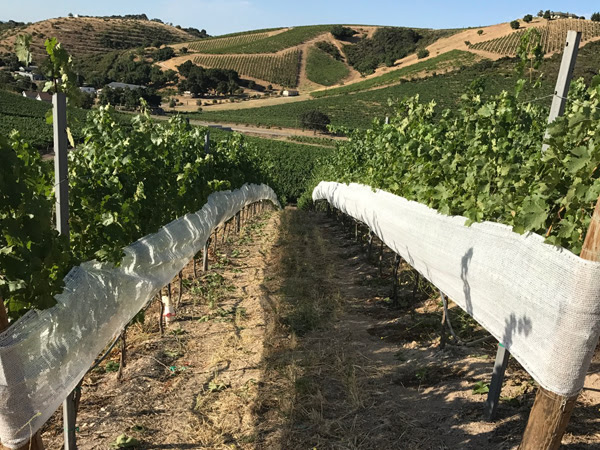
The following is an excerpt from our new blogpost. With the dramatic ups and downs of the climate, shade cloth is rapidly becoming a necessity here in California. I’ve written a bit about shade cloth before, but recently we were asked by a client if colored shade cloth made any difference. Luckily, the UCDavis Extension led by Kaan Kurtural has done the legwork for us. Kurtural et al. examined the effectiveness of 4 different shade cloth colors: 40% black, 40% blue, 40% Aluminet (Shiny), and 20% Pearl. The percentages refer to how much light each cloth excluded. They compared these shade cloths to a control, where no shade cloth was used. Shade cloth is now available in all sorts of colors, but black is still the best for limiting heat stress in the fruit zone. It’s important to go over some physiology at this point, mainly how grapes are affected by light and heat. Light, more specifically UV and visible light, can cause the increased synthesis of anthoc
00
May 24, 2022

Expert Editorial: The Judgment of Paris and Its Impact on the U.S. Wine Industry
By Anthony Zhang May 24 is a day of celebration for wine lovers across America, as it marks the anniversary of The Judgment of Paris, an event that paved […]
00
February 17, 2022

Event Type: Conference, Seminar
Location: UC Davis Conference Center
Date: 3/16/2022
On March 16, 2022, the UC Davis Department of Viticulture and Enology Extension Team will host a Grapevine Red Blotch Disease Symposium. This program will be available both as an in-person program (at the UC Davis Conference Center) and live-streamed as a webinar (on Zoom). Speakers will include: Cindy Kron, Frank Zalom, Kent Daane, Nitin Nitin, Justin Tanner, Kaan Kurtural, Houston Wilson, Anita Oberholster and more! More details, including presentation titles, will be coming soon. LOCATION This is a hybrid event. Attendees have the option of attending in-person at the Conference Center on the UC Davis Campus, or by live stream. Click here for more info
00

February 28, 2020
Pellenc America conducted a Trial with UC Davis Winemaking Team headed up by Anita Oberholster Ph.D. and Leticia Chacon Rodriguez with the Pellenc Optical Sorting Line that consists of the Pellenc Selectiv Process Winery-Medium (SPW-M), Vibractiv Table & Selectiv Vision 2. Our control group was handpicked Cabernet Sauvignon from Lodi, CA. that we processed with only the SPW-M that mechanically destems and sorts the fruit with the Pellenc patented Selectiv Process System. Our Trial consisted of 2 sorting levels with the Pellenc Vision 2 Optical Sorter. The first part of the trial we used the lower level Optical of sorting. For the second trial we used the high level of Optical sorting. As the wines matured, we noticed some very interesting results. The bottom line is we could take a harvest of Lodi Cabernet Sauvignon and with different levels of sorting we could change the complexity of the finished wine. We easily understood how to change the settings on the Pellenc Vision-2 to mak
00