
Filter Post Type
NewsVideoProductEventLink
Sort:
Most Recent
1–10 of 60
The weather is shifting, trip-planning season is underway, and tasting room traffic is about to pick up. This is the good news. The bad news? If you're reading this and thinking "we'll get to our spring marketing when spring gets here," you're behind. The tasting rooms that stay full from April through June aren't the ones with the best wine or the prettiest views. They're the ones that showed up in someone's planning process three weeks before the trip happened. People don't stumble into wine country on a whim and wander from door to door the way they did fifteen years ago. They research. They scroll. They book. And if your winery isn't visible and compelling during that research window, you're invisible when it counts. The hotel industry figured this out years ago. Marriott doesn't wait until summer to market beach properties. They start running "book your getaway" campaigns in late winter, because they know the booking win
00
Generous. That's the very best word I can think of, to describe last week's Outbound Sales webinar. The panelists were generous with their time and content, and all participants were generous with their conversation. Here is the link to the webinar, in case you missed it or if you'd like to revisit. And here were some top takeaways: An Outbound Sales team is like a "Swiss army knife" of a winery. They field calls and questions from all directions, from phone sales to tracking orders to relationship building. The Average Order Value (AOV) of Outbound Sales is almost always higher than the AOV of a Tasting Room sale. Key skills needed in an Outbound Salesperson include persistence, objection handling, methodical note taking, long-term commitment, and an ability to trust the process. Chris created this highlight reel of Enolytics' Outbound Sales toolkit, including the Sell More Now! module and AI summary feature. Looking ahead, we'd like to share our
00
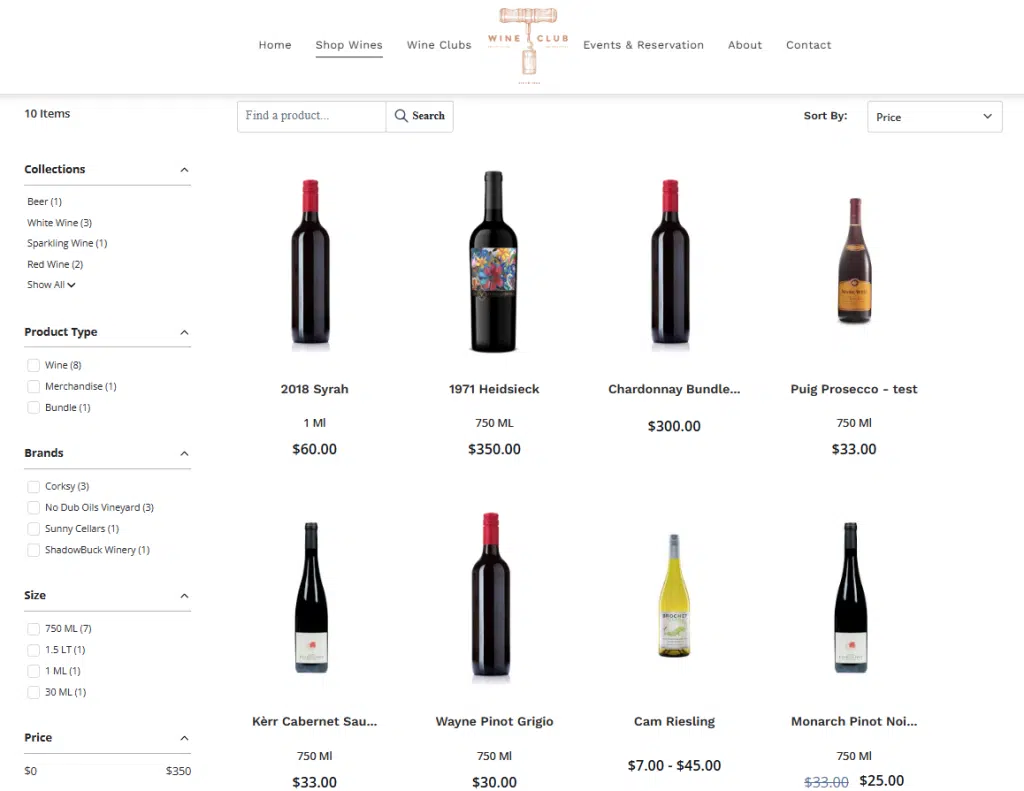
A few years ago at the DTC Wine Symposium, a panelist joked about the modern winery website formula: the guy, the dog, the truck, and the vineyard. Beautiful backdrop, strong lifestyle photography, a thoughtful founder story. Polished, absolutely. Strategically distinct, rarely. The critique wasn’t about branding. It was about structure. Most winery websites aren’t broken, but they aren’t built as decision environments either. Calls to action are unclear, revenue pathways are buried, shipping surprises appear late, and wine club often lives in isolation instead of throughout the buying journey. After auditing winery sites across regions and production sizes, the pattern is consistent: performance is constrained by friction, not effort. Most wineries don’t have a traffic problem. They have a conversion architecture problem. Before increasing ad spend or launching another promotion, run a winery website audit — on your phone. Start at the homepage and move t
00
February 25, 2026
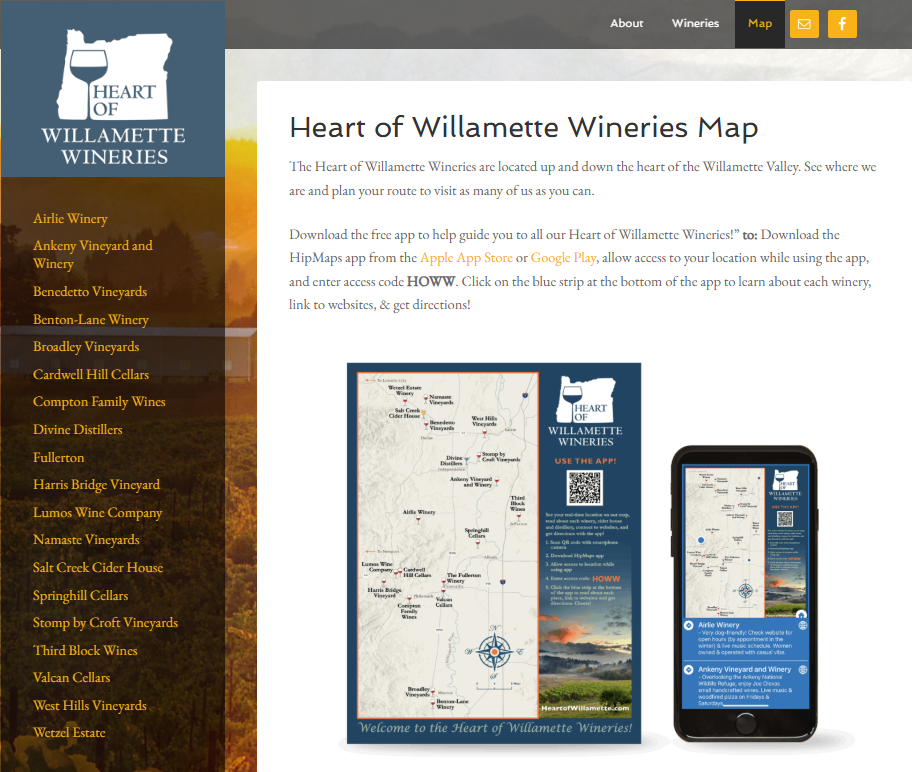
Marketing budgets may be getting leaner but visitor expectations sure are not. One of the smartest moves a winery can make isn't a bigger spend: it's a shared one. Pooling resources with neighboring wineries doesn't dilute your brand. It amplifies it, elevates your entire area as a destination, and gives visitors a richer experience that keeps them coming back. At HipMaps we create custom-designed maps with an app that help wineries amplify their marketing, enhance the visitor experience, and easily refer business to each other in a unique and engaging way. Here's how it works: a group of wineries — whether a formal association like Alexander Valley Winegrowers or an informal collection of neighbors — pools together to create one beautiful, branded map featuring all of their locations, in the style and branding that reflects their area. Hear from HipMaps Founder Rachel LeRoy, see examples of how Alexander Valley Winegrowers and others are utilizing their Hip
00
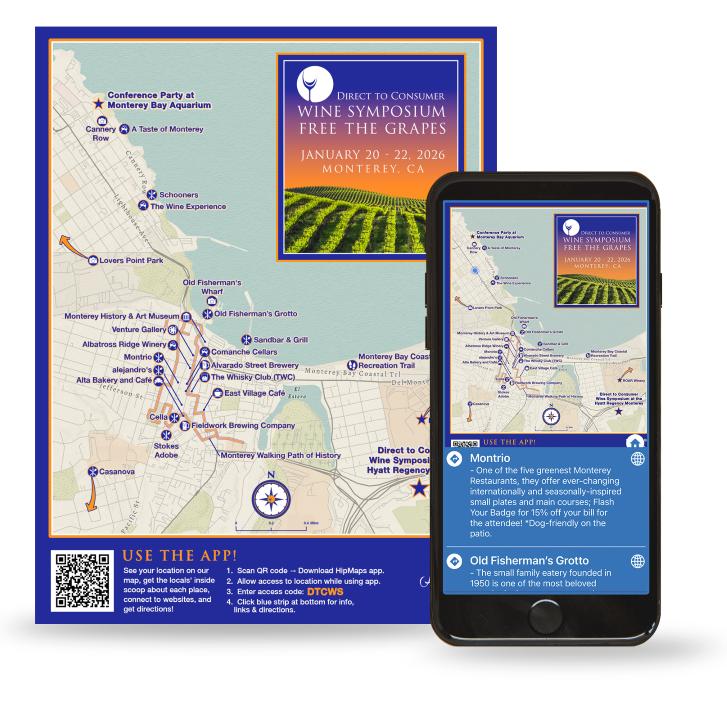
HipMaps and the Direct To Consumer Wine Symposium teamed up to enhance the attendee experience at the upcoming 2026 DTC Wine Symposium in Monterey, California from January 20th to 22nd. The Wine Symposium HipMap features hand-selected local favorites: hot spots and hidden gems recommended by Monterey locals. Symposium attendees can explore the best of Monterey by downloading the HipMaps app and entering access code DTCWS to see their real-time location on the map, read the inside scoop about each place, learn who is offering discounts to DTC Wine Symposium attendees, access websites, and get directions. HipMaps Founder Rachel LeRoy will be onsite in the DTC Wine Symposium tradeshow where attendees can enter to win a free HipMap. Learn more here. How HipMaps Serves the Wine Industry HipMaps helps wineries and wine associations in two distinct ways: Custom Vineyard Maps designed for tasting rooms and marketing materials showcase a winery's vineyards, AVAs, terrain and wine story, c
00
December 18, 2025
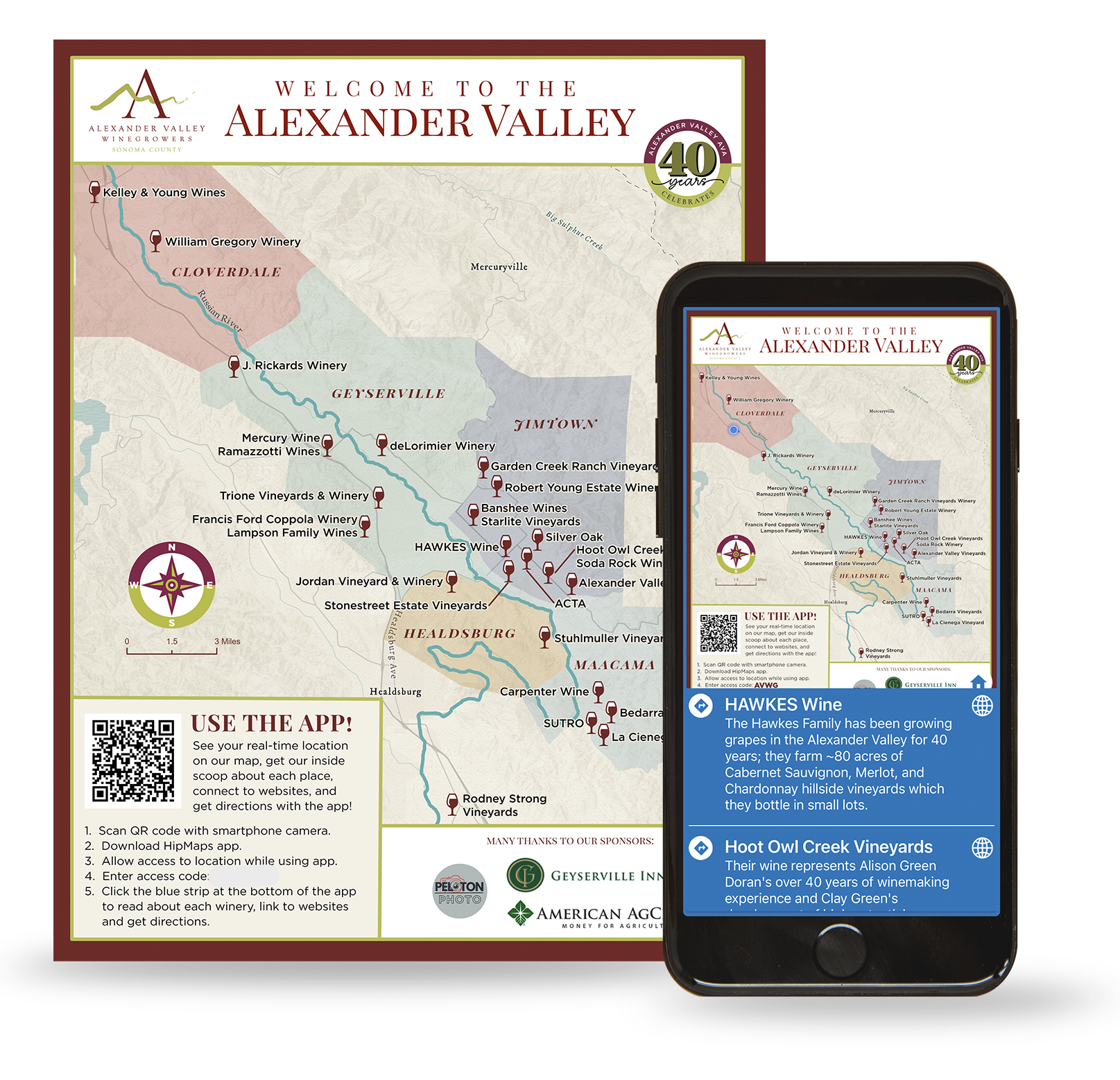
HipMaps and Alexander Valley Winegrowers (AVWG) have collaborated to bring AVWG's 40-year legacy to life through a custom-designed HipMap and interactive app experience! A Community Built on Family and Tradition Located in northeastern Sonoma County just north of Healdsburg, California, the Alexander Valley is home to 33 wineries and 77 winegrowers, many of them family operations with generations of history in the valley. It's a community where tradition, collaboration, and world-class winemaking go hand in hand. The Alexander Valley AVA (American Viticultural Area) is celebrating its 40th anniversary, and HipMaps provides a modern tool that helps visitors truly experience and understand this magnificent valley. The AVWG HipMap showcases the valley's diverse terrain, from vineyards on the valley floor along the beautiful Russian River to those nestled in the Mayacama Mountains. The interactive app lets visitors see their real-time location on the custom-branded map, learn a
00
December 2, 2025

HOW TO KEEP YOUR BRAND TOP OF MIND WHEN CUSTOMERS ARE DROWNING IN HOLIDAY EMAILS The inbox in December isn’t a communication tool—it’s a full-contact sport. Every brand, from the global megastore to the local dog bakery, is shouting their way into people’s attention span with flashing subject lines, endless exclamation points, and “40% OFF” hysteria that blurs into static. Consumers don’t read; they scan for relief. According to Mailjet’s 2024 BFCM report, holiday email volume jumps nearly 80% between Thanksgiving and Christmas, while average open rates drop to 13–15%—a statistical cry for help. But the real problem isn’t quantity—it’s tone. Every brand is talking at their audience instead of with them. The louder the messaging, the less people listen. Leading with prices and panic doesn’t inspire trust; it triggers fatigue. That’s your opportunity. The brands that win the inbox aren’t the
00
November 4, 2025

Meta Ads, Miracle Results If your holiday Meta ads felt like lighting money on fire in a festive candle, that’s not because social is dead. It’s because your targeting and flighting were built for wishful thinking, not gifting intent. The fix isn’t magic. It’s method. You can absolutely turn Meta into a gift-selling machine between Thanksgiving and New Year—if you understand what actually drives intent and how to spend wisely when every other brand on earth is screaming for attention. What follows is a ruthless, winery-specific playbook for the six-week window between Thanksgiving and New Year that prioritizes intent, protects margin, and leans on real benchmarks instead of folklore. First, reality: volume is there, but it clusters Holiday ecommerce keeps breaking records, with online spend hitting roughly $241.4B from Nov 1 to Dec 31 and mobile responsible for the majority of transactions. (Adobe Newsroom) Translation: your customers are buying on their
00
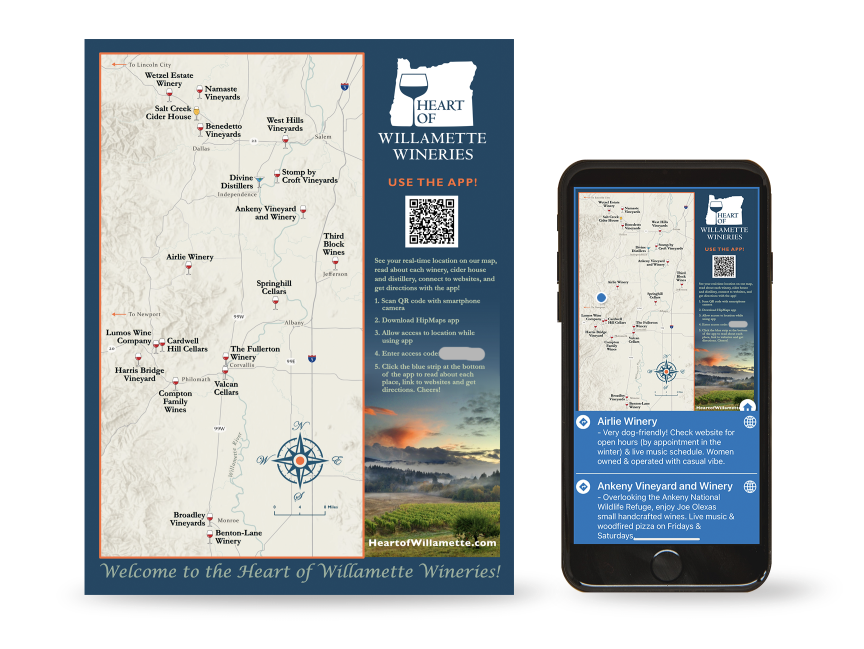
We're making it easier than ever for winery associations, informal groups of wineries and winery partners to collaborate on a sophisticated marketing tool that works 24/7 for years to come! Our Harvest Special offers the best value we've ever provided so maximize your marketing budget with a collaborative HipMap! What You Get With Our Harvest Special ✓ 10% discount - Custom HipMap is normally $1,999, now $1,799. ✓ Unlimited app uses for the entire first year (normally $100 to $1,000 extra). ✓ Flexible timeline – purchase before October 1st but start designing when you're ready. When shared among 20 participating wineries, that breaks down to just $90 per winery in year one with no additional charges. See It In Action Want to see exactly what your $90 investment creates? Watch this 3.5-minute video as HipMaps Founder Rachel LeRoy shares examples of HipMaps designs and demonstrates the features of HipMaps interactive app that the younger generations especially lov
00

August 22, 2025
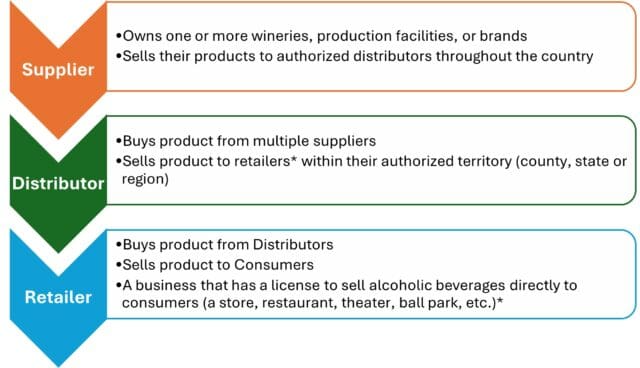
There are multiple paths to get started in wine sales. By Karen M. Wetzel As a wine industry career coach, I find that wine sales roles are highly desired. But given the differences between supplier and distributor sales positions, it can be hard to determine which might be best for you. Before we look at specifics, here’s a quick review of how alcoholic beverages are brought to market in the United States through the government’s three-tier system. Supplier Sales All wine sales originate with the supplier at the top of the three-tier system. A supplier may own or represent a single winery, such as Truchard or Fortunati Vineyards, or might be an expansive corporation with multiple brands, such as Gallo or Treasury Wine Estates. Regardless of scale, suppliers are responsible for selling their products to distributors across the country. To achieve market success, suppliers employ sales directors or managers to oversee specific states or regions. Their primary responsi
00