
Filter Post Type
Sort:
Most Recent
110 of 12

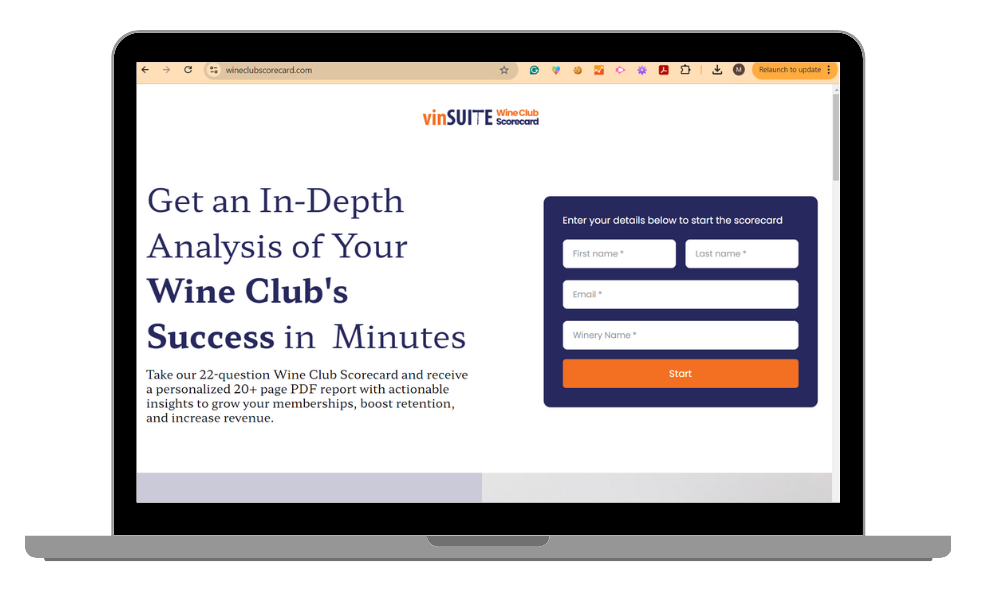
Wine Club Scorecard

For Winery Owners, GMs & Wine Club Managers


Your Wine Club Deserves Better Than a Best Guess


Talk to enough wine club managers and a pattern starts to emerge. The club is running. Shipments are going out. Members are renewing, mostly. And yet there is this persistent, low-grade frustration that things could be doing so much more, and nobody can quite agree on what better actually looks like or where to start.


That is not a people problem. It is not even really a strategy problem. It is what happens when you are managing something genuinely complex without a clear baseline to work from.


Wine clubs are one of the most valuable revenue channels a winery can have. Done well, they create reliable recurring income, deepen customer loyalty, and turn occasional buyers into genuine advocates. But they are also difficult to manage well. You are balancing member experience, logistics, pricing, retention, acquisition, and brand storytelling all at once. And most teams are doing it without any real benchmark for how they are performing relative to what is possible.


You fix what is loudest, not necessarily what matters most.

So decisions get made on feel. Churn ticks up and the instinct is to throw a discount at it. Acquisition slows and suddenly everyone is debating whether to restructure the club tiers. Revenue per shipment plateaus and nobody is quite sure if that is a pricing issue, a product issue, or just the market.


What the best clubs do differently

The wineries that run their clubs well tend to have one thing in common: they have taken the time to actually understand where they stand. Not in a vague, gut-check kind of way, but specifically. They know their retention rate and what is driving it. They know which member segments are most valuable and why. They know where their acquisition funnel leaks and what a realistic cost per new member should look like. That clarity changes how they make decisions.

Most clubs do not have that clarity. Not because the people running them are not capable, but because nobody ever gave them a framework to build it from. That is the gap the Wine Club Scorecard was designed to fill.


What you actually get

The Wine Club Scorecard is a free assessment built specifically for winery owners, GMs, and wine club managers who want an honest read on how their club is performing. It covers the areas that actually drive club health: member retention, acquisition strategy, engagement, revenue per shipment, and overall club structure.


You answer a series of questions about how your club operates today, and what comes back is a genuine report with benchmarks, clear data on where you stand, and specific steps you can take to improve. Whether your club has 200 members or 2,000, the output is the same: real information you can act on.


The whole thing takes about five minutes. And the conversations it tends to start, with your team, with ownership, with whoever makes decisions about where to invest, are usually long overdue.


If you have had that nagging sense that your club is running but not quite performing, this is a good place to start. Not because it will hand you a magic fix, but because you cannot fix what you have not clearly identified. A lot of wine clubs are leaving real money and real member relationships on the table, not out of negligence, but simply because no one has stepped back to look at the full picture.


Now is a good time to look.

Free report. Benchmarked data. Clear next steps. Takes five minutes.

Take the Free Scorecard wineclubscorecard.com


© 2026 WineClubScorecard.com  ·  Built for the wine industry.
00
Why Influencers Are Suddenly Working for Wine (And What Most Wineries Miss)
Wine Ignored Influencers. Now It Needs Them. The wine industry once mocked influencers. Now, even Forbes is saying we may need them. As wine faces declining consumption and changing buyer behavior, the voices once dismissed as “unserious” are starting to look a lot more powerful. Read the Forbes article → What’s interesting is, we’ve been talking about this shift for a while. Last year, we hosted a webinar with MiniSocial on how wineries can use micro-influencers and user-generated content (UGC) to drive engagement and sales. Here’s what still holds true: UGC outperforms brand content—everywhere Content created by real customers feels more natural—and consistently drives higher engagement across social, ads, and email. Micro-influencers build trust faster Smaller audiences, but far more engaged—and far more believable than traditional ads. Your customers are your best marketers UGC shows how people actually experience your wine&md
00
Facebook/Meta: Turning Fans into Wine Club Members
Facebook/Meta: Turning Fans into Wine Club Members Expanding on insights from our Wine Club Scorecard, this post explores one of the most underused yet powerful tools for wine club growth: Facebook. While platforms like TikTok and Instagram often grab attention, Facebook remains one of the most effective drivers of wine club engagement and conversion when paired with Meta’s advanced targeting and advertising tools. With 72% of wine consumers aged 35–65 actively using Facebook, this is not just a social network—it’s an opportunity to build real relationships, deepen loyalty, and guide new members into your wine club. Yet most wineries still treat Facebook as a newsfeed instead of a growth engine. Sporadic posts, static bottle shots, and low engagement can’t compete with a thoughtful strategy that uses Facebook the way it was meant to be used: to connect, converse, and convert. Let’s explore how to turn Facebook into a true wine club acquisition chann
00
From Club to Click: Rethinking Wine Memberships
Wine clubs have long been the backbone of direct-to-consumer (DTC) sales. But with shifting consumer expectations and the rise of subscription culture, from streaming services to meal kits, wineries are rethinking the traditional club. Subscription models promise flexibility for customers, stability for wineries, and in many cases, less operational strain. We asked four leading technology providers (Awtomic, Commerce7, OrderPort, and VinSuite) to share their insights on how wineries can successfully add or adapt subscriptions. We also gathered a few winery examples to show how creative models are being used today. This list is in no way exhaustive, there are many winery DTC software/SaaS providers with options, and the landscape is continuously evolving. For a deeper dive, check out this article by WineBusiness Monthly with all the providers, trends, and a very helpful comparison chart. What Are Wine Subscriptions? At their core, wine subscriptions are a modern twist on the tradi
00
vinSUITE’s State of the Industry: 3 Moves Growing Wine Clubs in 2025
Wine Club Symposium — Session 1 State of the Industry: Why Wine Clubs?  Watch the full recording of vinSUITE’s opening keynote to see how leading wineries are growing clubs in a softer market—by reducing sign-up friction, making commitment flexible, and keeping members engaged between shipments. The panel shares field examples from tasting rooms and clubs, then maps them to simple operational changes you can test this quarter. You’ll leave with practical ways to shorten the join flow, add flexible commitment (pause/skip/swap or prepaid), and build habit-keeping touches between shipments—plus the metrics that show it’s working. What you’ll learn Reduce tasting-room friction: capture contact earlier and streamline the join flow. Flexible commitment: pause/skip/swap and prepaid balances convert “almost” members and save cancels—without discounting. Between-shipment engagement: one planned touch + a simple cancel-save step k
00
What We're Learning from the Wine Club Scorecard
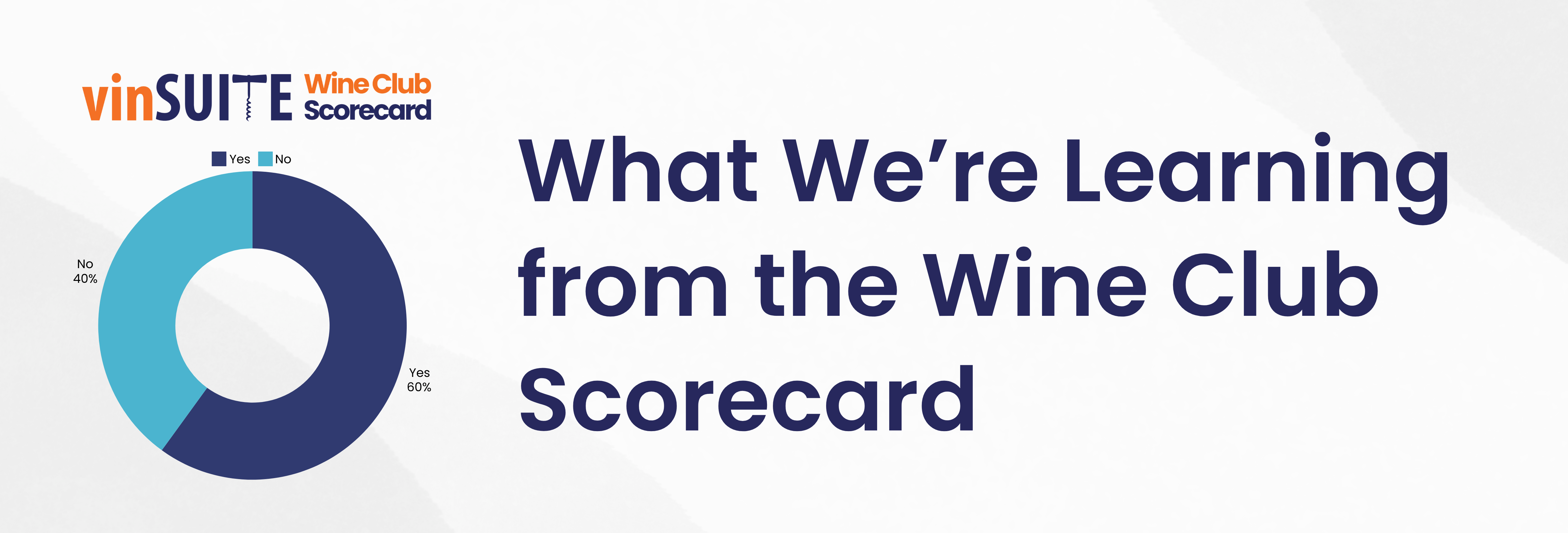
    In our analysis of Wine Club Scorecard responses, some surprising trends have emerged. Many wineries are missing crucial strategies that could dramatically boost growth and member engagement. Here are some of the biggest opportunities revealed so far:   1. Tracking Member Churn: A Critical Oversight for Retention Surprisingly, 40% of wineries don’t track their membership churn—the rate at which members leave the club. Without churn data, understanding why members are leaving becomes difficult, making it challenging to take proactive steps to keep members engaged. Tracking churn allows wineries to spot trends, like when members are most likely to leave or what offerings might need improvement. For wineries new to tracking churn, the Wine Club Scorecard offers straightforward steps and retention strategies to reduce attrition and maintain a thriving membership.   2. Offering Flexible Membership Options: Personalization Matters While traditional wine
00
vinSUITE Launches Revolutionary Wine Club Scorecard Assessment to Help Wineries Maximize Growth and Optimize Their Wine Clubs
vinSUITE Launches Revolutionary Wine Club Scorecard Assessment Personalized 20+ page reports provide wineries with strategies to improve wine club acquisition, retention, and member value. Napa, CA, October 22nd, 2024 – vinSUITE, the leading provider of direct-to-consumer (DTC) software for wineries,  is transforming how wineries grow and optimize their wine clubs with the launch of its innovative Wine Club Scorecard. This powerful new resource provides wineries with a personalized, 20+ page report filled with data-driven insights and strategies that can unlock the full potential of their wine club programs.  Leveraging over two decades of experience helping wineries grow their DTC channels, vinSUITE developed the Wine Club Scorecard to deliver critical insights in under 10 minutes, without disrupting daily operations. With wine clubs contributing as much as 39% of DTC revenue according to Silicon Valley Bank’s 2024 State of the Wine Industry Report, optimizing
00
WISEWISE
News
October 3, 2024
Taking It to the Streets
Overdependence on Tasting Room traffic as the sole driver to grow our DTC business has become problematic for all wine regions. Between fires, the pandemic, changing travel patterns many wineries have focused new efforts on building DTC customer bases from programs that they can actually control – DTC road show events. WHAT What do we mean by road show events? Traditional Winemaker Dinners – This is not new. Wineries have been partnering with a local on-premise account for decades. Now, however, restaurants are looking to fill empty tables and may offer better options than ever before. Wine Club Events – Also not new, but picking up a lot of momentum, especially since COVID. A great way to engage Current and Alumni Members, especially those who mention they don’t get to take advantage of their benefits. Private Tastings – In a customer’s home or country club. They invite the Guests, often their very well qualified friends and associates. Afterall, b
00
How to Transform Surveys into Profit-Driving Activities
Do your existing sales execution survey questions drive beverage alcohol sales and increase profits? If not, it’s likely because your survey is not designed to yield actionable answers. Survey projects need a proven methodology and tool to make the data actionable; otherwise, time is wasted, and little is accomplished. You Can’t Fix What You Don’t Know Surveying helps identify your definition of a “perfect account,” perhaps more importantly, it should uncover gaps and reveal Accounts that are not performing. Since you can’t fix what you don’t know, understanding where you could be better represented or underperforming is a powerful place to start. Transform Surveying into Sales-Driving Activity What does it take to transform surveying into a sales-driving activity that will help you cross the finish line with a win? Top wine and spirits category performers use digital survey tools to help plan, measure, share, and drive specific Key Perfor
00
O-I Glass Issues 2021 Sustainability Report
O-I Glass, Inc. has published its 2021 Sustainability Report examining the vision, innovation and transformation behind its vision to be the most innovative, sustainable and chosen supplier of brand-building packaging solutions. The report highlights the refresh of O-I’s business strategy, elevating sustainability within the company while achieving a number of sustainable firsts for the industry. “While we believe glass packaging is already the most sustainable packaging solution, sustainability at O-I is about more than what we make. It is also about how we make it,” said Andres Lopes, Chief Executive Officer for O-I. “We enhanced matters, from our approach to governance and management of sustainability to the number of initiatives and quantitative goals. We are excited to share our elevated ambitions and what they mean for O-I and its stakeholders.” In 2020, O-I introduced structural enhancements to deepen and accelerate sustainability progress, in
00