
Filter Post Type
NewsVideoProductEventLink
Sort:
Most Recent
1–10 of 56
Best Wine Club Management Software for Wineries (2026 Quick Guide) Your wine club is likely your most predictable DTC revenue stream. Members buy on schedule. They purchase more outside of shipments. They refer friends. According to Silicon Valley Bank’s State of the U.S. Wine Industry Report, direct-to-consumer revenue, particularly wine clubs, remains one of the most controllable and margin-protective channels for wineries. Yet many wineries are still running their wine club: Manually Across disconnected systems On software not built for winery operations That friction quietly costs money every week. What Wine Club Software Should Actually Do in 2026 At minimum, your system should: 1. Increase retention Flexible club levels and shipment schedules Clear, automated member benefits Customization options that members value 2. Reduce revenue leakage Automated expired card updater Clean billing workflows Fewer manual errors 3. Speed up tasting room enrollment POS-connected s
00

February 10, 2026
Event Type: Webinar
Date: 2/24/2026
Coffee with Rob: Macro Trends & How Top-Performing Wineries Are Responding This session is all about stepping back and looking at the bigger picture. Rob will dig into the macro trends impacting the wine industry, drawing from the 2026 SVB State of the U.S. Wine Industry Report along with additional slides from his presentation deck that help put the data into context. Rather than focusing on day-to-day tactics, the conversation will center on what’s happening at a market level and what the data shows about how top-performing wineries are navigating today’s environment. We’ll start with Rob’s take on the data, followed by a moderated Q&A with questions submitted in advance by the eCELLAR community. DATE: Tuesday, February 24th, 2026 , 9:00 AM – 10:00 AM WHO: Rob McMillan, EVP & Principal Brand Strategist, Wine Silicon Valley Bank, a Division of First Citizens Bank LOCATION: Virtual Event RSVP ABOUT THE SPEAKER Rob McMillan, EVP & Pr
00
January 20, 2026
The wineries with the most loyal wine clubs aren't the ones with the best discounts. They're the ones with the strongest emotional identity. This will sound counterintuitive to anyone who's ever tried to stem club churn by sweetening the deal with free shipping or an extra bottle. But the data tells a different story. Companies with strong emotional connections to customers outperform competitors' sales growth by 85%. Not 8.5%. Eighty-five percent. The question isn't whether emotional connection matters. It's how you build one. Enter brand archetypes: a framework rooted in Jungian psychology that helps wineries create the kind of deep, identity-based loyalty that discounts can never buy. When wineries align their story, experience, and messaging with a core archetype, wine club loyalty stops being a battle against churn and becomes a natural expression of who they are. What Are Brand Archetypes? (And Why They Work in the Wine Industry) Brand archetypes are 1
00
January 16, 2026
The 2026 State of the U.S. Wine Industry Report, published by Silicon Valley Bank and authored by Rob McMillan, provides a comprehensive, data-driven assessment of current conditions in the U.S. wine market. Built on more than 25 years of industry research, the report combines results from SVB’s annual winery survey, its Direct-to-Consumer (DTC) survey, demographic and cohort consumption modeling, and a wide range of third-party wholesale, retail, and population datasets. The conclusion is clear: while the industry continues to face structural headwinds, wineries are not experiencing these conditions equally. A widening performance gap has emerged between those adapting to changing demand and those struggling to do so. 2025 Performance: A Difficult Year for Many By nearly every measure, 2025 was a challenging year for the U.S. wine industry. Roughly half of the surveyed wineries rated the year negatively, citing slowing demand, rising costs, margin pressure, and inventory ch
00
January 15, 2026
Demand decline improving with stabilization on the horizon Silicon Valley Bank (SVB), a division of First Citizens Bank, today released its 2026 State of the US Wine Industry Report. Widely regarded as the leading source of market trends in the premium wine sector, SVB’s 25th annual report provides an analysis of current market conditions, success strategies, and forecasts for the year ahead. The 2026 report estimates the following industry sales totals for 2025: Total volume of ~329 million cases (down from 335.9 million in 2024) Total value of ~$74.3 billion (down from $75.5 billion in 2024). The wine industry is moving through a multi-year demand correction, largely driven by value wines at the under $12 price point. Industry sales in 2025 declined 2.0% (by cases) and 1.6% (by dollars), yet both represent improvements compared to 2024. The industry ended the year with both profit margin compression and higher levels of inventory. The premium industry will likely experience its
00
Event Type: Webinar
Location: Online
Date: 1/15/2026
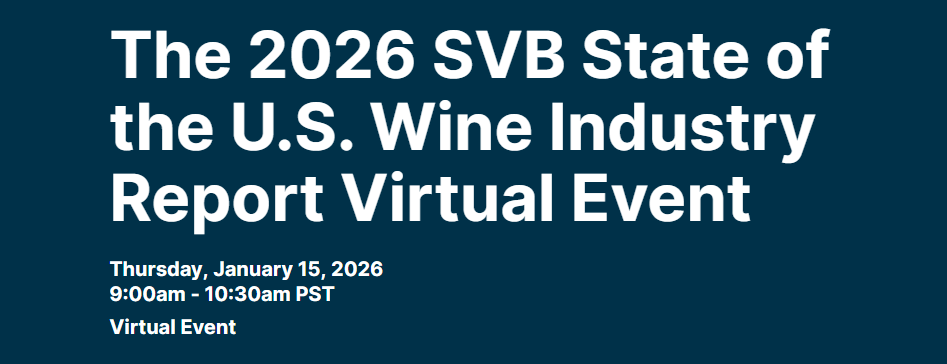
Please join us on Thursday, January 15 for a live, virtual event to review findings and analysis from our 2026 State of the U.S. Wine Industry Report. Our panel of wine industry experts will present findings from the latest SVB State of the U.S. Wine Industry survey and discuss market sentiment, ongoing business challenges and share success stories. In this year’s session, we will: Examine the biggest impacts on U.S. wineries’ financial health. Analyze the ongoing shifts in consumer behavior. Investigate the relationship between wine supply and emerging threats. Explore the sales strategies currently used by leading brands. Our panel of wine industry innovators hosting this discussion include: Rob McMillan – EVP & Founder, Silicon Valley Bank Wine Division Janie Brooks Heuck – Managing Director, Brooks Wine Kristin Marchesi – Managing Director, Metis Mergers & Acquisitions Matt Owings – COO & CFO, Rombauer Vineyards Virtual Event Details
00
Facebook/Meta: Turning Fans into Wine Club Members Expanding on insights from our Wine Club Scorecard, this post explores one of the most underused yet powerful tools for wine club growth: Facebook. While platforms like TikTok and Instagram often grab attention, Facebook remains one of the most effective drivers of wine club engagement and conversion when paired with Meta’s advanced targeting and advertising tools. With 72% of wine consumers aged 35–65 actively using Facebook, this is not just a social network—it’s an opportunity to build real relationships, deepen loyalty, and guide new members into your wine club. Yet most wineries still treat Facebook as a newsfeed instead of a growth engine. Sporadic posts, static bottle shots, and low engagement can’t compete with a thoughtful strategy that uses Facebook the way it was meant to be used: to connect, converse, and convert. Let’s explore how to turn Facebook into a true wine club acquisition chann
Wine Club GrowthWine Club MarketingFacebook for WineriesMeta AdvertisingWine Club AcquisitionSocial Media Strategy for WineriesDigital Marketing for WineriesWine Club RetentionFacebook AdsWinery Community BuildingCustomer EngagementHow to Grow a Wine Club with FacebookBest Facebook Strategies for WineriesWinery Marketing Tips 2025Using Meta Ads to Increase Wine Club MembershipWine Industry Marketing InsightsWine Club ScorecardWIN Series 2025DTC Wine MarketingvinSUITE Insights
00
September 10, 2025
In today’s wine industry, tasting room reservations are not just operational tools — they are strategic levers. According to the 2025 SVB State of the Wine Industry Report, tasting room visitation remains one of the most powerful drivers of Wine Club acquisition and the second-largest contributor to direct-to-consumer (DTC) revenue, following wine sales themselves. Yet, as consumer visitation patterns evolve, how wineries manage reservations — whether through third-party platforms or built-in tools — has become a critical decision. The right choice can impact everything from guest satisfaction and Wine Club conversion to brand control and long-term revenue growth. Let’s explore the two primary approaches wineries use today: • External reservation platforms (e.g., Tock) • Built-in reservation flows on the winery’s own website External Reservation Systems: Convenience with Constraints
00
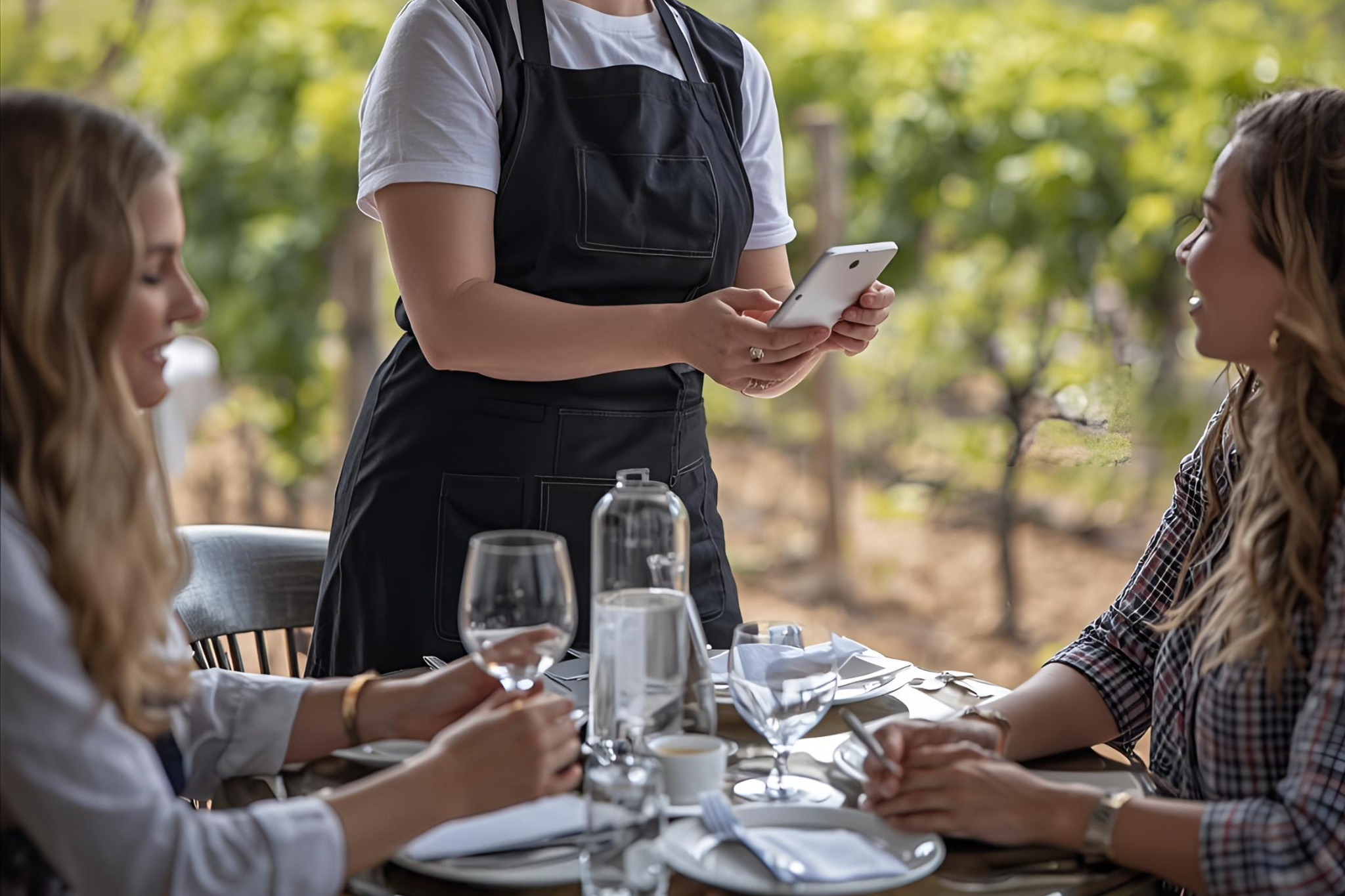
Great wine brings people to your winery. Great service brings them back. And today, nothing elevates service like a Point-of-Sale (POS) that lets you meet guests anywhere, from the vineyard lawn to a bustling festival. In today’s DTC landscape, the tasting room is no longer the only in-person touchpoint that matters. Wineries are hosting vineyard tours, pouring at festivals, working farmers’ markets, and even running golf-cart service to meet guests where they are. But here’s the problem: too many wineries are stuck with outdated point-of-sale systems that can’t keep up. If your team is tethered to a counter or juggling multiple systems, you’re not just slowing down service—you’re losing sales, missing data, and eroding customer trust. The solution? A mobile POS for wineries that makes every interaction seamless, personal, and connected. Why Flexibility Matters in Winery Service Hospitality is the heartbeat of any winery. Guests expect warm, pe
00
August 5, 2025
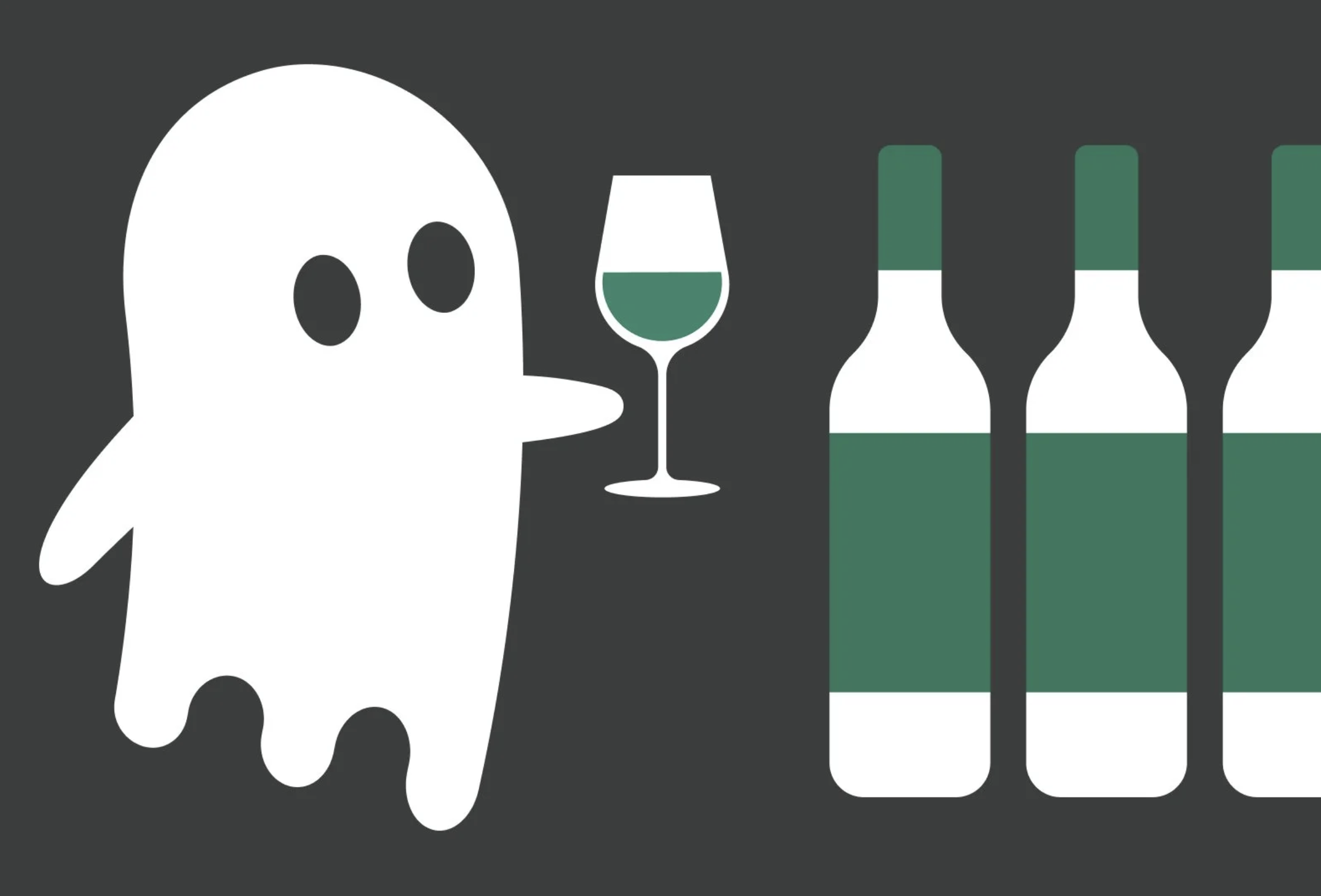
Are Your Wine Club Members Ghosting You? Here's Why Your wine club members are breaking up with you, but they're not telling you why. They're just... disappearing. The numbers are stark: Silicon Valley Bank's latest research (which we are going to reference a lot in this blog) shows wine clubs are experiencing member attrition rates between 28-36% annually, with luxury segment clubs performing only marginally better at 23-29% (SVB Direct-to-Consumer Wine Report, 2025). That's not a leak, it's a flood. And while many wineries frantically chase new sign-ups to replace the departed, few address why members leave in the first place. Wine club fatigue isn't a mysterious phenomenon. It's a predictable human response to predictable winery behavior. The Warning Signs You're Already Losing Them Before members cancel, they disengage. They're sending signals you might be missing: Email open rates drop below your average Shipment modifications increase (dow
00