Filter Post Type
NewsVideoProductEventLink
Sort:
Most Recent
1–10 of 46
March 16, 2026

Transporting liquid products efficiently and safely is a critical part of production. From grape must to finished wine, every stage of the process requires containers that protect the product, reduce costs, and minimize environmental impact. Container Logic offers a solution that addresses all these needs: collapsible intermediate bulk containers (IBCs). What Are Collapsible IBCs? Intermediate bulk containers (IBCs) are a versatile method for transporting large quantities of liquid food-grade materials. Unlike rigid single-use containers, collapsible bins are designed to fold down when empty, making them reusable, space-efficient, and environmentally friendly. Their durable construction ensures that liquids remain protected during transport, while the foldable design simplifies storage and return logistics. Key Benefits of Collapsible Bins Reduced Packaging Waste Traditional single-use containers generate significant waste with every shipment. Collapsible bins minimize the need f
00

Wineries today are navigating tighter margins, fluctuating production volumes, and increasing pressure to stay operationally agile. From harvest spikes to storage and logistics challenges, having the right equipment—without overextending capital—has become a strategic priority. That’s where Container Logic fits into the conversation. Container Logic specializes in stainless steel containers and tanks designed for beverage and food manufacturers, with solutions that align especially well with the realities of wine production. Their offerings support key winery needs including fermentation, storage, blending, and transport—while giving producers flexibility in how they access that equipment. Built from high-quality stainless steel, Container Logic’s tanks are engineered to protect product integrity and withstand the demands of commercial production. Options include single-wall, jacketed, and insulated vessels in a range of sizes, allowing wineries to match
00
December 10, 2024
00

According to Technopedia, “Future proof” describes a product, service or technological system that will not need to be significantly updated as technology advances. Purchasing a Future Proof Palletizer A palletizer purchased today must be as future-proof as possible because it will likely be in operation until 2034, or perhaps as far into the future as 2044. With a life expectancy of one to two decades, a palletizer built today must be engineered with machine control and layer configuration software, electro-mechanical parts, sensors, robots (for some applications), and other components that will perform efficiently and reliably as the machine ages. The manufacturer of the selected palletizer must also be a long-term partner able to provide after-market service and support capabilities that increase the likelihood of maintaining, and when needed, updating or modifying the palletizer to maximize machine life. Basic Considerations There are basic considerations that must
00
April 18, 2024

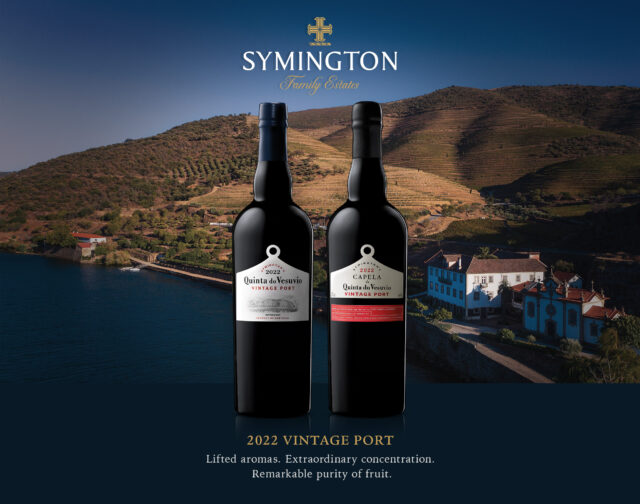
Symington Family Estates Announces the Release of the 2022 Vintage Ports from Quinta Do Vesúvio
SAN FRANCISCO, Calif. – April 18, 2024 – Symington Family Estates, owners of Quinta do Vesúvio, one of Portugal’s most prestigious wine estates, is delighted to announce the release of two Vintage […]
00

Thanks to our beloved 3-tier system, pricing in the wine & spirits business per each state is daunting. But coordinating accurate, reliable pricing across multiple states is a Herculean task. When managing on-premise pricing for national chains, most adult beverage manufacturers know little about tackling such an arduous task. Our aim in this first article in a series about pricing management is to unravel the mysteries of managing pricing for national on-premise chains. The unique needs of on-premise chains So much of our industry is oriented around the off-premise, and rightfully so, as this is where 80% or more of the volume is done. The ‘suggested retail price’ (or SRP) on the shelf is the anchor point. However, pricing for on-premise is very different from the retail shelf, and failing to understand the unique needs of the channel can result in many missed opportunities. The table below is a handy visual aid to understand the distinctions between on and o
00