
Filter Post Type
NewsVideoProductEventLink
Sort:
Most Recent
Tagged:Recycling
1–10 of 21

October 28, 2025
The California legislature recently amended the California recycling labeling requirements for wine and spirits containers, making it significantly easier for wineries and distilleries to comply. The new law, AB 720, extended the deadlines for complying with the labeling requirements and authorized the use of QR codes for CRV compliance. Here are the specifics: The deadline by when all wine and spirits containers in the marketplace must have CRV labeling has been extended a year, from July 1, 2025 to July 1, 2026. The cut-off date for the permanent exemption of already labeled containers from CRV requirements has been extended 18 months, from January 1, 2024 to July 1, 2025. Now, any containers filled and labeled without CRV markings before July 1, 2025 will not need any additional labeling to be compliant, even if sold after July 1, 2026. Wineries and distilleries may now use half-inch high QR codes for CRV compliance. This creates an important precedent for other states to follow. W
00

Wineries holding a Maine Direct Shipper of Wine License may have recently received correspondence from the ME Department of Environmental Protection (DEP) urging them to either comply with the DEP’s new recycling requirements right away or cancel their license. The California Wine Institute met with the agencies involved and confirmed that neither the ME Bureau of Alcoholic Beverage & Lottery Operations (BABLO) nor the DEP will take action against DTC licensees that have not fulfilled the recycling requirements, as long as they do not ship to Maine consumers. For holders of a ME DTC license, we recommend keeping the license in place, but not shipping direct to consumers in ME until the issues are worked out. The DEP has acknowledged the problems and is currently working on several possible proposals to potentially ease the requirements in 2026. The DEP is also seeking public comment, and has posted information on how to comment on their recycling program on this webpage. We
00
Recycling & Waste Solutions Tanker Hauling Services Wine Rinsate, Storm Water, Sludge, and other Waste Water products suitable for disposal at waste water disposal and recycling facilities. Our fleet includes tankers and vacuum trucks. Roll-Off Boxes Wood, scrap metal, glass, concrete, dirt, rock, plastic, cardboard, and Construction materials are hauled to recycling facilities Compost Our Super Compost consists of 100% recycled organic materials that is generated and collected from local sources. Our Super Compost is OMRI listed, Certified OIM with CDFA, and STA certified with the US Composting Council. Environmental Solutions and Emergency Response Environmental Waste Disposal Services Our nationwide network of treatment, disposal and recycling facilities offers sustainable, safe and compliant solutions for all hazardous and nonhazardous waste streams including All Pesticides, Herbicides, Insecticides. Lab Pack, Field and Industrial Services Republic Se
00
June 11, 2025

Starting July 1, 2025, wine bottles shipped DTC to Maine consumers will be covered by Maine’s recycling program. Previously, wine sold at wholesale has been subject to the recycling requirements, but wine shipped DTC has been exempt. To continue shipping DTC to Maine beyond July 1, wineries will need to comply with the requirements of that program. A law passed in 2023 required this change, but the implications for DTC shippers were uncertain. On June 4, 2025, the Maine Department of Environmental Protection (DEP) issued a memo explaining the program and its requirements for DTC shippers. We’ve summarized them briefly below. In order to continue to ship DTC to Maine after July 1, wineries must become the responsible party for recycling requirements by registering as an Initiator of Deposit (IOD). To become an IOD, wineries need to obtain a license from the ME DEP. The annual fee for wineries producing no more than 50,000 gallons a year is $50. The annual fee for wine
00

There are two new requirements involving the recycling of wine containers in Oregon: one covering wine in bottles or other types of packaging, and one covering wine in cans. The former will be covered under Oregon's Extended Producer Responsibility (EPR) law starting July 1, 2025, while the latter will be incorporated into the existing beverage container recycling system on the same date. Legislation to include wine bottles in the existing beverage container deposit and recycling system failed due to opposition, so suppliers shipping to Oregon need to be aware of two separate systems, depending on how they package their wines. Wine Bottles Wine bottles and other forms of packaging (such as bag-in-a-box and Tetra Packs) will be covered by Oregon's Extended Producer Responsibility (EPR) law starting July 1, 2025. By March 31, 2025, all suppliers that ship packaged wine in or into Oregon (unless exempt as described below) must register with the designated Producer Responsibility
00
April 12, 2024

Consumers are asking for sustainability measures from their favorite brands. Infinity Bottling is poised to help our customers tell their story and increase their brands sustainability in many ways. Infinity offers bulk glass handling from a range of domestic California based suppliers; Bag in the Box filling and the facility recycles at least 90% of the packaging waste materials created in the bottling process. Bulk glass procurement has multiple benefits for a brand as well as the environment. The benefits of converting to bulk glass handling are numerous including: Environmental footprint benefit as more glass arrives per delivery truck and glass shipments can come directly from the manufacturer to bottling, which saves extra truck trips and repeat unloading/reloading energy. Customer savings on the cost of repacking, $1/case or more, cartons remain pristine from less handling and transit and customer realizes savings on the cost of carton erecting often built into the repack costs.
00
March 25, 2024
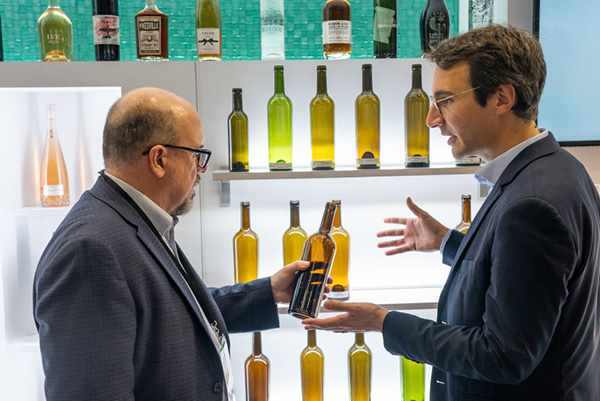
Leading Global Glass Manufacturer Implements 3-Part Plan for a Sustainable Future Throughout the Industry With 10,000 employees, 34 glass production facilities in 12 countries and manufacturing upwards of 17 billion glass bottles and jars per year, Verallia, the world’s third largest producer of glass packaging for the wine, spirits and food industries, has roots that go both deep and wide. The Wine Industry Network (WIN) talked with Felix Lamolinerie, CEO of Verallia USA, about how the company began, and its evolution into a sustainability leader for the worldwide glass industry. History The company’s origins come from the establishment of the Vauxrot glass facility in France in 1827. With its 200 years of know-how, Verallia, the preeminent industry leader, is seizing the initiative to redefine how glass is produced, reused and recycled in order to ensure that it is the world’s most sustainable packaging material into the foreseeable future. “Sustainability has
00
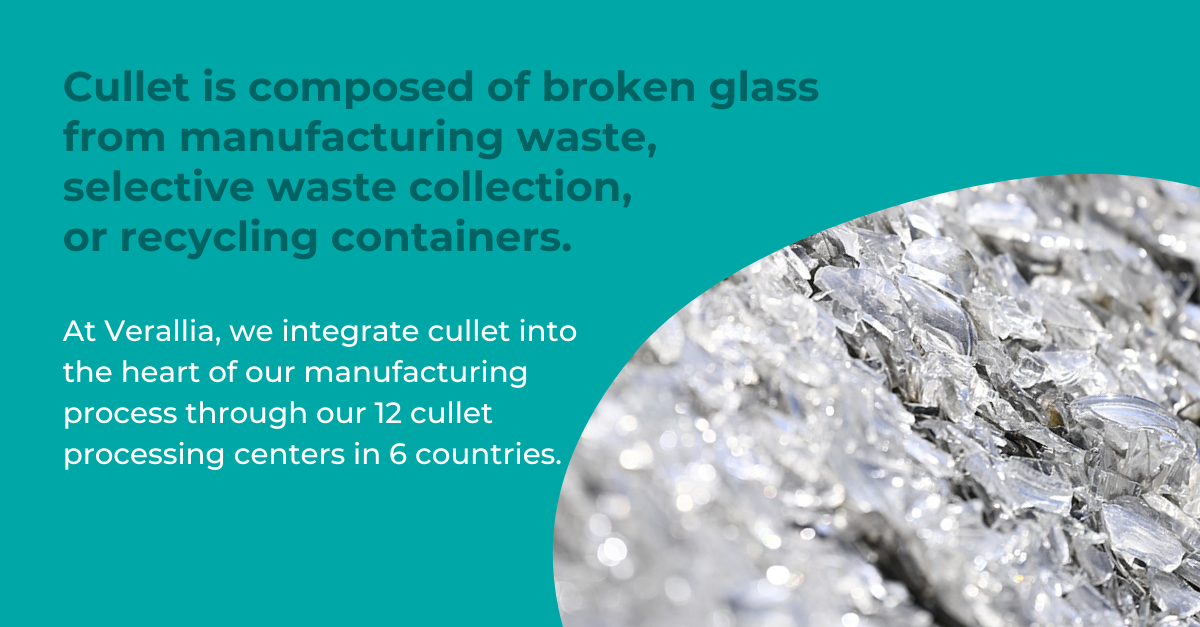
Discover the benefits of glass cullet with Verallia USA Did you know that glass is one of the most sustainable packaging materials available? ♻️🔍 Unlike other materials, glass can be recycled endlessly without losing its quality or purity. By choosing glass, you contribute to resource conservation, reduced energy consumption, and minimized environmental impact. Together, we can make a positive change for our planet. 🌎💚 Let's dive into the realm of glass cullet, cullet is recycled glass, carefully processed and ready for a new life as high-quality bottles and jars made of recycled glass. By using cullet as a key ingredient in glass production, we can significantly reduce our ecological footprint and foster a circular economy. 🔄 By embracing glass cullet, we conserve valuable natural resources. By replacing virgin raw materials like sand with cullet, we minimize the need for extraction and help protect ecosystems. Together, we can work towards a more sustainable future, one bottle a
00
December 19, 2023
Here’s a timely reminder about the new California recycling requirements going into effect January 1, 2024. Registration with CalRecycle. If you haven’t already done so, it’s time to register with CalRecycle as a beverage manufacturer and/or beverage distributor, and make any changes to your POS and accounting systems needed to keep track of the fees that are your responsibility (described below). You also need to make sure that your POS system calculates the CA sales tax on the total retail price of wine sold, including the CRV fee. CRV fees. If you sell wine or spirits to California consumers and/or retailers, you are considered a “beverage distributor” under CA’s recycling law. Beginning January 1 you must collect CRV fees on all bottle sales to California customers. CRV fees are $0.05/container for containers under 24 fluid ounces, $0.10/container for containers 24 fluid ounces or more, and $0.25 for bladders and boxes of any size. You will re
00

Glass Reimagined: Towards a Carbon-Free Wine Packaging Era Every consumer goods manufacturer has a roadmap to environmentally friendly stewardship, with measurable goals for reducing carbon emissions, using sustainable resources and minimizing waste. With somewhere between 23% and 29% of a winery’s carbon footprint coming from the glass bottle, the challenge for the wine industry is to make the venerable glass bottle more sustainable considering that according to the latest EcoFocus® consumer trend survey, 85 % of American grocery shoppers over the age of 21 choose to buy wine in glass. The Core Value of Recycling Recycling glass bottles is core to a circular packaging economy since recycled bottles are crushed and cleaned to produce cullet, which goes back into the glass furnace to make new bottles. Using this recycled cullet reduces the natural resources and energy needed to produce glass. In fact, increasing cullet to 55% reduces the use
00