
Filter Post Type
NewsVideoProductEventLink
Sort:
Most Recent
1–4 of 4

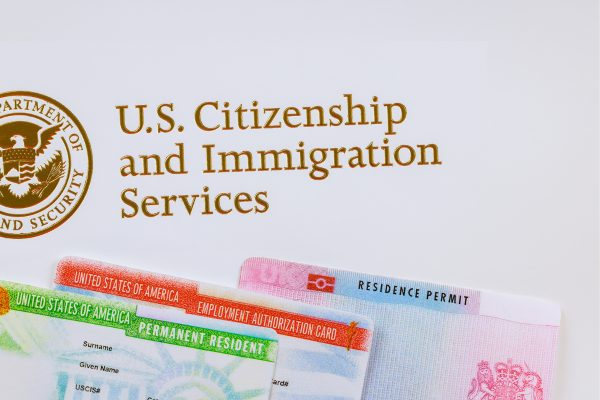
There is a lot of talk and a lot of questions right now about the new administration’s policies and statements on immigration. ICE (Immigration & Customs Enforcement) is the Federal enforcement agency that focuses on immigrant status. They have recently been assisted by the FBI, DHS and other law enforcement agencies when they conduct “raids” to locate and detain suspected offenders. California employers face additional legal requirements due to state laws passed between 2017 and 2021. Employers must, for example, notify employees within 72 hours of receiving an audit notice. Employers are also prohibited from voluntarily allowing ICE to enter non-public areas unless the agent shows an appropriate warrant that authorizes access. Employers and employees are legitimately concerned about their rights and responsibilities. In this article, we will attempt to address some of these concerns. There are two different occasions when an employer might be required to interac
00
July 24, 2024
What is PAGA? Since 2004, California’s Private Attorneys General Act (“PAGA”) has allowed an individual employee to “stand in the shoes of” the State to recover civil penalties from an employer for Labor Code violations—not only for violations against the single employee bringing suit, but for violations against all aggrieved employees. In this way, a PAGA lawsuit is a representative action like a class action. However, PAGA actions do not play by the same rules as class actions. How is PAGA different from a Class Action? Because an employee bringing a PAGA action is (in theory) acting as a private attorneys general to enforce State laws, PAGA actions are not treated like traditional civil lawsuits. Instead, they are treated as administrative enforcement actions brought by the State. For this reason, many of the limitations on class action lawsuits do not apply to PAGA actions. For example, PAGA actions cannot be waived, worker class certification an
00
What Could be the Impact on Your Business? Is an arbitration agreement that purports to waive the right to bring a Private Attorneys General Act (PAGA) claim unenforceable under California law, as the California Supreme Court held years ago in Iskanian v. CLS Transportation Los Angeles, LLC, 59 Cal.4th 348 (2014); or does the Federal Arbitration Act (FAA), which favors enforcing bilateral arbitration agreements according to their terms, preempt California law, invalidating Iskanian? This is the question posed by Viking River Cruises, Inc. v. Moriana, Case No. 20-1573, which came before the U.S. Supreme Court for oral argument on March 30, 2022. A decision is expected within the next few weeks or about two months from the argument date. Case Analysis The petitioner in Viking River Cruises argued that the Iskanian rule is preempted by the FAA, relying on a line of Supreme Court precedents, most notably AT&T Mobility LLC v. Concepcion, 563 U.S. 333
10
March 16, 2020

Andrew Grossman Mr. Grossman is an associate practicing in the firm’s transactional group, where he focuses on a broad array of corporate matters, including mergers and acquisitions, commercial agreements, financings, and corporate formation. He provides counsel to clients from a variety of industries, such as food and beverage, technology, and real estate. Prior to joining CMPR, he was an associate corporate counsel at a cybersecurity company, where he advised international cross-functional departments on corporate and technology matters, and at a national managed healthcare company, where he advised on HIPPA and partnership agreements and handled strategic acquisitions. Andrew graduated from UCLA School of Law. He received his B.A. from UC San Diego in three years, graduating summa cum laude and winning best honors thesis. He is admitted to practice in the State of California. Read More about Andrew Grossman Joy Holloway Ms. Holloway is a transactional attorney and a
00