
Filter Post Type
NewsVideoProductEventLink
Sort:
Most Recent
1–10 of 17
Vibes more positive, not yet the hard facts and figures An unseasonably warm start to spring in California has accelerated vine development in the growing areas to a marked extent: This month’s report relays the latest news from the vineyards – and how it may, or may not, affect the bulk wine and grape markets – and delves deep into the California Department of Food & Agriculture’s Preliminary Grape Crush Report for 2025, published last month. The state’s smallest winegrape harvest in 26 years, combined with some improved mood music regarding case-good sales – if lacking hard figures to support it – has helped create a feeling that the wine industry is headed in the right direction. Before the sunlit uplands are reached, however, more painful rightsizing must occur, and we continue to see vineyards removed and mothballed, crush and storage capacity taken offline, and companies shrinking, merging, or shuttering altogether. In the shorter te
00


Ten Ways Wineries Can Evolve From Selling Bottles to Creating Experiences That Resonate With a New Generation. If I told you a winery just opened with no vineyard, no winemaker on staff, and no interest in talking about terroir… would you visit? What if I told you it had a silent disco in the barrel room, a drag brunch series, and a 3-month waitlist for a zero-proof pairing menu? Those wineries exist. And they’re thriving. Because for a new generation of visitors, the wine isn’t the reason—it’s the reward. It’s not about what you pour anymore. It’s about how you make people feel. And we used to excel at this. But then we woke up one day… and it wasn’t working like it used to. The same offers stopped converting. The same messages started falling flat. The same visitors didn’t come back. And it’s not because we got worse at what we do. It’s because the customer changed. What they want. How they behave. Where t
00

When I start feeling optimistic, I imagine one or two people might read these blogs, (although I have a sneaking suspicion that they sit out on the internet equivalent of a doctors waiting room table between the large type Reader’s Digest and June 2004 People magazines). But I wouldn’t be able to legitimately pretend to be an industry expert if I didn’t do the obligatory “predictions” blog. I will stick to my lane: Marketing. Because it’s what I know and also there are many other excellent articles out there with overall market predictions. (But, then again, what do I know? My senior thesis at Boston University was an analysis of radio and TV media consumption patterns with the supposition that cable television would never take off because people wouldn’t pay for it.) So, I’ve been wrong. Like, really wrong. But assuming I get lucky sometimes, here are five things I believe will come to pass. 1) GENERATION X WILL DEMAND ATTENTION. We&rsq
00

December 8, 2023

It’s December in the laboratory and the last four months have gone by in a blur, passing by in an instant and simultaneously, so slowly. In the months running back and forth with samples from the production floor to the lab, and standing at the lab bench, performing manual TAs, pHs, FSO2s, and more - you deserve a much-needed break. Your back hurts, the fruit flies are seemingly doing everything they can to set up a permanent home in your lab, and your interns, whose energy and liveliness you are already missing, are slowly trickling off to their next winery adventure. You haven’t had time to think about anything other than grapes, juice and ferments for what feels like forever, and suddenly the holidays are here. There is still so much to do. It feels like you should be slowing down, but the consistent pressure to get numbers back to the winemakers for movements is still there. Not to mention you now have weeks of time-consuming ML checks on top of everything else
00
February 14, 2023
The California Department of Food and Agriculture’s preliminary 2022 grape crush figure, published February 10th, totalled 3,349,662 tons, slightly lighter than anticipated. The lightness of the crop – the fourth in succession below the 4-million-ton mark and the smallest since 2011 – was attributable to drought conditions, a severe frost, and ongoing vineyard removals, particularly in the Central Valley. Only Sonoma of the North Coast’s four crush districts registered an output reduction versus 2021, but approximately 130,000 fewer tons were harvested in the Central Coast and all but one district of the Interior – the Bakersfield area, up modestly – came in lighter. Total Chardonnay tonnage was down 15.9% versus 2021 to 520,983 tons, so that Cabernet (-6.5% to 556,787 tons) became the largest variety harvested in the state for the first time ever. Of the largest varieties, Pinot Noir was next after Chardonnay in experiencing the biggest drop,
00

January 18, 2023
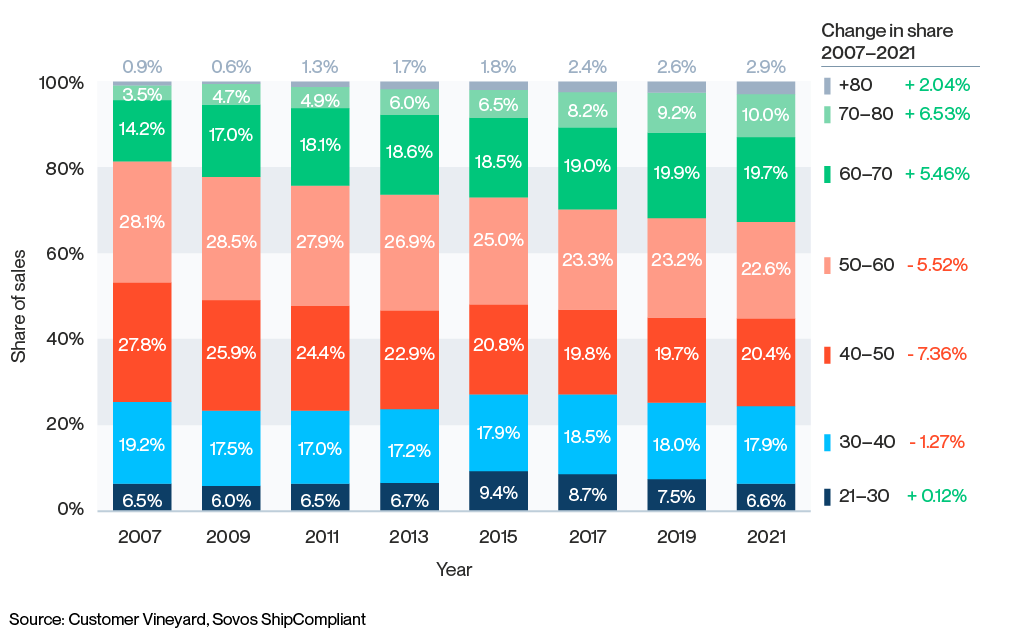
US Wine Industry Enters Negative Growth Phase; Adoption by New and Younger Consumers Is Lagging NAPA, Calif. – January 18, 2023 –Silicon Valley Bank, the bank of the world’s most innovative companies and the US premium wine industry, today released its 2023 State of the US Wine Industry Report. The 22nd edition of the annual report provides an assessment of the industry amid current market conditions and shares a unique forecast for the year ahead based on proprietary research and economic and behavioral trends among consumers. While the premium side of the wine industry experienced another strong year amidst an increasingly challenging marketplace – with revenue on average up 9.7 percent through September 2022 – the US wine industry as a whole experienced negative sales volume growth due to a decrease in sales of lower-priced wine. Silicon Valley Bank will host a live webinar with Silicon Valley Bank Wine Division founder and author of the
00

This is the time of year when people begin abandoning their computers to spend time with friends and family, so before you go I want to wish you a wonderful holiday season regardless of what you may celebrate--Christmas, Hanukkah, Kwanzaa, or simply the end of one year seguing into the next. How time flies! Read more... Lame Duck Runs The "Lame Duck" session of Congress between a November election and a new Congress in January is often a pretty sleepy time in DC. There are always budget-related measures that have to be passed, and which almost always come right down to the wire to create a little drama, but usually little else of note. But the 2022 Lame Duck session has been the most active and productive in memory, with the House and Senate passing legislation to prevent a potentially devastating rail strike, the Respect for Marriage Act legally protecting same-sex and interracial unions, and several other major things that are still pending. As for the money matters, here&
00

Majority Leader Chuck Schumer Meets with WineAmerica and Waterloo Container WATERLOO, NY–Senate Majority Chuck Schumer met on Friday, December 2 with leaders of WineAmerica, the National Association of American Wineries, and owners of Waterloo Container, a large supplier of bottles to the American wine industry located in the fabulous Finger Lakes wine region of upstate New York. WineAmerica President Jim Trezise, Vice Chair Scott Osborn of Fox Run Vineyards, and Board Member Erica Paolicelli of Three Brothers Winery met with their Senator and discussed WineAmerica’s National Economic Impact Study of the Wine Industry plus two legislative priorities. Scott Osborn, Erica Paolicelli, and Jim Trezise join Majority Leader Schumer The USPS Shipping Equity Act would allow the postal service to ship wine (and beer, and spirits) directly to consumers like FedEx and UPS have been doing for years. Federal funding for the National Agricultural Statistics Service (NASS) of USDA to cond
00

June 13, 2022

Automation in the winemaking lab has become a mainstay in our busy times. Big wineries have teams of enologists and banks of automated measurement tools, while small wineries often send testing out to labs that employ these same devices. Winemakers doing the lab work themselves and those utilizing external lab services often don’t realize how beneficial it can be to have an automated lab testing device in-house. The primary benefit is the consistency of the testing procedure, which lets winemakers make decisions with the confidence that each test was conducted precisely the same way across vintages, technicians and locations. “Quality control is essential in the wine lab,” says Calvin Watkins, a product manager at Gusmer Enterprises, a winery supplier and manufacturer. “Traditionally, chemicals can vary depending on who is doing the test. Human error can create inconsistency from test to test, introducing imprecision into the winemaking process and impacting t
00

April 27, 2022
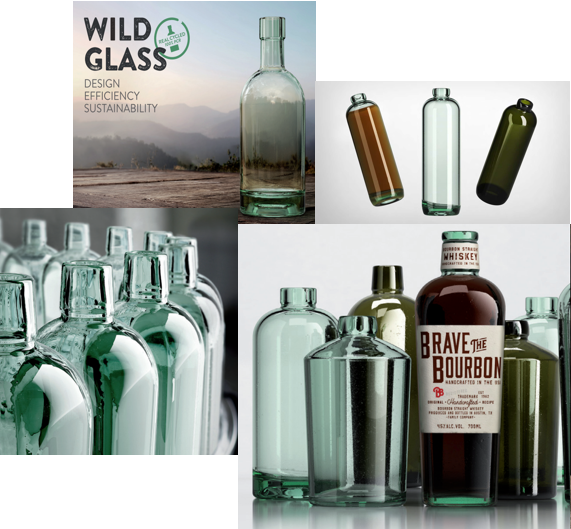
I was a guest speaker at NapaGreen’s Conference last week, presenting at the workshop “All Things Bottle Sustainability.” The conference featured several workshops on sustainability, with the last in the series this upcoming Friday, April 29th on “All Things Soil Sustainability.” I was proud to participate in the series and to support this important organization (www.napagreen.org), which focuses on building a more sustainable wine industry. As I’ve written about before, our industry’s continued success will depend on our ability to combat climate change by reducing our impact on the environment, including developing and utilizing better farming, production and, yes, packaging practices. My workshop focused on achievable ways we can manufacture and package wine bottles while reducing our carbon footprint and, at the same time, continuing to innovate quality and design. My company, Global Pa
00